Categories
1:48 Aircraft

Tamiya He-219 “Uhu” (Part 4)

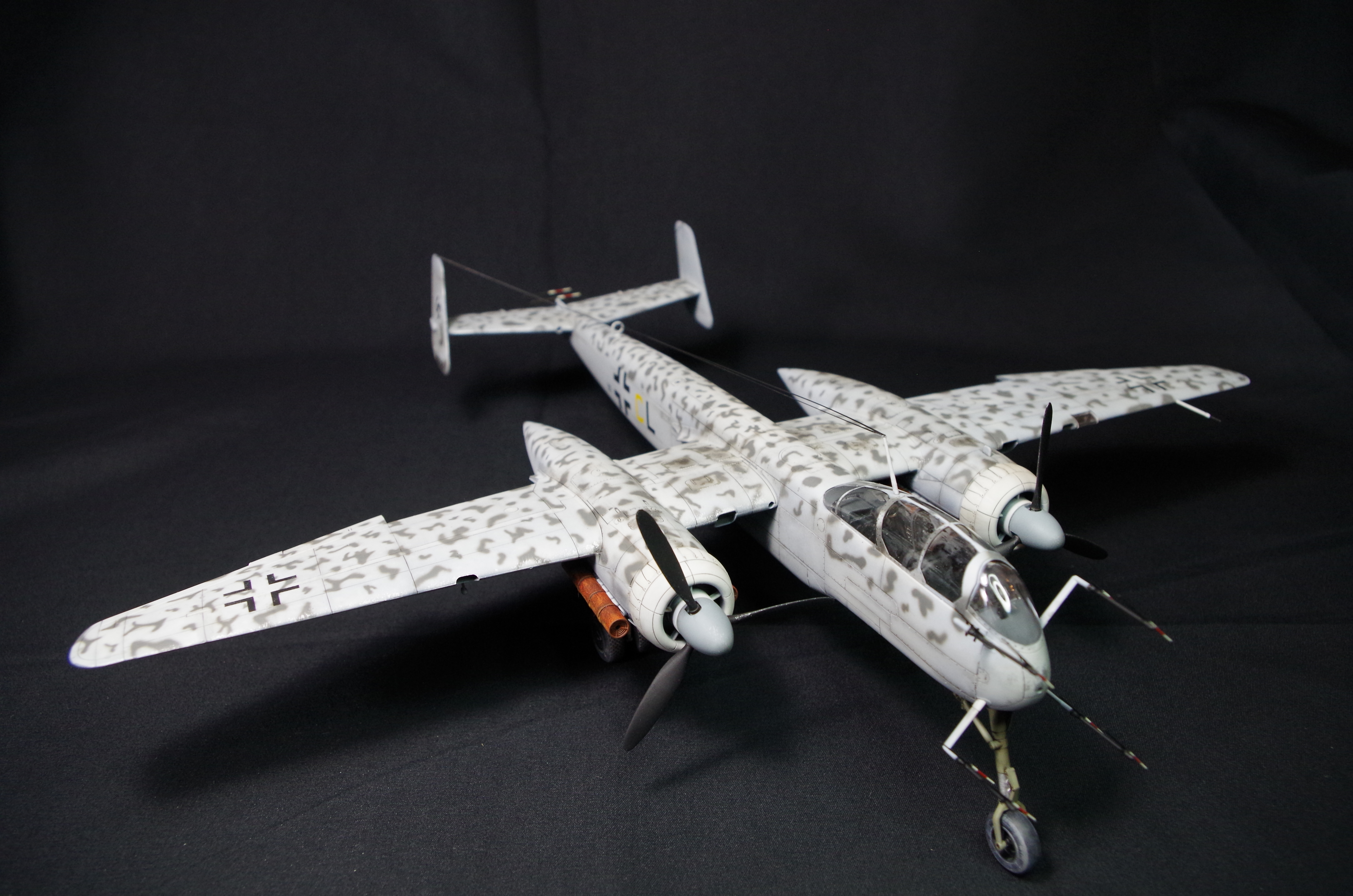
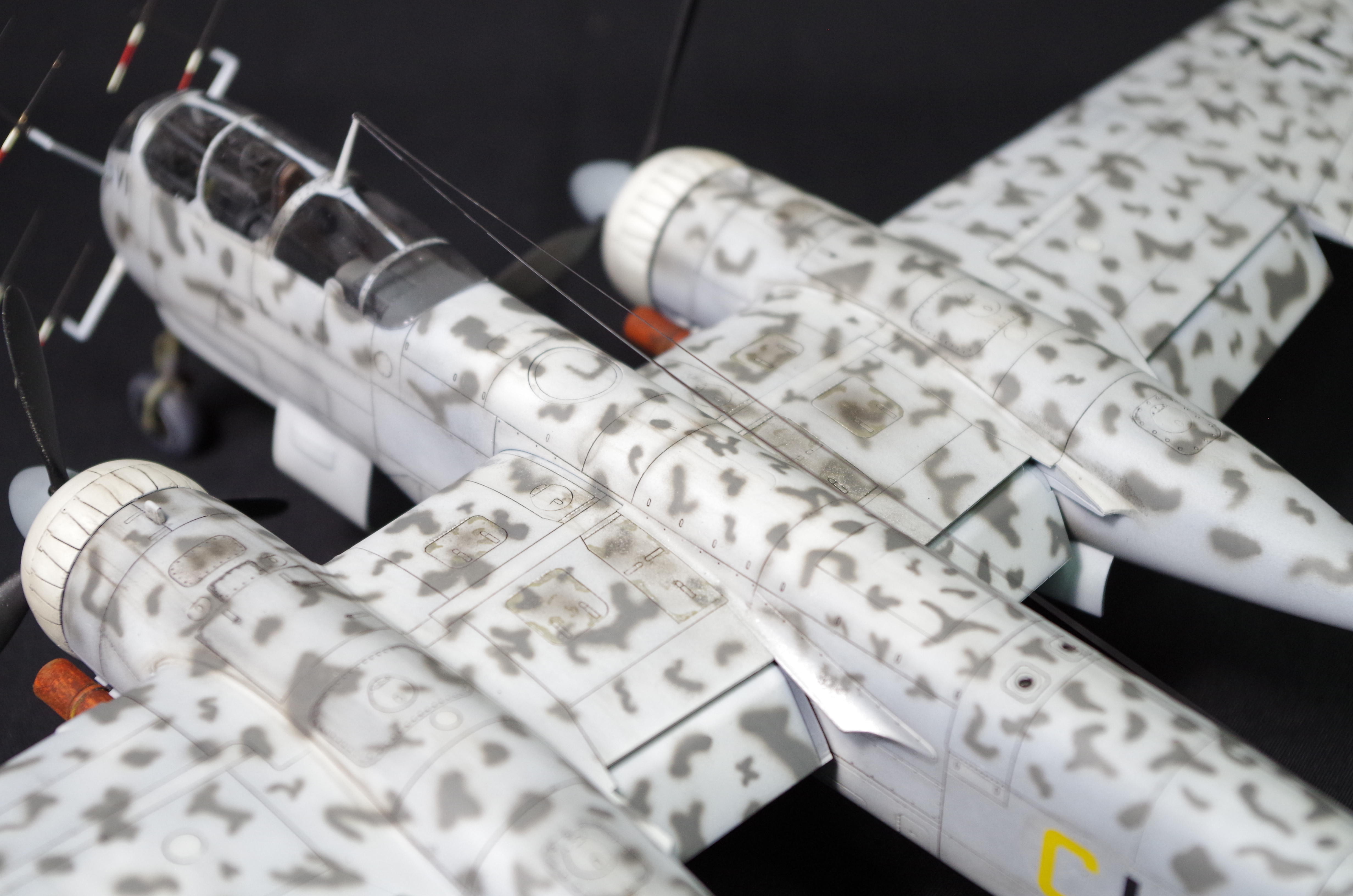
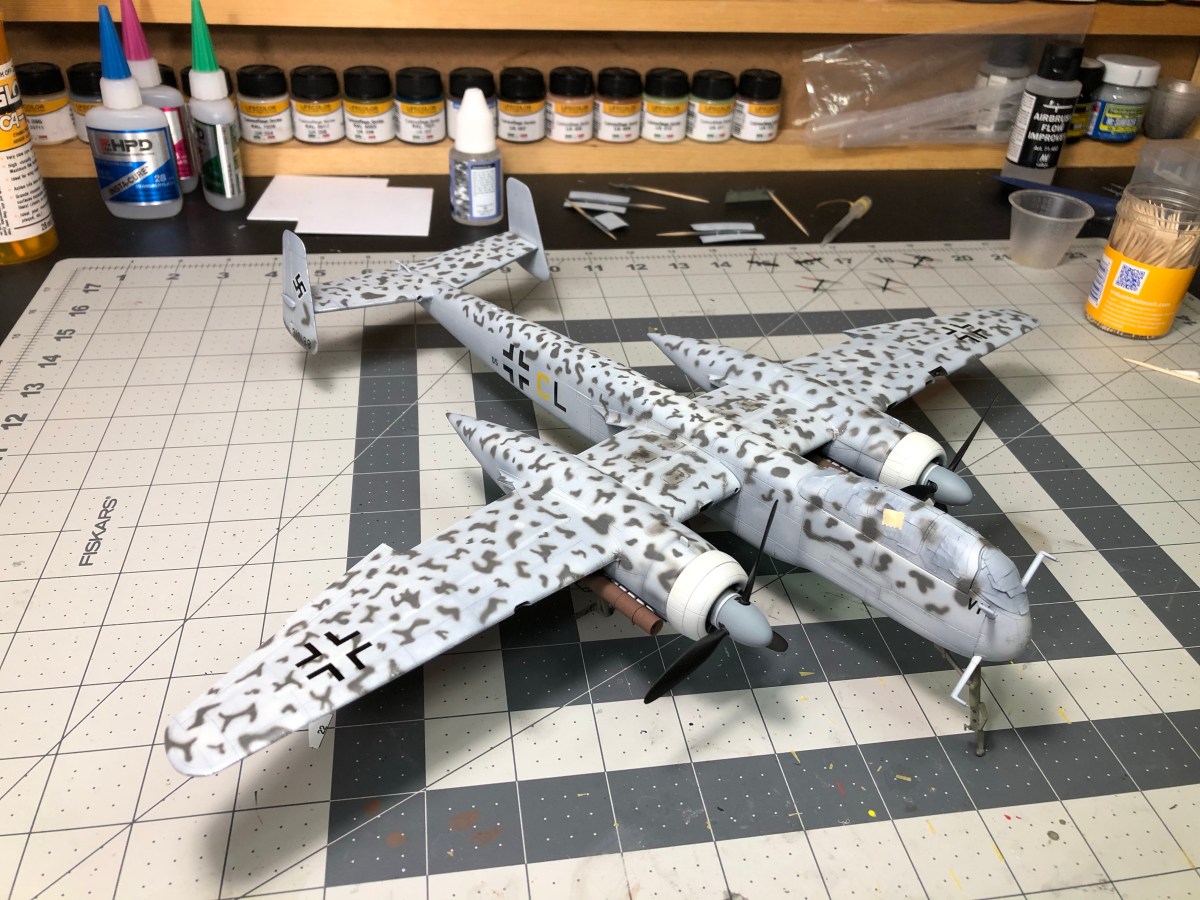
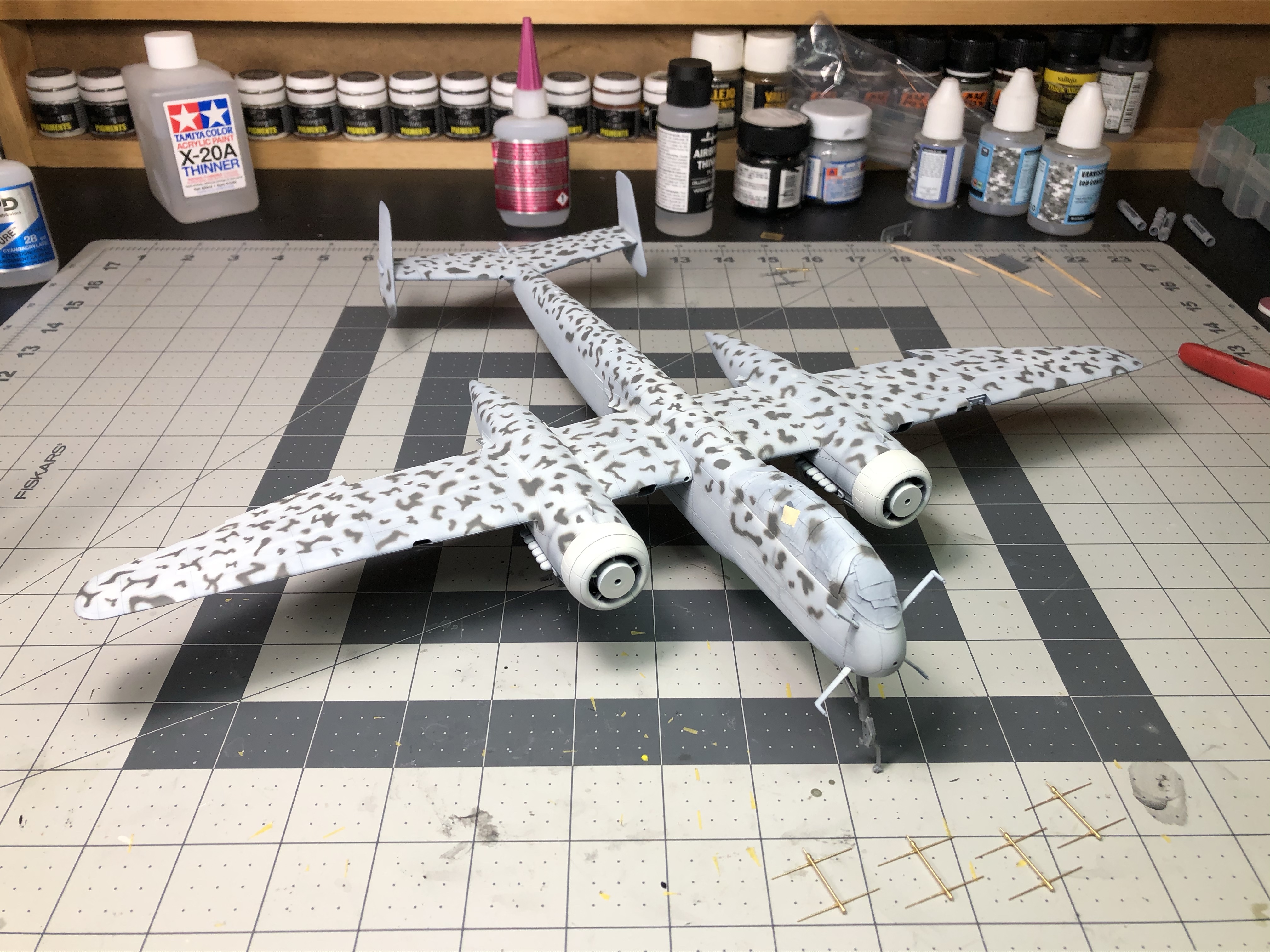
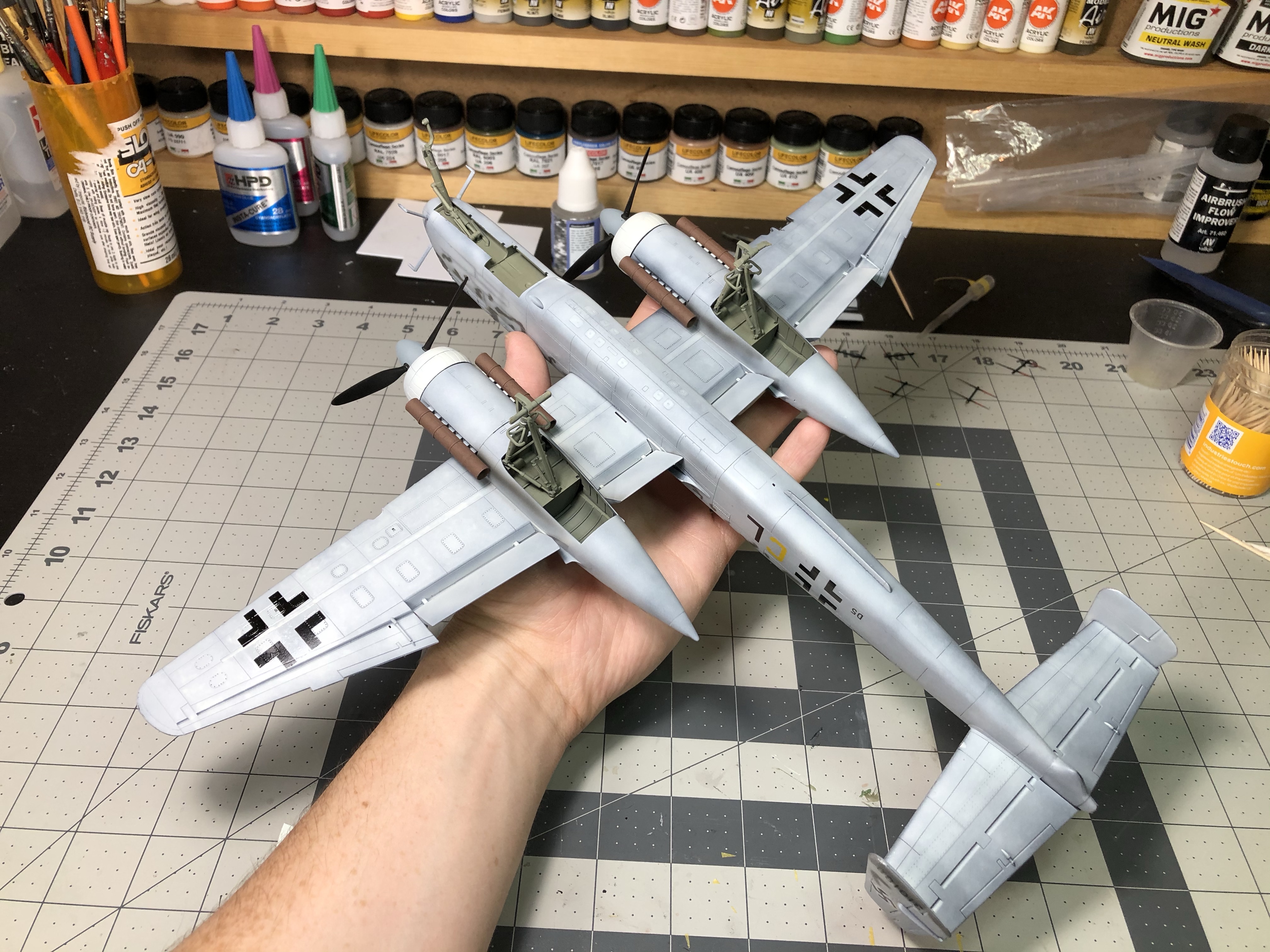
Onto the camouflage! Suffice to say this particular scheme has been one of the most labor intensive patterns I’ve ever had to paint. I selected this specific scheme because I felt that the grey-violet spots over the Grauweiss base color really stood out. I also felt that I could create more interesting weathering effects with a light colored canvas.

Final camouflage scheme completed.

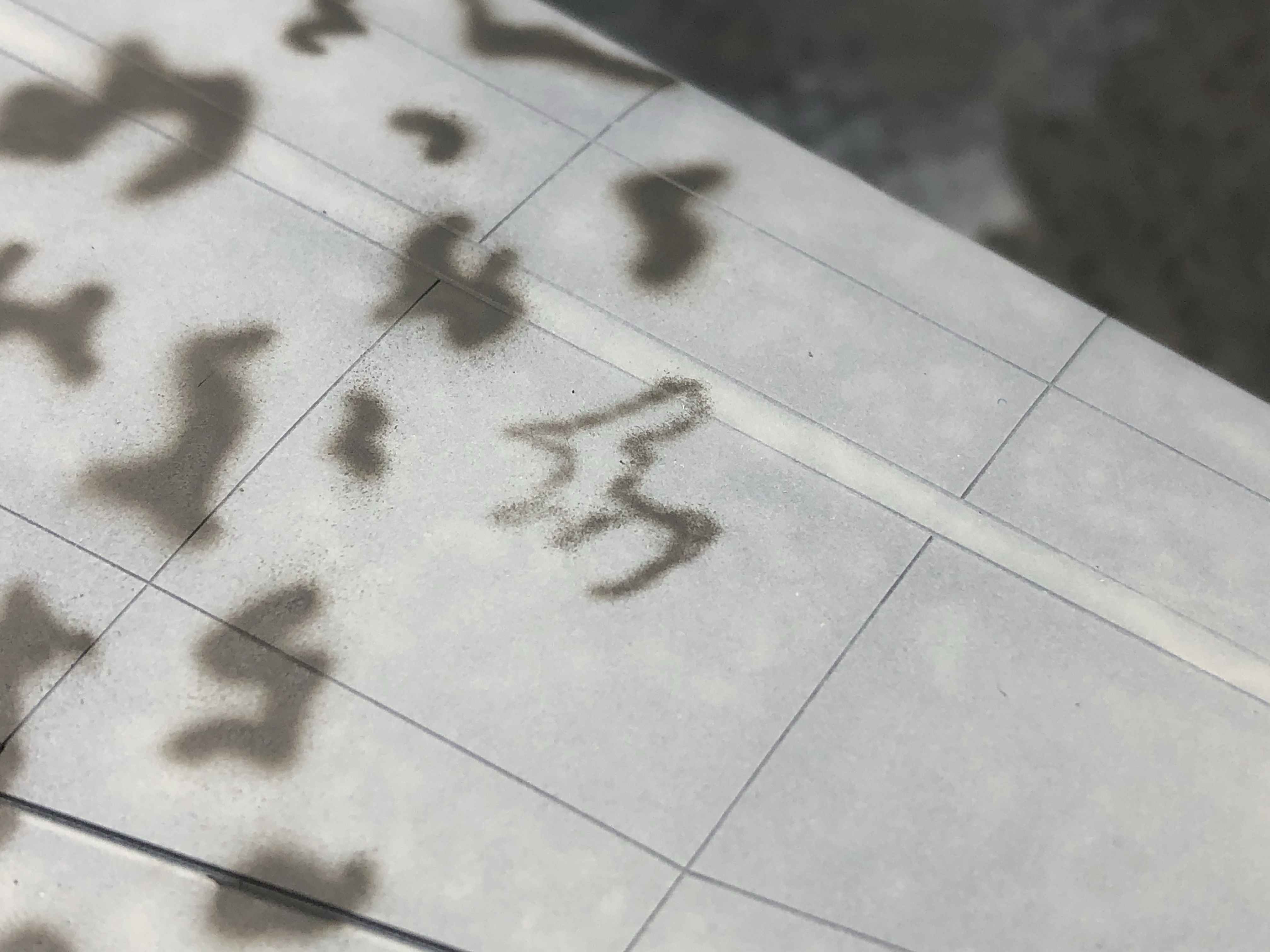
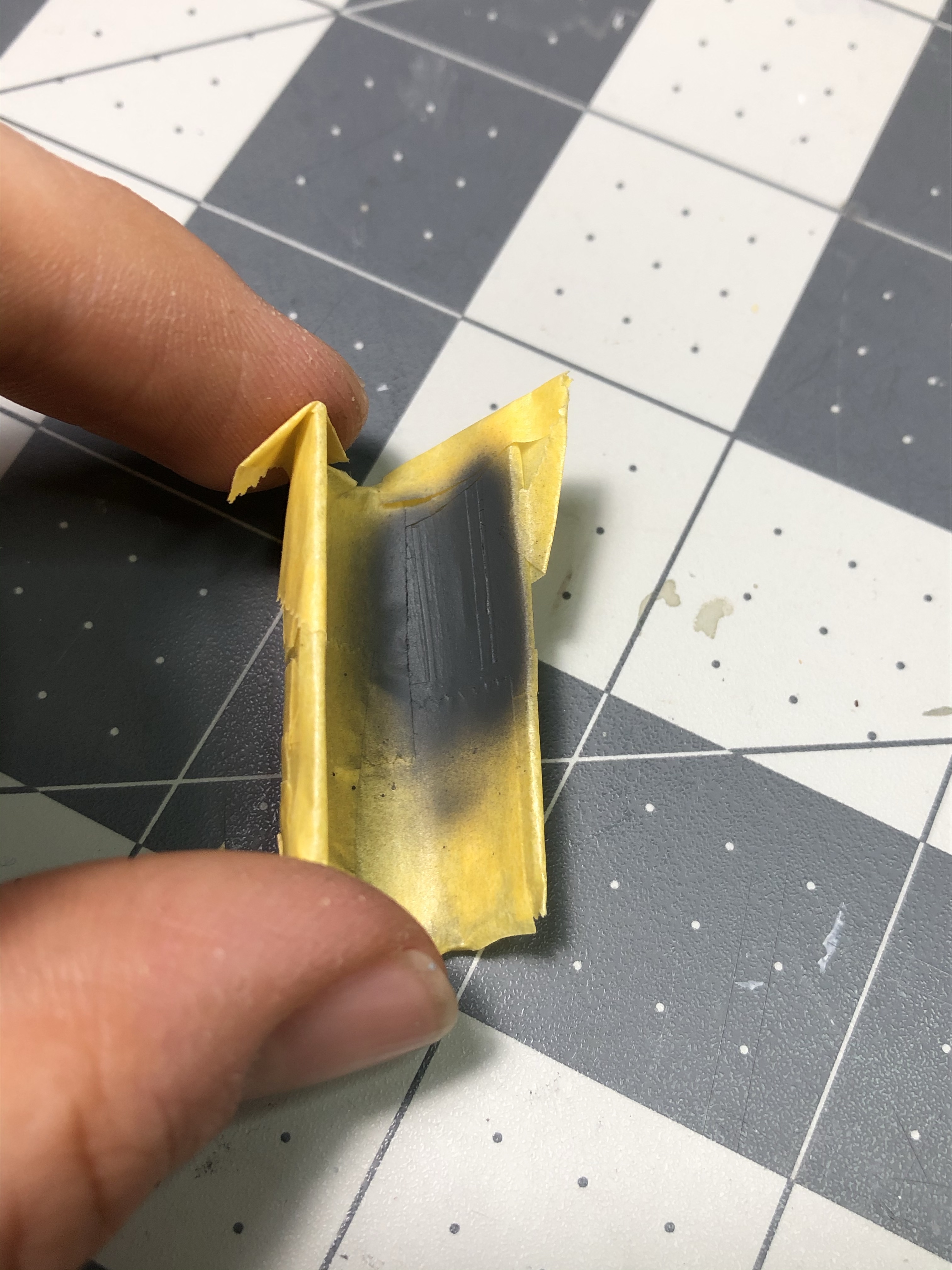
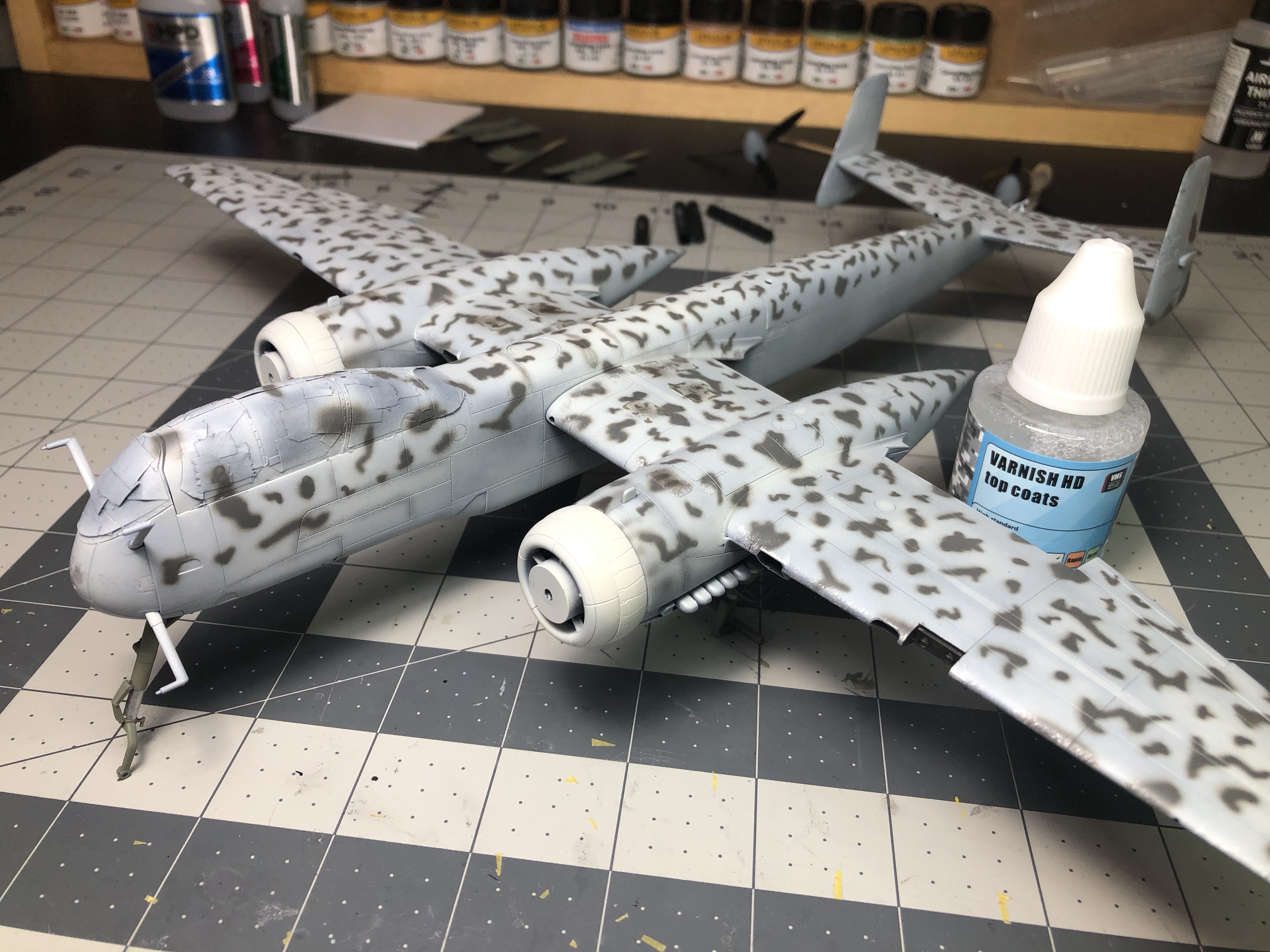
For painting the spots I used Vallejo model RLM 75 Grey Violet thinned with acrylic thinner and flow improver. The painting process really changed during the process and I frequently changed ratios to find the best solution for fine detail painting. I used my Sotar 20/20 airbrush and while in some cases It sprayed really well, I was finding that it was really inconsistent in how it sprayed. Lots of clogging, tip dry and spidering on the surface. It’s probably just me not used to the extremely fine nozzle and needle than what I’m used to (Badger 150).

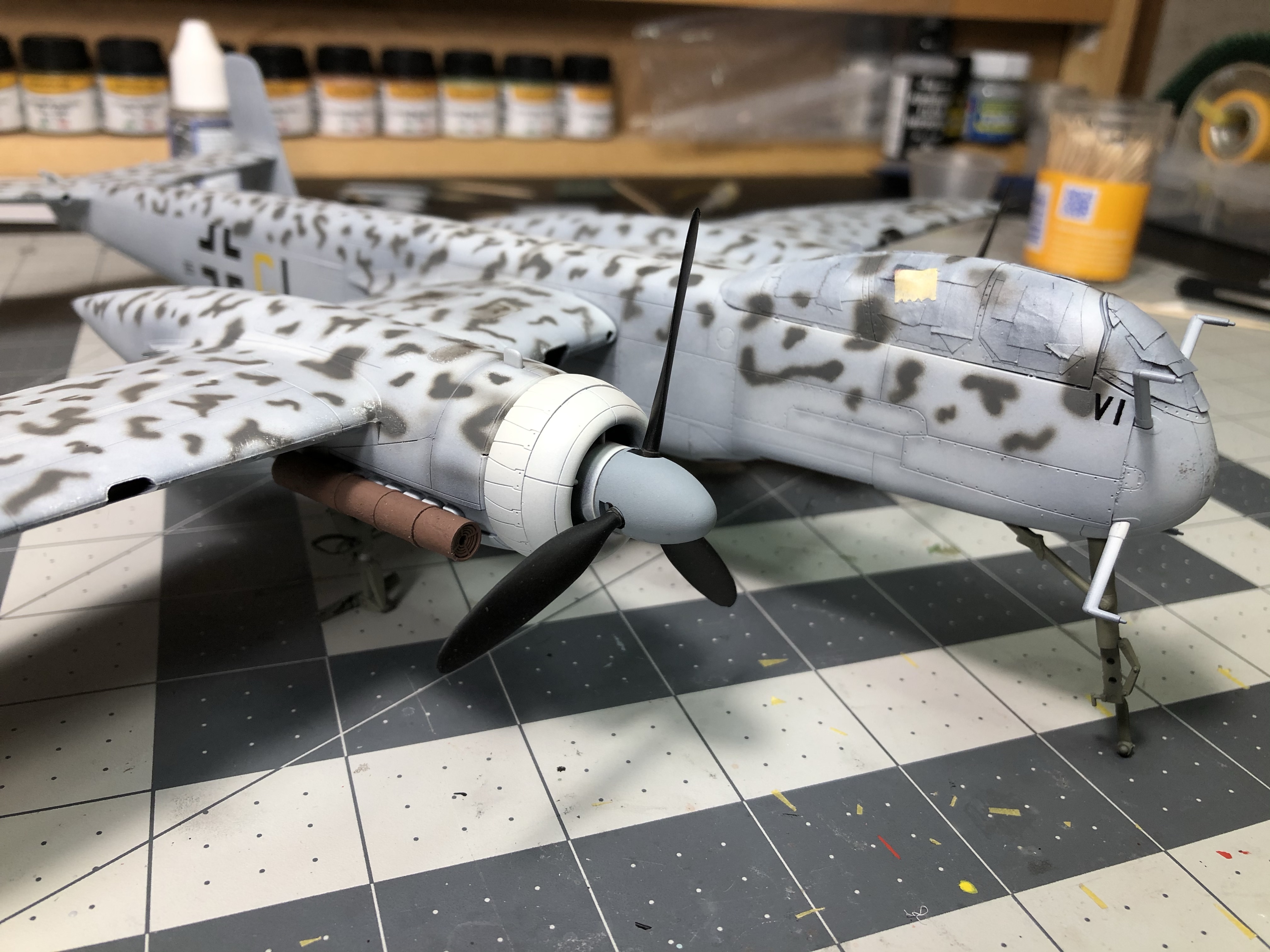
After finishing the initial camouflage coat I also did some initial weathering on the leading edges and select panels. I really wanted to portray a heavily weathered aircraft at the end of the war.

For sealing I tried out VMS’s varnish coats which sealed the paint excellently. Instead of going for a typical gloss goat I just used a satin which was definitely smooth enough for decals. I definitely want to do more product reviews so I think I’ll post a more detailed review of VMS products in the future, possibly one for Lifecolor paints as well.
Decals were pretty straightforward despite being over 20 years old at this point. With the assistance of VMS decal setting solution I was pleasantly surprised how well then went down, really great stuff!

Anyway that’s it for now at least, next up is weathering!

Categories
1:48 Aircraft

Tamiya He-219 “Uhu” (Part 3)

I’ve been getting a lot more work done on the Uhu as of late. Since my last update I’ve managed to get the final base coat down and get it ready for the first pass of camouflage spots. I’ve accepted the fact that I’ll miss my goal of completing the build in a single month, seeing as I’ll have to finish it sometime in the next four days. To pick up where we left off I masked the canopy off before spraying the first coat of primer down.

I really wanted to go the extra mile so I painted the railing for the cockpit window in the inside of the canopy. We’ll have to see how it looks in the end.

Painting

For primer I used Mr. Finishing Surfacer 1500 Black thinned with Mr. Levelling thinner. I was pretty happy with the results to be honest and I’ll definitely be using this combination in the future for primer. It goes on super smooth and adheres really well to the surface.

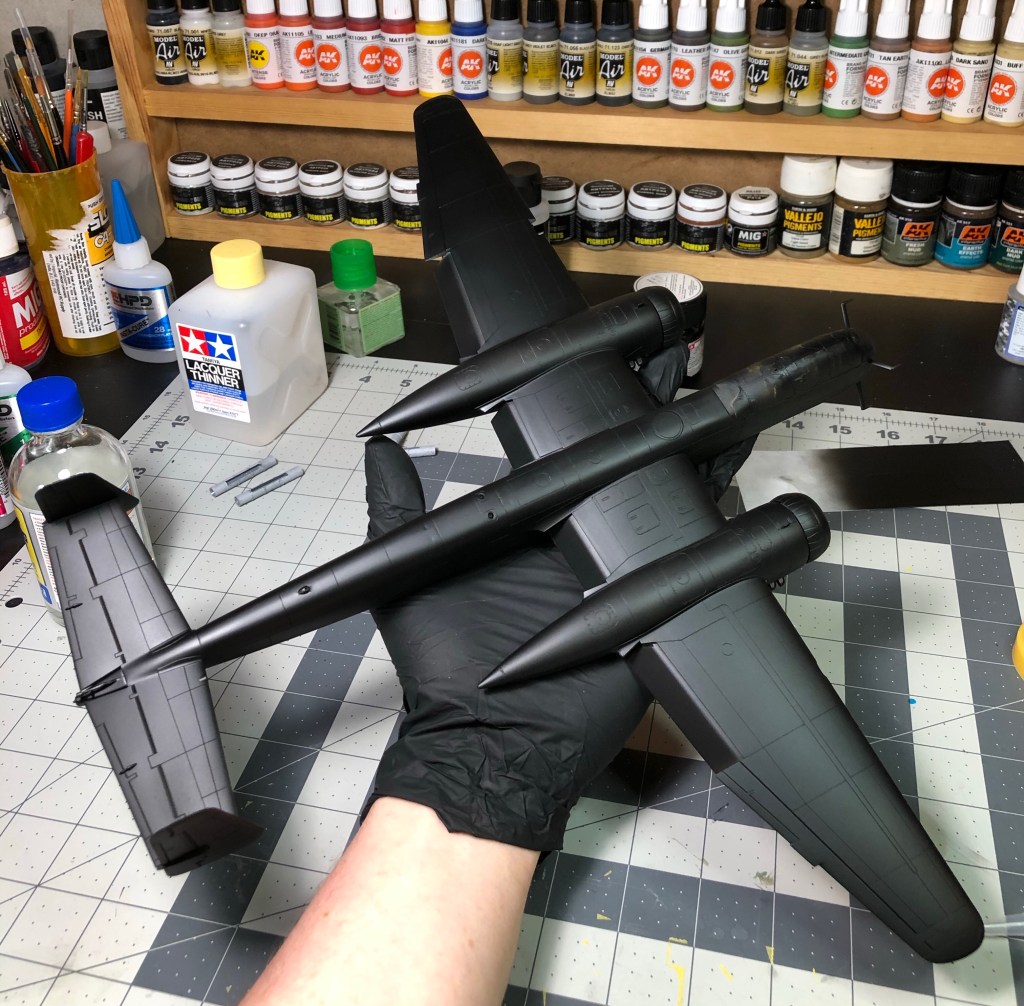
For the painting and weathering I really wanted to get a worn, weathered look in the aircraft. To start, I used the black basing technique. Paired with the very light base coat I felt this approach would be best. I used a Badger Sotair airbrush to achieve the fine squiggly lines for this technique.

First pass, picking up highlights.

I slowly built up the paint opacity with further coats until I felt it was at a good point. Some details I wanted to highlight was the wing spar strut and the panel lines around the cockpit.

I made the final pass blending the various highlights together and overall I’m pretty happy with how it turned out. I definitely still need some practice but it’s a step in the right direction.

The final result
Categories
1:35 Armor In Box Reviews

RFM Panzer III Ausf. J In Box Review

Want to see my build of this kit? Click here: https://nomadmodels.wordpress.com/2023/10/03/rfm-pz-iii-ausf-j/

One of my first ever “mainstream” kits I’ve built was Tamiya’s Panzer III Ausf. L. Ever since then, I’ve been a huge sucker for the tank. In my opinion the Panzer III was the most over looked tank of the second world war and as such, it’s got a soft spot in my heart. Funnily enough, I didn’t intend to pick this kit up. I originally wanted to give Tamiya’s new Marder III a go, however it wasn’t in stock at my LHS. Bought for $70 CAD, This kit is a little steep price wise for what you’re getting. The Pz. III isn’t a huge tank and I was pretty surprised by how few sprues there were in the box. Anyway, let’s get into it, here’s my inbox review for Rye Field Model’s Panzer III Ausf. J.

Kit Features: 16/20

The kit certainly isn’t lacking for specialty features. It includes individual length tracks, a generous amount of photo etch, and a few other goodies. One thing I was particularly happy to see was the ability to open and close lots of different hatches. RFM also gives the builder the option of a workable suspension if they desire, a increasingly common addition to kits these days. The “Figures” included in the kit are interesting to say the least, essentially just geometric shapes, they are only useful as a nice novelty and not something most builders would want to include in their build. The figures are a bit of a catch-22, odds are if you’re the kind of builder who stages figures in your model, you do it because you want some additional realism/life into the scene. The problem is that they are inherently unrealistic and don’t fit well in the build. If anything you can use them as painting dummies in the future to practice your figure painting skills. Besides that though, the kit really provides you with some nice accessories to play with. Of particular note are the tracks, which, don’t have any injector pin marks and will require little cleanup.

Quality of Molding: 45/50

The molding of the kit is definitely the best part of this build, the details are crisp and it’s obvious RFM put a lot of effort into this area. Small details are well defined and clearly visible. Of particular note are the weld seams molded into the plastic. In my opinion these are some of the best injection molded seams found today. Another specific area of note is the detail found in the running gear. The “Continental” branding on the tire can clearly be made out, furthermore, patches of weld beads can be seen on the inside of the wheels. With typical kits, the bottom of the tank will often consist of a “tub” that the suspension can be attached to before closing the top. In this kit however RFM has opted to split up this construction method, allowing for greater detail in individual pieces. Seeing as this is a 2020 release, this kind of detail is expected and the kit absolutely delivers. Points are only lost due to the absence of any texture in the molding.

Instructions: 19/20

I was pretty happy with the instructions upon my first impression. Printed on a large booklet they feature 3d colour CAD illustrations of various build processes to aid with part placement. The instructions also indicate where on parts glue should be applied, this is particularly helpful with the track construction. The only issue I think may be a problem is that they seem quite busy. They may be hard to follow for some builders.

Miscellaneous: 8/10

The kit gives the modeller a pretty wide selection of markings to choose from, all of which fit pretty neatly on a small sheet of decals. While these specific options aren’t my cup of tea, I have to say RFM did a good job providing options. The only issue I have with the markings is that they don’t indicate unit or location on the color plates. For $70 this is a pretty healthy kit feature wise.

Total: 88/100

There’s no other way to say it, this is a really capable kit at a reasonable price. This kit is leaps and bounds better than the other J variants on the market. I have no doubt it’ll build up to be a good looking Panzer III. It comes with a good helping of accessories and is loaded with detail. Definitely try to pick this one up.

Categories
Aircraft

Tamiya He-219 “Uhu” (Part 2)

In stark contrast with the Mosquito, steady progress has been made on the Uhu. I’m committing myself to the build and have managed to put in at least some time into it every night this past week. Not all of the process has been fun unfortunately. For all the praise that Tamiya gets about the quality of their newer kits, the same quality is hard to find in this one. The engine nacelles were particularly problematic seeing as there are 5-6 different parts that need to be positioned exactly right to ensure proper fit of the others. Unfortunately for my build, the wings came ever so slightly warped meaning that after being completed there was a rather large gap in the engine nacelle.

This was fun to sand down and re-scribe.

The main fuselage was definitely better fit wise but when it came to join the halves together I found a very slight gap near the nose. It’s very faint and only slightly noticeable. Non the less, I applied some Mr. Surfacer for the main body seam and sanded it down over the next couple days. it wasn’t nearly as difficult to get to as the engine gap but just tedious work instead.

Panel lines had to be re-scribed after this filler was sanded away.

For the main fuselage cannons I drilled out the barrels pretty easily, it adds a lot to them I found and was a pretty easy process. I’m actually not sure what kind of process was intended for these since they’re fitted pointing upwards in the main body of the aircraft. whatever the reason, they look a lot better now than how they did straight out the box.

I also wanted to add some detail around the flame hiders provided by the kit. Out of the box, they are pretty standard, nothing special. I instead wanted to change things up and add some texture definition and depth to these parts. To start I trimmed down the locator pin on one end so that they would appear deeper than normal. Secondly I drilled a hole in the intake side to again, add depth to the part. Next I took a page out of Nightshift’s book and did some texturing on the part itself. I figured that the Luftwaffe wouldn’t have used any exceptionally durable metal for this piece (especially this late in the war) and as such it would have rusted and worn easily. For the finished product I’ll be going for a rusted finish on this piece to really spice up the final model.

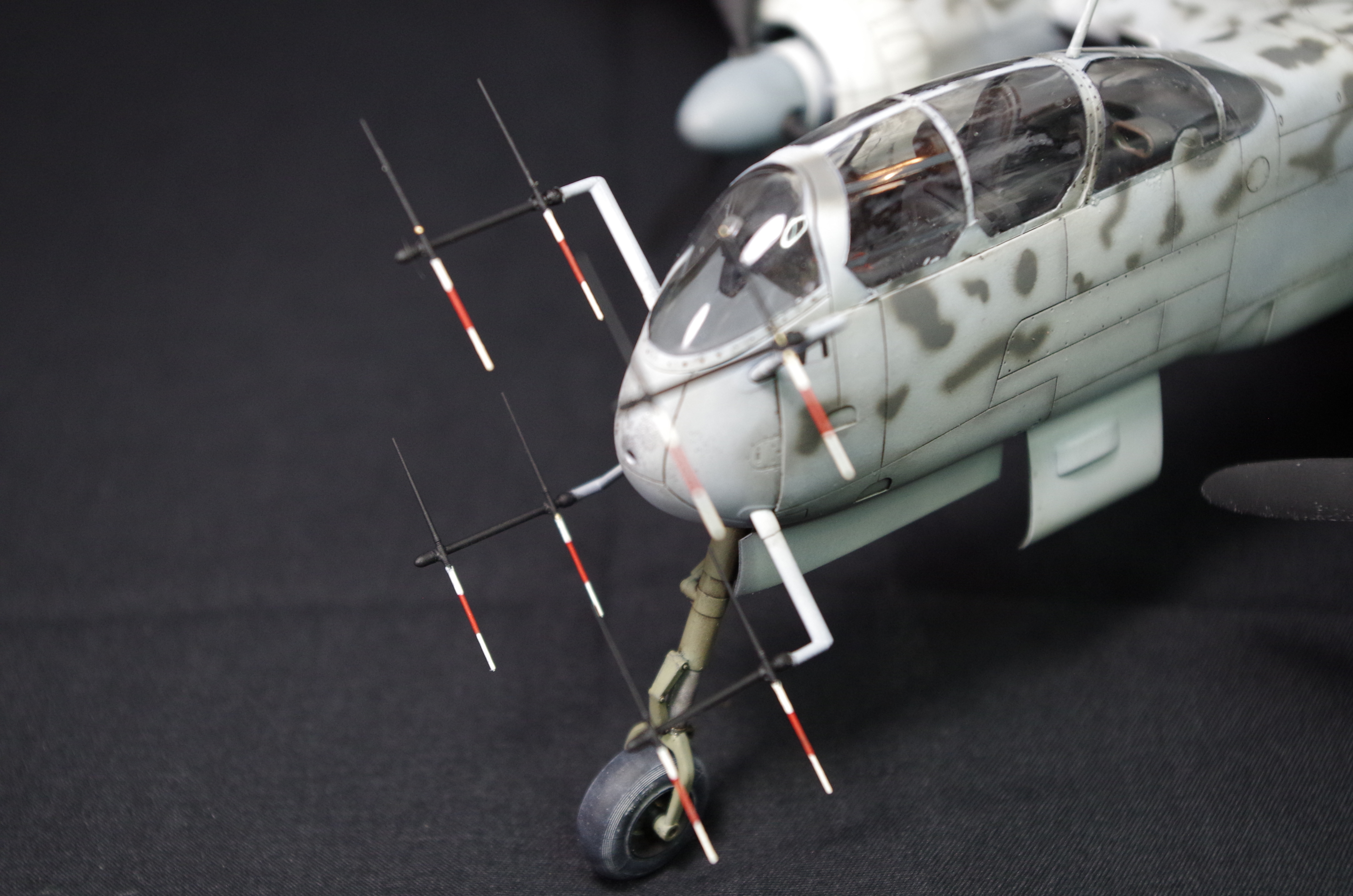
In terms of additional accessories planned for the build, I originally had only planned to use Master Model’s brass Fug 220 radar set. When comparing the out of the box radar and the brass part, there’s really no comparison. The Master part really looks fantastic. It’s only drawback is how fiddly it’ll be to assemble. I’m already not looking forward to it. One thing to note, Although the Fug 220 was mounted on the He-219 and it being on this model is absolutely correct, Master doesn’t list the He-219 as a aircraft compatible with the set. Keep this in mind when searing for aftermarket accessories for your own He-219. I also picked up Eduard’s resin wheels for the build. Originally I didn’t plan on it but just saw that they were in stock when I was getting the radar set. I’m really glad I did, the OOB gear is really pathetic and Eduard’s edition is really next level stuff. I can’t wait to see them on the finished model.

In terms of updates that’s pretty much it for now, the wings will be joined on soon. The gear, props and canopy all have to be started so I’ll be getting to those next. In all likely hood I’ll probably mask up the canopy next and try to get a primer coat down first before moving onto the gear. I’m confident that I’ll get it done within a month but I’m still not sure how long the painting and weathering process is going to take, It’s a big model and I’ve got big plans as to the type of finish I’m going for.

Fangs Out.
Categories
Aircraft

Tamiya He-219 “Uhu” (Part 1)

Next on the Bench was Tamiya’s late war German night fighter the He-219 “Uhu” or “Owl”. Construction started with the cockpit of course and Tamiya was nice enough to supply a metal “tub” for all the major cockpit components, this should be pretty helpful to keep the nose down. After putting a couple of nights at the bench in I have to say, I’m already quite disappointed with the kit. Not the typical Tamiya fit as it seems as I had some issues joining the wings together.

I am however quite happy with the level of detail so far, especially on the radio operator’s station! really looking forward to detailing the cockpit up. I’ve also opted to get a aftermarket Fug 220 radar set which, after applied on the nose of the aircraft, will really stand out. I also picked up a set of resin wheels from Eduard. I’ll be posting comparison pictures a little later on in the build.

For the priming I’m trying out Mr. Finishing Surfacer 1500 Black. I found the Vallejo Black primer I used on the Mossie peeled way, way too easily. I found while using the new primer I was still getting a overly rough surface texture even after thinning with leveling thinner. I think I’ll have to look more into what I might be doing wrong airbrushing wise. I suspect the paint is drying before reaching the model, but more investigation is needed.

That’s all for now, For this build I really want to get consistent bench time in. I’m aiming to have it all completed within a Month!

follow the build page on Scalemates.com! https://www.scalemates.com/profiles/mate.php?id=93444&p=projects&project=95754