Categories
1:48 Aircraft Projects

Bf-109 G-6: Painting

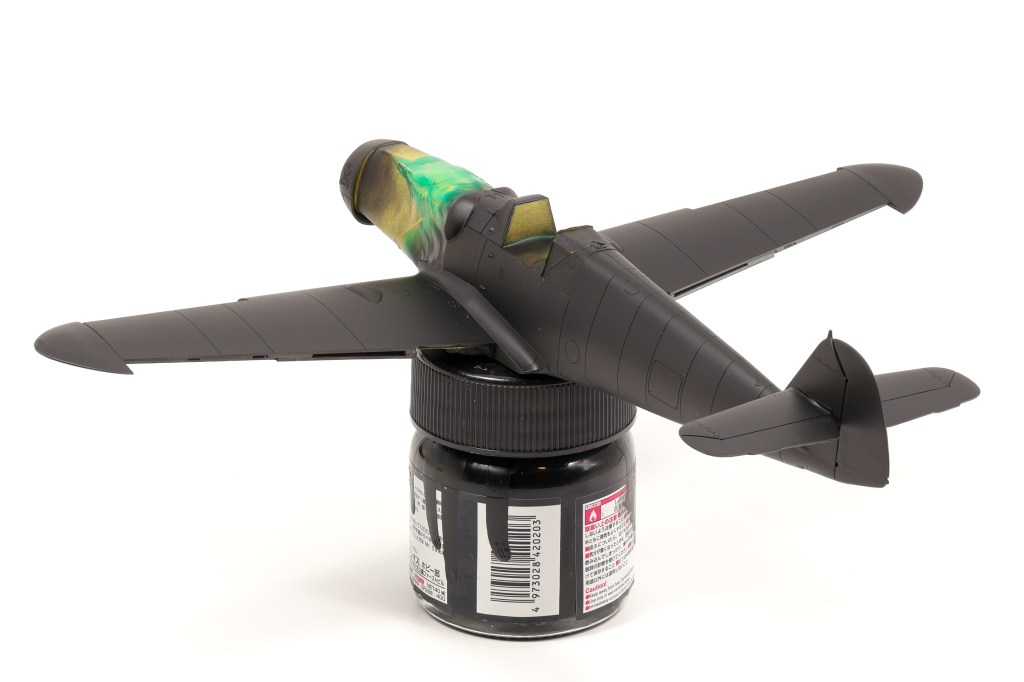
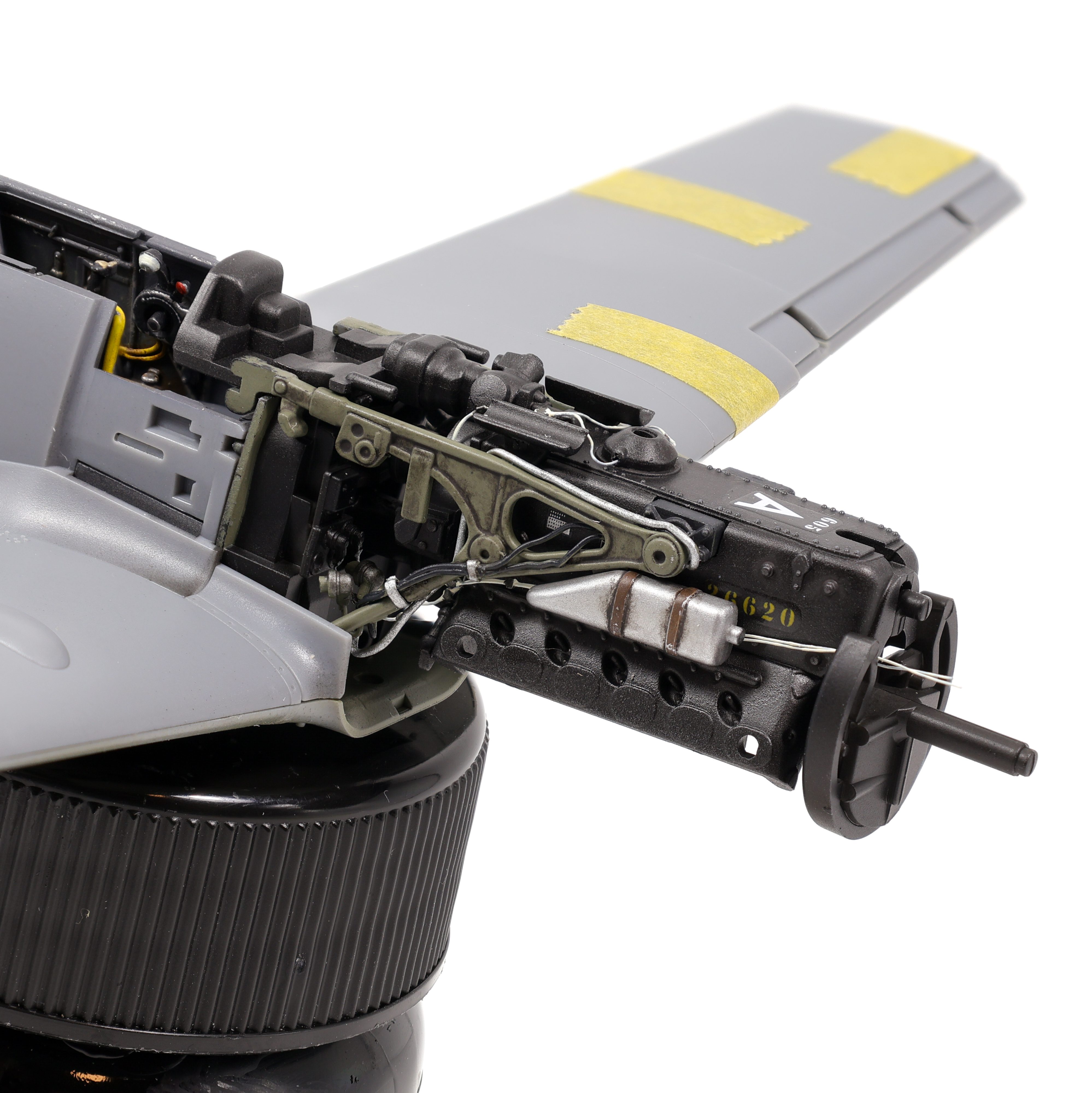
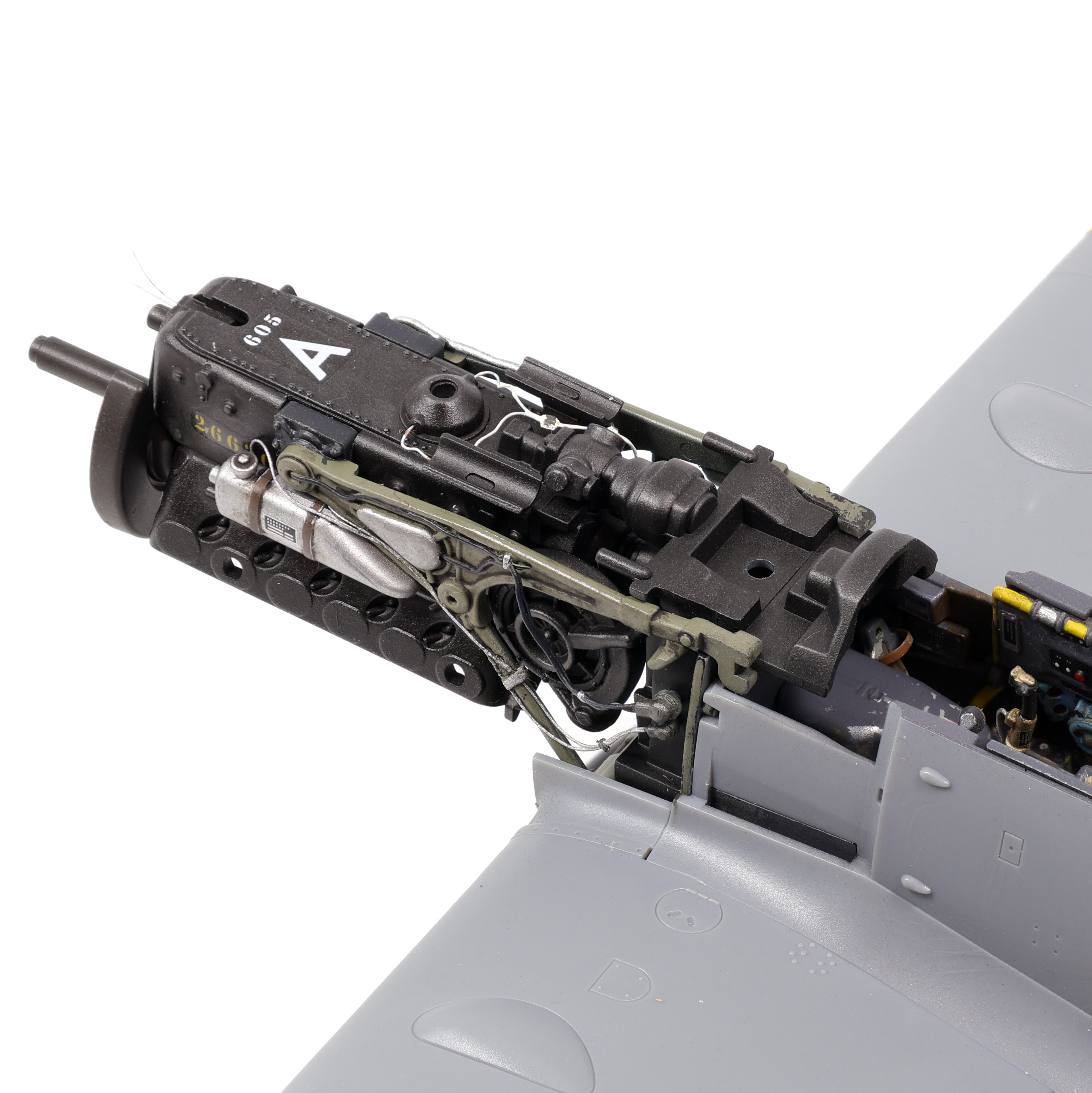
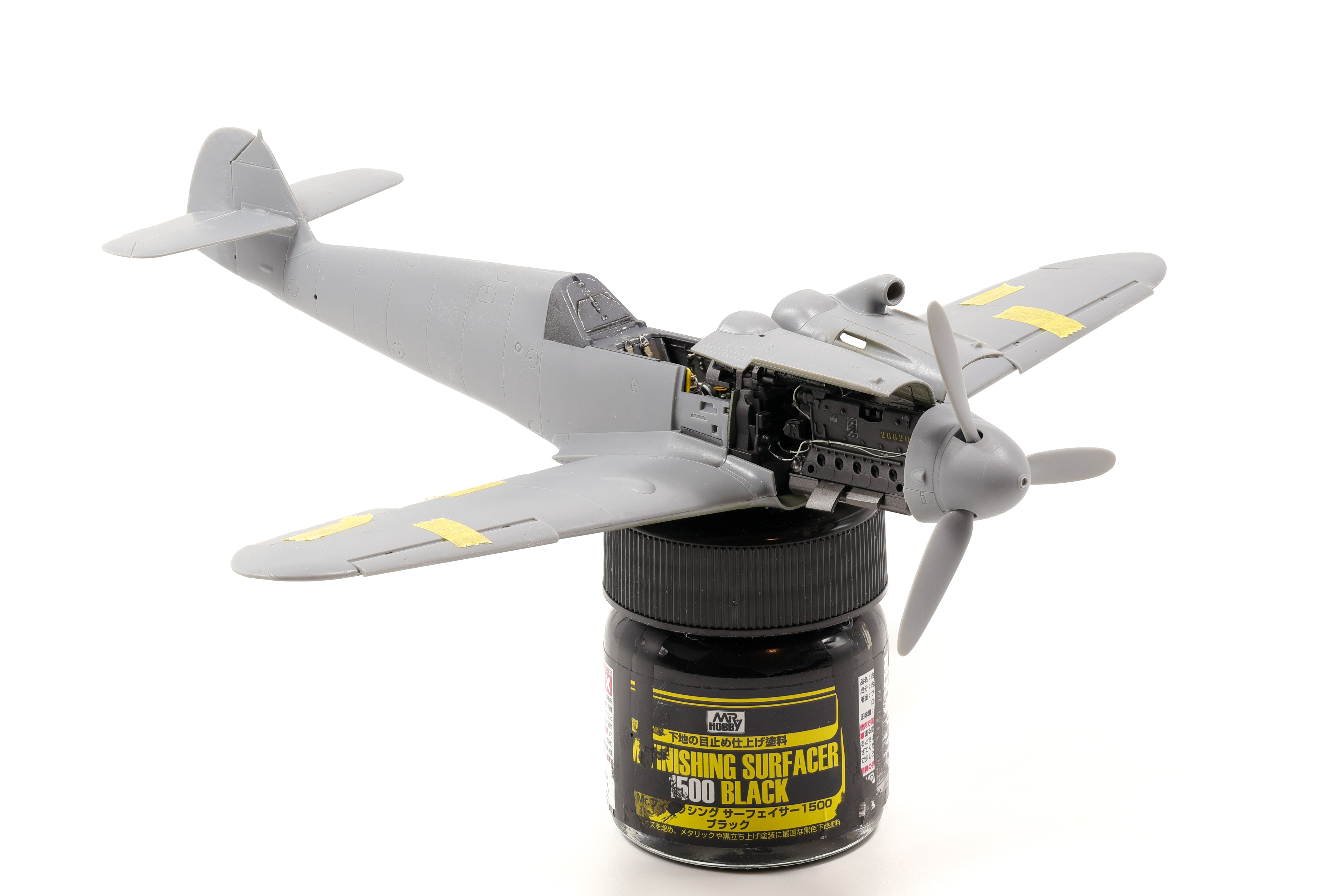
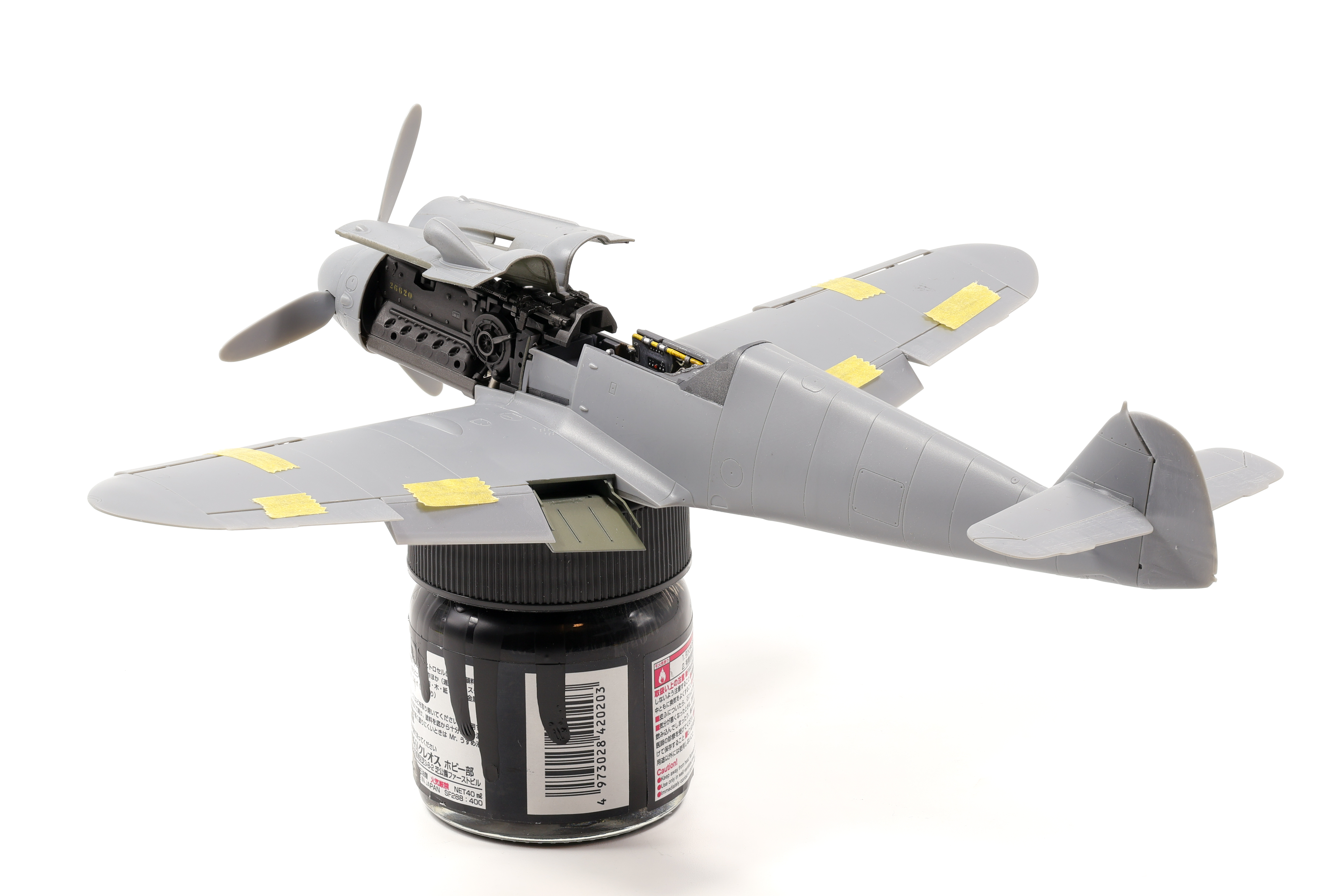
With the completion of the construction phase of the Bf-109 I could move on the priming and painting of the model. Since I was adding HGW rivets for the the first time my normal process was somewhat interrupted and I was thrown a bit for a loop. For those unaware HGW makes various sets of positive rivet decals that can depict tiny rivets on an aircraft. My main question was when was the best point to apply them to the model?

After researching online and asking around it seemed the best course of action was to apply them directly over primer but underneath any metallic colours used for chipping.

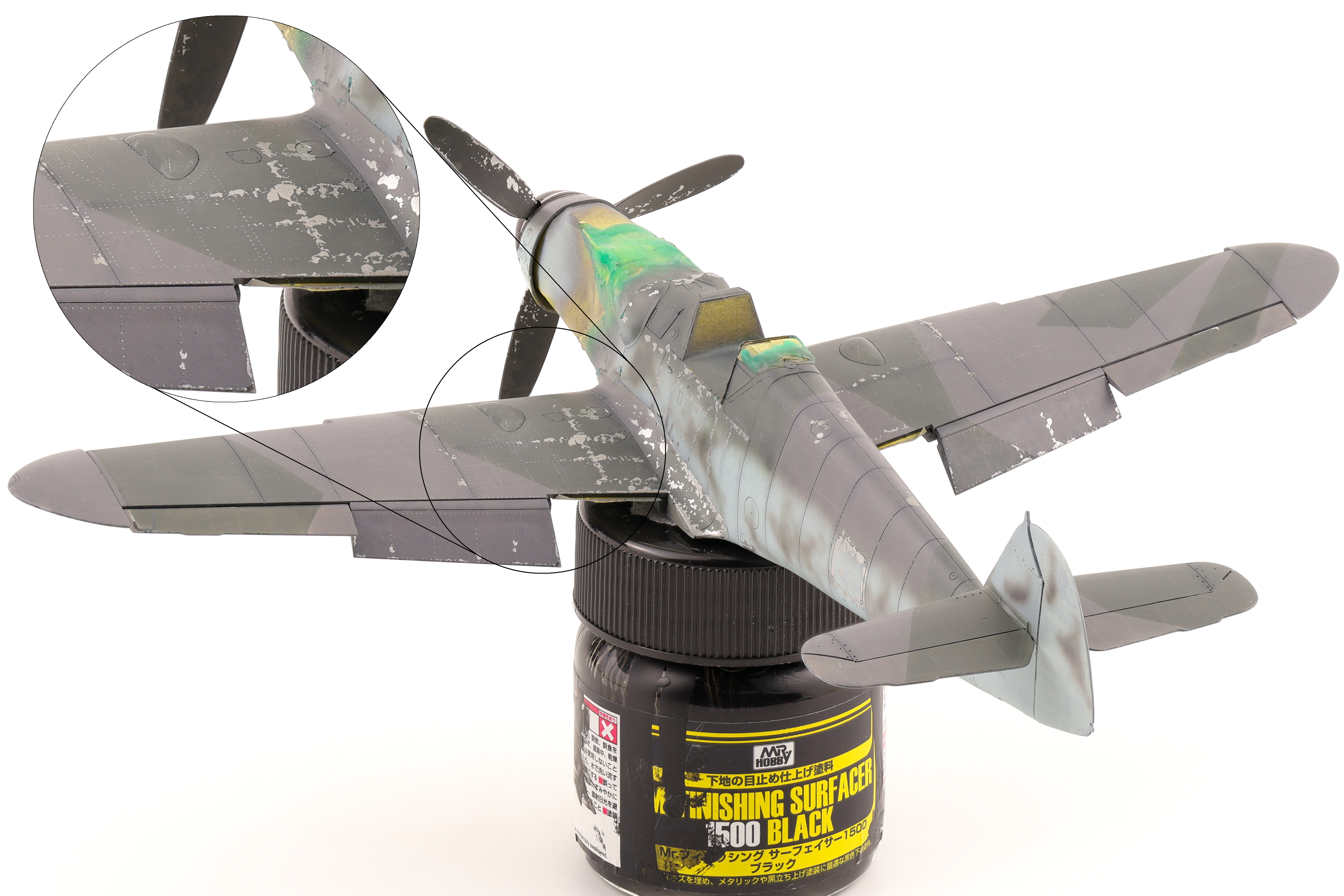
I used my go to primer, Mr. Colour 1500 black which laid down a very smooth base for future paint. This primer was also chosen because it would do well to resist the decal setting solution that I would use in the next step.

After allowing the primer to cure fully, I then spent the next several days applying the rivets to the model. Even though they come in large sections that make it easy to cover large areas of the model it’s undeniable that these are time intensive. To start, they don’t have individual carrier film and you’ll have to trim the sheet that you dip into the water in order to limit how much overhang you have to deal with.

This ended up biting me several times as I’m used to having carrier film limited to the area with the decal. It wasn’t until I had removed the decal from the water that I realized that I had a massive area of useless carrier film to work around. This can be a problem in that you can’t really apply the decals that are right next to each other due to the fact that the film overhang gets in the way of the other decal.

All in all though these are pretty minor issues and besides the time commitment I found that they went on pretty nicely with the manufacturer recommended Mr. Mark Softer setting solution. Removing the carrier film was a breeze as well. The rivets had very minimal lifting and the film was very easy to remove. A few dabs with a damp paper towel was enough to remove the adhesive residue left over as well. All in all I think they look pretty sharp!

After the rivets were applied, I then painted a metallic chipping colour. I picked Mr. Colour Super Metallic “Super Duralumin” as it has a really nice sheen and lays down beautifully.

After applying the metallic chipping coat I then added some small amount of chipping fluid where I knew I wanted paint chips to be present. This was a precautionary measure that would guarantee access to the chipping fluid medium underneath the several layers of paint.

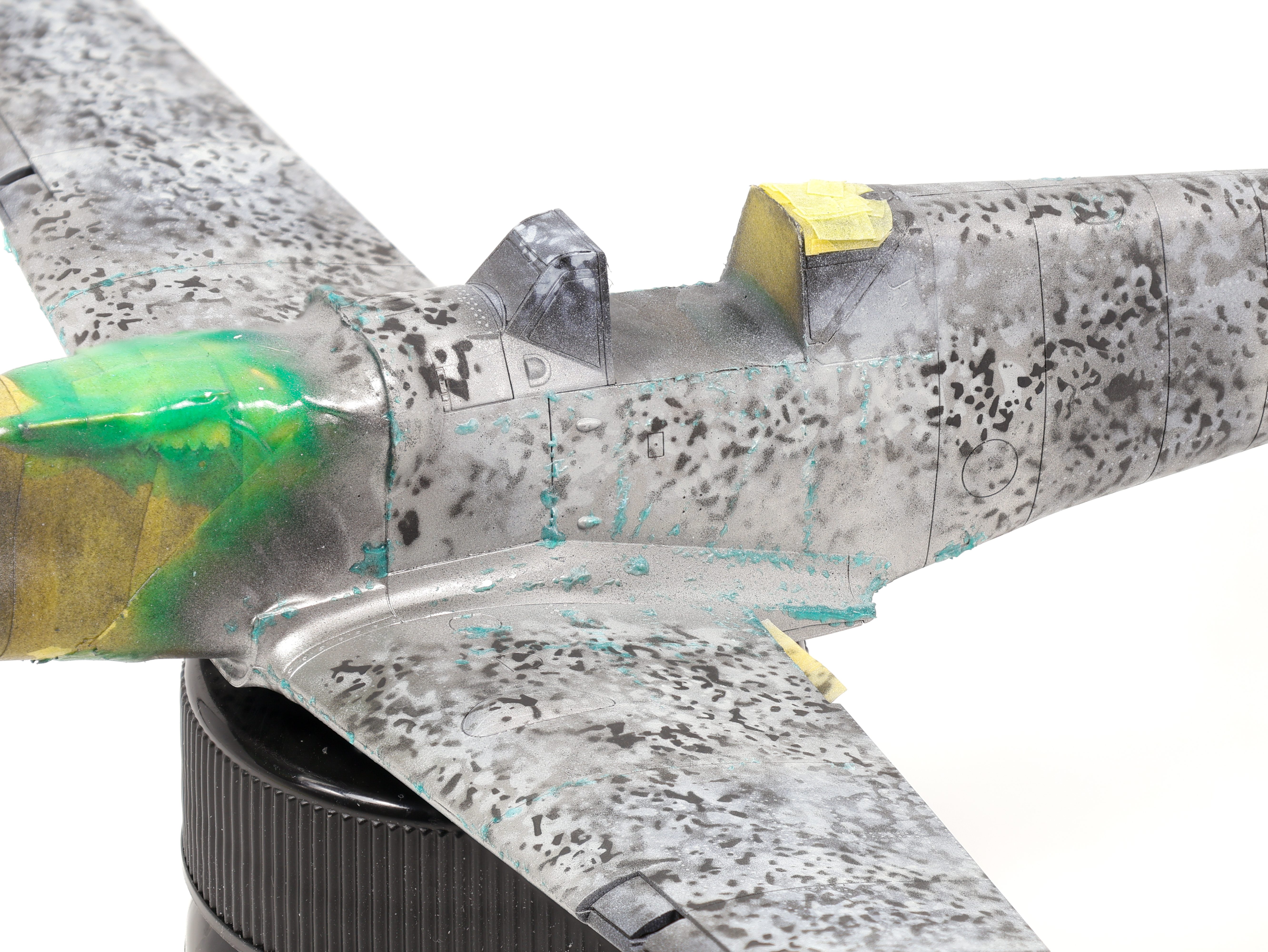
Next, I got on to preshading the model in preparation of the final colours. Between the black primer and the silver metallic the shades of the model were very disjointed and I needed to rectify this. To start, I applied some white and black marbling over the entire model using a metal mask tool. This would start to unify the tones present in the model and avoid the contrast between the metallic surfaces and the black primer.

After the initial round of pre-shading was completed I decided to apply a very thin layer of the final colours onto the model. I did this so I could create a template for the camouflage scheme that I could follow later on with a more careful application of the main colours.

After completing this very thin layer, I decided to do a rough panel line preshade. I opted to go this route because while I liked the variation that the stencil templates provided, I felt that this variation was a bit too uniform and I wanted some more elements to effect the final top coat. I loaded up a very thinned down application of Tamiya rubber black and sprayed it onto the model with a 0.15mm nozzle/needle. Overall I’m fairly satisfied with my application of the panel lining here.

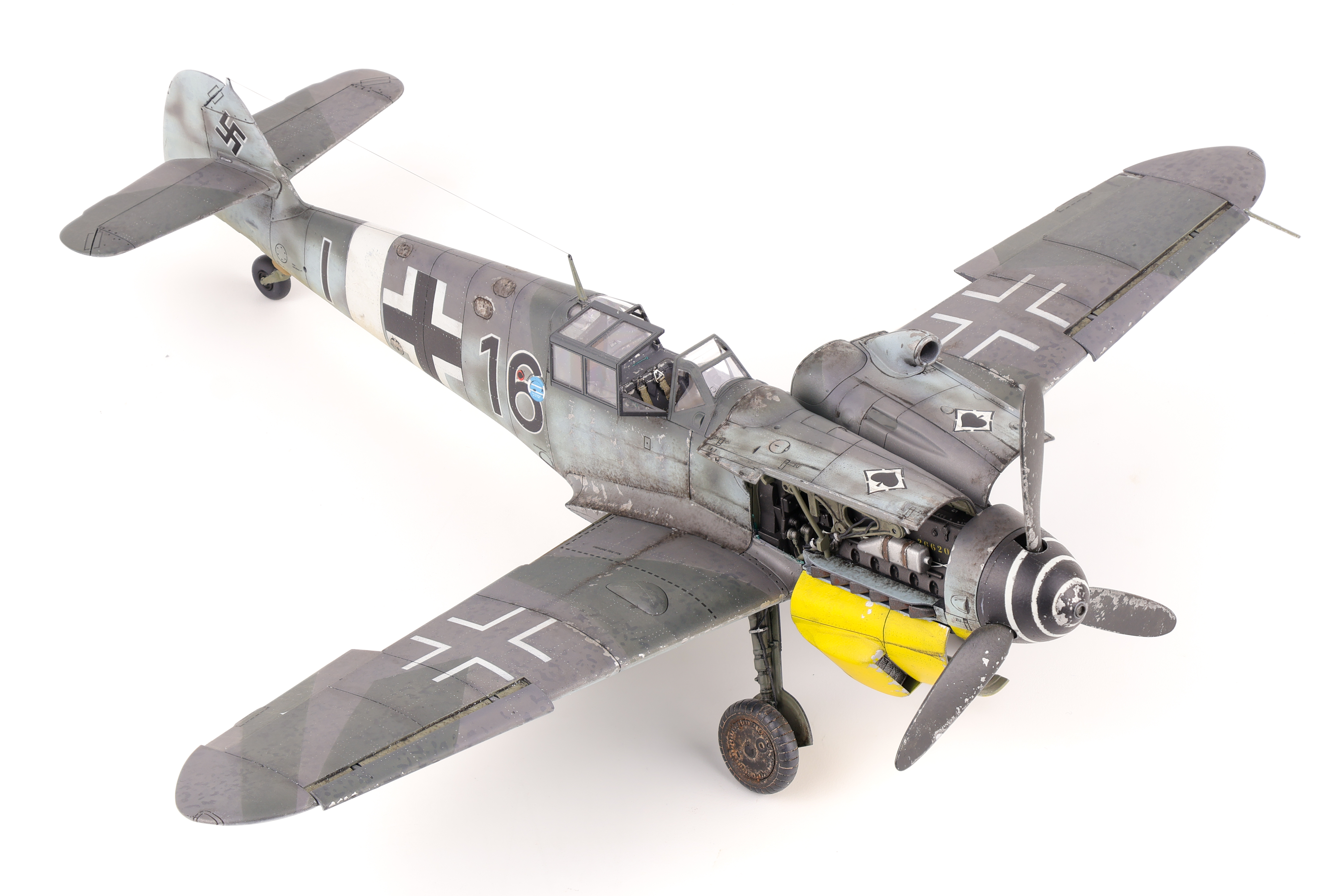
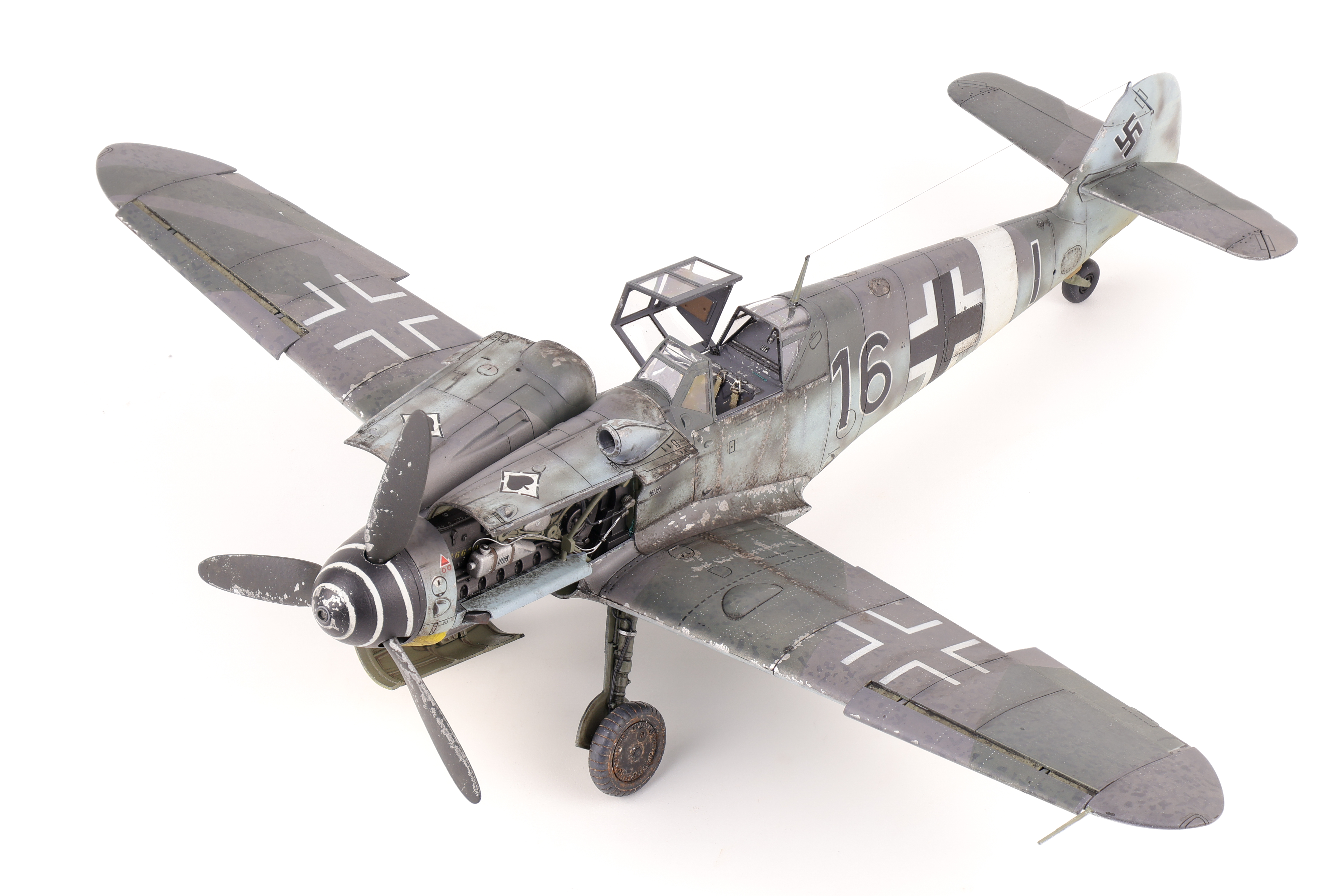
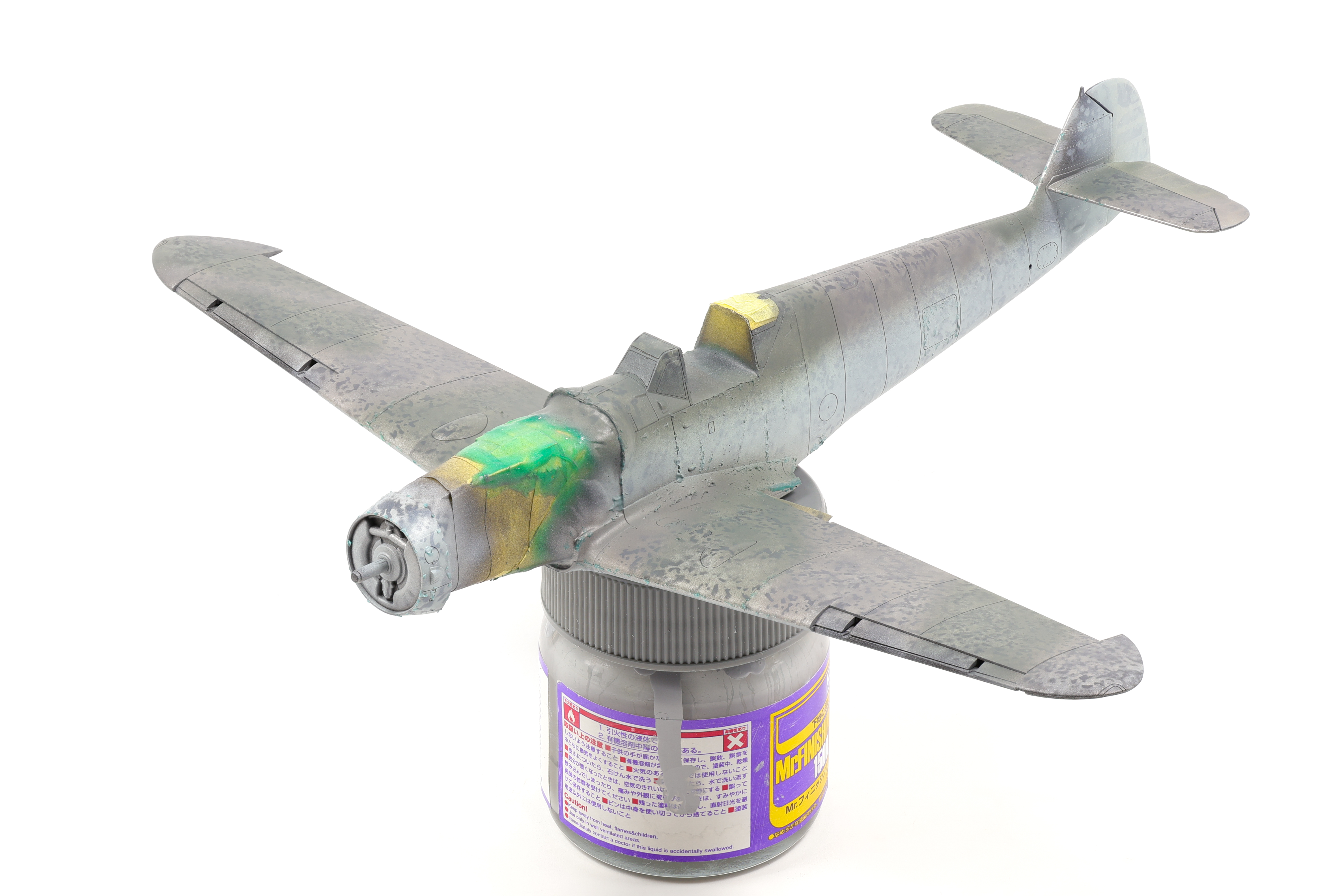
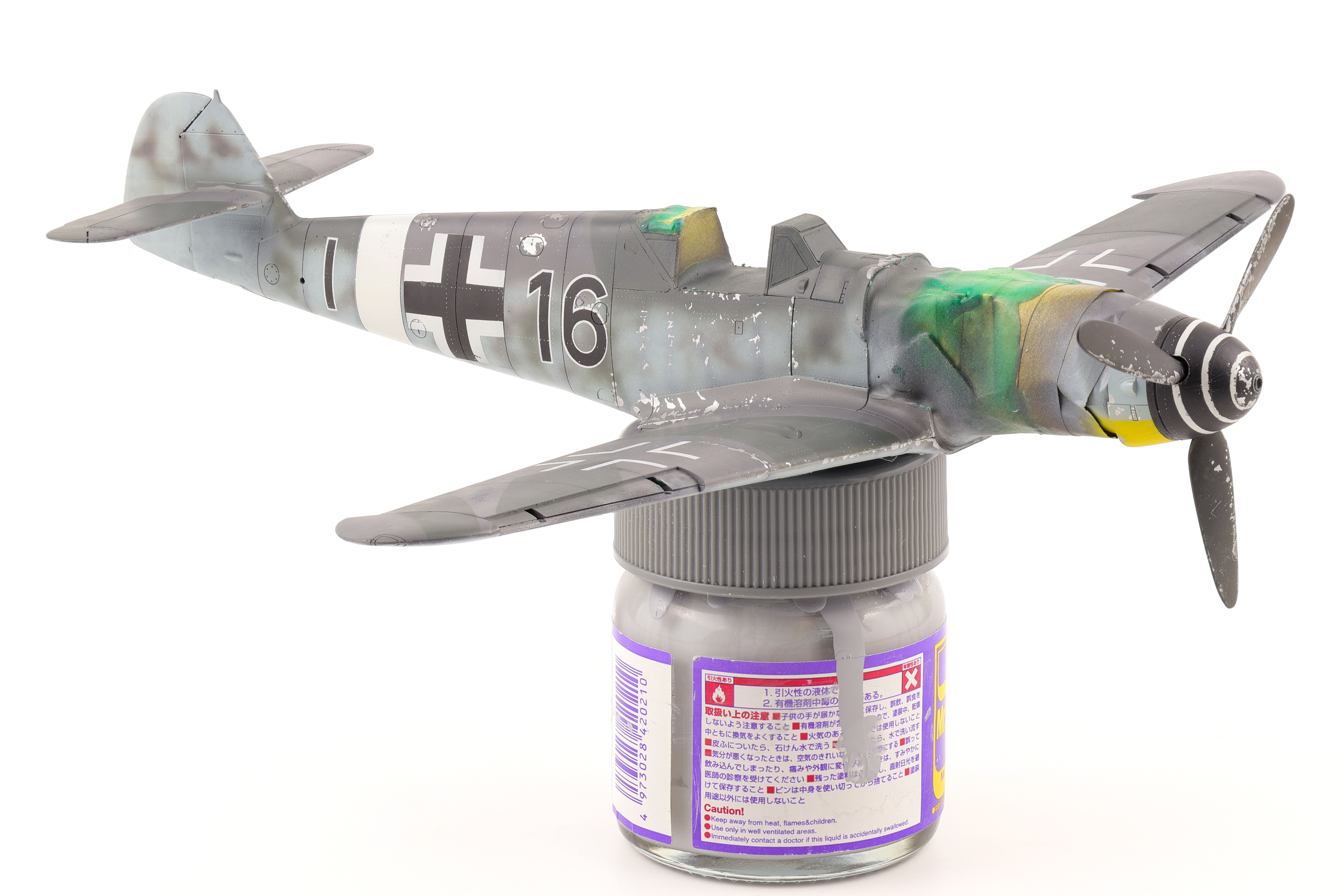
I then needed to apply the final colours to serve as a basis for the iconic mottling seen on the majority of 109’s. To do this, I needed to tape off some areas of the model to get a hard edge transition which would be needed for this specific scheme. This was a lot easier said than done as the model was covered in small dabs of masking solution thus making it had to get a crisp line with the masking tape. I started with the light blue fuselage and under side surfaces as the darker greys would cover easier than the lighter shade. The scheme I selected called for RLM 76 as the fuselage colour, however I only had RLM 65 available to me. To re-create a colour closer to 76, I created a mixture of around 70/30 RLM 65 to white paint. Next up was the RLM 75 Grey Violet colour and I also opted to lighten it with a few drops of white to ensure that it would contrast with RLM 74 Grey Green which is a very similar shade which was applied un lightened onto the model.

In the end I was left with what I felt was a very respectable Bf-109 scheme with enough contrast to be interesting yet accurate to the historical colours used.

What I worked on next was the tricky fuselage mottling. This was a phase of the build I wasn’t particularly looking forward to as it’s difficult to pull off this camouflage element convincingly. It’s also fairly prevalent in German aircraft so there’s no avoiding it.

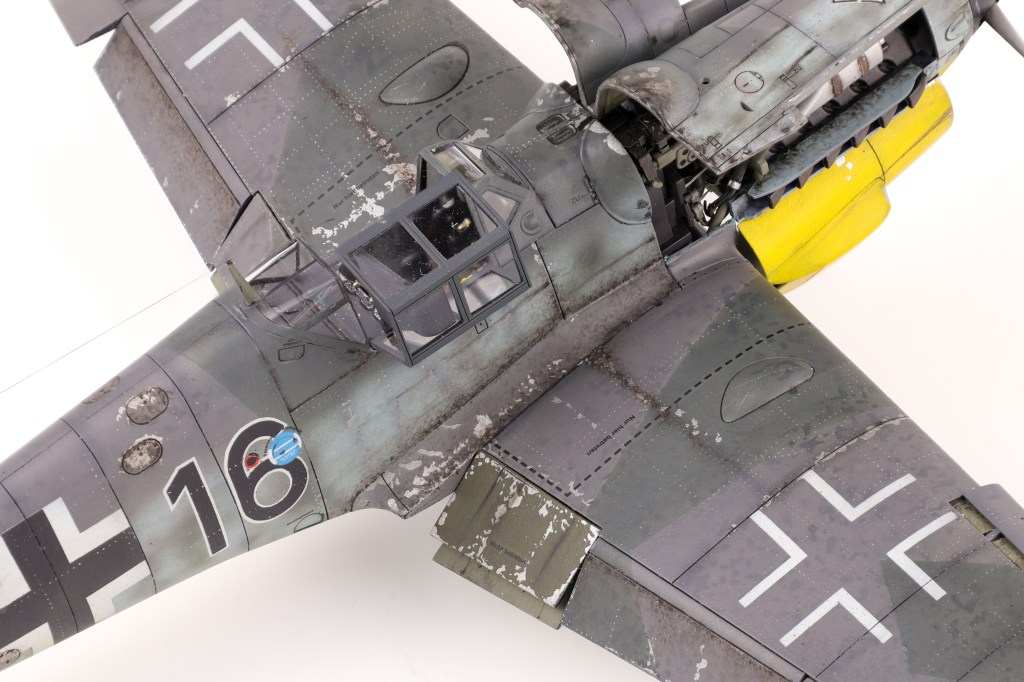
I think my application went fairly well. From the colour profiles and reference photos I noticed that the mottling didn’t touch the upper camouflage paint all that much and it was fairly substantial in some areas.

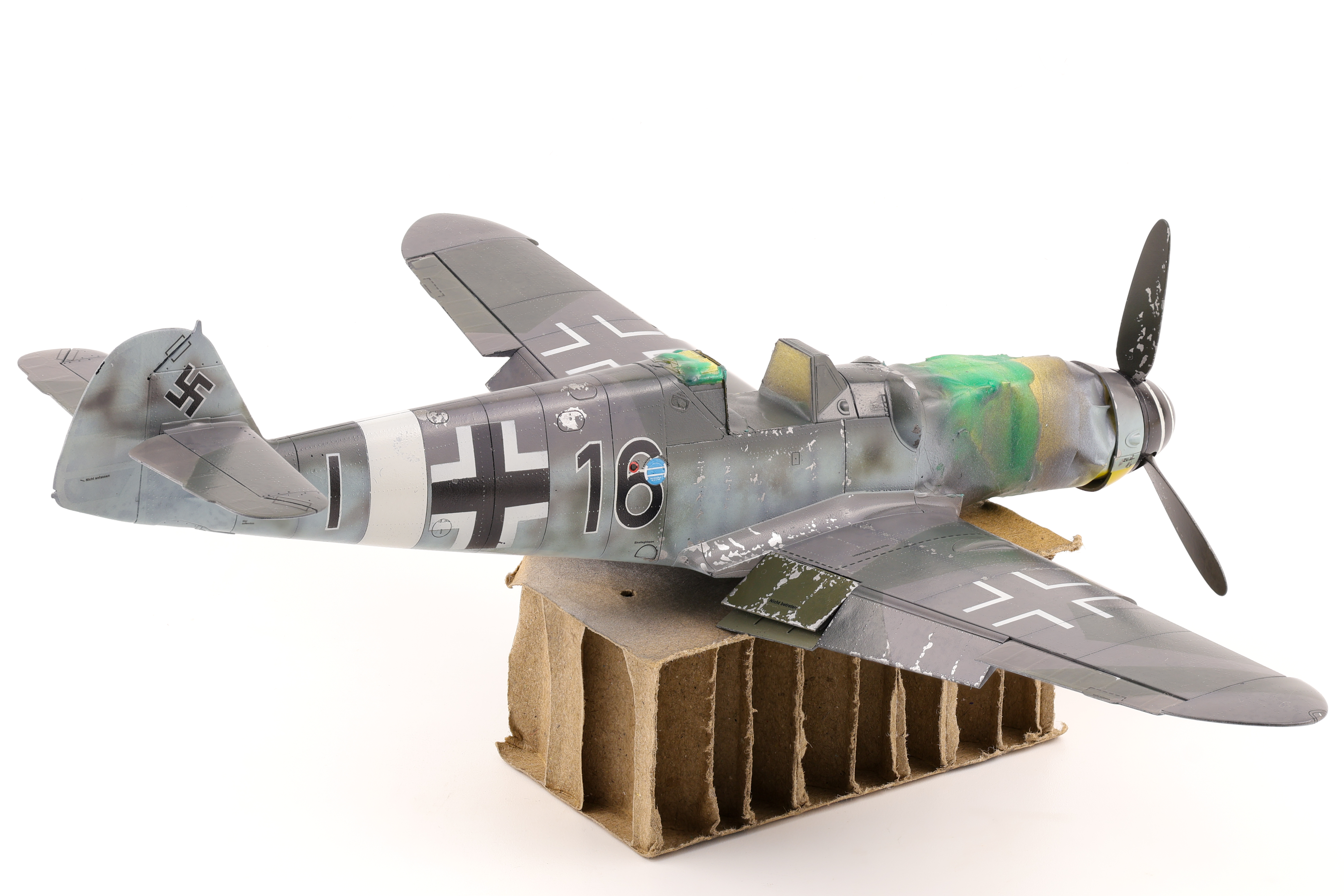
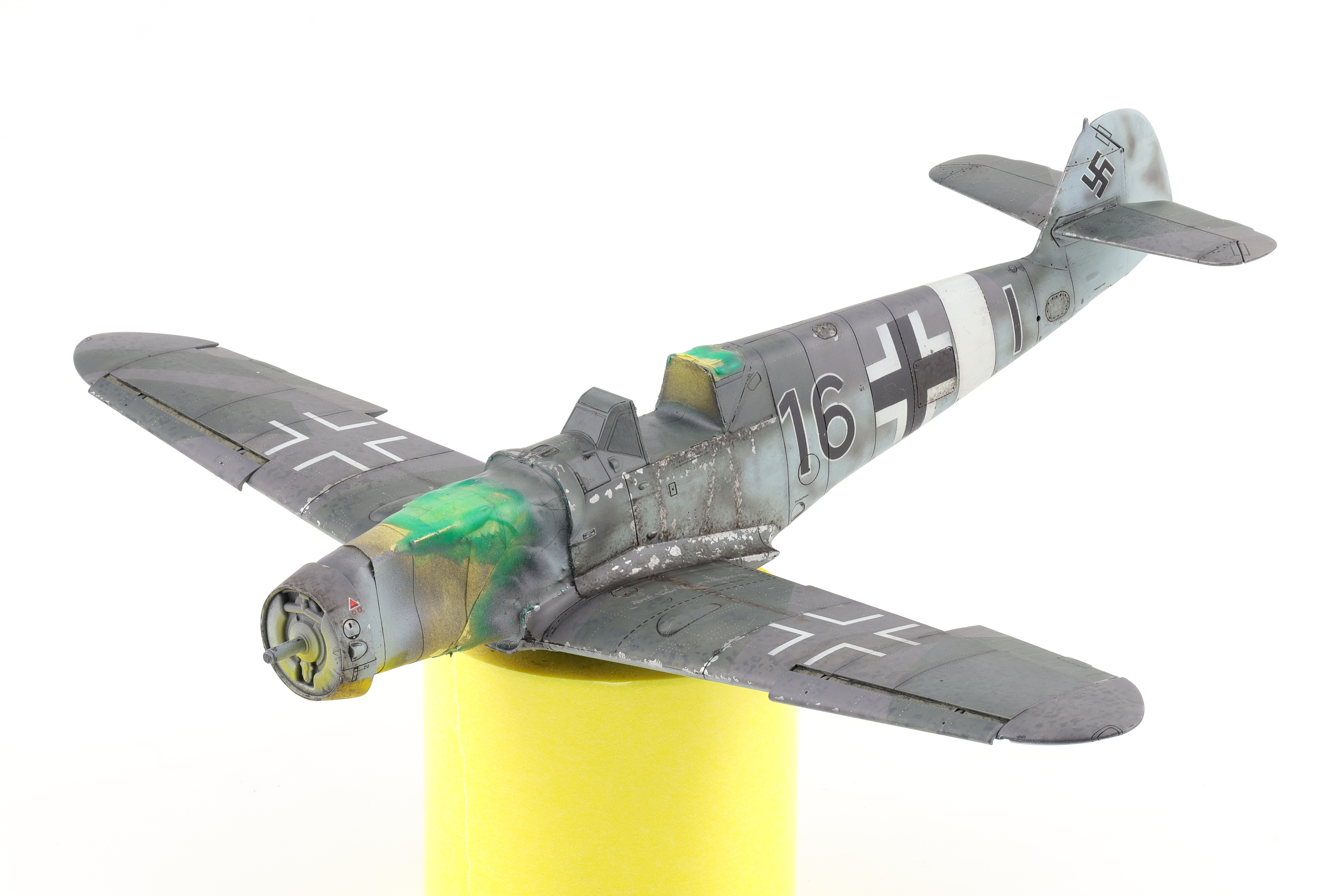
After completing the mottling, I then removed the liquid mask to expose the chipping effects underneath. While it would have made sense to do so after the markings were painted I felt that it would be too difficult to get a solid line with the masks that I planned to use. I can always add chipping effects at later time over top of the painted on markings. I removed the masks for another reason as well, I wanted to expose the HGW rivets and see how they contrasted with the painted surfaces. Do do this I took a 8000 and 12,000 grit sanding pad and sanded the surface of the paint. This removed the paint directly over top of the raised rivets but is high enough in grit that no scratches are left behind. If anything this helps to create a smooth surface in preparation for a gloss coat.

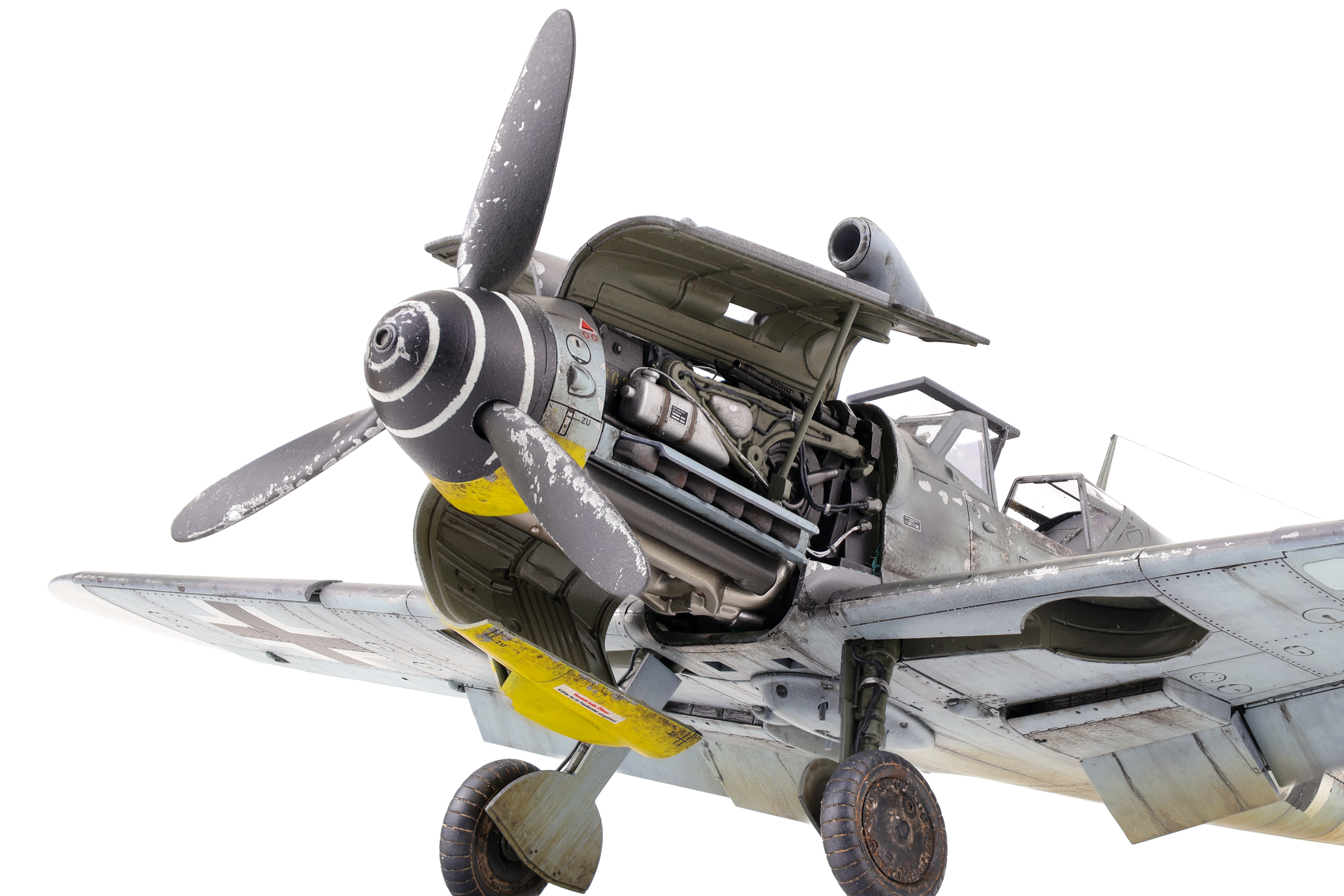
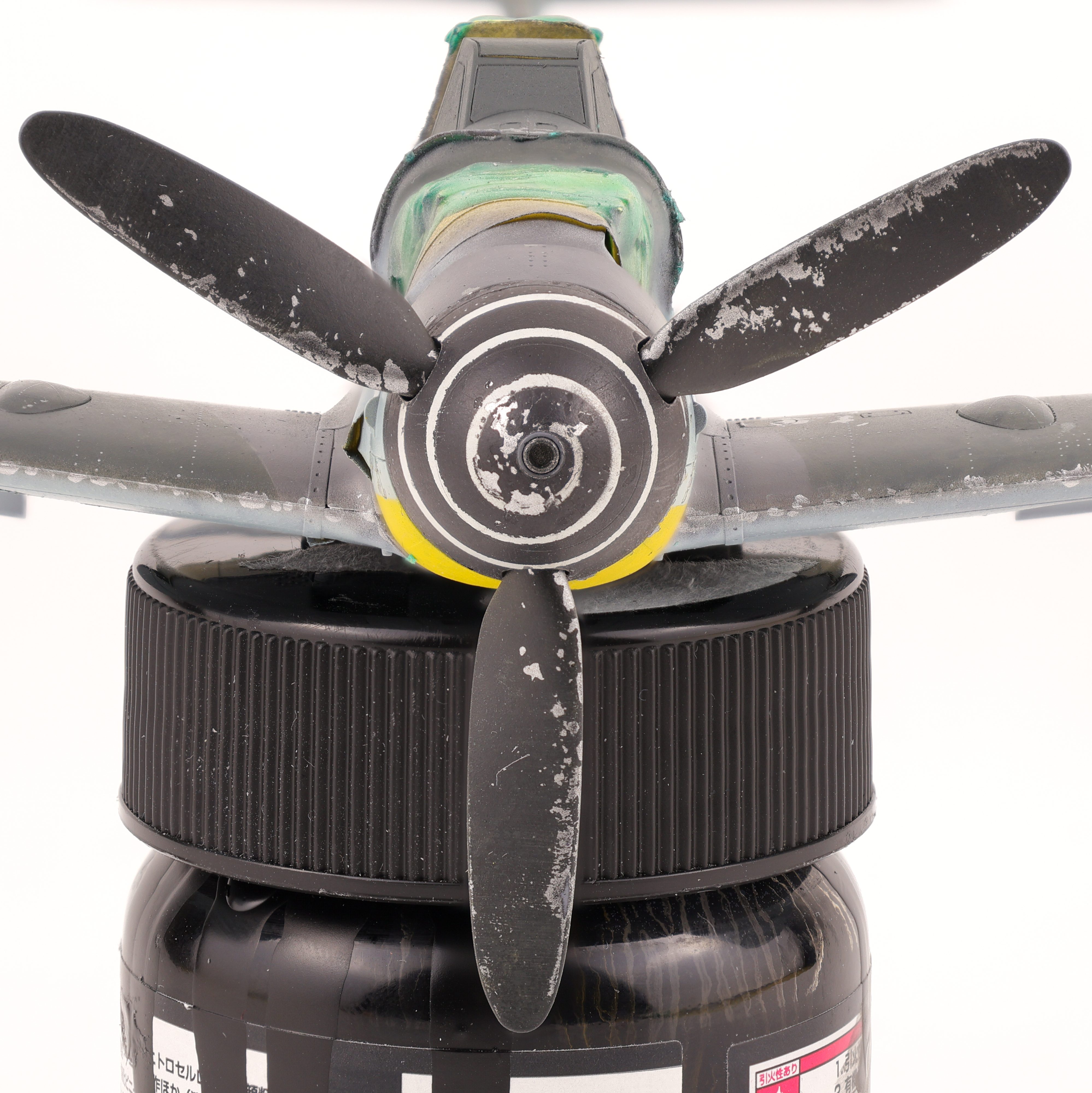
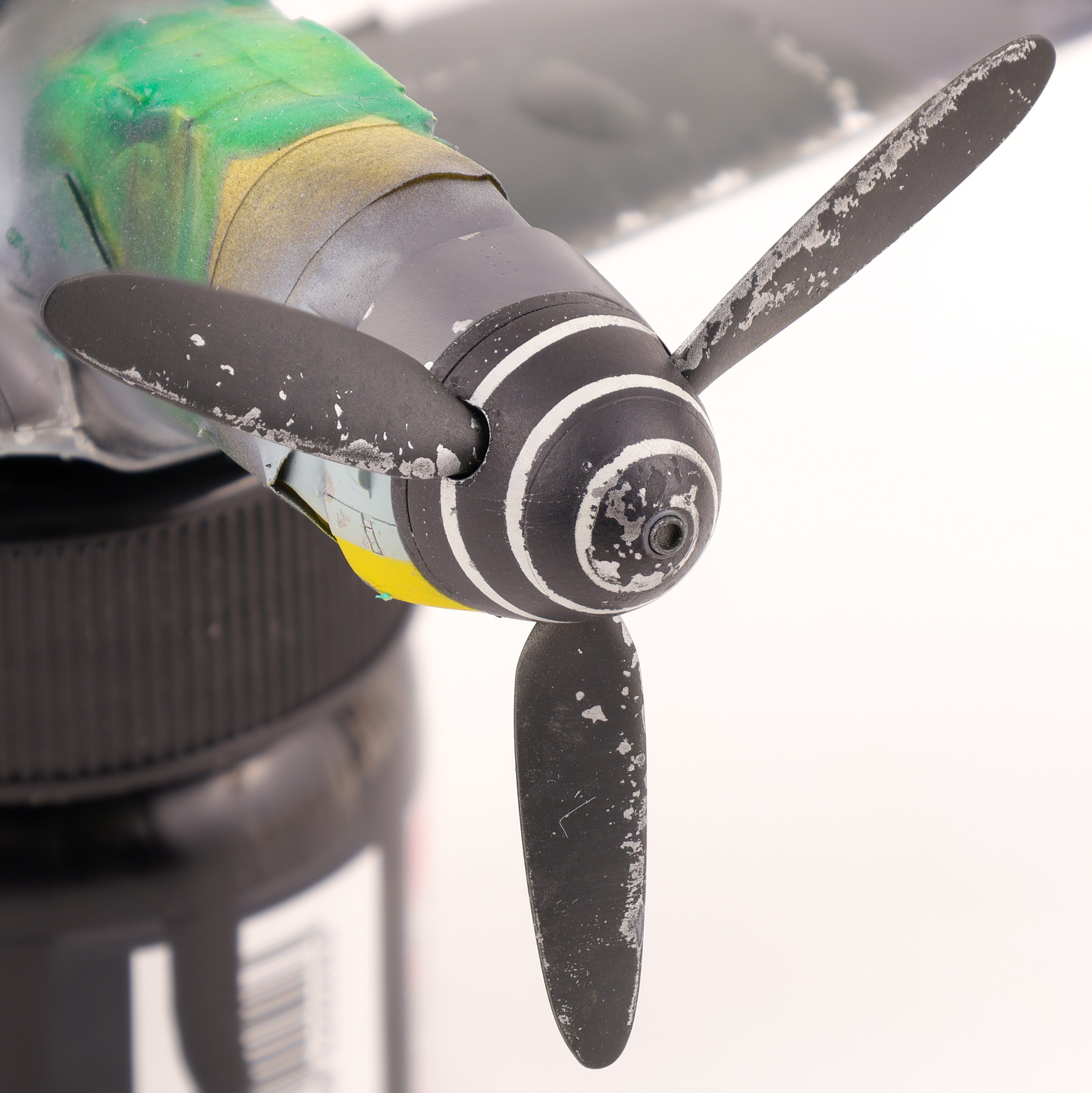
I also took this time to paint up the prop and spinner. I really like the effect I was able to get here even if it is pretty weathered. This vehicle is meant to depict a G-6 that’s both seen a lot of action and has been sitting in the Italian sun for a while. I’ll definitely need to come back to address some errors but I think this is a good baseline to build off of.

Next up was the markings and for this project I treated myself to a Montex mask set instead of decals for the markings. This was my first time using masks extensively in an aircraft build and while my application wasn’t perfect I’m still fairly happy with the result I was able to achieve. Even on my first attempt the painted markings look so much better than decals!

That’s where I’ll leave this update as I move on to the stencilling and weathering stages, Thanks for looking!

Categories
1:48 Aircraft Projects

Bf-109 G-6: Construction

While waiting for some aftermarket parts to arrive for another build, I decided to take up Tamiya’s 1/48 Bf-109 G-6 as a fun little side project. I had heard great things about this kit and the inclusion of a fully detailed engine made this particular offering by Tamiya somewhat interesting. In fact, in 2023 I reviewed this kit and was somewhat pleased with what was included in the box.

Tamiya Bf-109 G-6 In Box Review

Tamiya’s 2017 G-6 model is a well-stocked kit perfect for both new and experienced modellers, despite lacking features like photo-etched parts. The model has a quality molding, clear instructions, and three standard colour options. While criticized for its minor shortcomings, it’s considered a worthwhile model for…

Keep reading

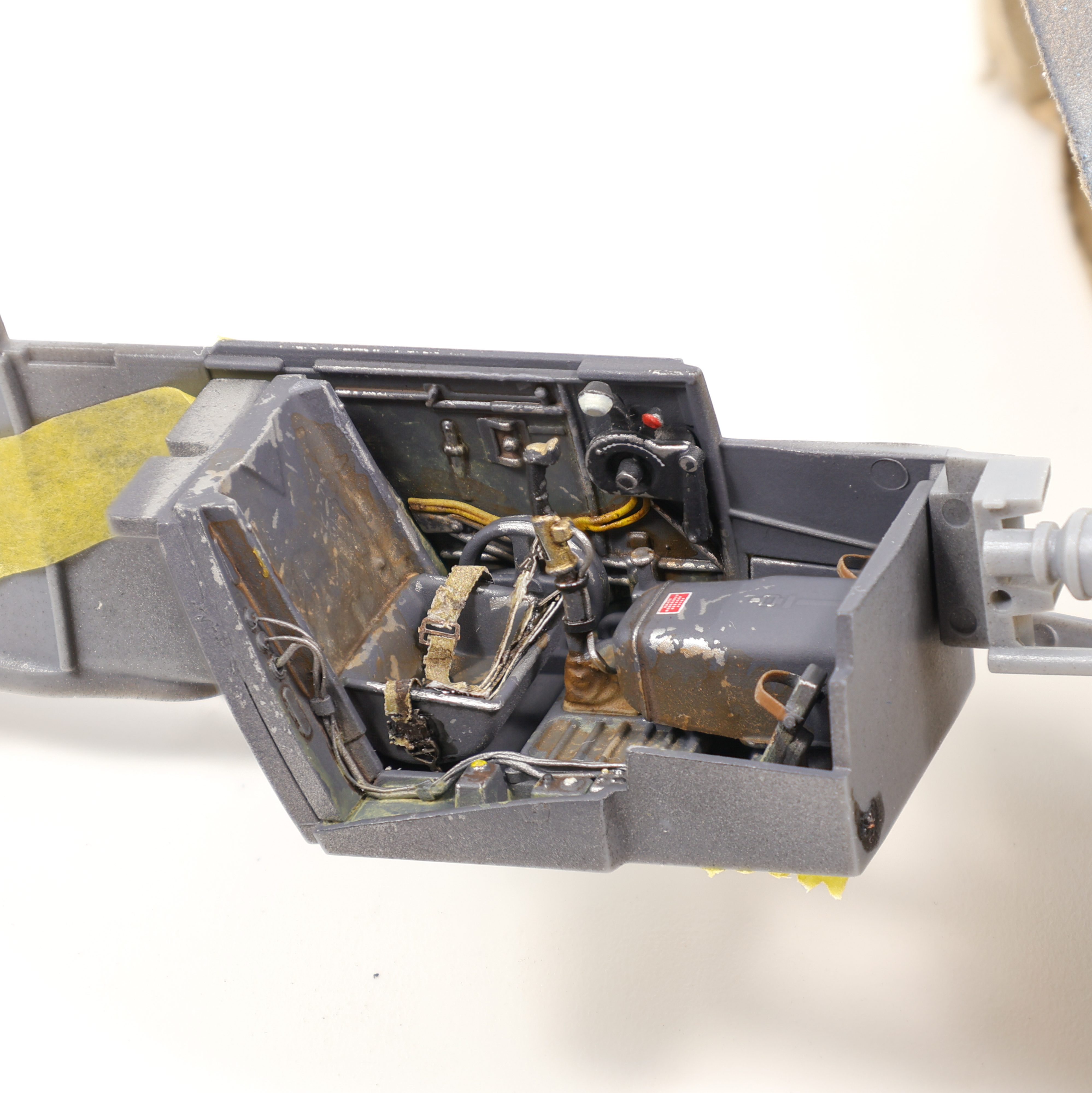
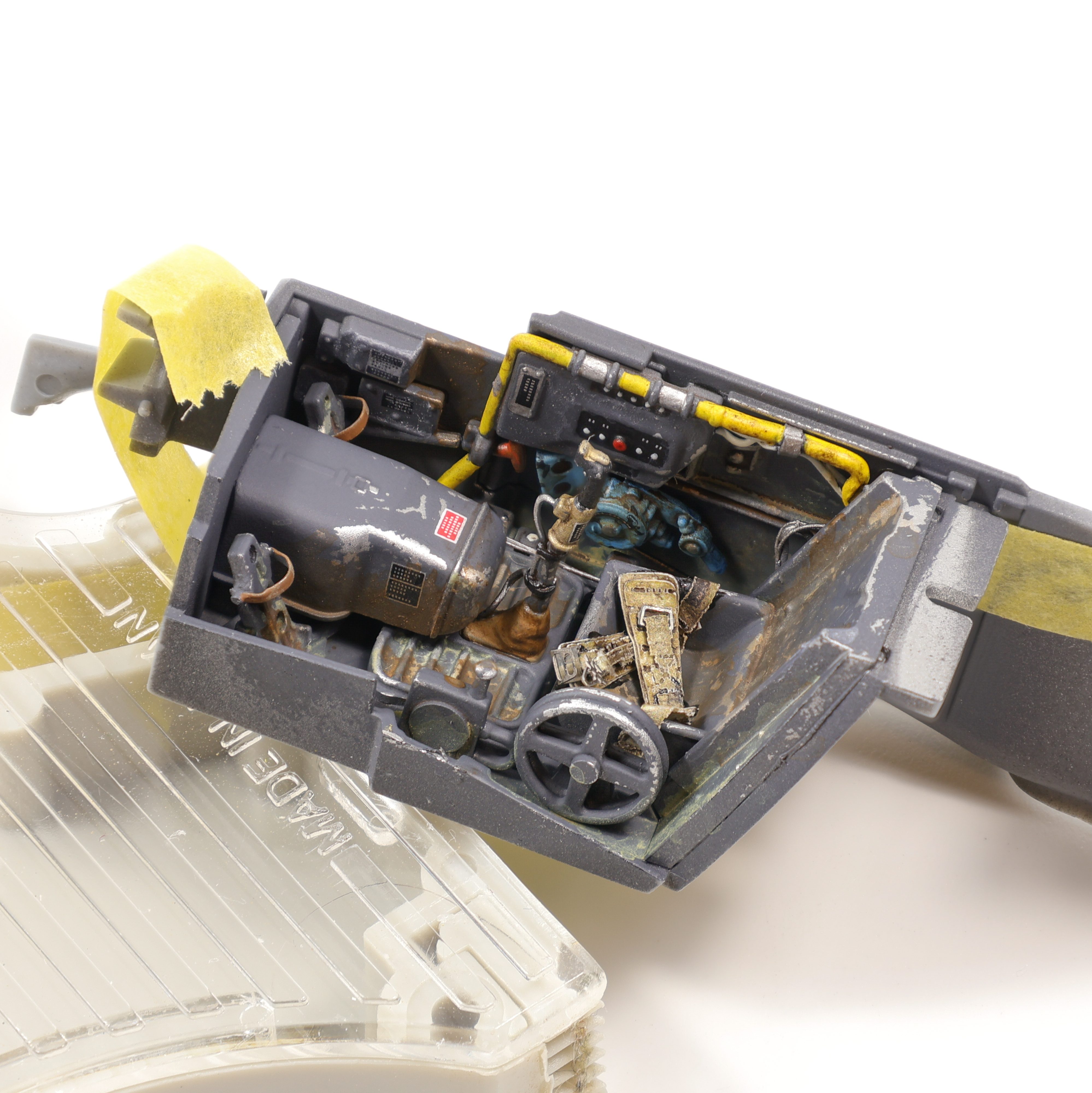
Construction, unsurprisingly, starts with the cockpit. Things went pretty smoothly and it wasn’t long before I was laying some paint. I knew that I wanted to incorporate some chipping effects so after the major construction as done on the cockpit I sprayed down a layer of aluminum to serve as a chipping base.

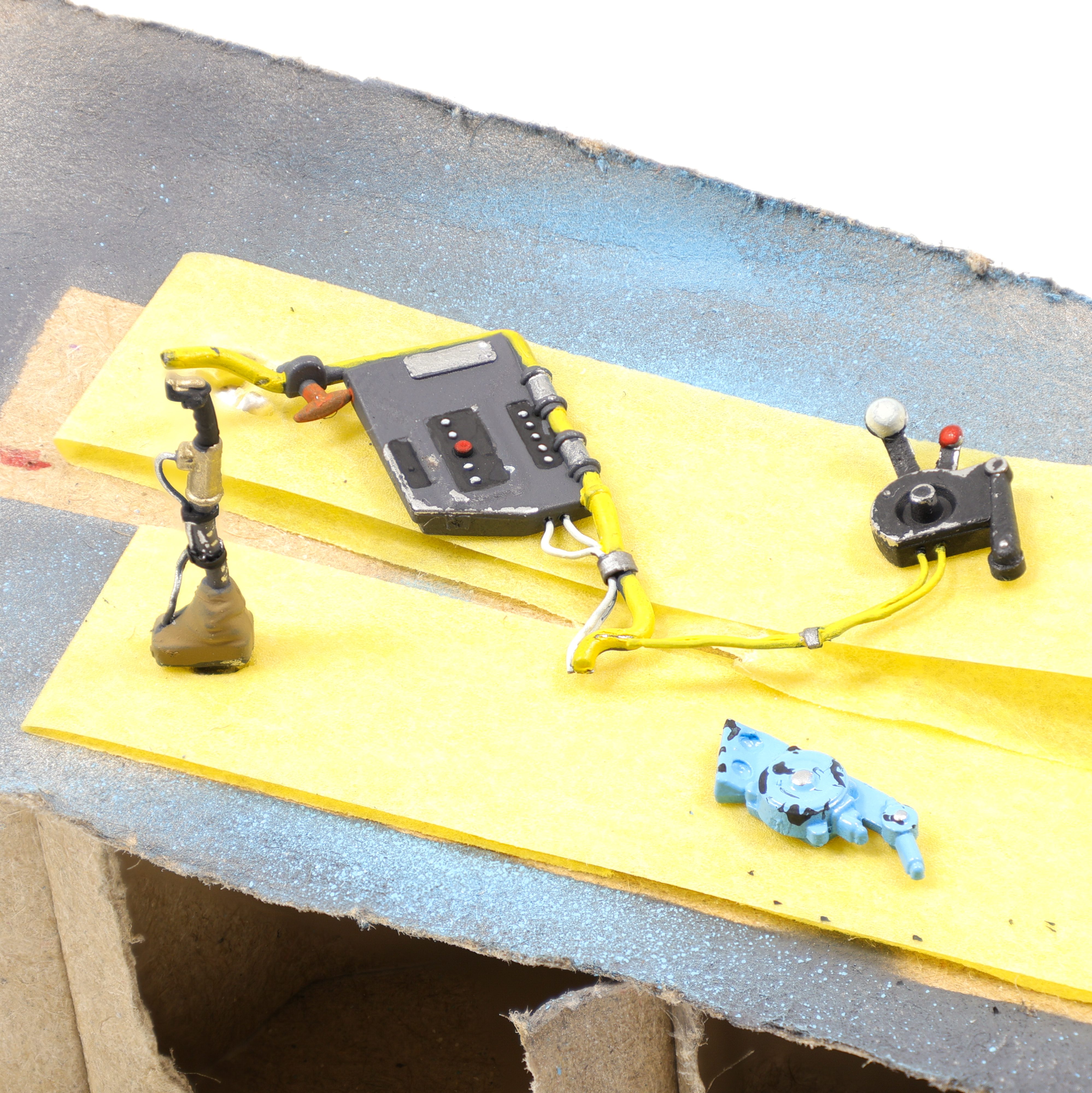
I also opted to add some additional wiring to the cockpit area as I felt that the detail was a bit sparse. The added detail was particularly noticeable on the control stick:

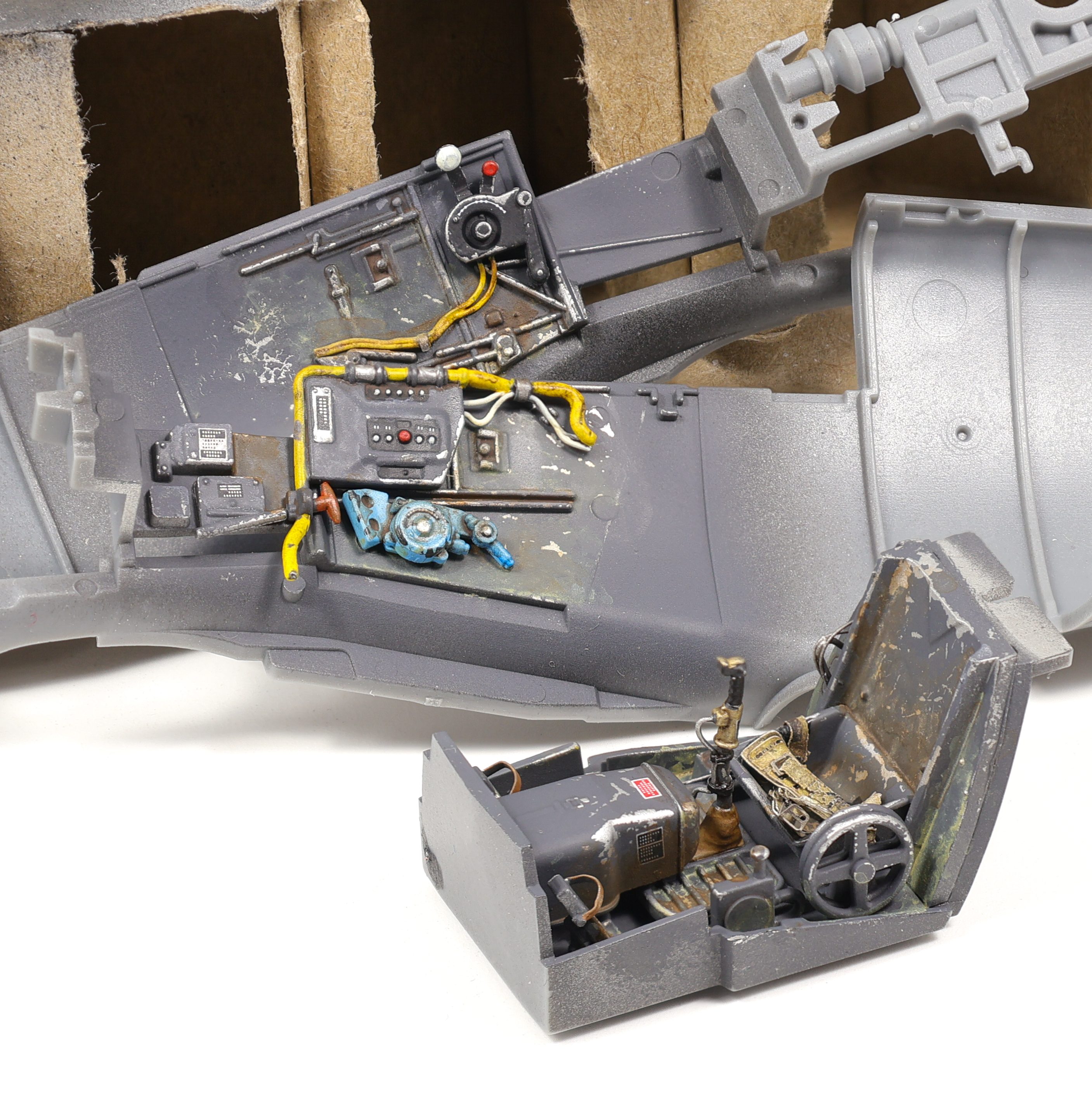
Next, I whipped up a generic “German aircraft interior grey” after spraying the cockpit pieces with the chipping medium. I wasn’t too specific about getting the exact shade right as most of this work will be hidden in shadow when the fuselage is sealed up. I used Tamiya acrylics at this stage which I’ve found chip very nicely. I primarily used a brush moistened with water, although in some areas I opted to used an old airbrush needle to get more fine, controllable chips. I then move on to painting the various small details in the cockpit. The Bf-109 is a bit unique in that it has a rather colourful cockpit with blue and yellow pieces of equipment present.

The result at this stage is VERY stark although after subsequent weathering and varnishes the colours will be muted somewhat. I was particularly happy with how the control stick turned out as in my reference photos I saw some brass elements that really pop in the grey monotony that is the rest of the cockpit.

I then applied a VMS satin varnish over the entire cockpit in preparation for decals and weathering. For the decals I used several pieces from Anyz to depict cockpit placards and switch lettering. I find that these decals really add a lot if life to the model and look great in a busy cockpit. I chose to use AK’s weathering pencils as the primary medium for weathering as I wanted to experiment a bit further with these after trying them out a bit on my last aircraft build, Eduard’s F6F Hellcat:

F6F-5 Hellcat: Completed Build

A few weeks ago I completed Eduard’s F6F-5 Hellcat and I’m finally getting around to post the photos and compile my thoughts about the build. If you’re just here for the photos check them out below 👇 As for my thoughts, this build was a pretty fun, short project. I really didn’t invest a ton…

Keep reading

I feel like these weathering pencils have interesting pros and cons. For depicting built up levels of dust, dirt and grime they are great. In a confined area like a cockpit however, I’m not sure they are the right choice with the kind of results I’m after. They do give off a VERY stylistic result however and while some people might love the result I managed to get here I wouldn’t be surprised if some people hated it too. As for me I’m a bit in the middle, I do like what I achieved here but I think I want to go back to oils and enamels for my next project.

I definitely achieved the dirty/dusty look that I was going after but I feel like this is still pretty stark result. More refinement and practice will be needed to get my cockpits where I want them however. I will say though, when all the pieces are added together the result isn’t half bad:

Some might notice the HGW belts in the above photos and in addition to the belts, I’m also planning on using HGW rivets in this build. For all the pros the Tamiya kit offers it still doesn’t include a fully riveted model like Eduard does. To rectify this and to experiment with a new product I picked up a full rivet set to see if this is a product I’ll consider purchasing in the future. Although this build is meant to be a fun side project to keep me occupied, it’s also a test bed for future builds.

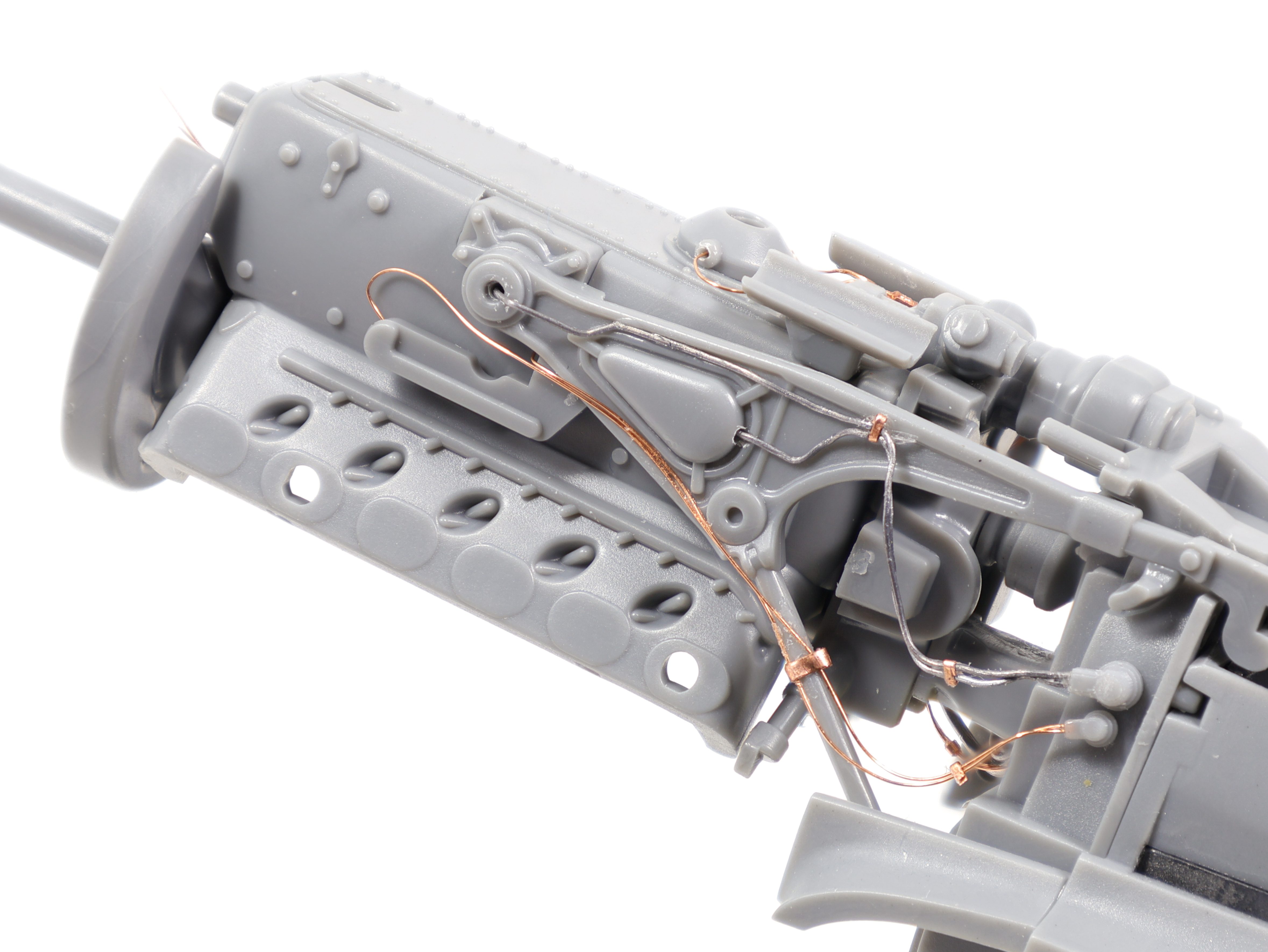
After major assembly was completed on the cockpit I sealed the cockpit halves and moved on to the engine assembly. The DB 605 engine is really nicely molded however I felt it was lacking some wiring detail. To rectify this I added a combination of 0.1mm copper wire and 0.2mm lead wire in various places to busy it up a bit. Although it’s not period specific, I used some avionic connectors from Anyz instead of having them go straight into the plastic.

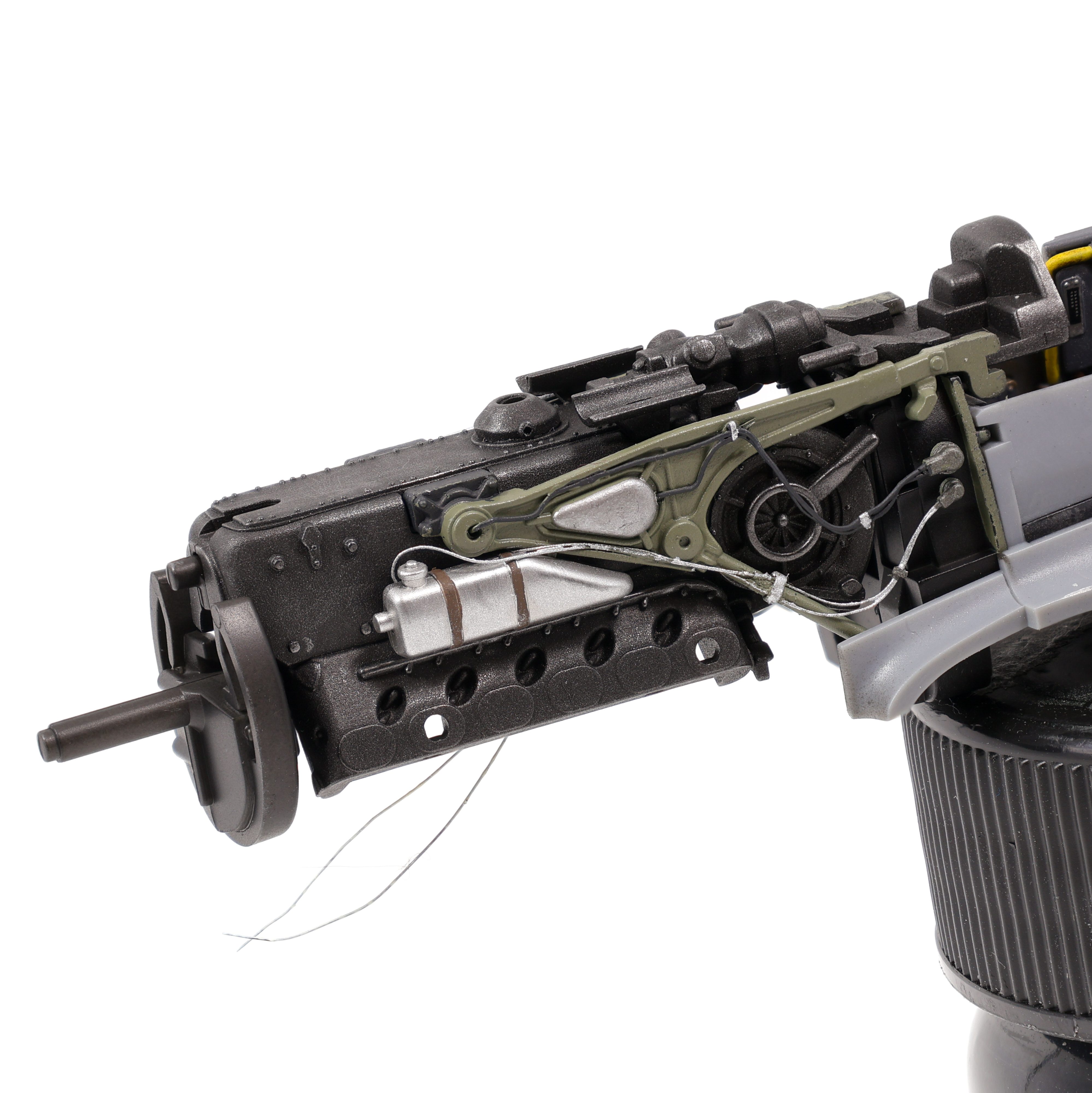
Because the engine had various different elements all in different colours I keep things detached to allow for easy painting. To start, I painted the engine block in MC214 “Dark Iron” These Mr. Metal Colours are really nice because they are bluffable and have a really nice sheen when polished. The “Dark Iron” shade was exactly what I was looking for and finishes as a very dark, almost black, grey.

I painted the engine mounting arms with RLM 02 and after adding a few accents of aluminum it was time to bring everything together for a mockup:

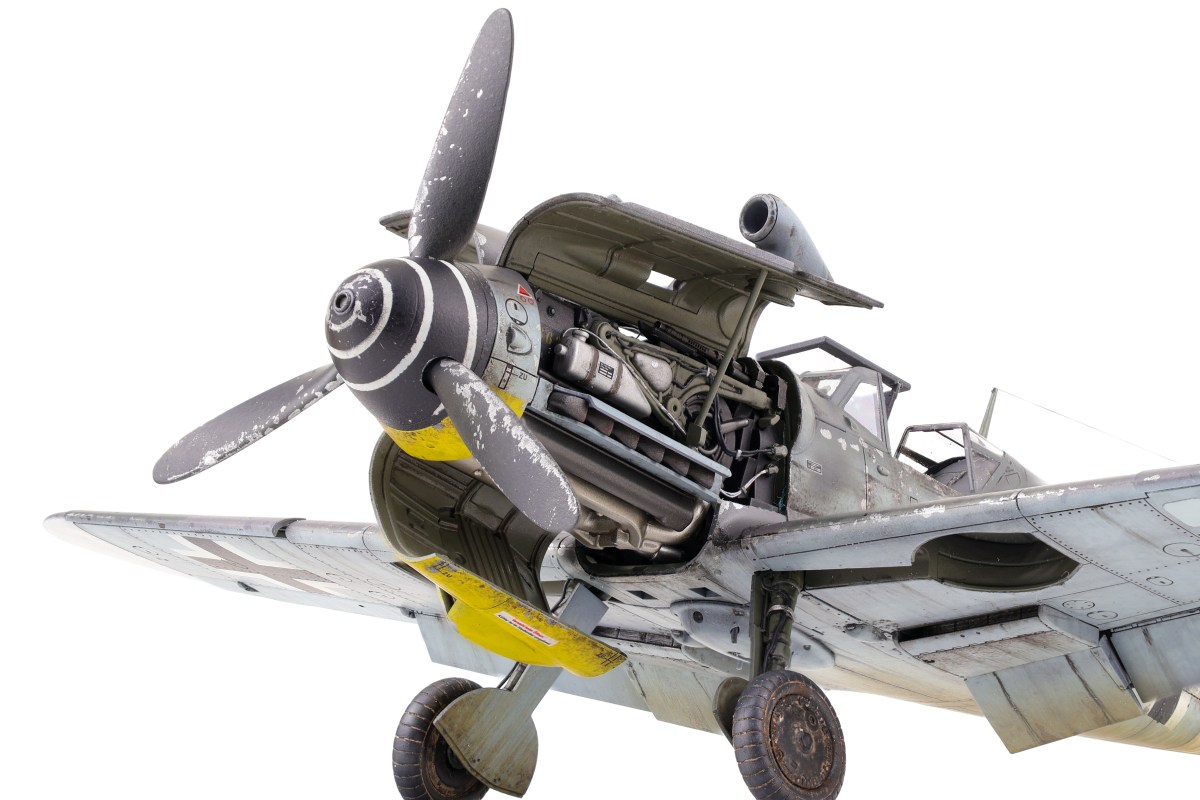
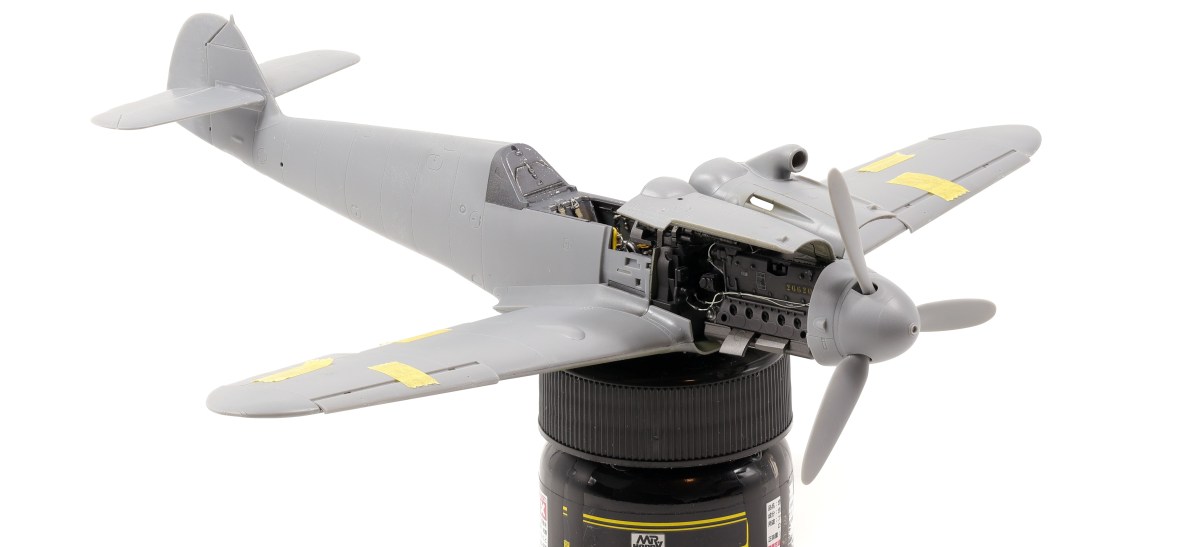
I have to admit the DB 605 builds up to a pretty nice looking engine! After the painting was completed I hit the engine section with another coat of VMS Satin varnish for the decals and weathering. For the decals I did opt to used some of the kit supplied decals as there are some specific markings that need to be added for the engine to be accurate. Along with the kit decals, I also added some Anyz placards although the majority of them ended up not being visible in the final product. After decals I opted to revert back to oils for the weathering and used some Abteilung 502 “Bitume” mixed with straight black for a very dark grime wash. I left the weathering at that as I wanted a dirty, yet restrained, look to the weathering on the engine section. After applying a final flat coat to seal everything together I dry brushed some graphite powder over the engine block to represent wear on the edges and give a nice metallic look.

Now that the cockpit and engine subassemblies were complete, I was able to move on to further steps of the build, namely building out the rest of the fuselage and the control surfaces. The control surfaces needed some work as the HGW rivet set comes with decals for the fabric surfaces which required removal of the molded on details. I put together the frontal section including the prop and spinner along with the oil cooler assembly that hangs beneath the engine. I also got to work building up the engine panels that would be posed in the open position above the engine. With these additions this build was looking more and more like a Bf-109!

After verifying fit of these components it was time to disassemble these parts in preparation for painting. At first I was a bit at a loss for how to mask off the engine section. It’s a fairly complex shape and it’s difficult to seal of the entire compartment. To solve this issue, I first wrapped the engine in tape and then used masking fluid to seal off the large gaps in engine cowling, forward of the cockpit. I’m pretty pleased with this solution but only time will tell if I was successful in my approach.

That’s it for now, next up is the priming and application of the HGW rivets!

Categories
1:48 Aircraft In Box Reviews

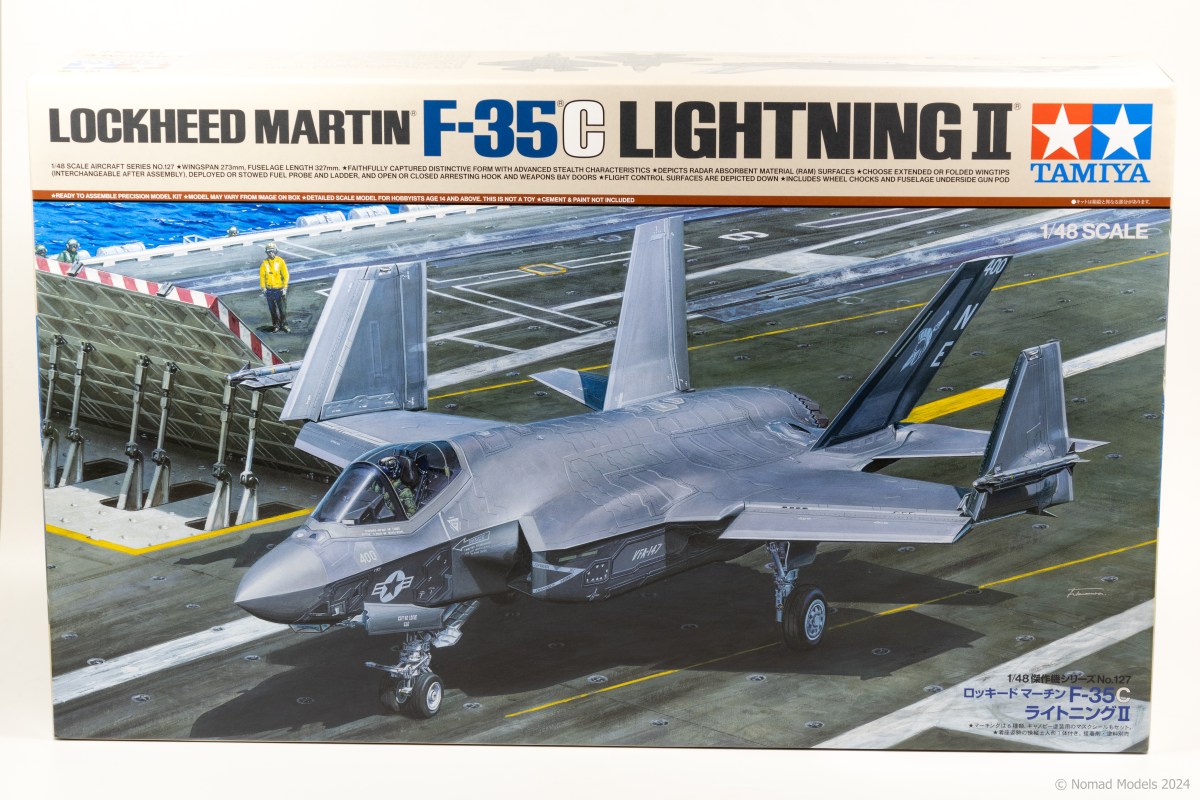
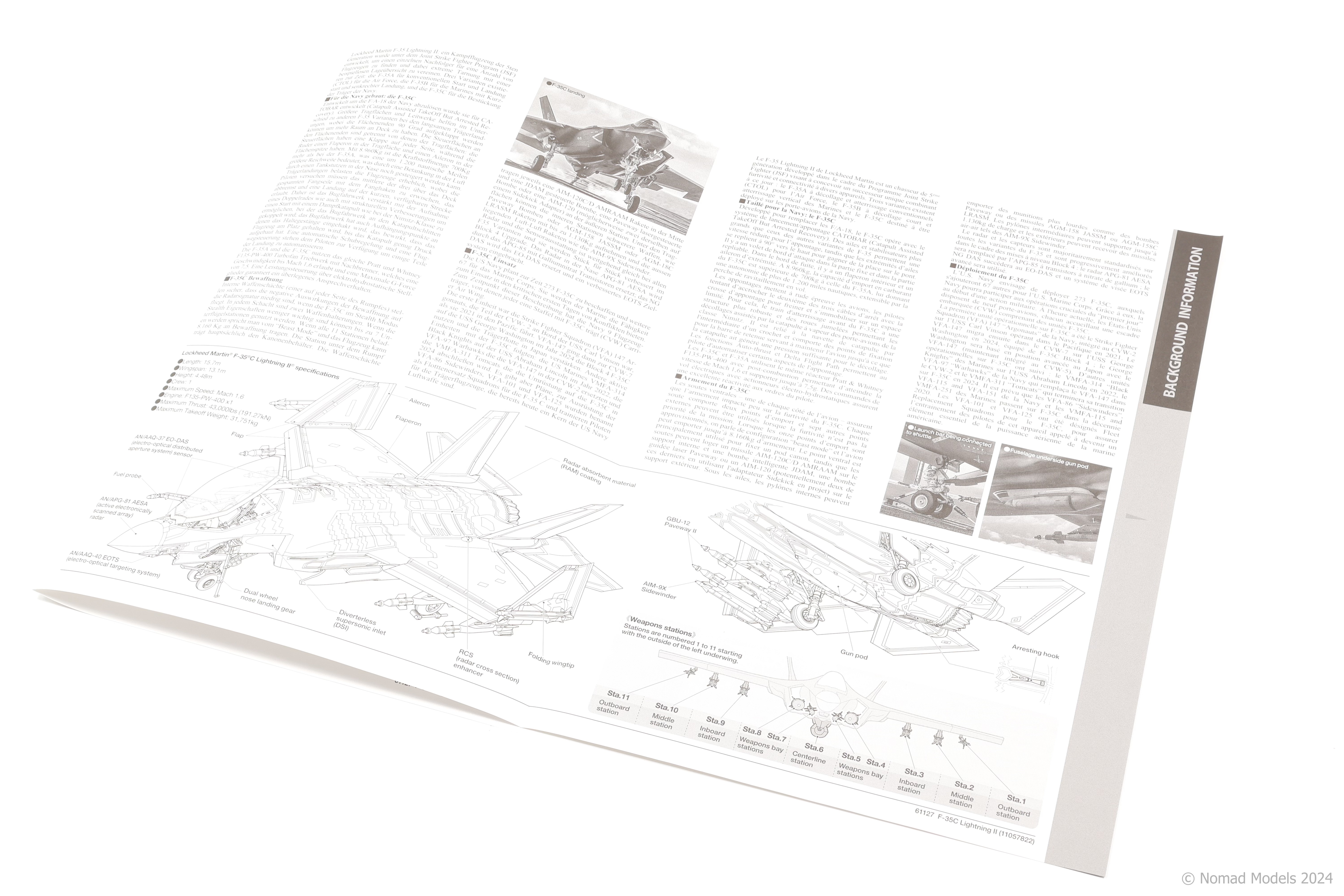
Tamiya F-35C Lightning II In Box Review

I knew when going into this review that Tamiya’s F-35C was going to be a serious challenger for the best kit I’ve ever reviewed. Both the A and B variants have recived critical acclaim since their releases in 2022 and 2023 respectively. Back in 2020 I rated Meng’s Jumbo Sherman a 92/100, will Tamiya’s latest lighting take that crown?

Kit Features 17/20

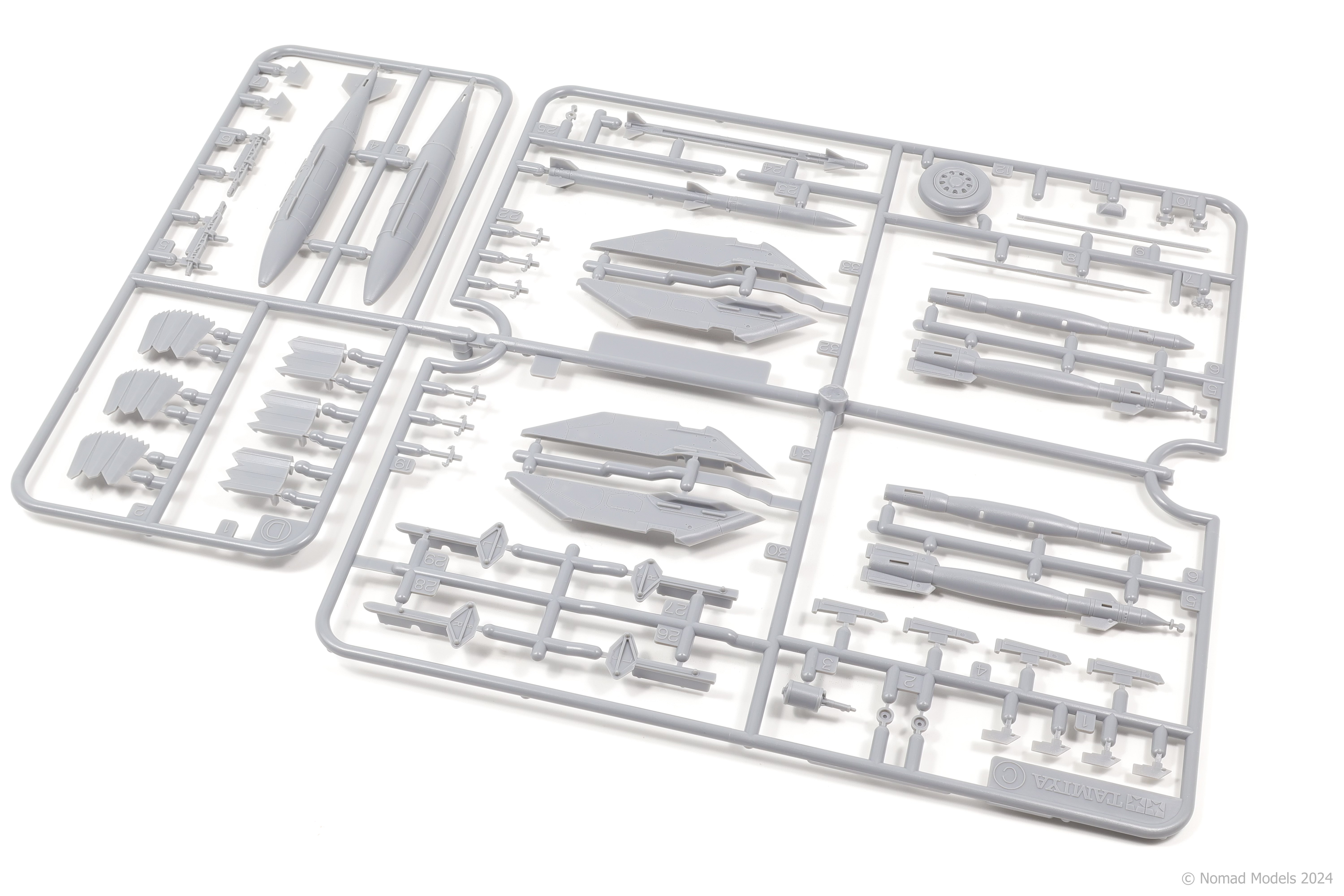
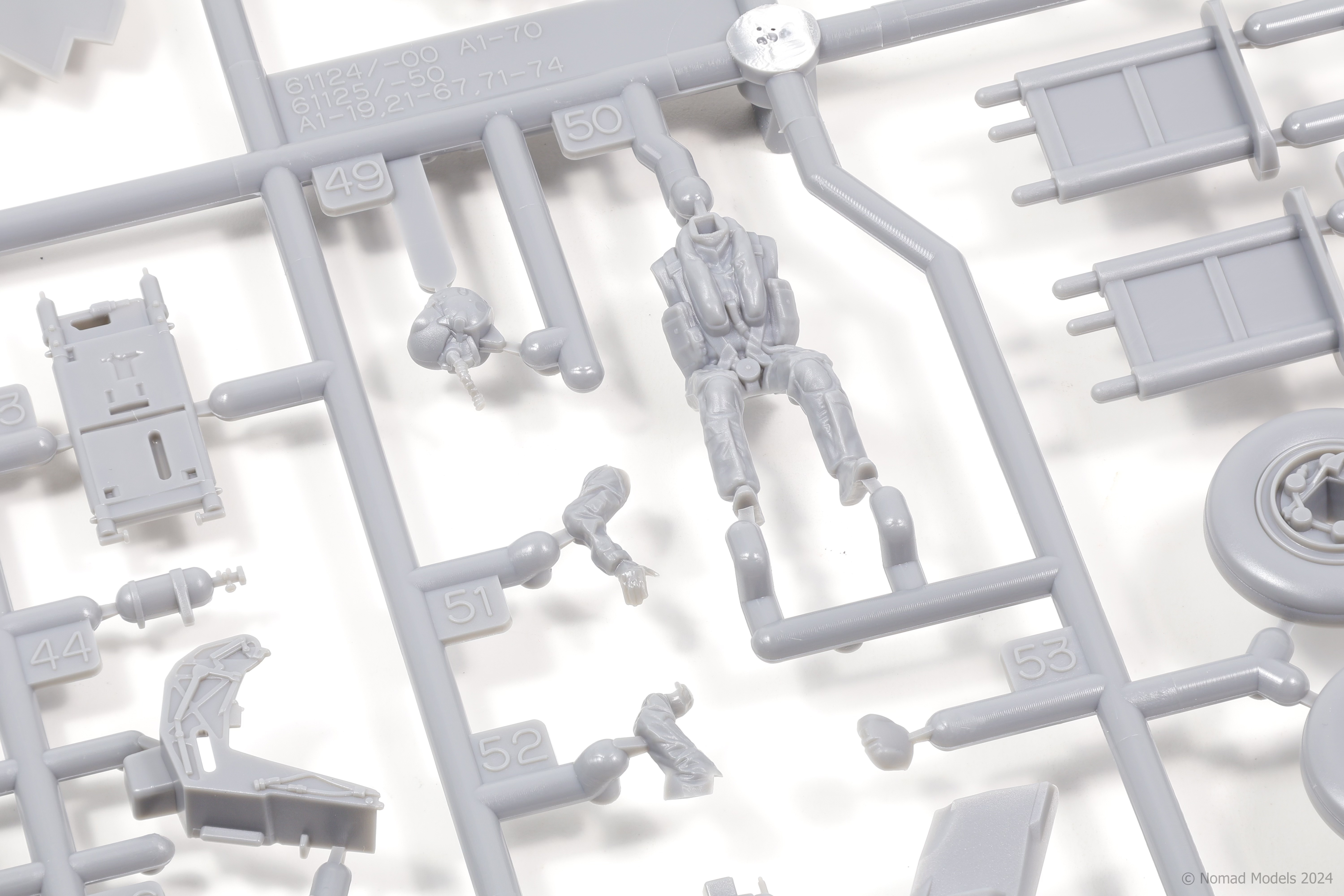
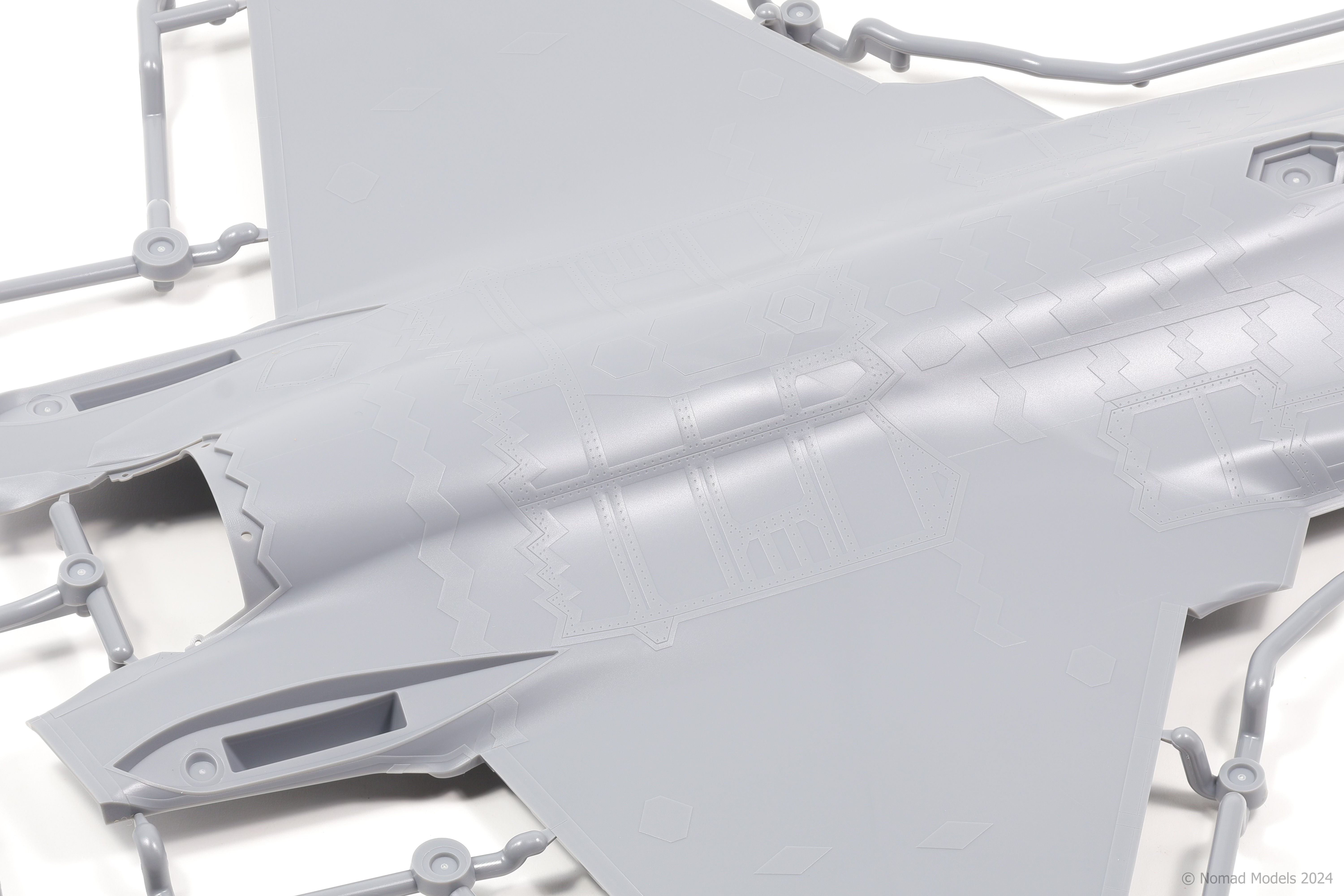
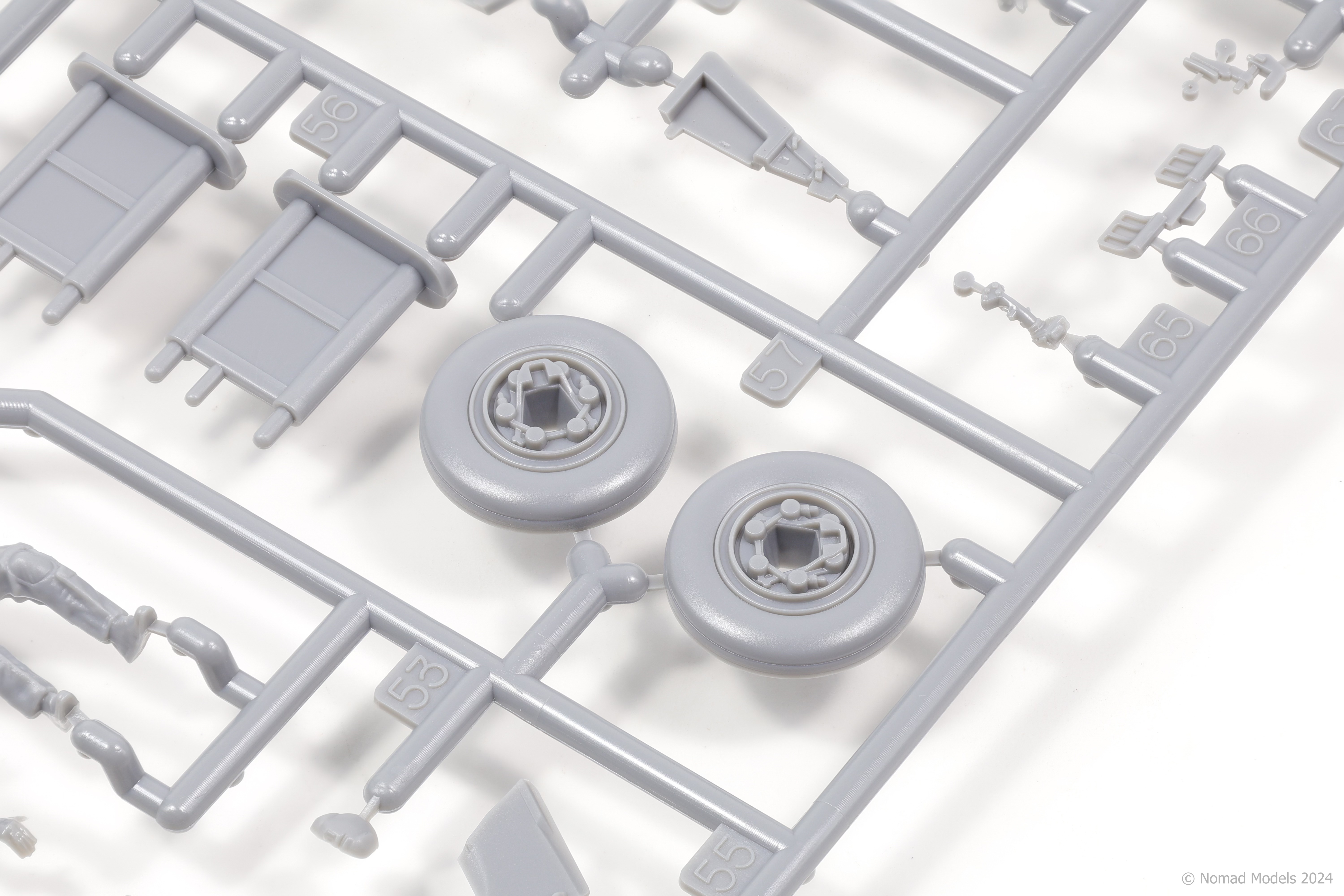
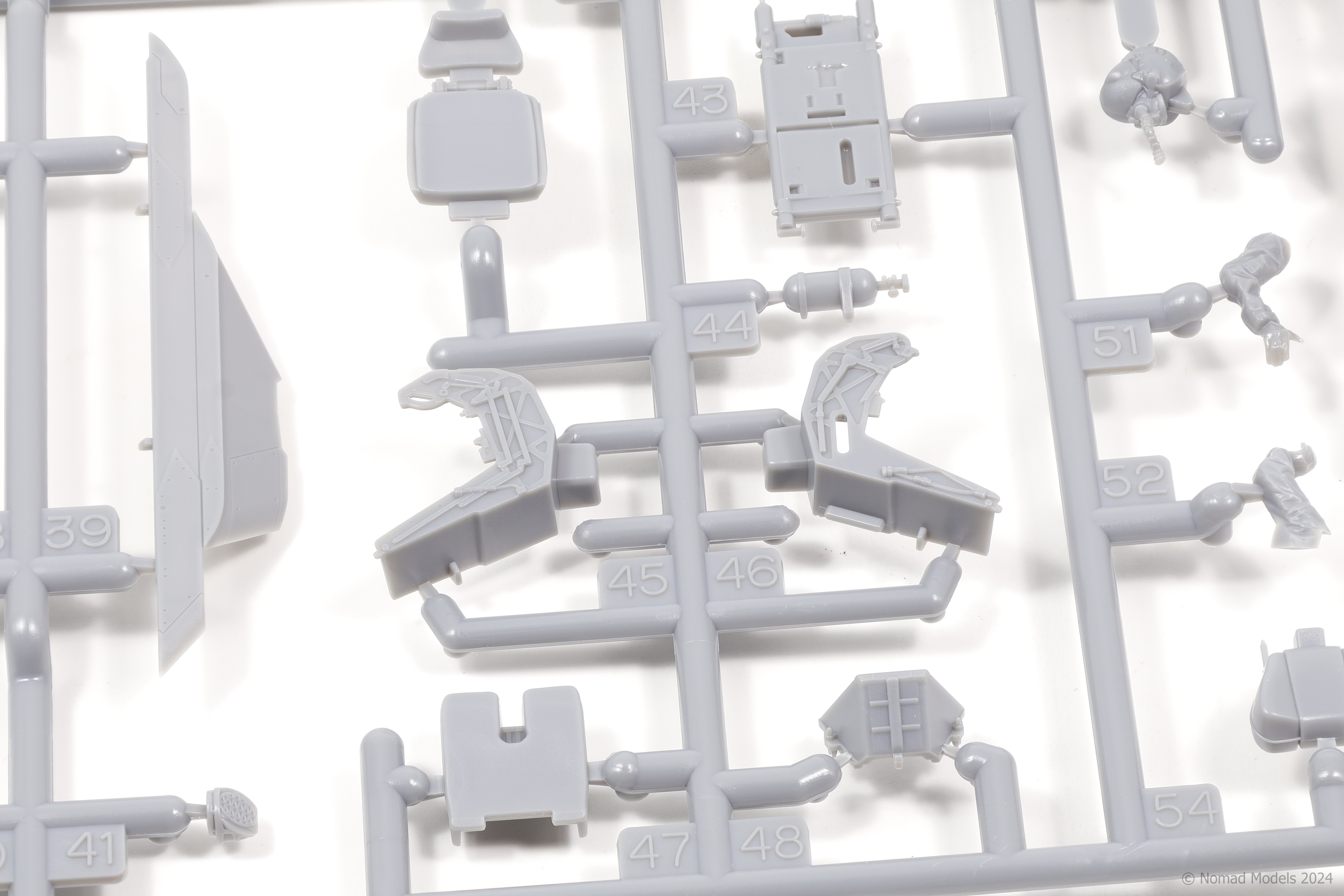
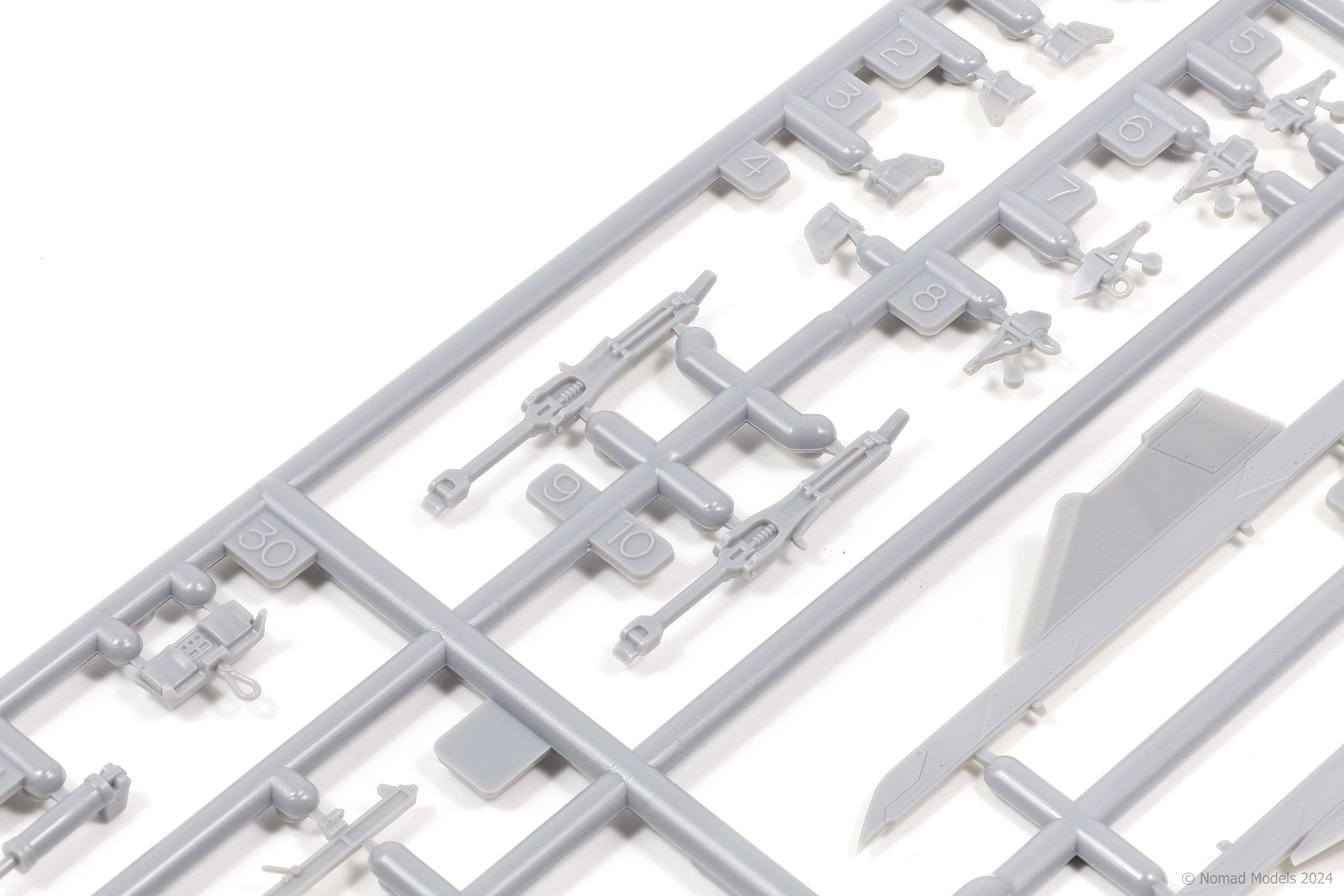
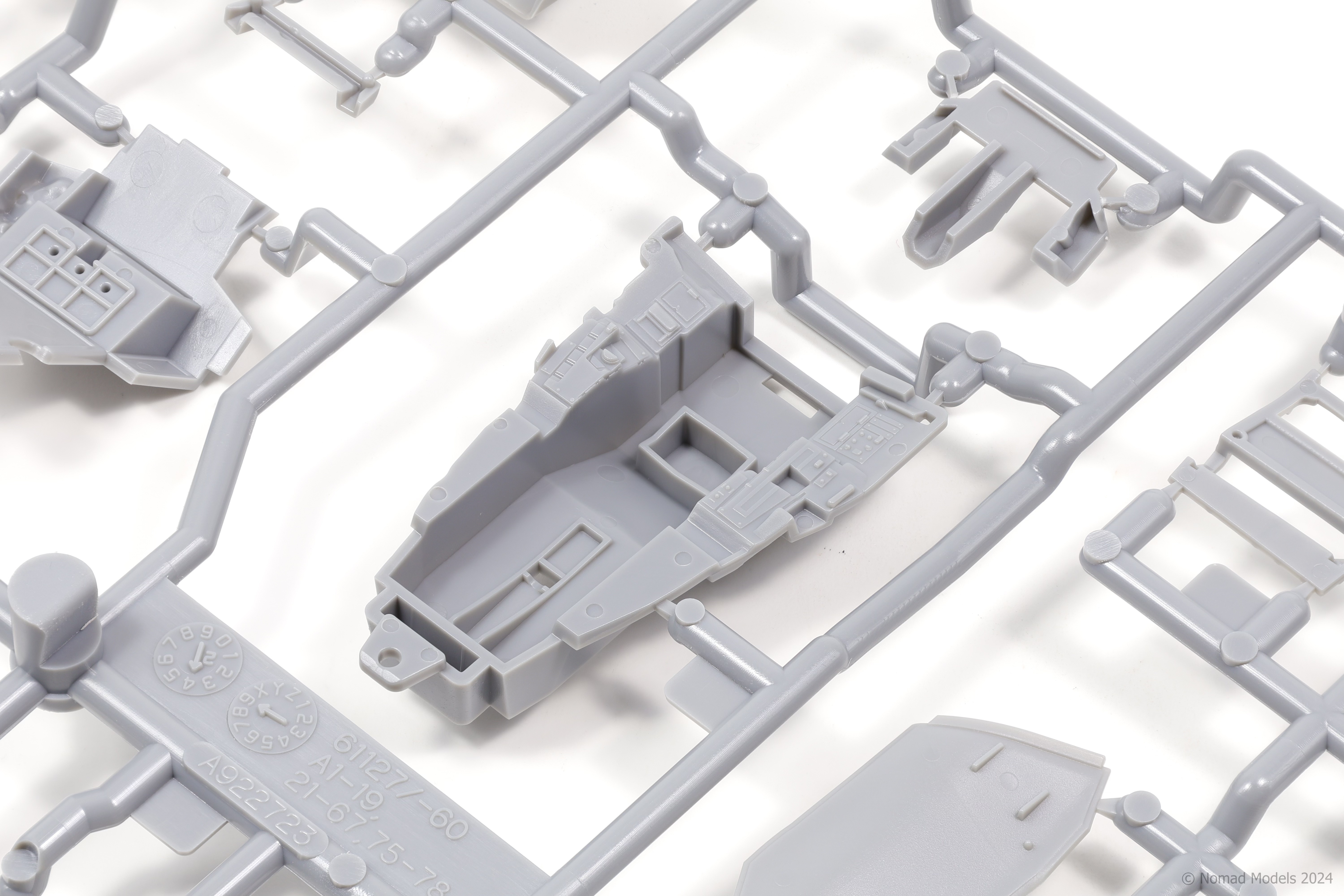
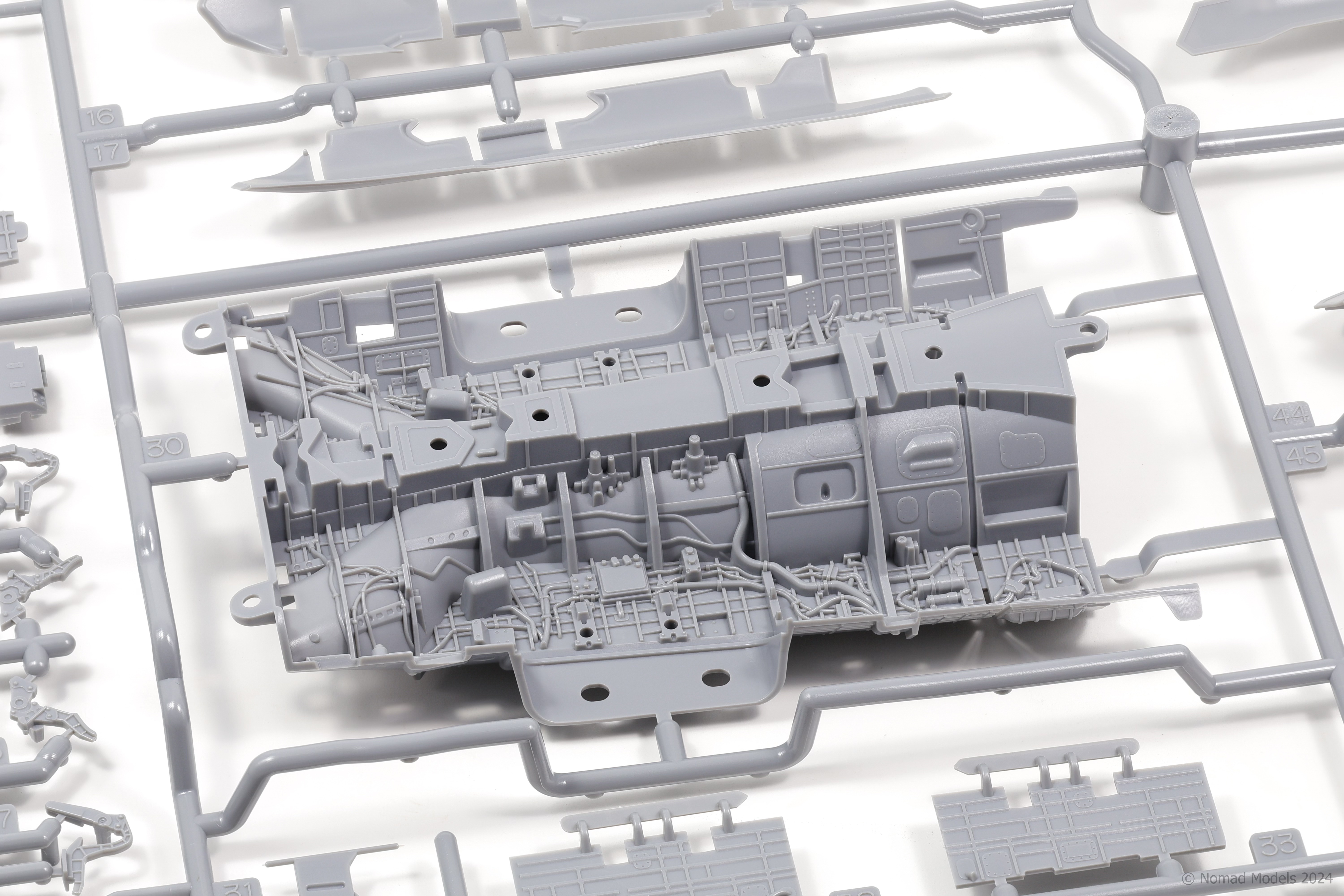
Tamiya’s F-35 offers some really nice features, some of which are unique to the subject matter here, a stealth aircraft. Modellers are offered a wide range of options to choose from in depicting thier own F-35. The canopy, wingtips, ladder, weapon bays, gun pod, arrestor hook, and fuel probe are all optional accessories to the modeller. I was also surprised to see RCS enhancers included in the kit, these are little nodules added to the exterior of the F-35 to increase its radar cross section to civilian radars. These are examples of small additions that really show how much effort went into designing this kit. The kit includes a nicely molded pilot figure along with helmet specific decals. Also included is a healthy amount of ordinance so that the model can be built in “beast mode”. Other manufacturers might skimp on the included weapons (considering that this IS a stealth aircraft) but Tamiya is not guilty of this here. The kit features various paper masks for the canopy and other parts, although you will have to cut them out yourself. Masks for the RAM panels are not included however and decals are provided instead. For modellers wanting to paint their own RAM panels the lack of masks will be felt as it’ll take some time to mask off the fine details.

Quality of Molding: 50/50

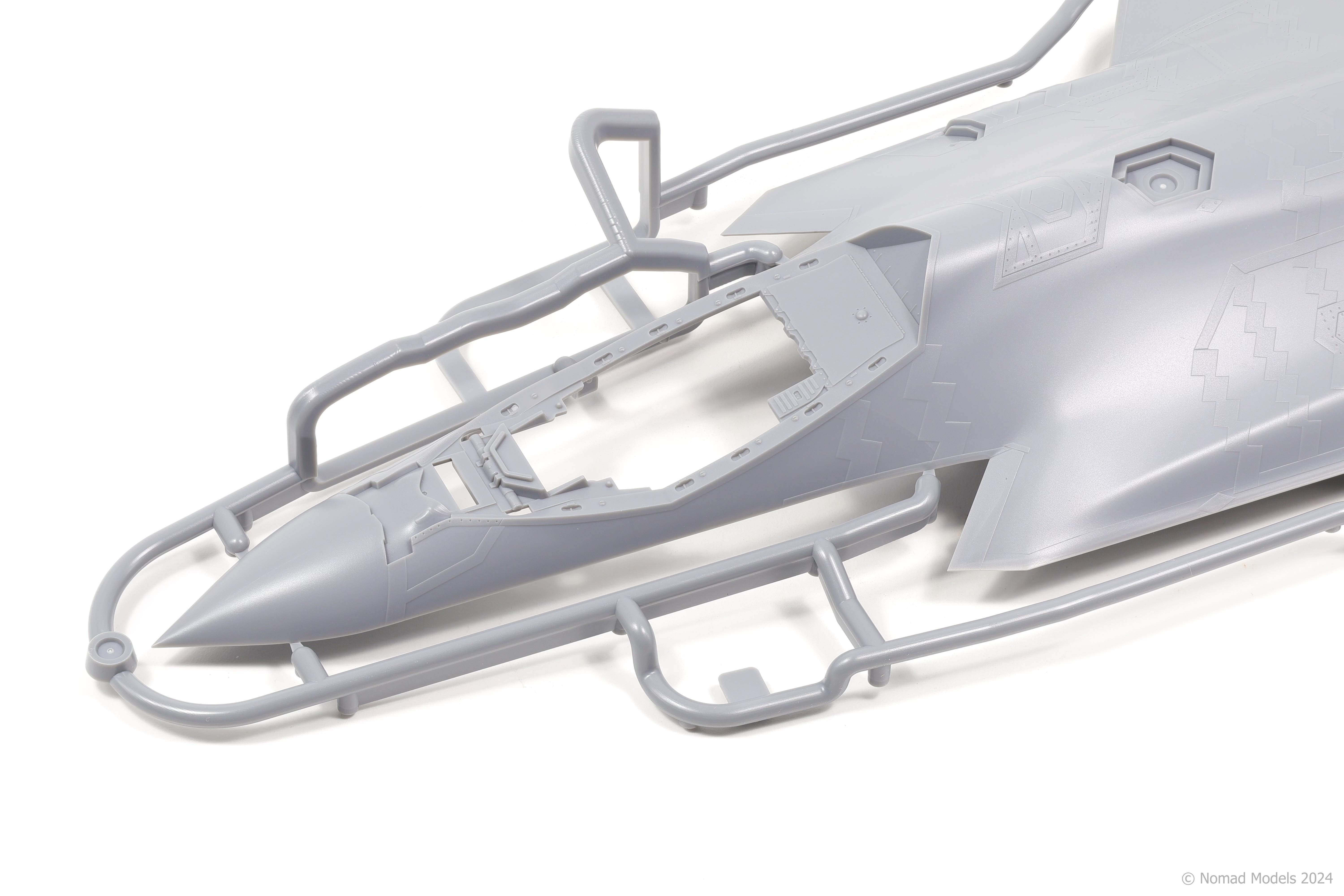
I’m hesitant to give any category a perfect score on any kit, but considering that this kit (and the rest of Tamiya’s F-35 lineup) features arguably the most impressively molded part in all of modelling there’s just no way I can justify anything less than a perfect score here. I’m of course referring to the weapons bay.

The quality of the modelling isn’t just limited to this area however as each and every part is intricatley detailed from the cockpit to the RAM panels. The detail is just so fine and impressive, it’ll be a real joy to see these parts painted up.

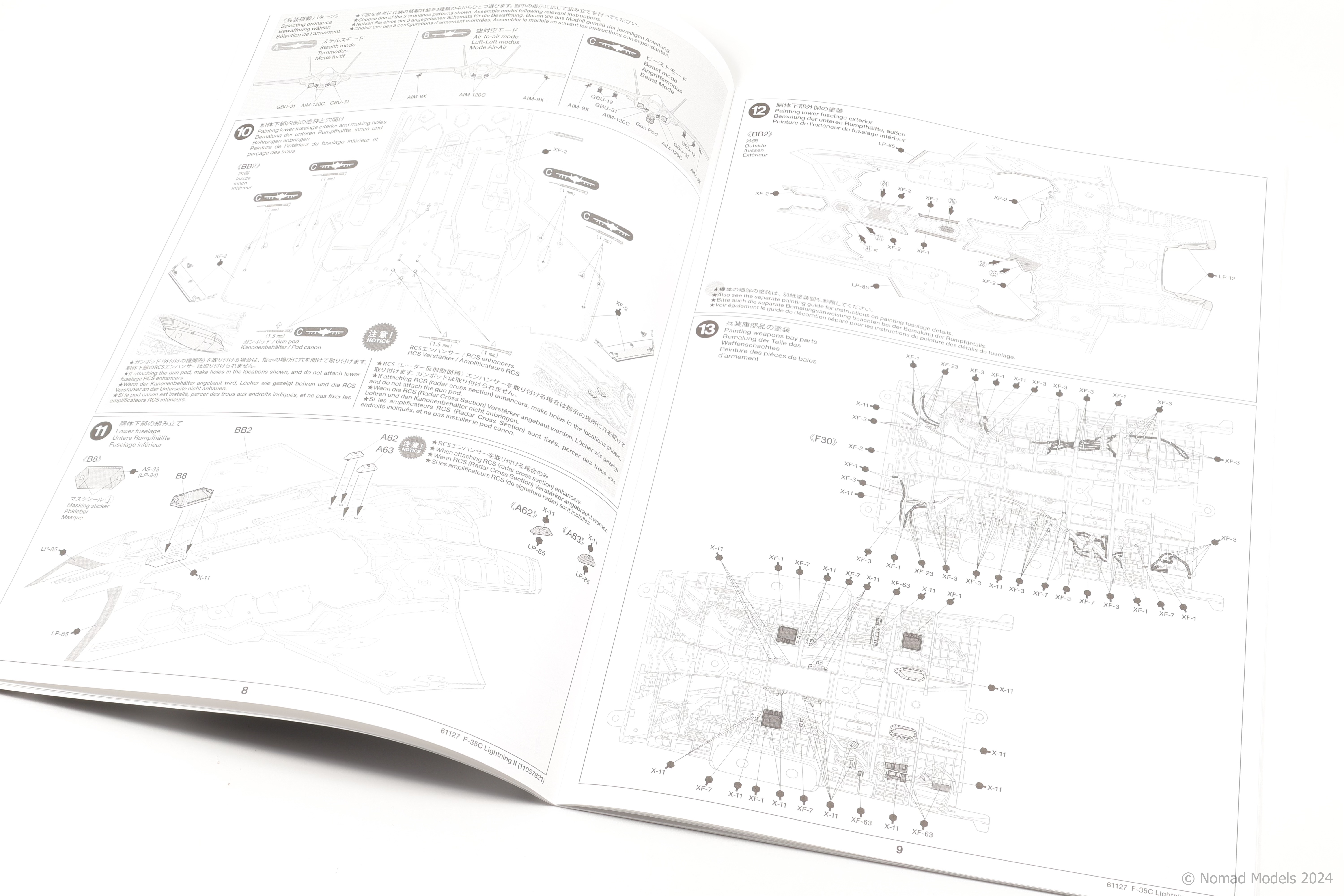
Instructions: 19/20

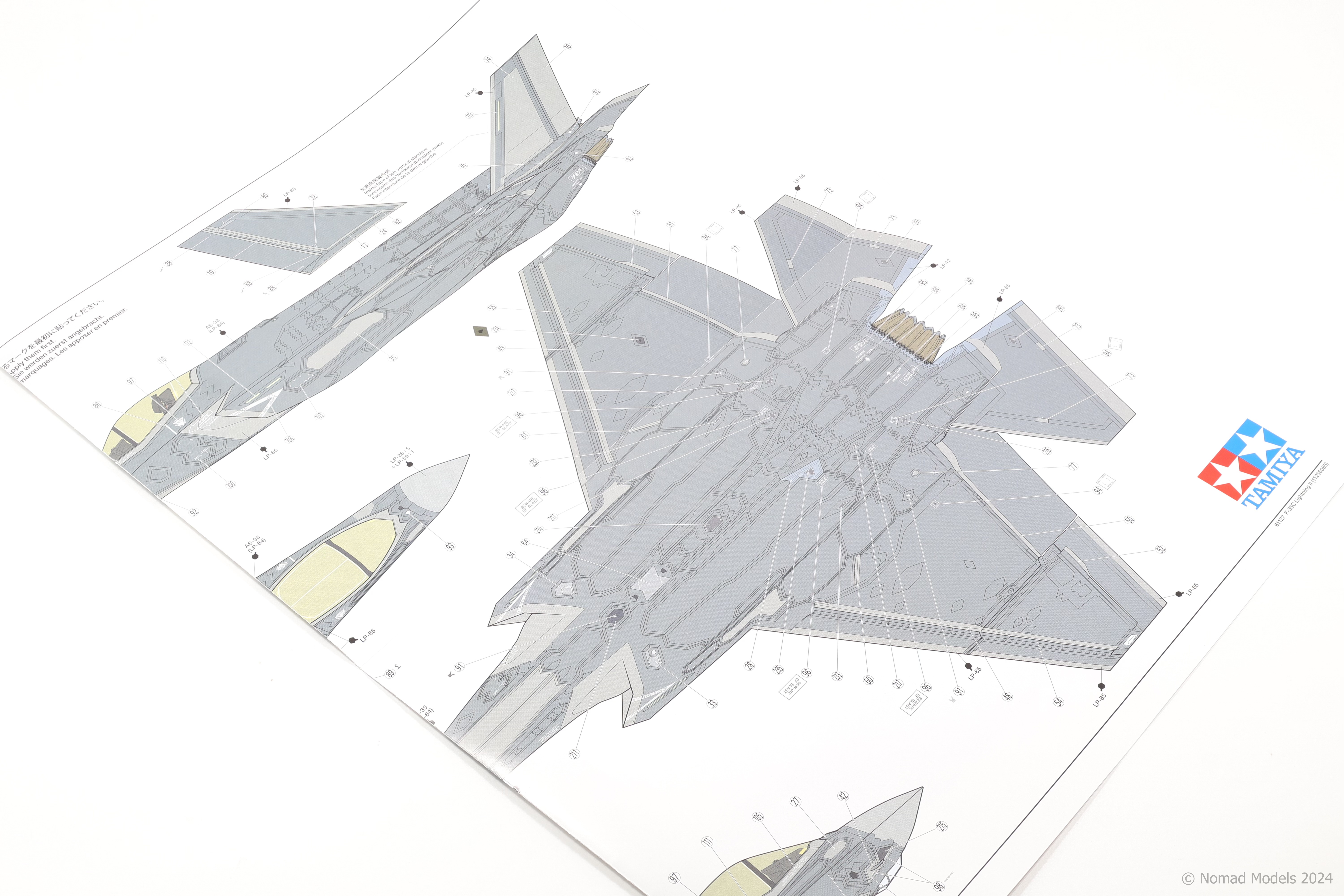
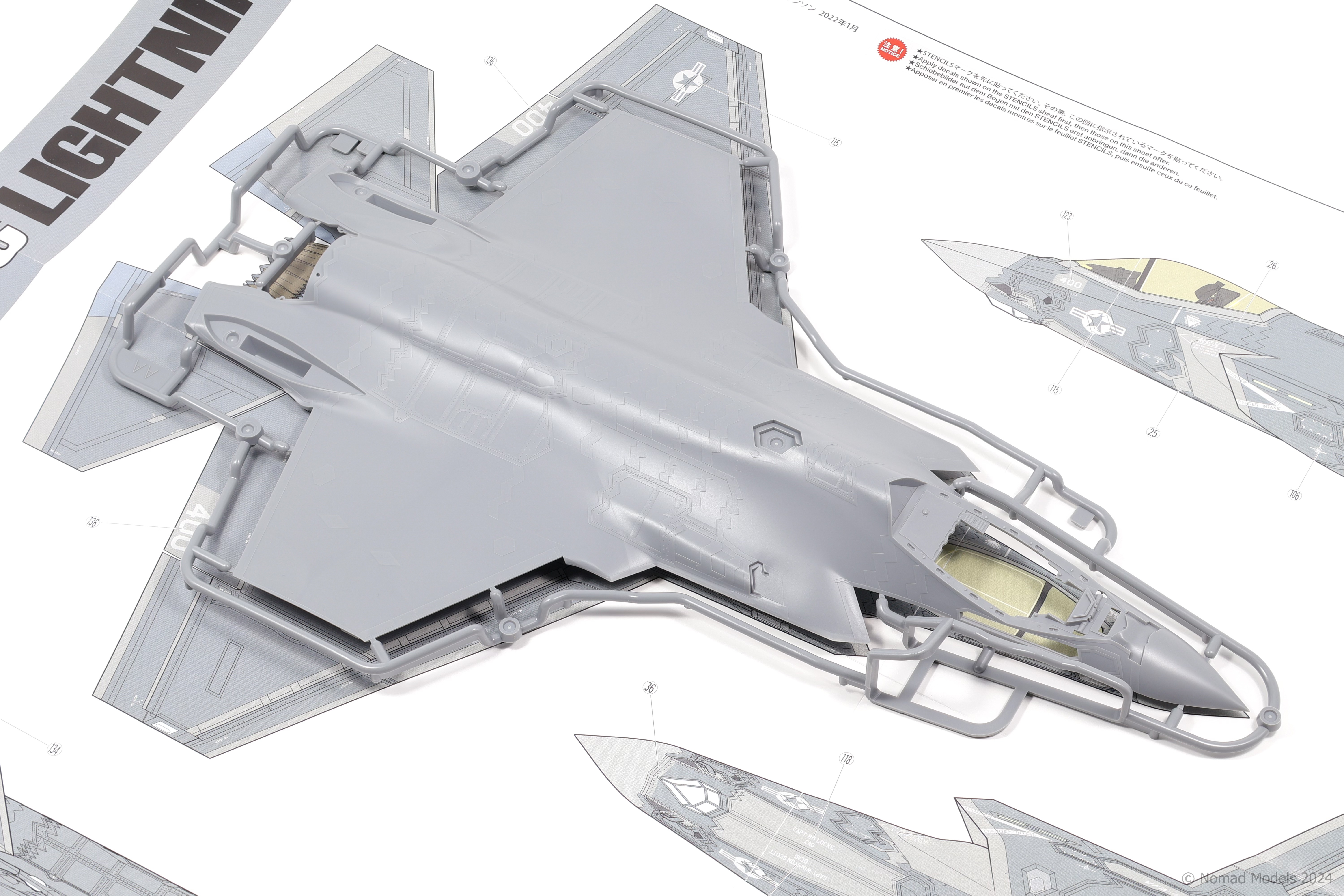
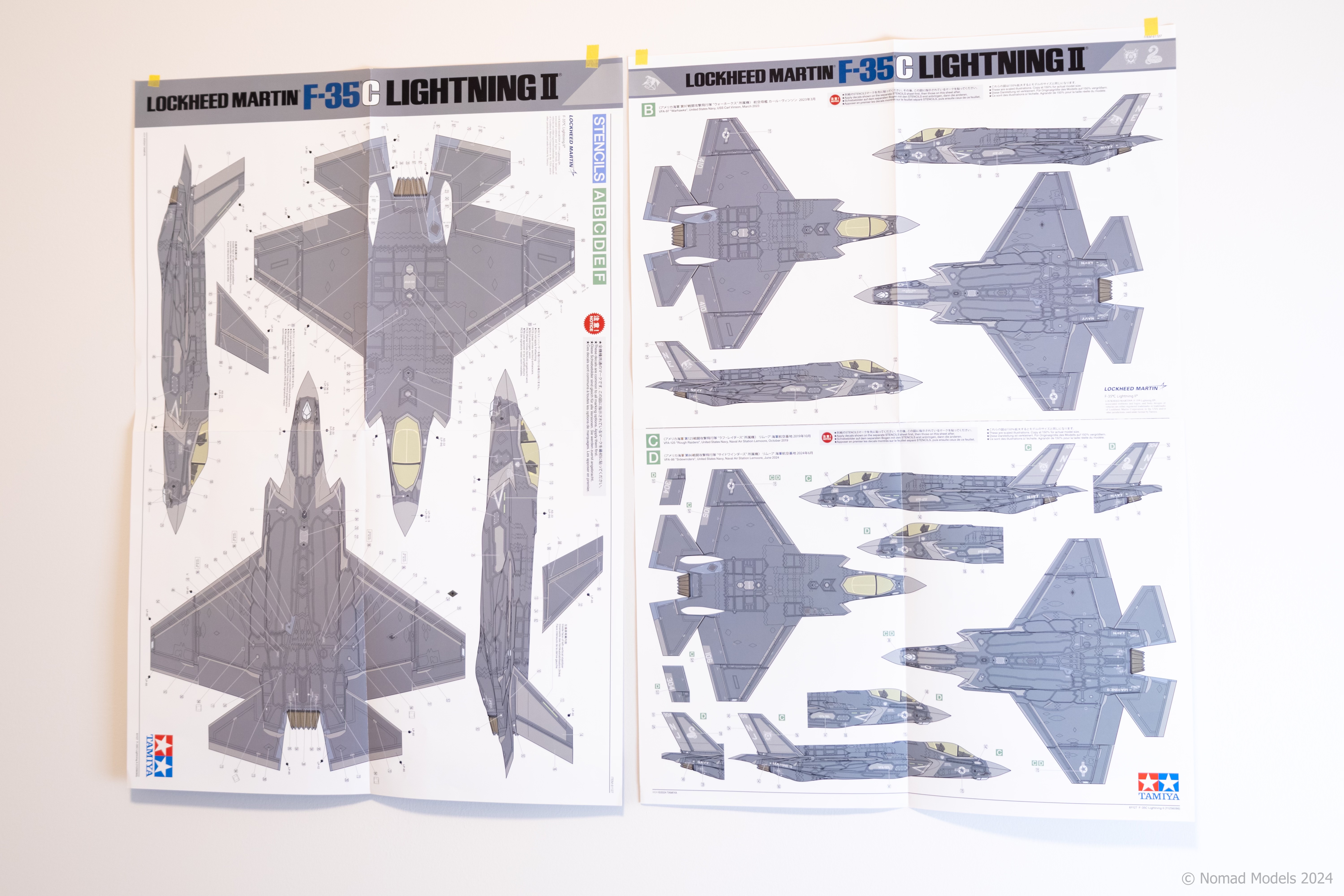
These are the most substantial instructions I have ever seen from a Tamiya kit and at first glance they guide the modeller through the build effortlessly. Make no mistake, This is a complex kit and not one I’d recommend for beginners. With the amount of options that the builder has in completing this kit, it’s not a surprise that they are filled with “Do this if A, Skip B, See steps 35-45, attach parts in numbered order.” That said, these are as clear as clear can be for indicating the significance of your choices in the build. The colour profiles included are hugely impressive and nothing like I’ve ever seen in this hobby. Included is a massive 1/48 sized poster detailing the “A” markings with full colour sheets for the rest of the 5 markings. In all the kits I’ve built I’ve never seen such impressive colour profiles included in a kit, they stand in as some serious wall art!

Miscellaneous: 9/10

A whopping 6 marking options are included in the kit, 2 Marine and 6 Navy jets. The F-35 is a pretty boring aircraft when it comes to markings so Tamiya has done their best here, you get some colour in one option but the rest are fairly similar, not that this was unexpected. The decal quality is excellent as well with very clear printing. The decal thickness may be another issue however.

Total: 95/100

Tamiya’s F-35C is undoubtedly at the apex of the hobby right now, and for good reason. It’s by no means something I’d recommend to a beginner, as there is a number of small parts and keeping focused on a specific aircraft and loadout might be a tall order for somebody new to the hobby. In all other areas however this kit excels.

Categories
1:48 Aircraft Projects

F6F-5 Hellcat: Completed Build

A few weeks ago I completed Eduard’s F6F-5 Hellcat and I’m finally getting around to post the photos and compile my thoughts about the build.

If you’re just here for the photos check them out below 👇

As for my thoughts, this build was a pretty fun, short project. I really didn’t invest a ton of money or time into this project but it was still a blast.

Weathering was fairly straightforward and basic seeing as due to the extensive pre-shade, a lot of the work was already done in creating surface variation. I started with a grey wash completed with oil paints. Washes can be tricky with dark base coats as using a dark colour can really blend in and be hard to see. With a grey colour it’s a lot easier to see the panel lines and added rivets and, in my opinion, looks more realistic.

After the wash I did some oil paint rendering, primarily on the fabric control surfaces in order to show some colour variation in the different type of material. I did some further OPR on the gun access panels in order to represent crews servicing those areas with oily hands.

I knew I wanted to pay specific attention to the exhaust staining as well. From my reference photos I could tell the Hellcats had the tendency to build up both dark and light soot if left uncleaned. I even found a photo of the specific aircraft I was building which showed a substantial buildup of exhaust gasses.

To re-create this effect I first did a pass this the airbrush painting a heavily diluted coat of a dark brown (almost black) mixture in the area I wanted the staining. I then went back over the area with a grey-white mixture, being careful to remain in the larger area covered by the black soot.

After the paint dried I then added some oil paints directly over the previous layer to further add colour variation. I added straight black over the darker areas while a light tan colour was used with the grey tones. I think the results speak for themselves:

To wrap up the build I did some light oil streaking around the cowling which almost disappears into the Navy Blue finish. I added ultra fine wire as the arial and that was it!
Enjoy the photos below!
Categories
1:48 Aircraft Projects

F6F-5 Hellcat: Painting and Decals

For the past few weeks I’ve been steadily building Eduard’s 1/48 F6F-5 Hellcat as a sort of “reset” build to complete before diving into the painting stage of the Tiger project. I picked the Hellcat because I’ve always had a soft spot for U.S Navy fighters and also because I wanted to move this kit out of the stash.

Construction was straightforward although a bit disappointing. This kit is by no means a new Eduard release with the molds dating back to 2008. This is not that ancient but in the grand scheme of things it’s a far cry from the hyper detail kits the brand is releasing nowadays. If you’d like to hear more about my thoughts on this kit, I did a out of box review on it last year:

Eduard F6F-5 Hellcat (Late) In Box Review

Eduard’s Profipack Hellcat has impressive features including photo-etched parts, resin wheels, mask set, and armament options. However, its quality of molding is below-par as it lacks detail and crispness. Eduard’s excellent instructions and various marking options are commendable, albeit limited in color and vibrant prints. With a challenging price, the kit’s weekend edition provides better…

The chipping effects on this build required a two stage chipping process. The first stage consisted of a metallic colour underneath a custom zinc chromate mix chipped with standard hairspray chipping. This was done somewhat quickly as the results didn’t matter too much in that only a small fraction of this coat would be visible in the final model. After this coat was chipped, I hit it with a coat of hairspray and re-primed with 1500 black for the preshading coat.

The preshade/marble coat took an entire day to complete and I was very happy with how it came out in the end. I was able to get a lot of variability in the finish which I knew would be needed to show through the very dark blue final coat.

For the main coat I selected Mr. Colour 14 (Navy Blue). It’s a semi gloss paint to start and I added some GX100 gloss to increase the sheen which worked well I found. I knew that I’d be finishing this model in a gloss finish and wanted to make sure that my base coat was as smooth as possible.

I then got to work removing the masking fluid left behind as part of the weathering process and I was really happy with how this approach turned out. It was difficult at first to remove the fluid but with a plastic tool I was able to scrape it off quite efficiently. I was worried about paint peeling off in areas where the fluid was not applied but this ended up not being an issue as the main coat of Navy Blue was very durable.

After removing the masking fluid I hit the model with a coat of GX100 gloss varnish in anticipation of the decals.

Decals were out of the box, and went down somewhat well. Being from Eduard, I decided to experiment with removing the carrier film with Tamiya Enamel thinner. This went well and helped achieve an even greater painted on effect.