
For this project I took the approach of avoiding any pre-shading or subtractive chipping. While this strategy was not entirely new to me (see my T-55A project) it is still is not something I’m used to. I made this decision because I felt that post-shading was a better approach for achieving the desired look I was after.
This decision led into the next, namely what kind of chipping I wanted to apply to the build. To start, I knew that the chipping effects were going to be somewhat limited in this project. My rationale was that Kursk tigers were often new additions to their units and were not heavily worn down vehicles. These factors heavily favored in my decision to use additive chipping (with a brush or sponge) instead of subtractive chipping (with chipping medium). With the fact that the chipping was not going to be a significant effect I was happy to omit a chipping medium from my workflow.
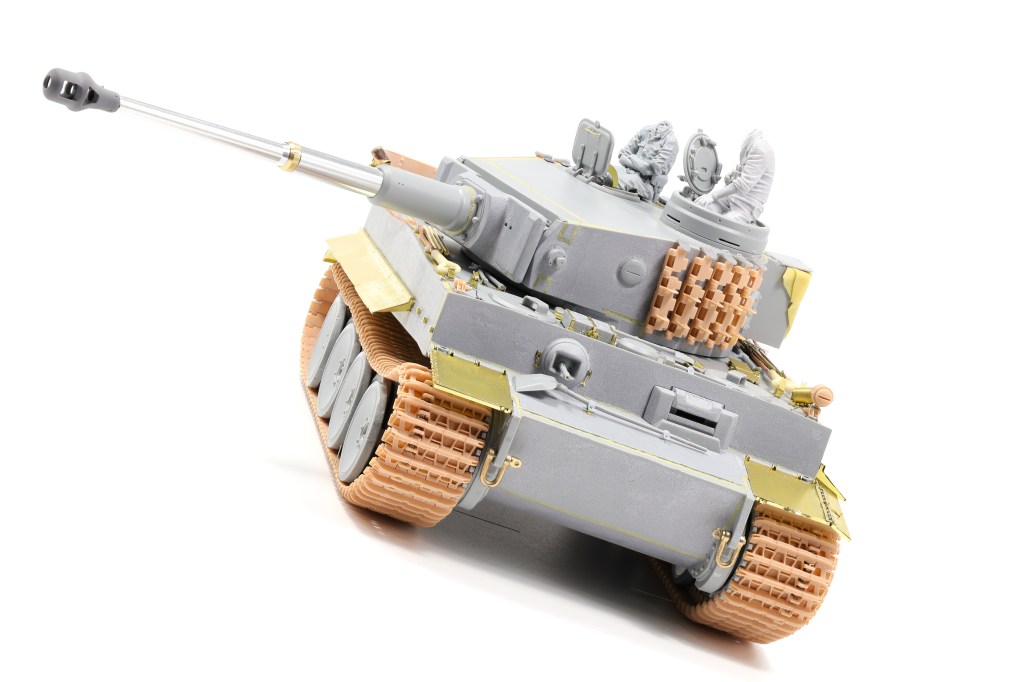
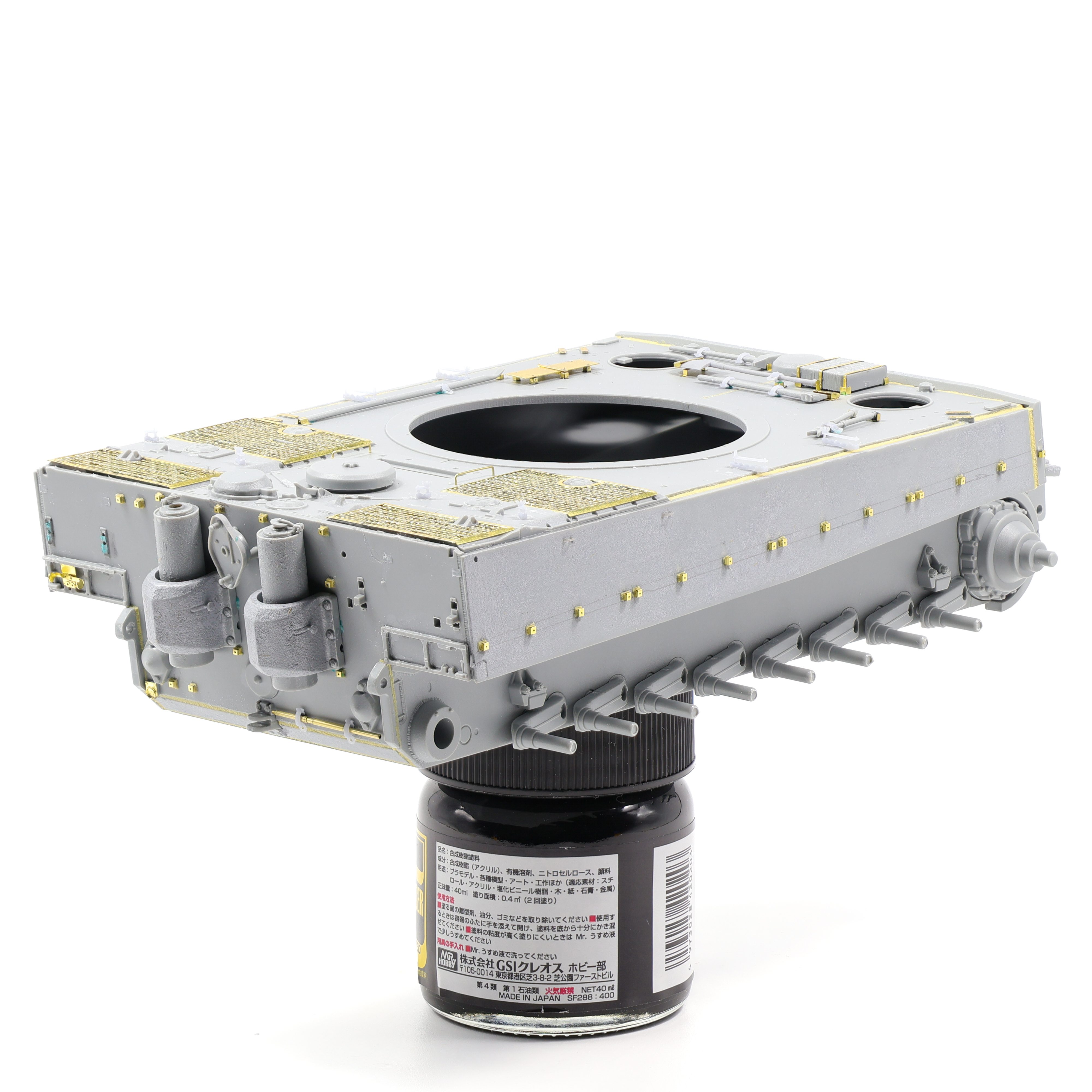
It came time to prime the model and as usual, I turned to Mr. Surfacer 1500 black as my primer as choice. Some people say that using a black base can make the surface colour look “colder” however in my case I don’t see it.


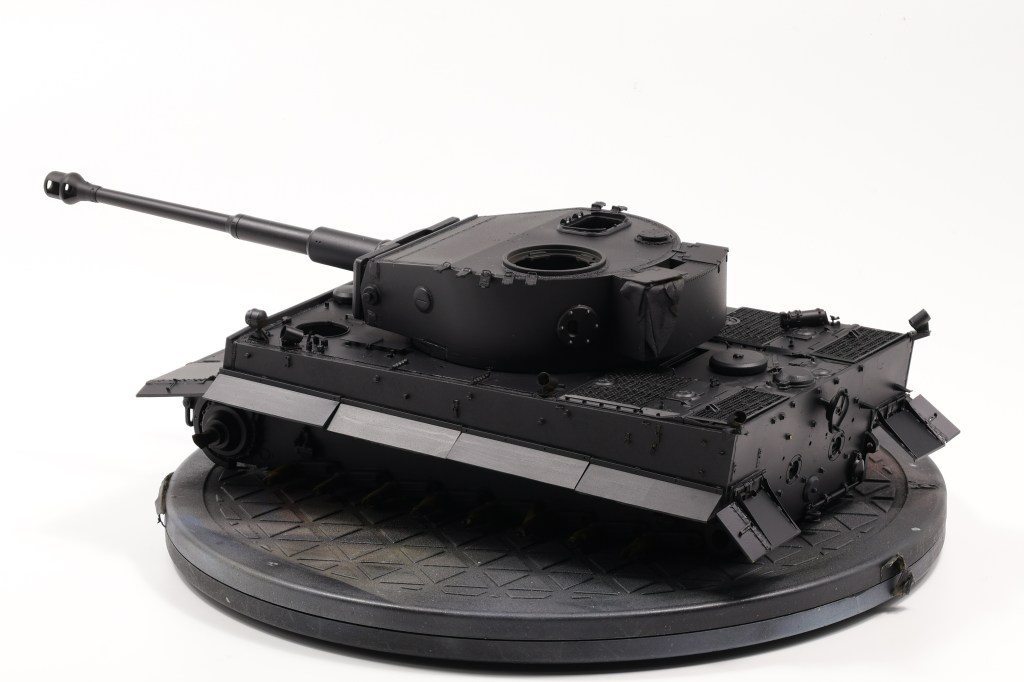
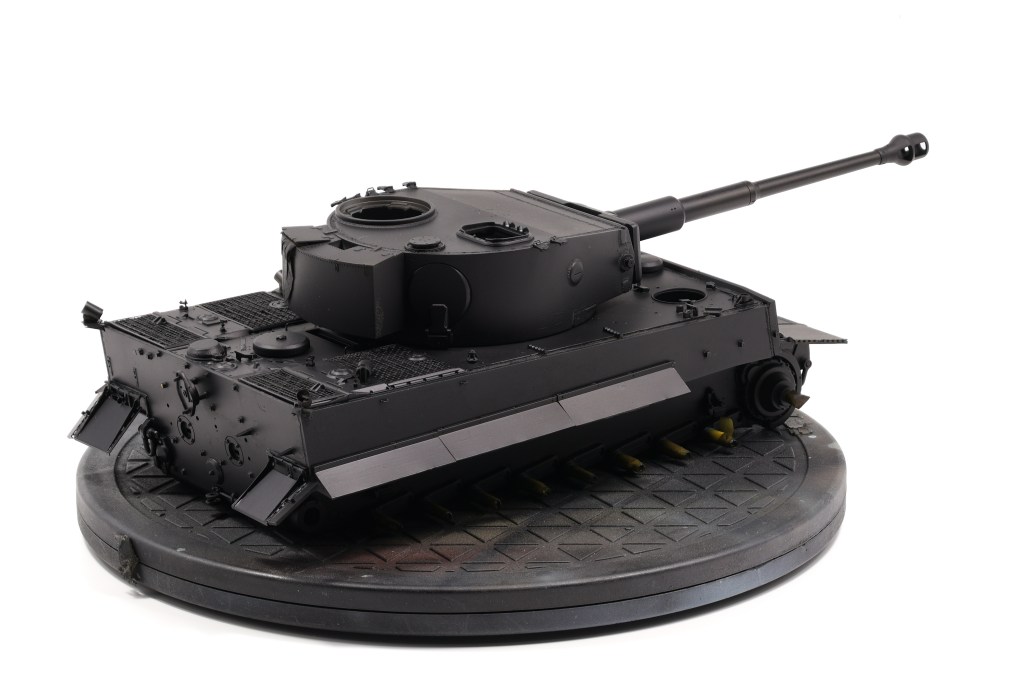
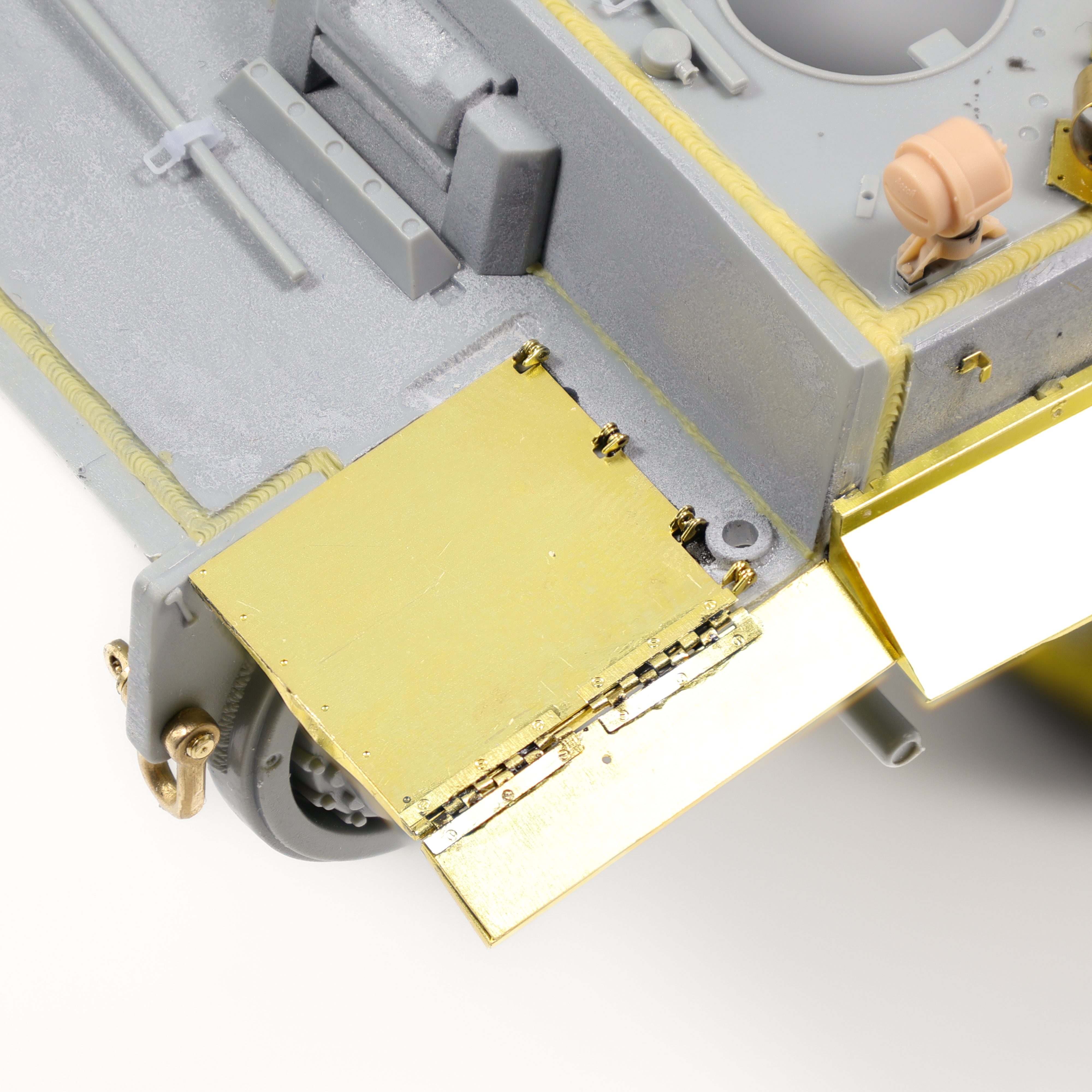
I was particularly happy to finally see my efforts in creating a realistic cast texture and I’m particularly happy with how it turned out, although black is not the best colour for detecting surface finish variation.

Next up was the main coat and for it I selected Tamiya’s Dark Yellow 2 shade (LP-55 and XF-88). I’m familiar with this specific colour and used it on my Sd.Kfz 251/22 Pakwagen project. I did find that it was slightly too dark and to compensate for this I added a few drops of flat white. I used Tamiya’s lacquer range and while I like how they cover the model, I find that they just run out too quickly. Tamiya’s acrylics can be heavily thinned and as such last a long time. The lacquers were significantly thinner and didn’t require a lot of thinner. As such I relied on a lot more paint to get proper coverage For this specific build I pretty much emptied the jar I bought for this project.
The results speak for themselves however and I was happy with how my Tiger looked after completing the first main coat.


After completing the main coat I began the post-shading process To do so I simply used more dark yellow with added white and black. I sprayed the light coats on higher areas and the darker coats where shadows would be. This was my first time going heavily into the world of post-shading and I’m quite happy with the results here.

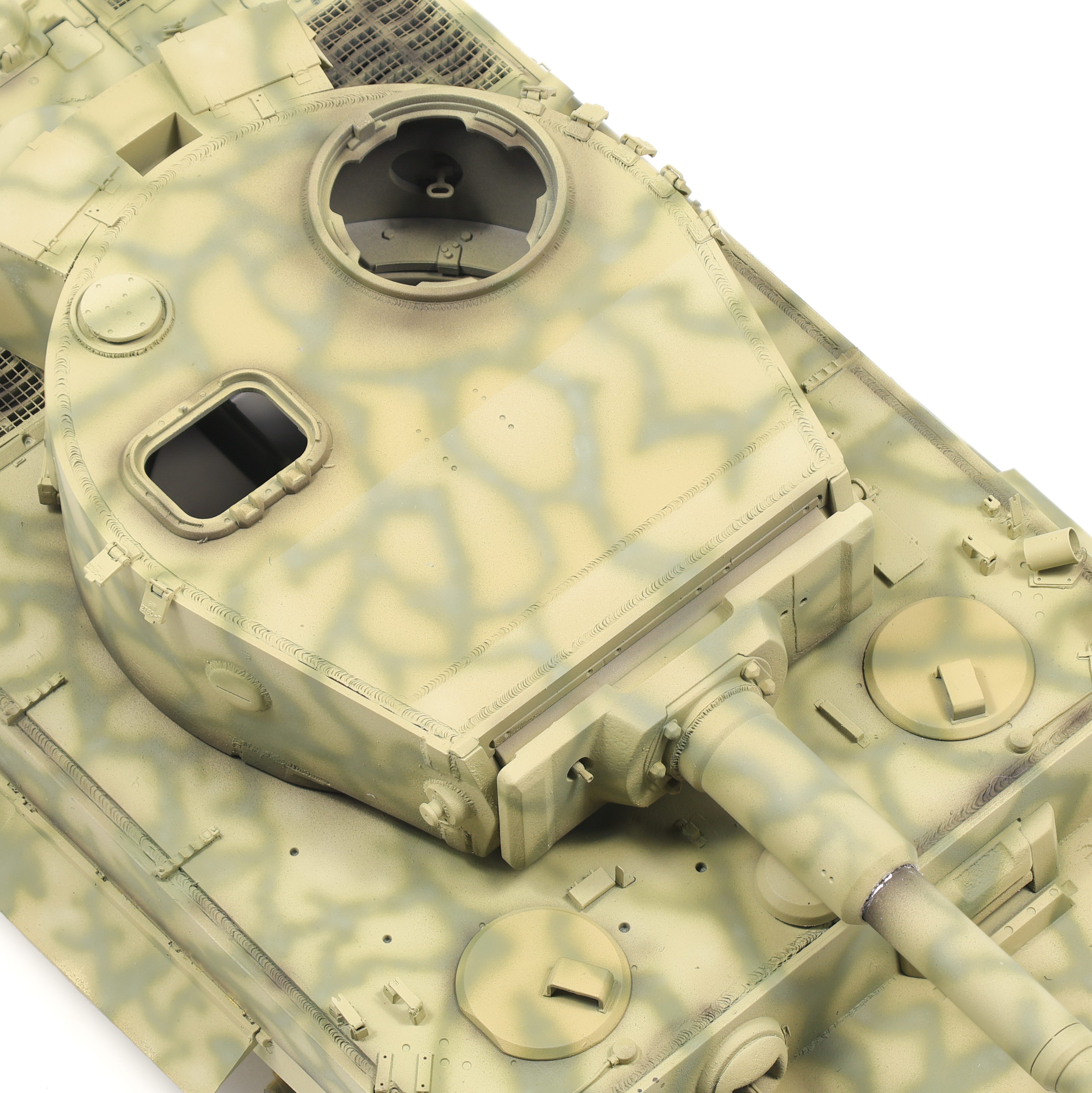
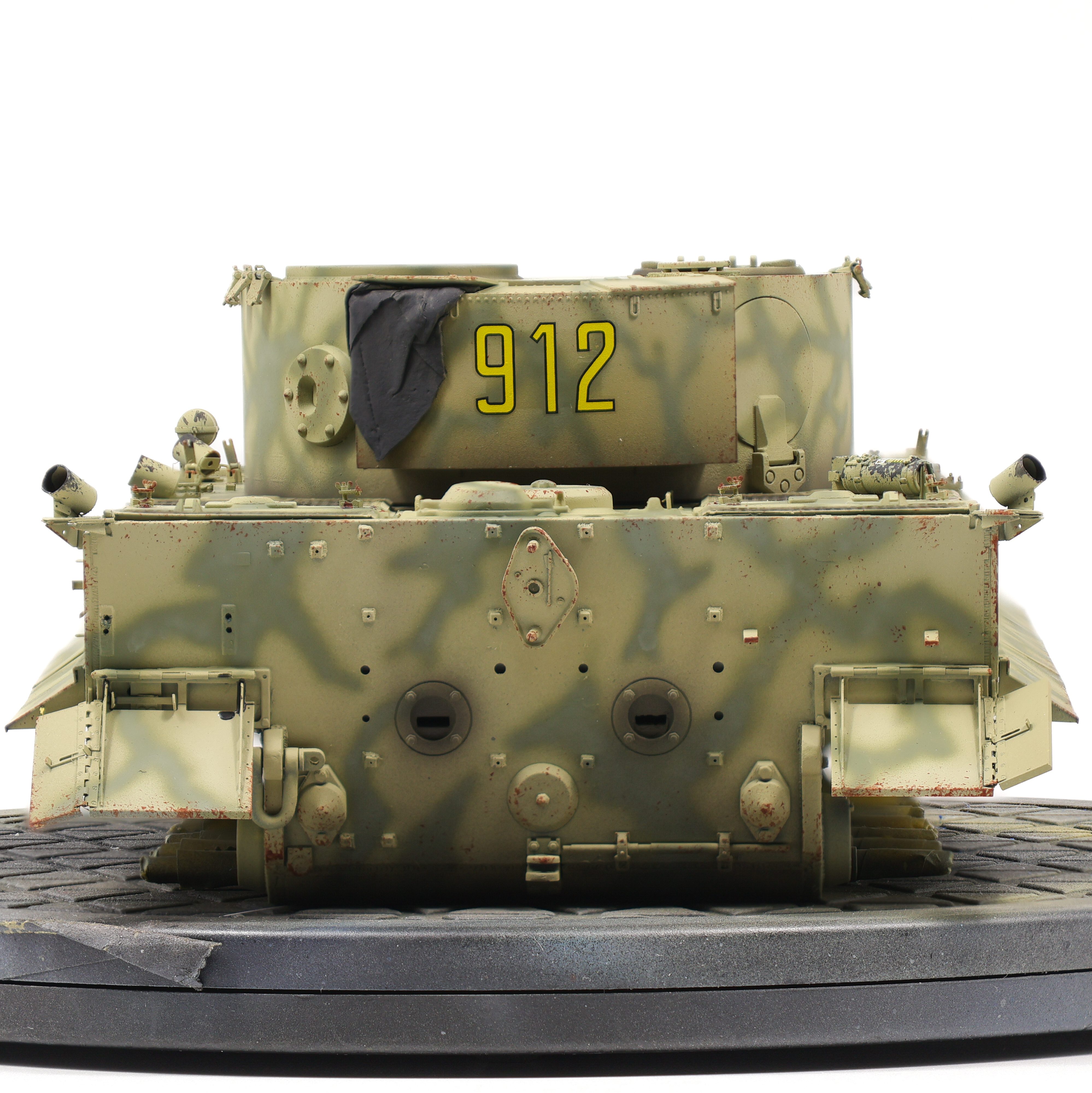
Next up in the process was the camouflage which was a process that, although it would be challenging, I was looking forward to immensely. It was hard to determine an exact scheme from reference photos and the colour profiles from Echelon FD didn’t help a lot either. The best way to describe the scheme was “dunkelgleb with olivegrun splotches”. I took a slightly different approach and tried to re-create a webbed look with long strands of olivegrun over the base dunkelgleb. It took about two days to finally finish but overall I’m very happy with how the scheme came out.

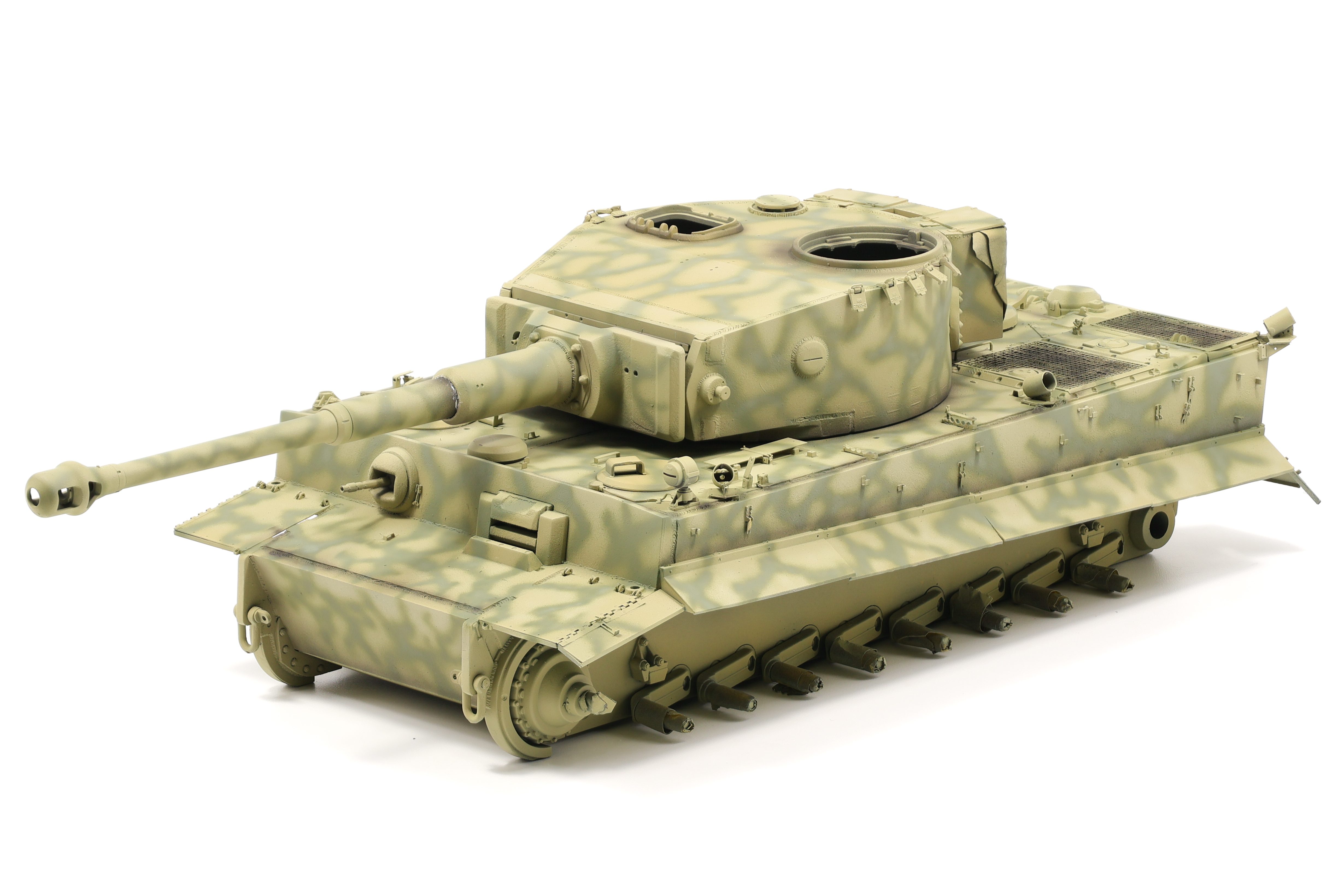


After getting the initial Olivegrun colour on I did another post-shading coat although this time I was more thorough with my approach and took the effect further in some areas. I whipped up a 50/50 mixture of Tamiya Dark Green 2 and White in order to make the initial scheme more faded and worn. Additionally, it blends in a lot better with the dark yellow base coat which is what I was after. I also did more shading with black, or at least a very dark brown. This effect can be most seen where the skirts meet the hull as well as the engine deck as well as a few other areas. Overall I really enjoyed the post-shading process on this model and at this point a decided to wrap it up and move on to the next phase of the build – Markings.
Considering that I had used Tamiya lacquers for all the paintwork, I felt confident in applying the decals straight onto paint. I’ve never worked with Echelon decals before and, after a test run on a spare piece of plastic, decided to use Tamiya Mark Fit Super Strong as the setting solution. I lightly sanded the paint surface with a 12000 grit sanding sponge in order to get the surface as smooth as possible in preparation for the decals. After a few passes the surface felt a lot smoother with no visible loss of paint.

Decals went on really well and with the help of setting solution, conformed excelently to the cast texture I had re-created. Results like these are really why I like to go the extra mile on small effects, it can really make a difference in the (almost) final result.

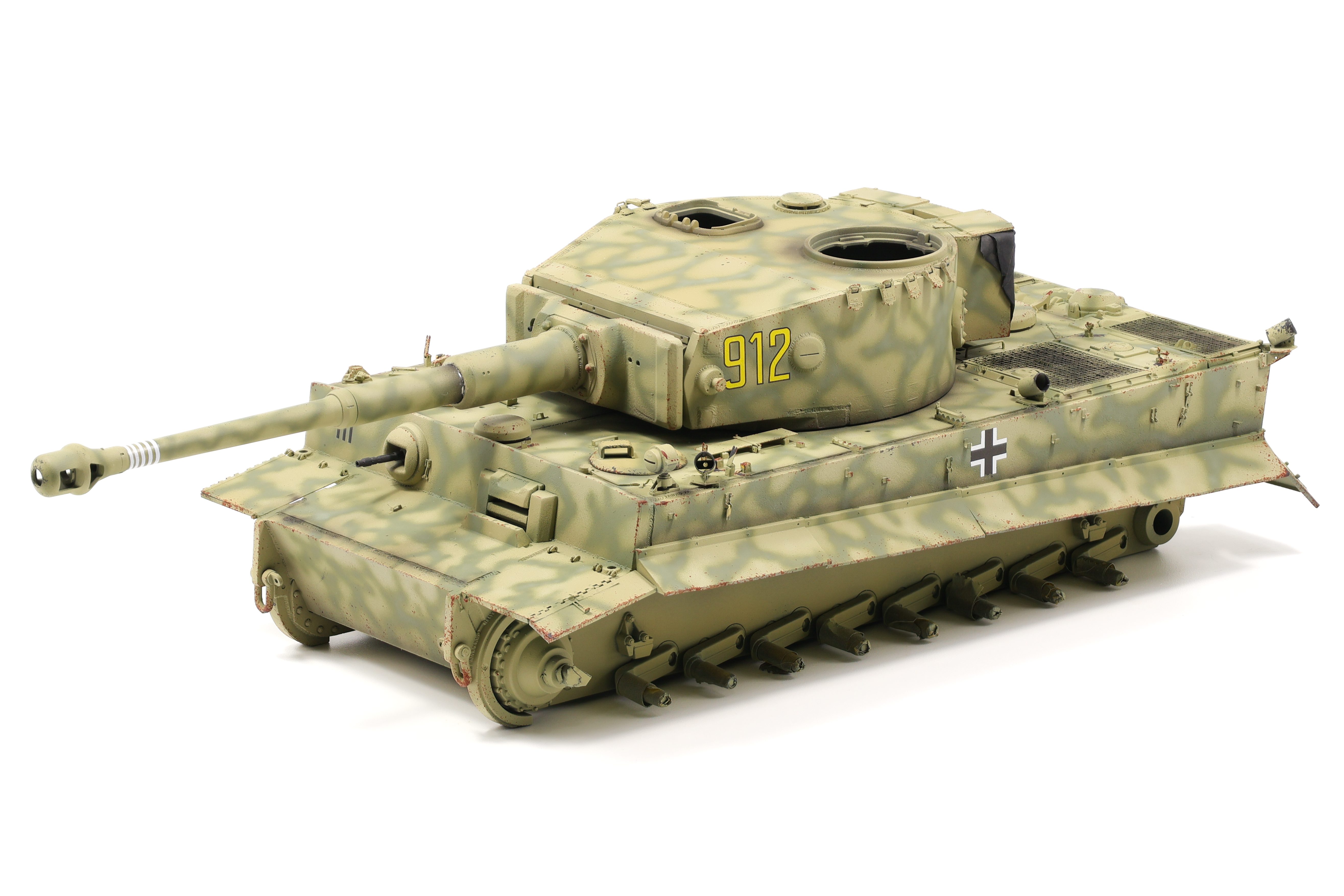


Truth be told, there weren’t a whole ton of markings to apply and it only took an hour or so to get them on the model. Of particular note are the kill markings on the barrel that Echelon provides. I was amazed as to how easy this decal conformed around the barrel to perfectly line up when it overlaps itself. This is done by making it slightly curved inward to match the dimensions of the barrel. It’s clear that they did their research and tested this product before selling to customers. Very happy with this sheet and I’ll be using them in the future.

After applying the decals I went along with some light chipping effects before sealing the model in VMS satin varnish. I didn’t want to go overboard on the chipping as I wanted a cleaner look from the vehicle. That’ll be it for now and enjoy the detail photos below!





















 Nomad Models