Categories
1:48 Aircraft In Box Reviews

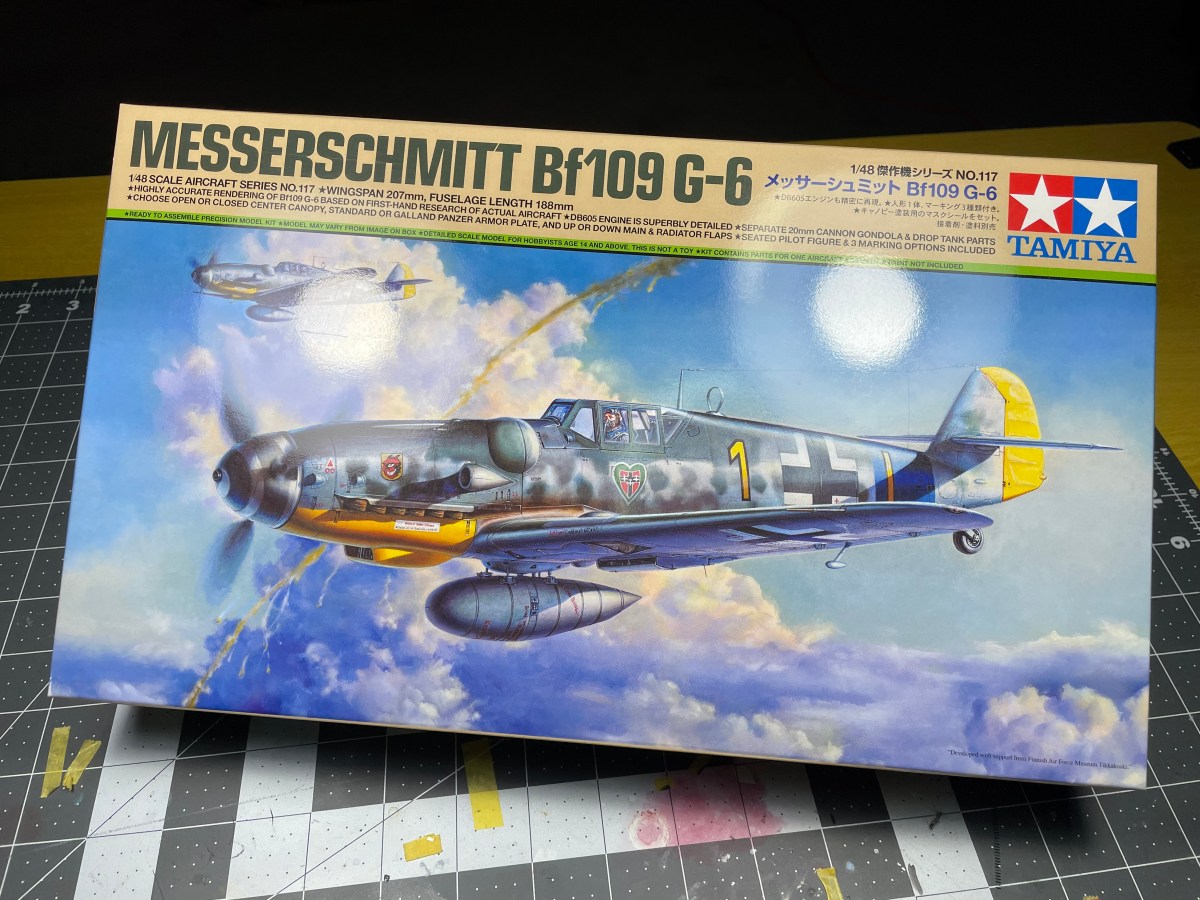
Tamiya Bf-109 G-6 In Box Review

Kit Features: 15/20

Tamiya’s 2017 G-6 is an excellent baseline as to what we as modellers should be expecting in 2023. Tamiya includes a well-stocked kit that is as equally perfect for a new builder as is for someone experienced in the hobby. The only features missing from this kit would be photo-etched parts or possibly resin inclusions as found in Eduard Profipack releases. What is included is a full DB 605 engine that can be built displayed or not (and crucially changed after completion between the two), a pilot figure, canopy masks and various other variant-specific options for building. In my opinion the inclusion of the masks and engine are significant, masking canopies for me is one of the more tedious parts of the hobby and I welcome the inclusions. Many kit builders will “include” an engine in so far that since the engine will be visible when completed, so something has to be there to take up space. Tamiya’s offering is the real thing. Kit features are rated as a 15/20, Tamiya includes a lot and there really isn’t much missing here.

Quality of Molding: 34/50

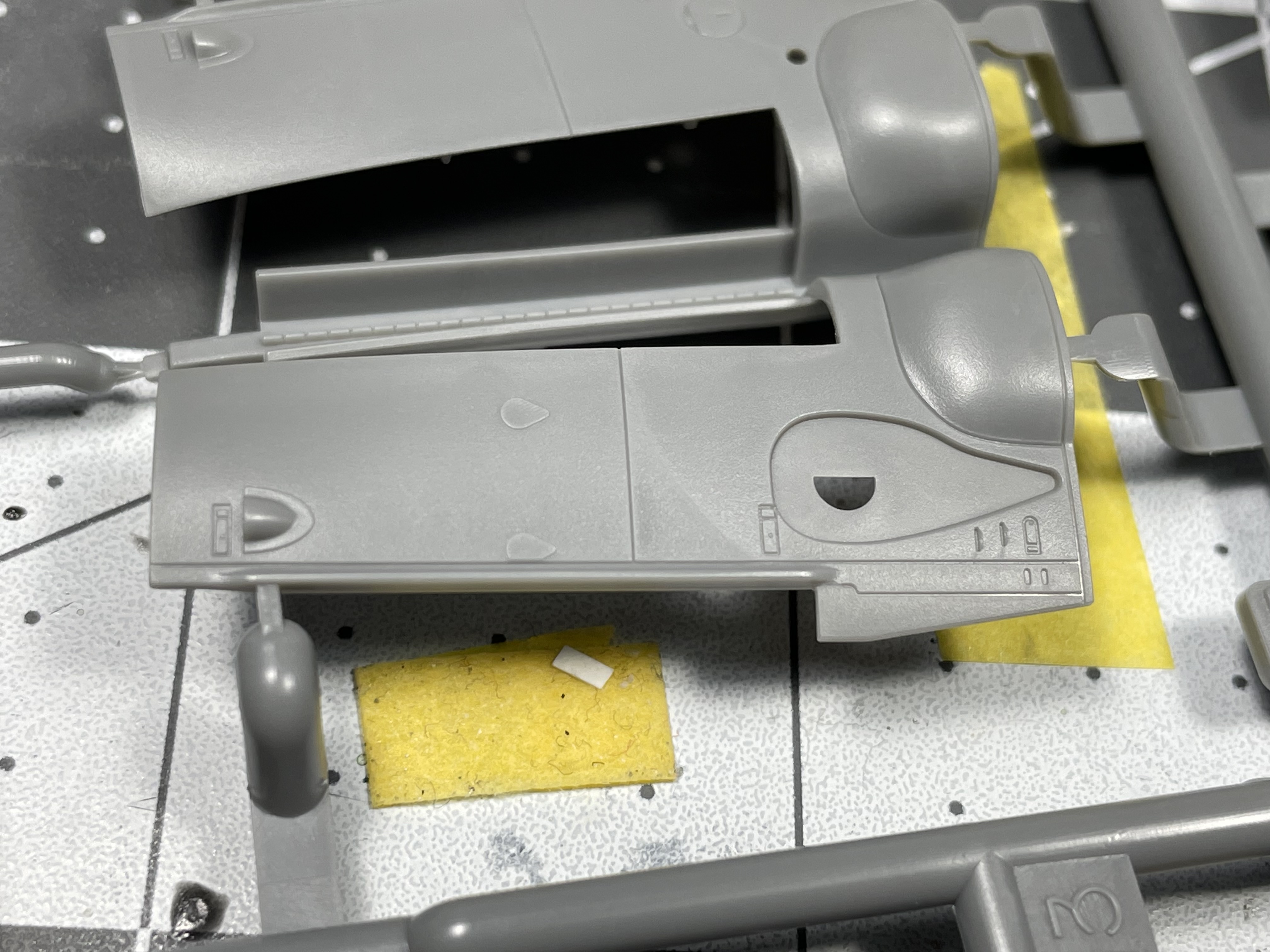
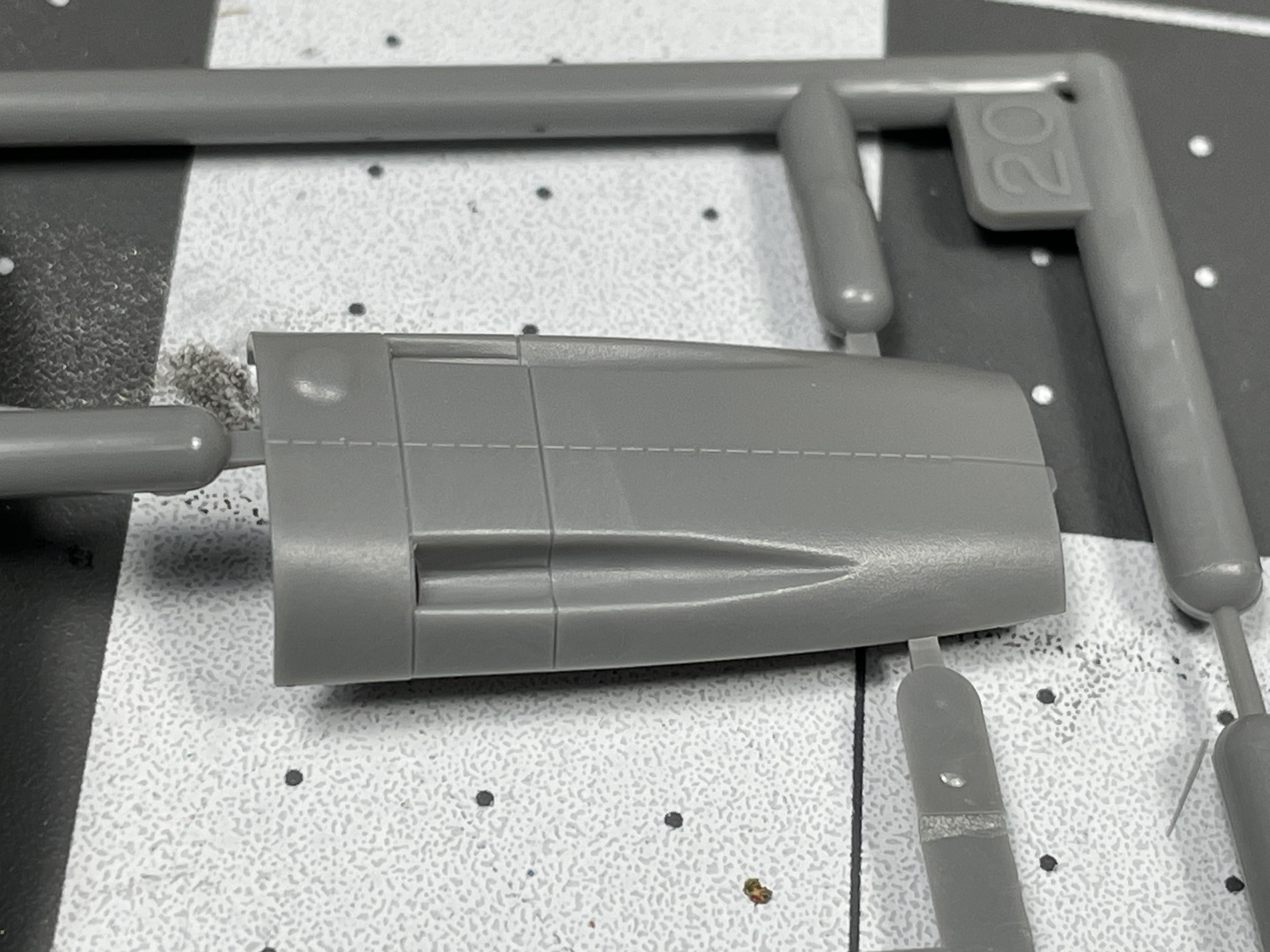
Tamiya’s new tool kits really are quite special, and the molding is an example of why. panel lines are very clear and the kit is the definition of “crisp” no flash is present at all. The only points that Tamiya looses out on is the fact that there are some rivet details missing that will need to be added if the modeller desires. As a counterpoint, Eduard is able to include all of the rivet details in their new tool Bf-109’s. Tamiya losses more points due to the fact that ejector pin marks are visible in prominent locations in the cockpit that will need to be filled. None the less, this 109 will build up to an excellent looking model and has a level of detail where I’m looking forward to getting a wash down into the surface details.

Instructions: 14/20

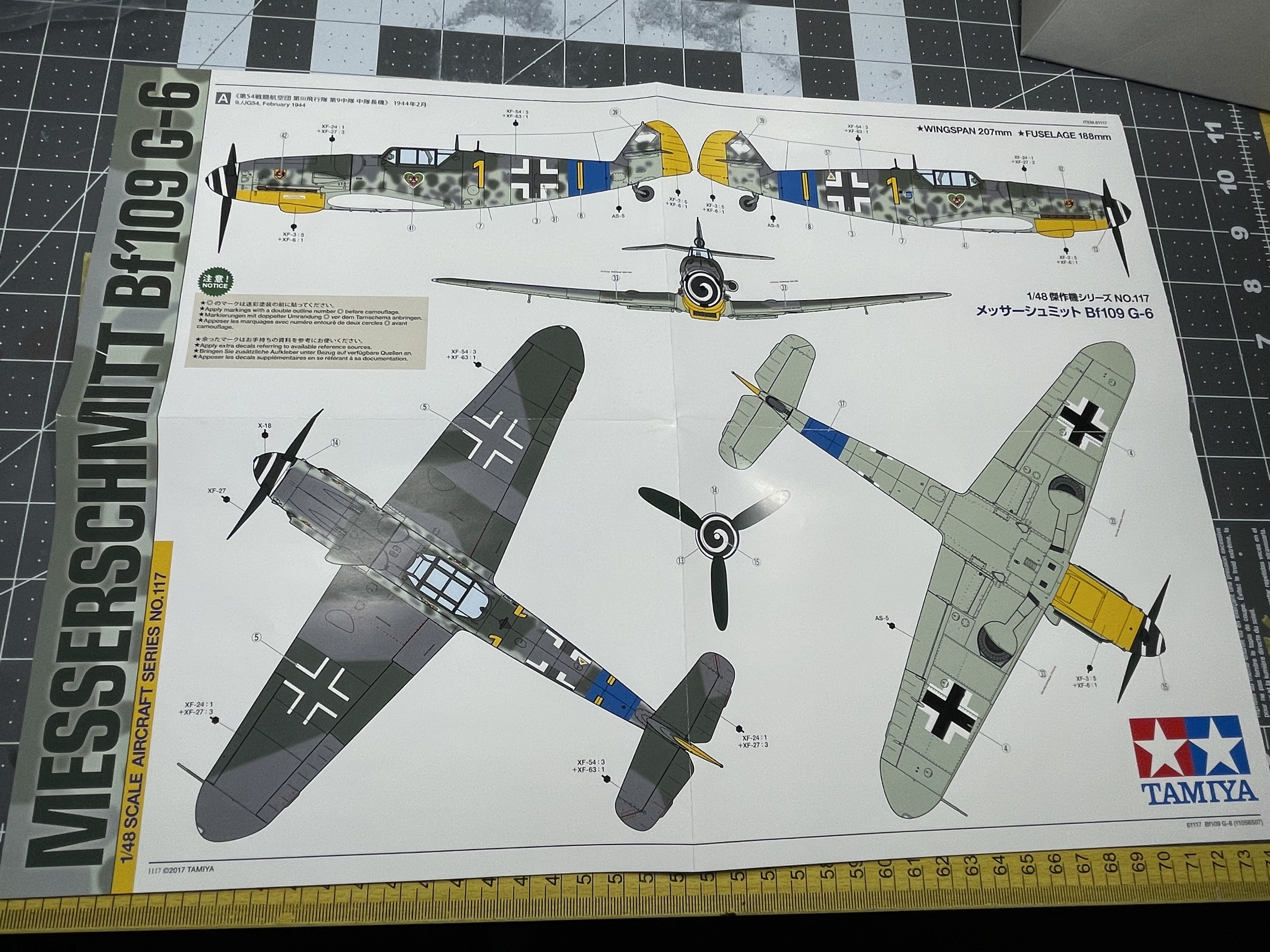
The instructions are perfectly workable and do offer some comforts to the builder. They are unfortunately not in colour and printed on cheaper materials but this downside is mitigated by the fact that the important colour profiles are in full colour and blow up much larger. I do wish that Tamiya included more information about the subject rather than the standard: “9/JG54, February 1945” It feels lacking compared to what Eduard is doing in this space in regards to the historical background of the subject. Despite these shortcomings the Tamiya instructions really are quite clear in what the modeller is required to do in each step with important parts clearly labeled.

Miscellaneous: 6/10

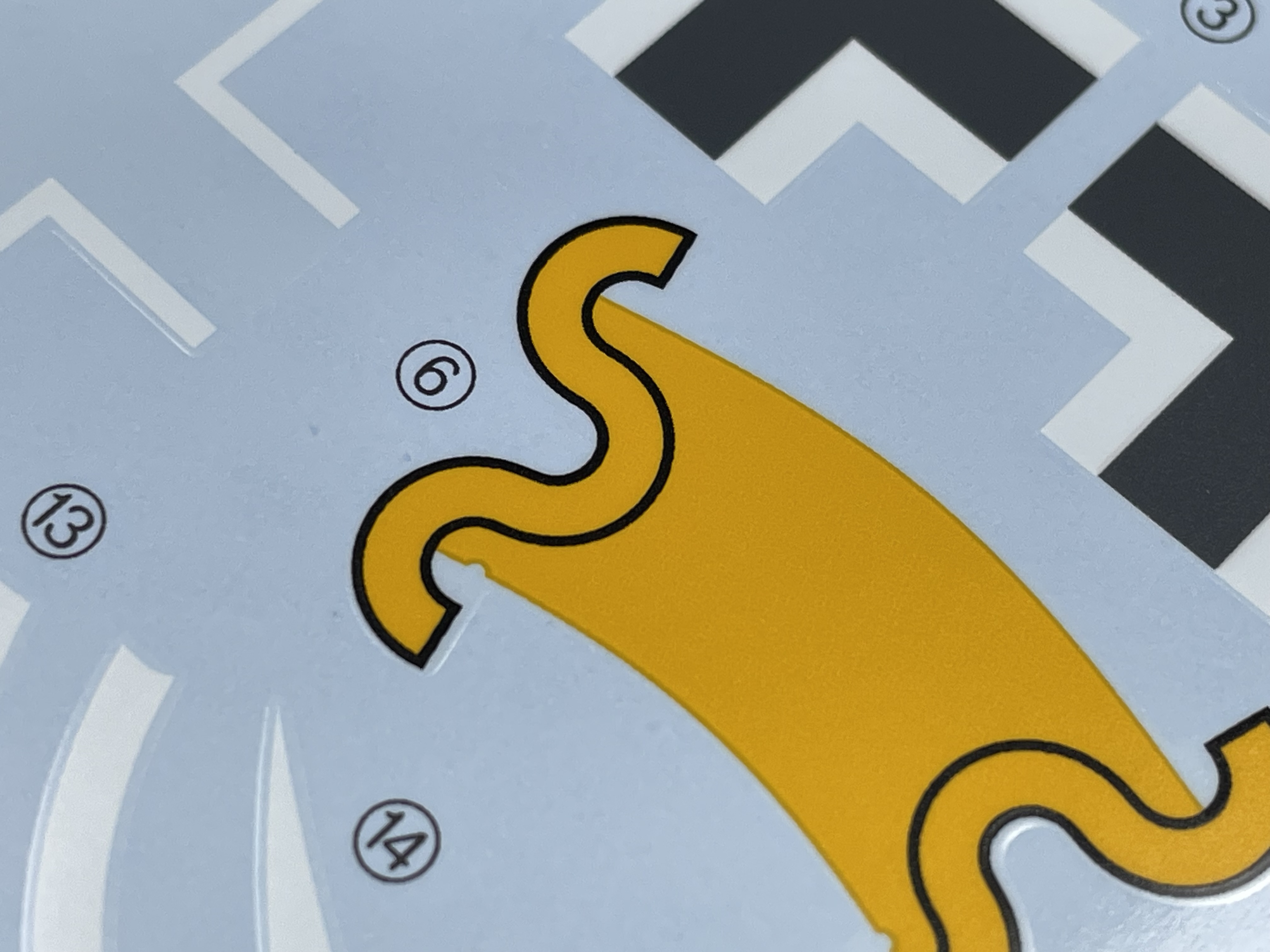
The kit includes 3 options for markings although it could be said that there is really only one option, the standard “grey 109”. I wish Tamiya included at least one other interesting option as G-6 109’s did come in several other schemes. The decals are perfectly printed and very clear, especially with the bright colours, no points lost here. The markings overall are a bit meh, you could say they’ve done a good job with mediocre subjects. As a final point I am docking them a score due to the fact that they use staples to seal the parts bags which can damage sprues unless completely removed, something a new builder might not realize.

Total: 69/100

Tamiya’s G-6 is a great kit, although this score may be deceptivley low the fact is, part of the “Tamiya Tax” is the fact that the modeller pays for the the engineering and fit of a Tamiya kit (and the brand!) and not necessarily the detail or what’s inside the box. In contrast to my previous reviews it may seem that this kit is only marginally better than Eduard’s Hellcat or Tamiya’s 20 year old Mosquito, and to be fair that’s not far off the mark here, but it’s an objective fact that this G-6 is a great kit when competitively priced between 60$-70$ CAD.

Categories
1:48 Aircraft In Box Reviews

Eduard F6F-5 Hellcat (Late) In Box Review

Kit Features: 16/20

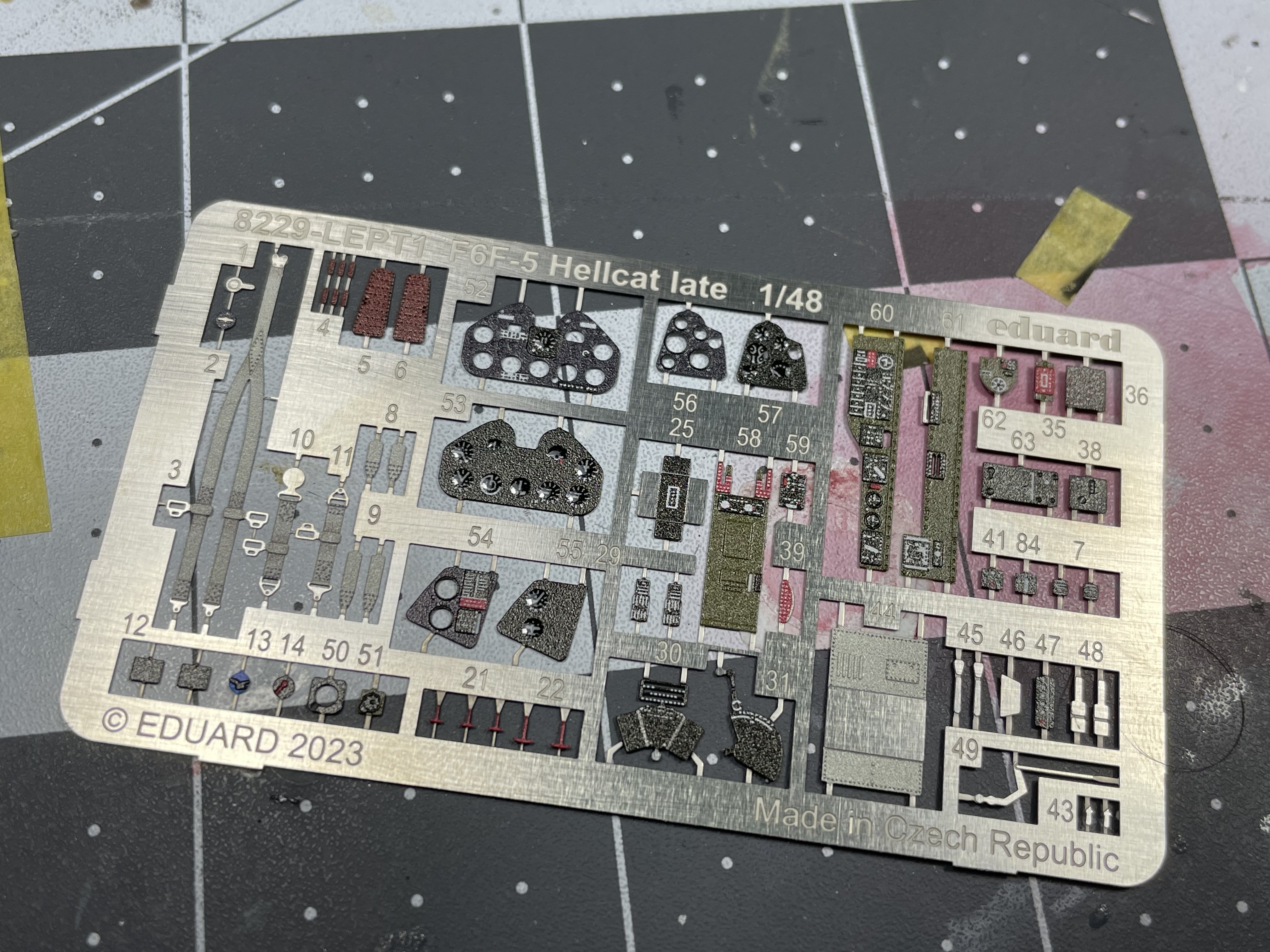
As a typical Eduard Profipack kit, Eduard has well furnished this kit. It includes quite a lot of bang for your buck, coming with two frets of photo-etched parts, resin wheels and a complete mask set for the model. The resin wheels Are greatly appreciated and are often a very useful improvement over the stock wheels. The kit includes some armament options in the form of rockets or bombs as well should the builder choose to include them. Overall the kit is well stocked compared to older releases but it should be kept in mind that you are paying for these extras in the overall higher list price of the kit.

Quality of Molding: 24/50

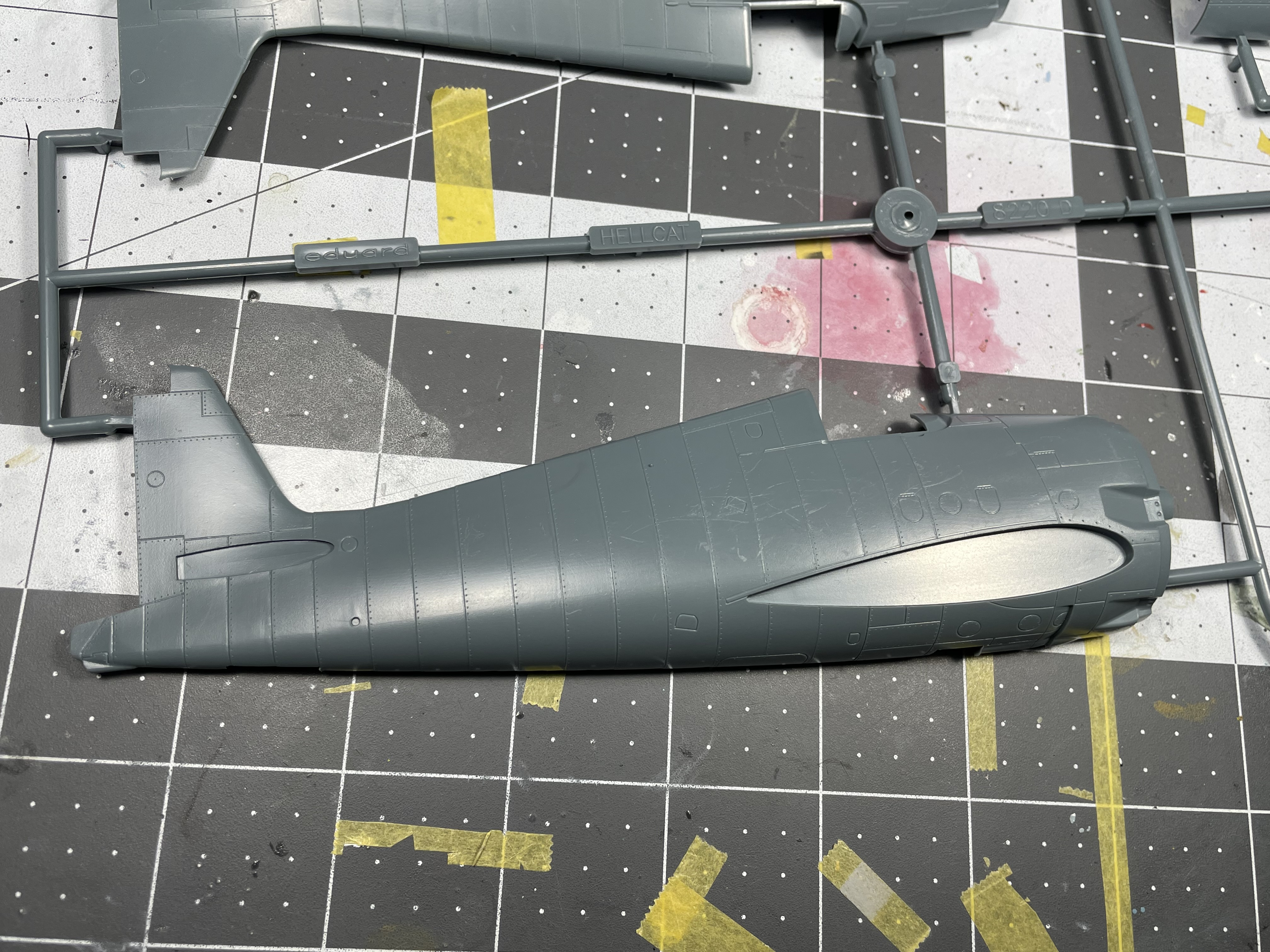
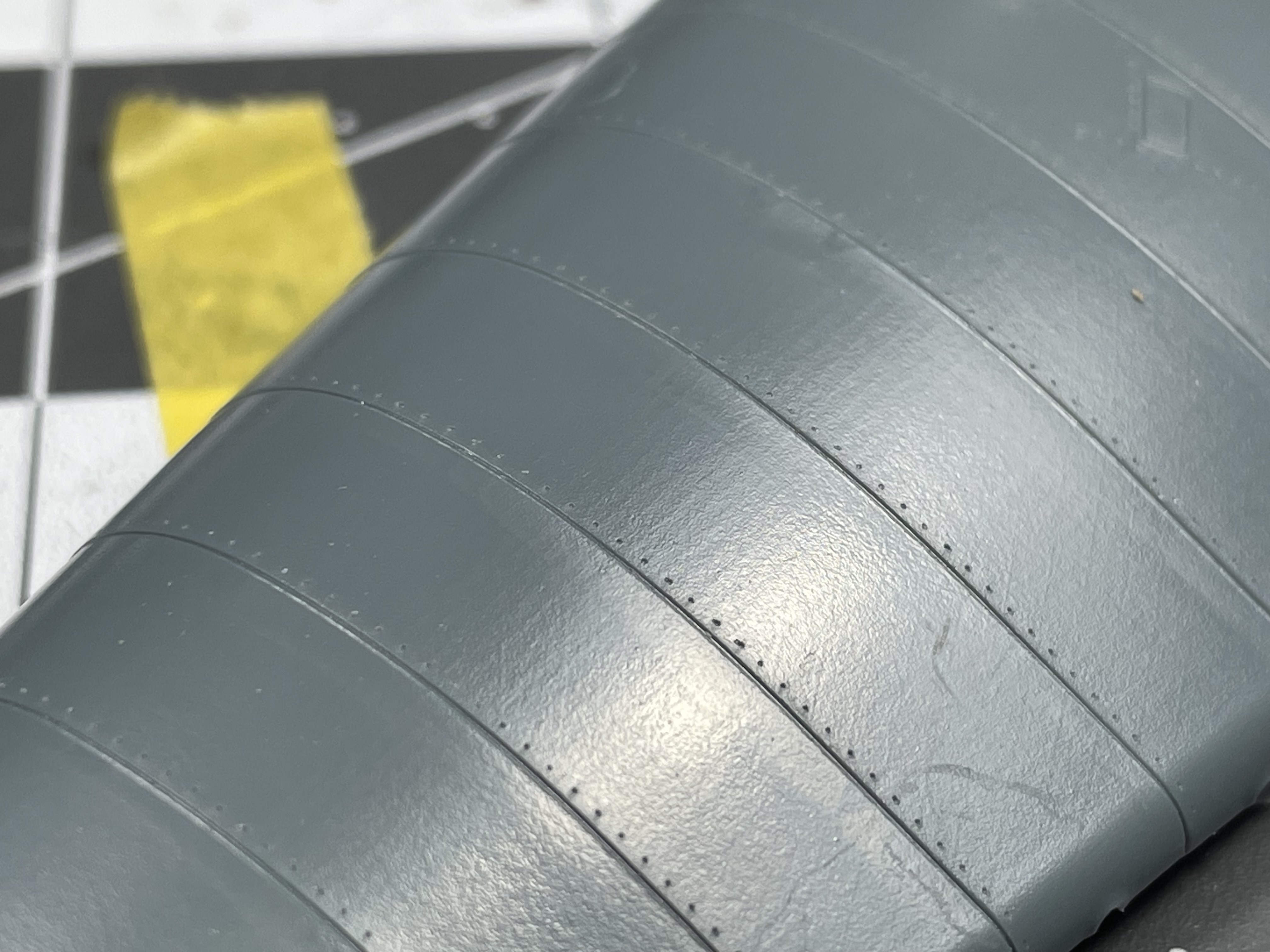
Eduard’s Hellcat offers basic panel-lining and riveting, as expected from the manufacturer. It should be stated however that the detail present in the molding does leave some to be desired. I was surprised by the lack of crispness in the molding details. looking further, the build does lack the extensive riveting found in newer tool Eduard kits. I could be wrong, but when tracing back this kit’s tooling on Scalemates.com, it indicated that this is a re-box from 2008 originally. This isn’t especially surprising to be honest, Eduard frequently re-boxes and re-releases kits but it’s not always clear when buying kits when the molding was first produced. I compared the molding on this kit to 2017’s Tamiya’s Bf-109G-6 (of which a review should be up soon) and it’s clear that the Tamiya kit’s lines superior in every way. The one aspect of the molding that goes in the Hellcat’s favour is the inclusion of the “layered” skin on the fuselage. The vertical panneling is molded so that ever so slightly the panels overlap as seen in the real fighter. All of these issues together paint a unfortunate picture and the fact that this kit is priced as if it is a new tool build while not including the level of detail found in Eduard’s new tool kits.

Instructions: 18/20

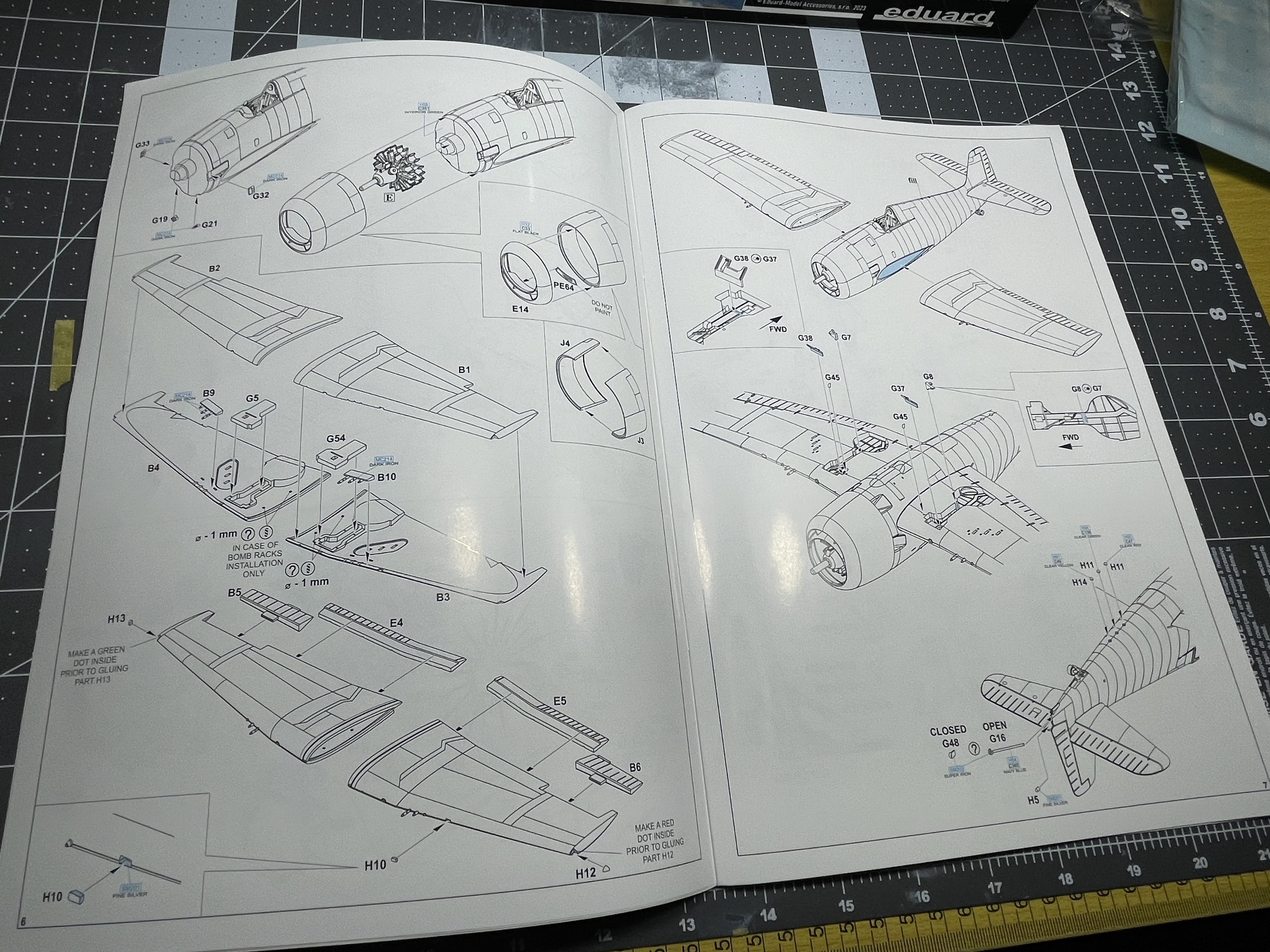
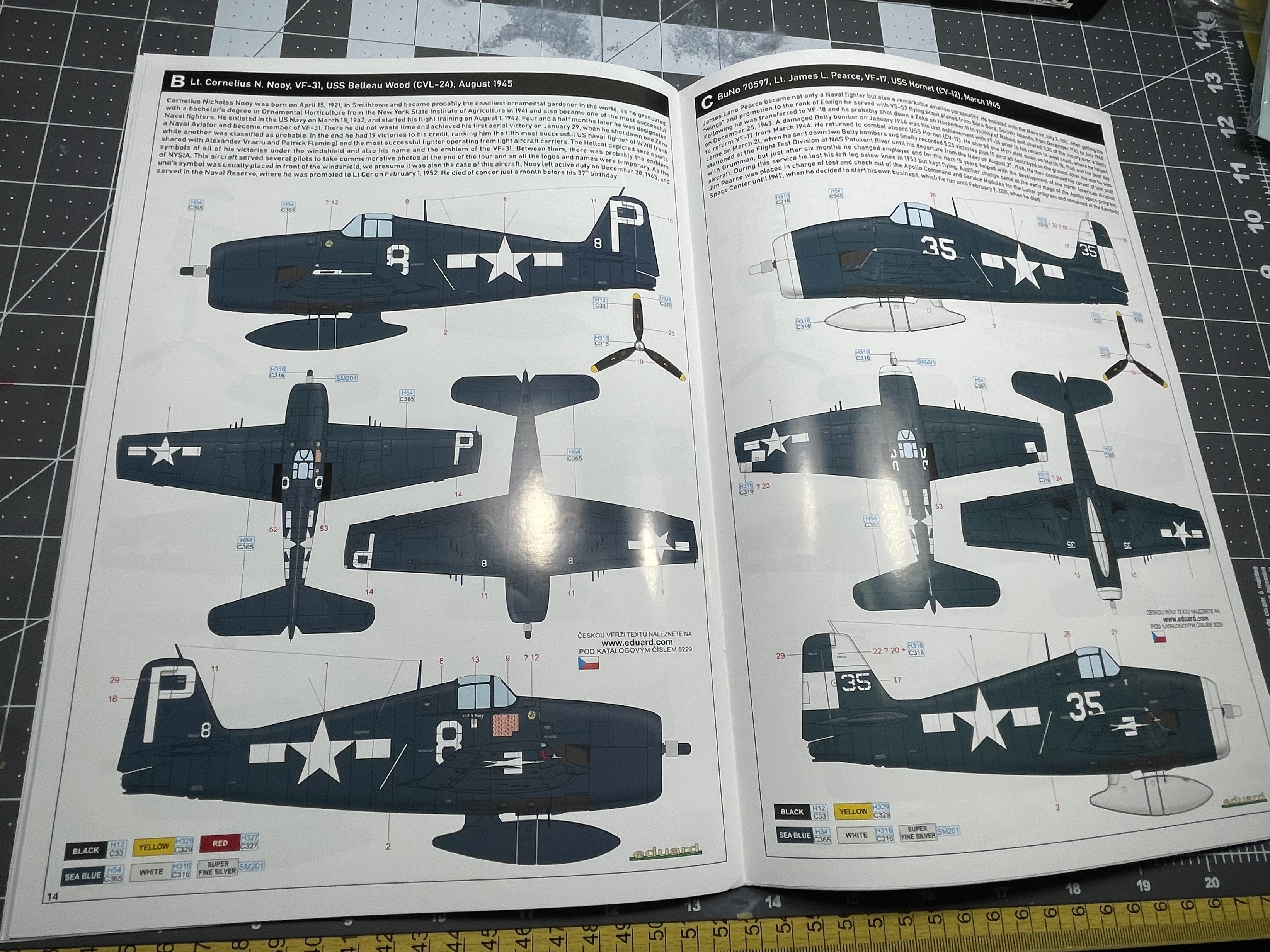
Eduard claws back some points in this section as their instructions have always been excellent. In colour and clearly printed they offer more than the bare necessities. Eduard instructions have always been well done and this is no exception. As a matter of personal preference, I prefer instructions in the form of a booklet (stapled together) rather than the type that just fold out (like Tamiya’s). One high point of Eduard’s instructions are the full colour profiles and the details provided about the markings. I for one like knowing the details about the aircraft I’m building and Eduard goes so much further in giving us those details than other manufacturers, they’ve clearly done their research! I love reading about the bird I’m building and the story of the person who flew it. Eduard gets a monster score in this regard, and well deserved.

Miscellaneous: 7/10

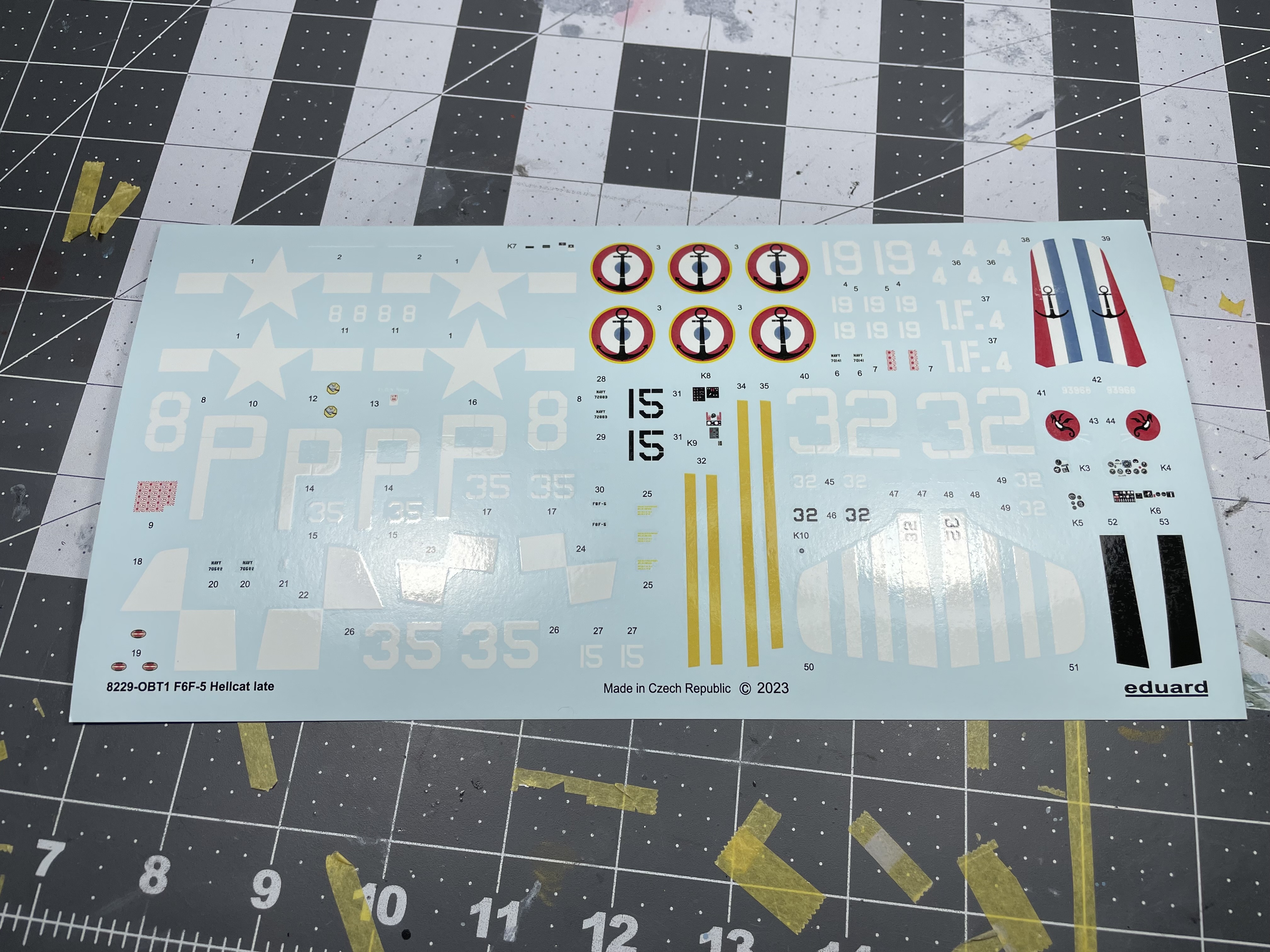
Included in the kit are 6 different marking options. I do like the variety of options included, however I feel that they could have gone a bit further in the width of what was offered. I don’t mean that they need to have offered even more options, however more colourful options would have been appreciated. They do offer a French variant which helps to increase the score, and the fact that late war Hellcats were pretty universally dark blue also mitigates it. They do loose points on the quality of the decals however, as Eduard has struggled to print vibrant colours on thier decals, with the reds on this sheet being a particular example.

Total: 65/100

Eduard’s Profipack Hellcat is in an interesting space. Nearly everything about it is excellent, save for the molding. for 62$ CAD it’s not an inexpensive build. As a lover of naval aviation subjects I’m biased but it’s an undeniable fact that the molding is disappointing. My honest recommendation? If you’re planning to build a late Hellcat either OOB or super detailed stick to the weekend edition of this kit. It’s a third cheaper and offers more flexibility for adding aftermarket parts (like a resin cockpit or engine). If you’re going to buying a kit with below average molding you may as well buy the cheap option.

Categories
1:35 Armor In Box Reviews

RFM Panzer III Ausf. J In Box Review

Want to see my build of this kit? Click here: https://nomadmodels.wordpress.com/2023/10/03/rfm-pz-iii-ausf-j/

One of my first ever “mainstream” kits I’ve built was Tamiya’s Panzer III Ausf. L. Ever since then, I’ve been a huge sucker for the tank. In my opinion the Panzer III was the most over looked tank of the second world war and as such, it’s got a soft spot in my heart. Funnily enough, I didn’t intend to pick this kit up. I originally wanted to give Tamiya’s new Marder III a go, however it wasn’t in stock at my LHS. Bought for $70 CAD, This kit is a little steep price wise for what you’re getting. The Pz. III isn’t a huge tank and I was pretty surprised by how few sprues there were in the box. Anyway, let’s get into it, here’s my inbox review for Rye Field Model’s Panzer III Ausf. J.

Kit Features: 16/20

The kit certainly isn’t lacking for specialty features. It includes individual length tracks, a generous amount of photo etch, and a few other goodies. One thing I was particularly happy to see was the ability to open and close lots of different hatches. RFM also gives the builder the option of a workable suspension if they desire, a increasingly common addition to kits these days. The “Figures” included in the kit are interesting to say the least, essentially just geometric shapes, they are only useful as a nice novelty and not something most builders would want to include in their build. The figures are a bit of a catch-22, odds are if you’re the kind of builder who stages figures in your model, you do it because you want some additional realism/life into the scene. The problem is that they are inherently unrealistic and don’t fit well in the build. If anything you can use them as painting dummies in the future to practice your figure painting skills. Besides that though, the kit really provides you with some nice accessories to play with. Of particular note are the tracks, which, don’t have any injector pin marks and will require little cleanup.

Quality of Molding: 45/50

The molding of the kit is definitely the best part of this build, the details are crisp and it’s obvious RFM put a lot of effort into this area. Small details are well defined and clearly visible. Of particular note are the weld seams molded into the plastic. In my opinion these are some of the best injection molded seams found today. Another specific area of note is the detail found in the running gear. The “Continental” branding on the tire can clearly be made out, furthermore, patches of weld beads can be seen on the inside of the wheels. With typical kits, the bottom of the tank will often consist of a “tub” that the suspension can be attached to before closing the top. In this kit however RFM has opted to split up this construction method, allowing for greater detail in individual pieces. Seeing as this is a 2020 release, this kind of detail is expected and the kit absolutely delivers. Points are only lost due to the absence of any texture in the molding.

Instructions: 19/20

I was pretty happy with the instructions upon my first impression. Printed on a large booklet they feature 3d colour CAD illustrations of various build processes to aid with part placement. The instructions also indicate where on parts glue should be applied, this is particularly helpful with the track construction. The only issue I think may be a problem is that they seem quite busy. They may be hard to follow for some builders.

Miscellaneous: 8/10

The kit gives the modeller a pretty wide selection of markings to choose from, all of which fit pretty neatly on a small sheet of decals. While these specific options aren’t my cup of tea, I have to say RFM did a good job providing options. The only issue I have with the markings is that they don’t indicate unit or location on the color plates. For $70 this is a pretty healthy kit feature wise.

Total: 88/100

There’s no other way to say it, this is a really capable kit at a reasonable price. This kit is leaps and bounds better than the other J variants on the market. I have no doubt it’ll build up to be a good looking Panzer III. It comes with a good helping of accessories and is loaded with detail. Definitely try to pick this one up.

Categories
Aircraft In Box Reviews

Tamiya Mosquito B Mk.IV/PR Mk.IV In Box Review

I managed to pick this Tamiya 1/48 Mosquito for around $45 CAD and despite the kit’s age I’m very happy with the purchase. I’ve never built a Mosquito (or any British fighter before) and made the safe choice to go with Tamiya. Initial impressions are pretty favorable, with crisp styrene and minimal flash present. It comes with three unique variants including a electric blue option.

Kit features: 12/20

Tamiya’s offering is pretty bare bones when it comes to kit features, offering not a lot more than decals and clear parts. One benefit of the kit is allowing the option to model the PR Mk.IV reconnaissance version of the Mosquito in addition to the standard Mk.IV version. In terms of armament, the kit not only includes bombs but also rockets, should the modeler choose to include them. The kit however looses points for no photoetch parts or other accessories. This disadvantage is somewhat mitigated however due to the fact that at the time of the kit’s 1999 release inclusion of photoetched parts wasn’t super typical and not expected at the kit’s pricepoint.

Quality of Molding: 35/50

The Mosquito features nice recessed panel lines and rivet details as well as passable cockpit details. When compared to modern releases however, the kit doesn’t reach the same levels of detail. Again however this must be expected due to the kit’s age. The kit gains back some points due to the fact that the detail is adequate and fully capable of building a nice looking model. Detail is really only omitted in hard to find areas such as the gear bay. In terms of molding quality no flash can be found, requiring little cleanup.

Instructions: 11/20

The instructions are the real weak part of the kit and don’t offer a whole lot more than the bare minimum. Tamiya’s instructions include a large camouflage profile which should help during painting. The instructions are in typical Tamiya style, folded out paper with no coloring. The downside of the instructions are very clear when compared to the instructions found in Meng’s E2 which was also reviewed on this site. The instructions however, are quite clear and easy to understand – the only real requirement for a kit’s instructions.

Miscellaneous: 7/10

Three different finishing options and two different variants help the Mosquito’s score in this area and the decal quality looks good considering they were manufactured over 20 years ago.

Total: 65/100

Initial impressions of Tamiya’s Mk.IV Mosquito are good and I have full confidence that the kit will shape up into a good looking model. At $45 CAD the price-to-kit ratio is quite high, and you get a lot of plastic for you money. this kit would be an excellent place to start with resin accessories or even just build OOB.

Categories
Armor In Box Reviews

Trumpeter E-50 Flakpanzer In Box Review

I picked up Trumpeter’s Flakpanzer earlier this summer after it caught my eye in my LHS. I’m a huge sucker for Paper Panzers in general so I knew when I saw it that I has to pick it up, especially when it was on sale for only $40 CAD. Despite my enthusiasm for the subject it was clear to me that the kit was pretty simplistic overall and lacked detail found in newer kits. For a kit pushing 10 years however, my initial impression was that it was of acceptable quality for the modeller who isn’t afraid of re-doing weld seams or flame cuts.

Kit Features: 11/20

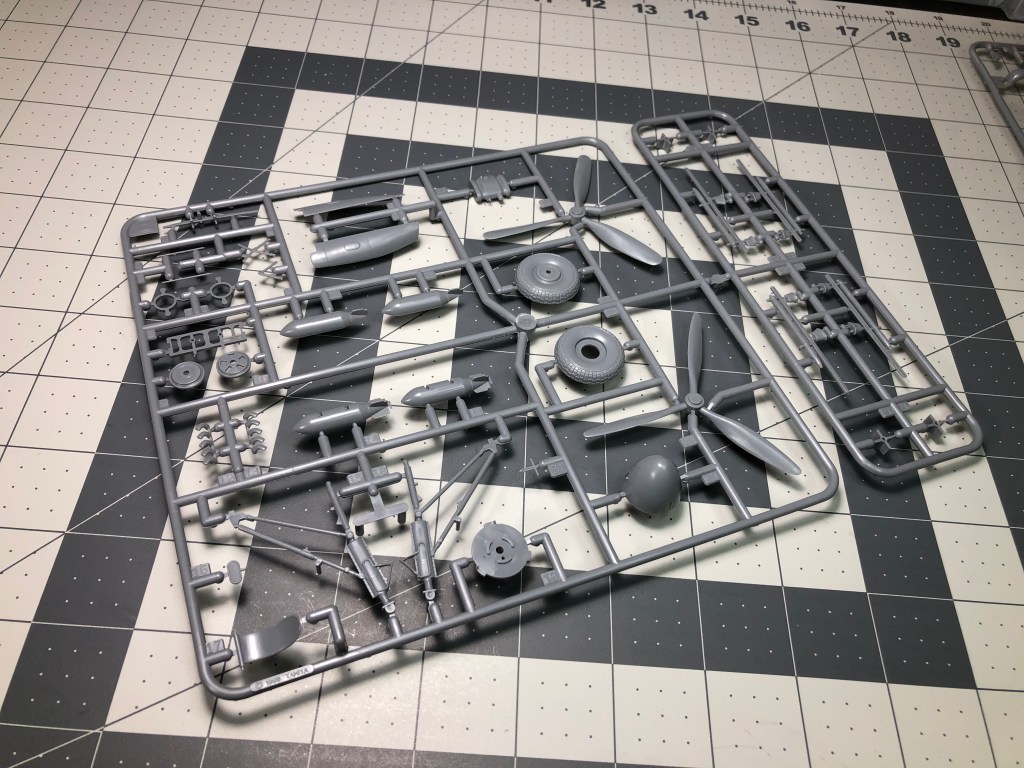
Suffice to say, the kit is pretty barebones. In terms of extra things added, Trumpeter includes a small photoetched fret and a copper wire for the tow cable. The kit doesn’t include any single link tracks or any other extra goodies for the builder. Because of the sparse accessories the kit’s rating in this category was quite limited. Only the inclusion of the metal wire saves the kit from a neutral 10/20 score.

Quality of Molding: 28/50

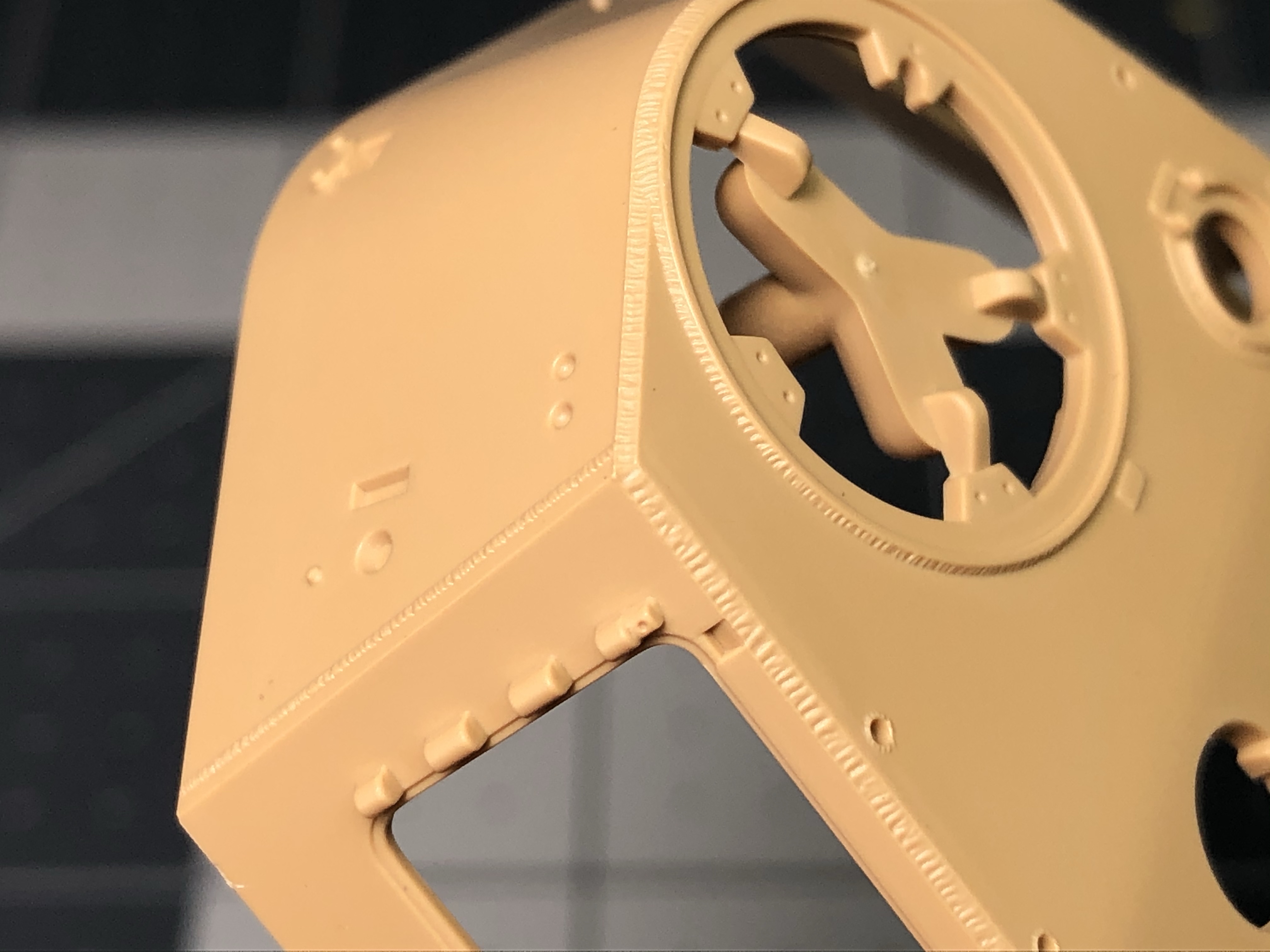
Put simply, it’s evident that the kit is a decade old. At first glance a lot of detail looks passable. There are weld seams, flame cuts, ect however after looking a bit closer it’s clear that the small details are lacking, especially when compared to modern releases. As with the kit features, the score here is somewhat low. The score is lowered further due to the fact that there were obvious molding errors on the hull as detailed in the photos included. If this kit were to be released in 2018 or 2019 then it would receive a score 10 to 15 points lower.

Instructions: 10/20

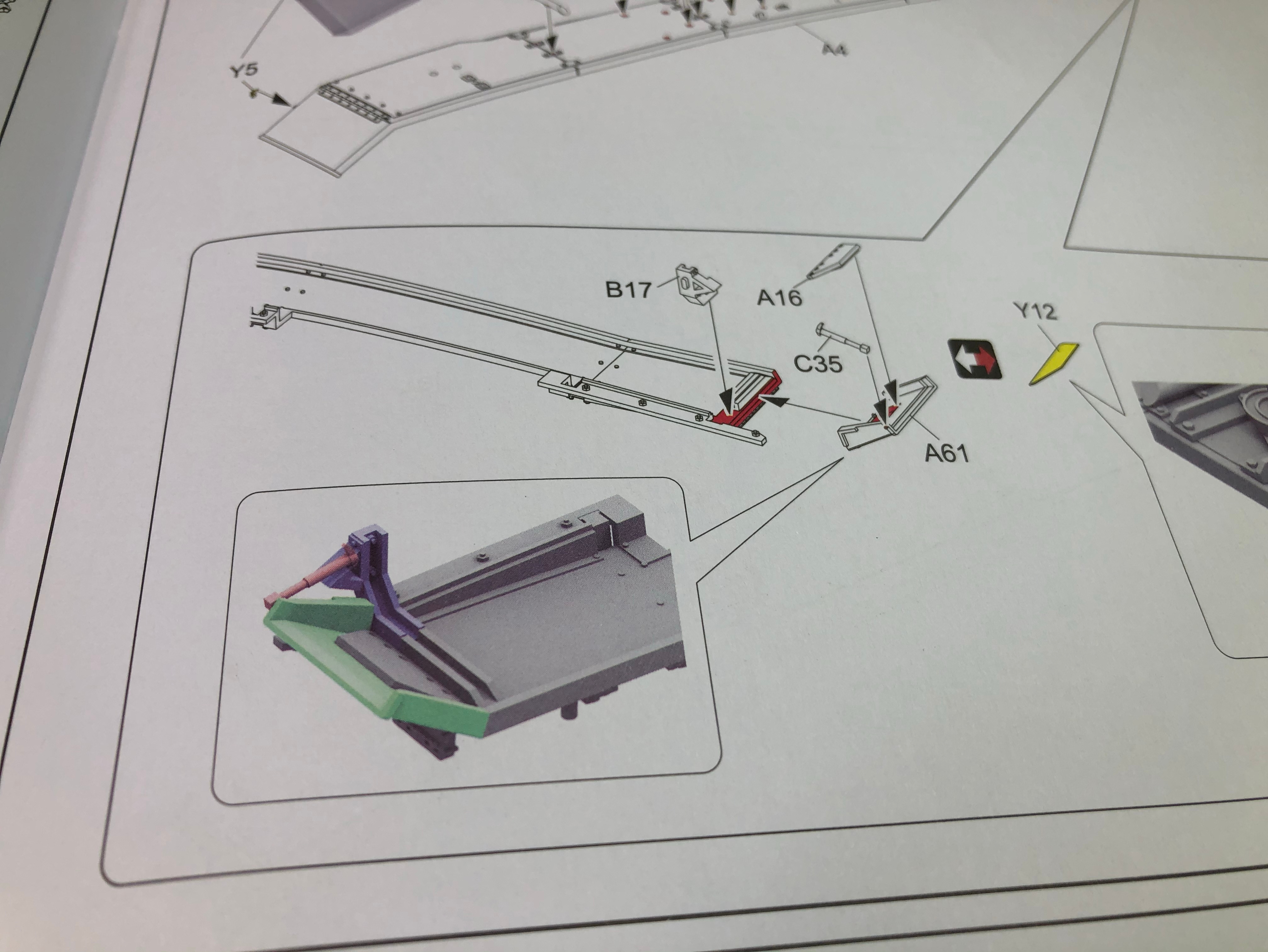
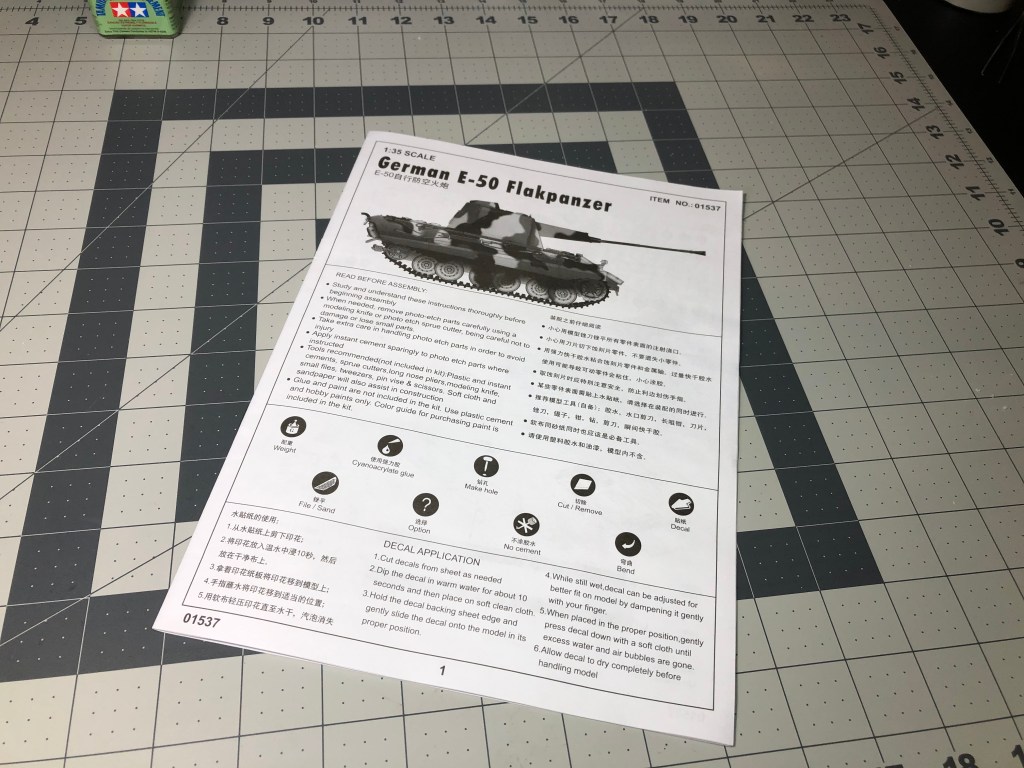
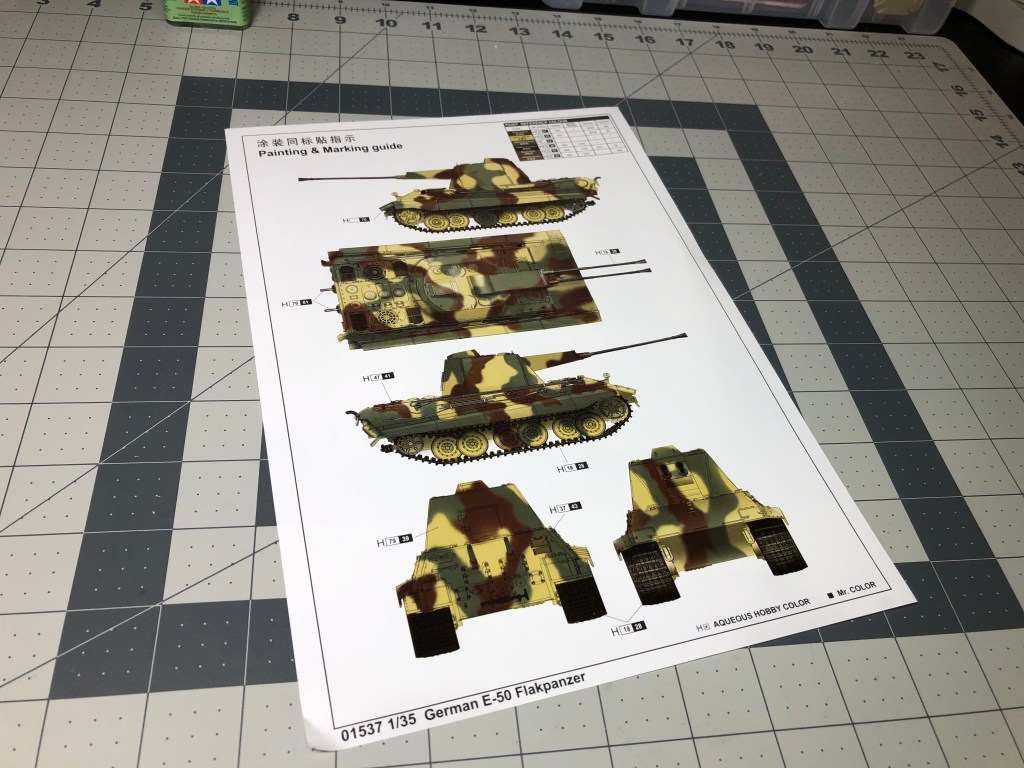
The instructions here are a bit strange and could have been clearer. To start, for some reason the second step is to glue the tracks together, even before completing the suspension assembly. To continue, the instructions do not clearly divide the steps during the construction phase making it easy to confuse parts to be added. It’s also worth mentioning that the instructions are very short at only 11 pages, evident of the low part count. In terms of the positives, Trumpeter does include a color profile of the box art although considering that no markings are included the usefulness of the colour profile is limited.

Miscellaneous: 4/10

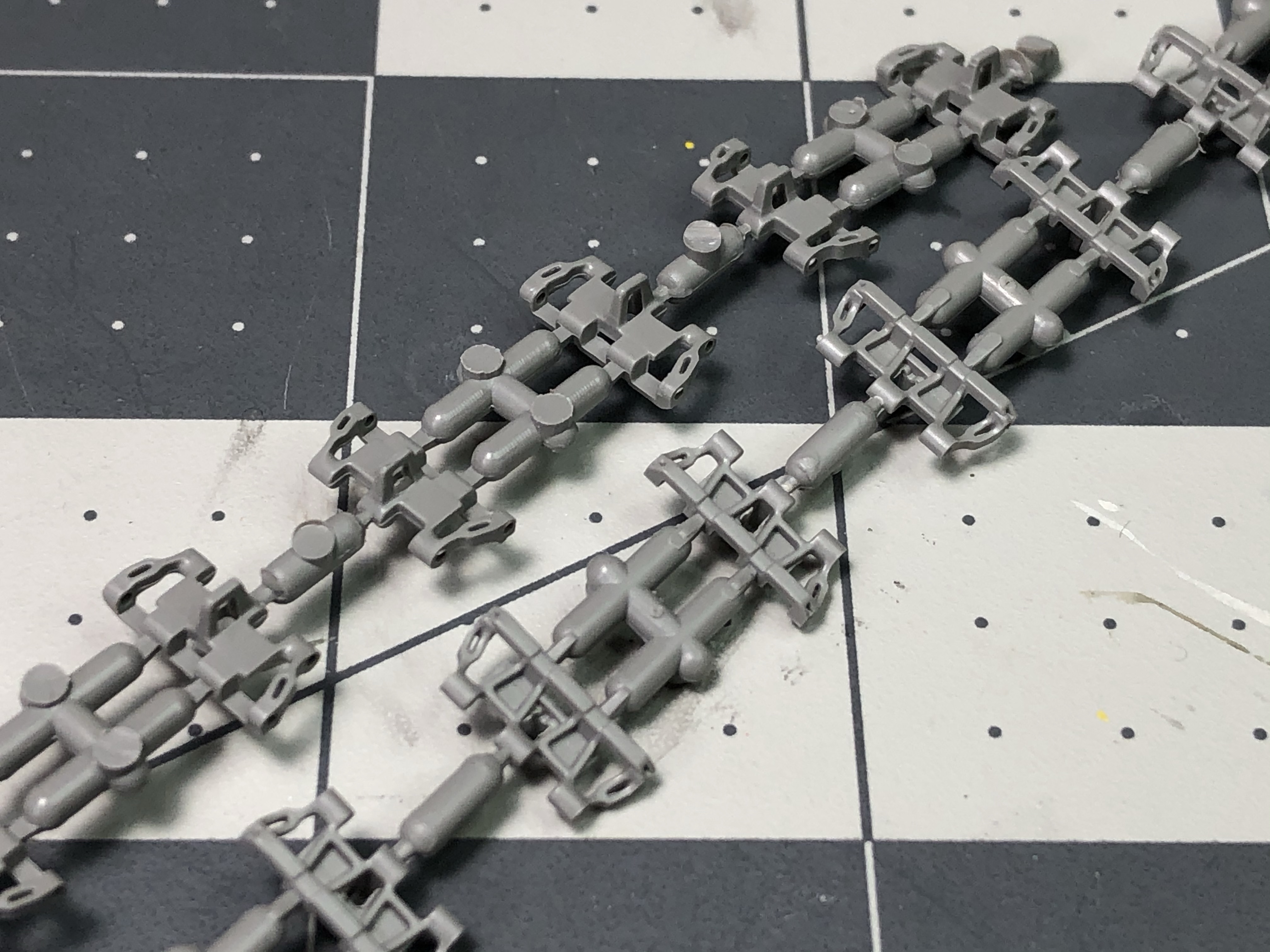
Seeing as the Flakpanzer only existed on paper, Trumpeter does not include decals for the kit. While this decision was understandable, at the very least the kit could have included various balkenkreuz for markings, giving the modeller a bit more freedom. Furthermore, the rubber tracks that were included were clearly deformed and will require significant work to straighten out.

Total: 53/100

It really pained me to give this kit such a low score, largely due to the fact that I’m a huge fan of the subject. For the build I’m already planning a list of accessories to add as it’s clear that OOB the kit has significant shortcomings.