Categories
1:35 Armor Projects

Sd.Kfz 251/22 Ausf. D “Pakwagen”: Painting and Weathering

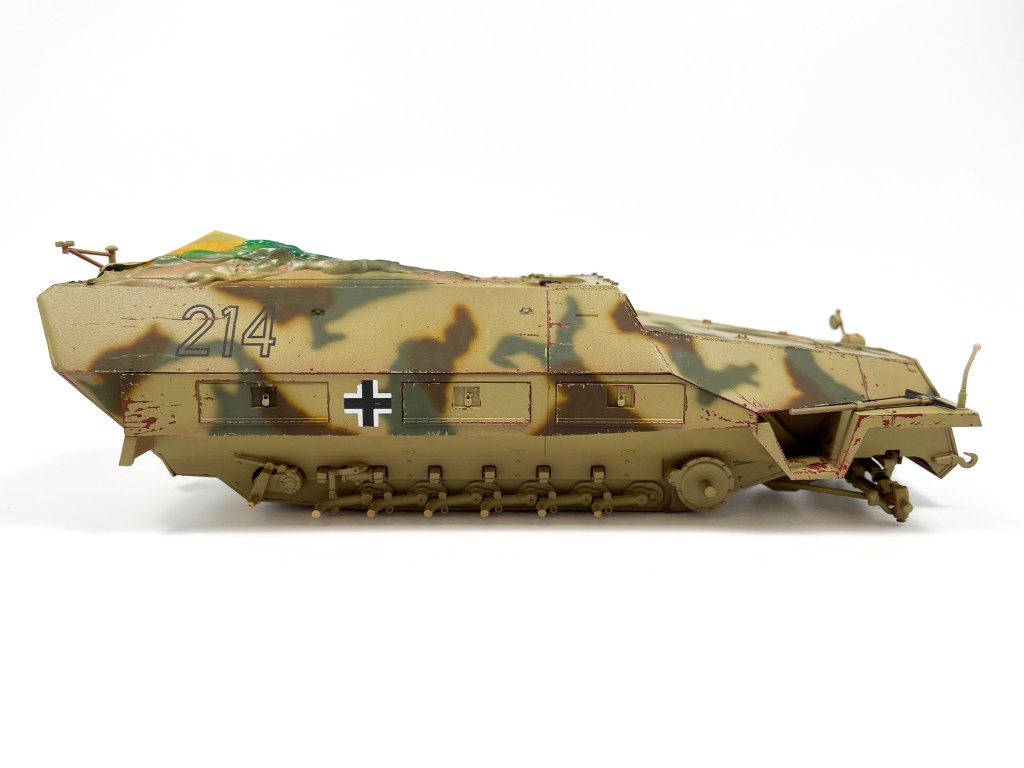
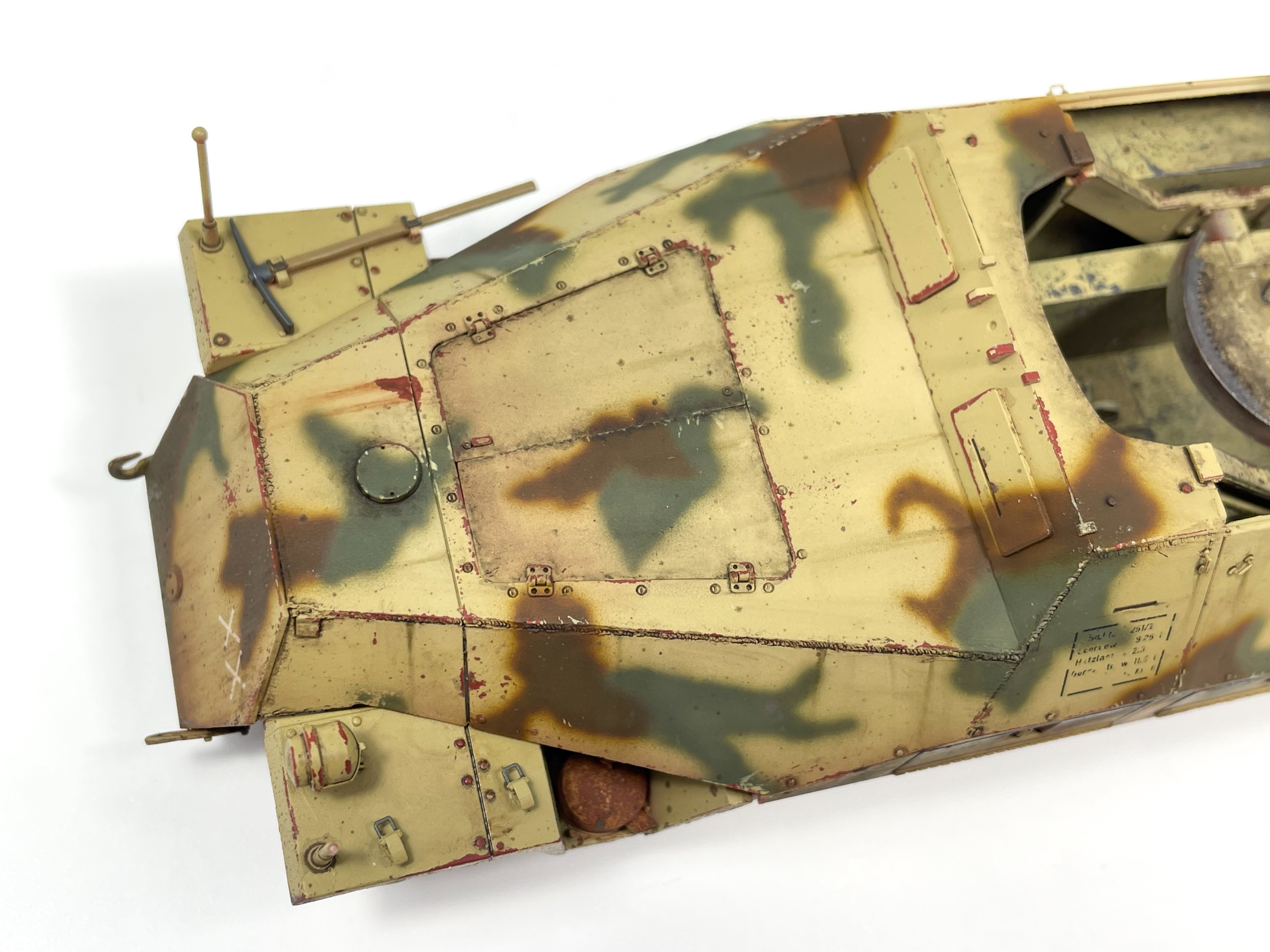
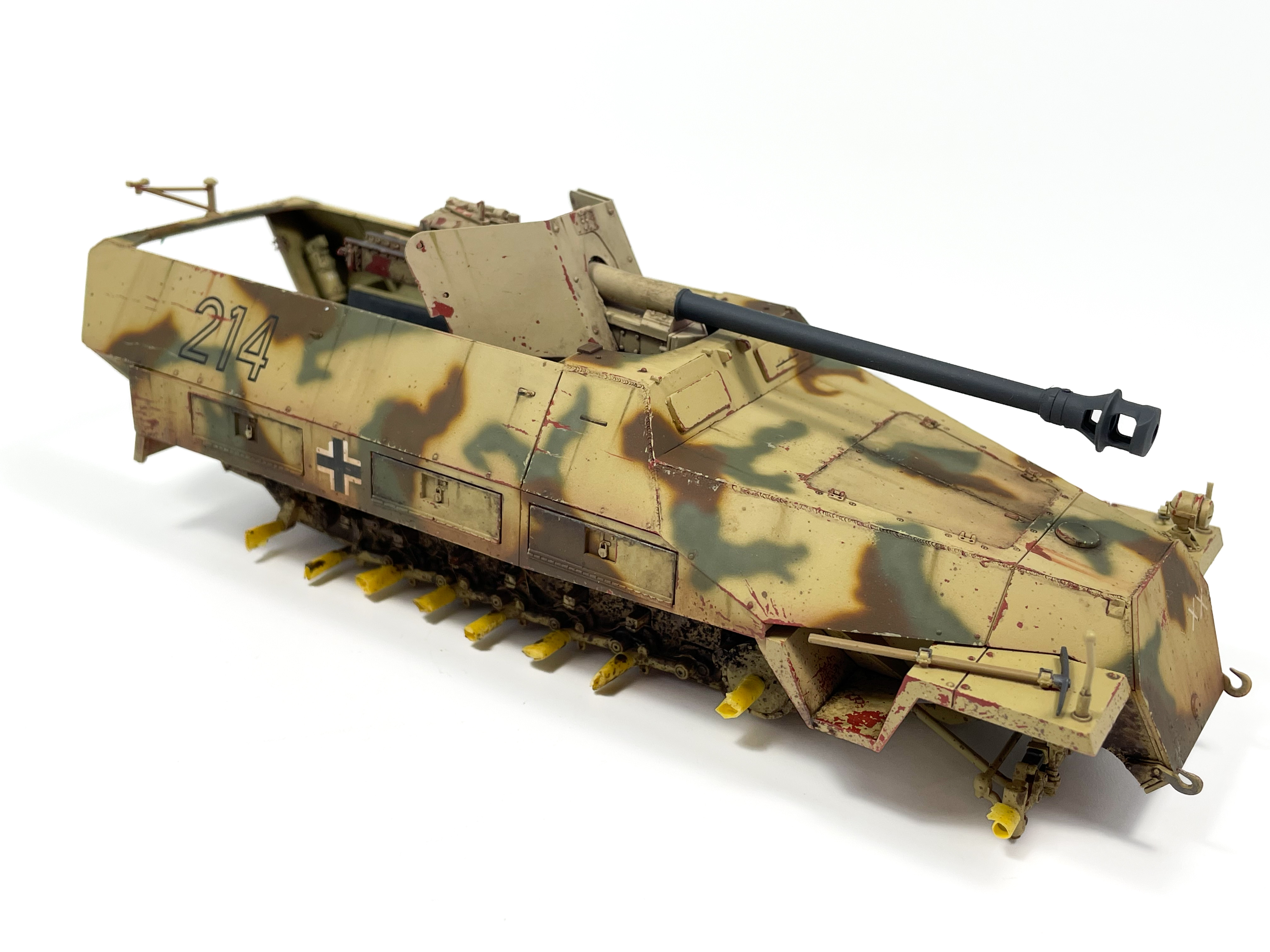
With the completion of the interior of AFV Club’s Pakwagen, I could move on to a phase of the build I was really looking forward to, the painting and weathering. It has been a long long time since I’ve done a German camouflage scheme (I don’t count the DAK Pz.III I did last year) and they are undoubtedly my favourite kind of paint job to recreate.

I wanted to simulate some hairspray chipping, so I opted to use Tamiya LP-18 “Dull Red” and to be honest, I’m not a huge fan of this shade. It’s a little too red in my opinion and almost looks like blood. For my next kit to utilize this shade I’ll probably add in some dark brown to tone it down a bit.

Following the primer red I hit the model with a coat of hairspray before moving on to the camouflage colours. Tamiya released a new set of German camouflage colours some time ago and I wanted to try these shades out and see if I liked them enough for future builds. I used XF-88, 89 and 90, Dark Yellow 2, Dark Green 2 and Red Brown 2 respectively for the base colours. I throughly enjoyed how the Dark Yellow and Dark green shades came out however I have my doubts about Red Brown. For starters, it can look quite green in the bottle and unless you spray quite an opaque layer over dark yellow the edges will look somewhat orange to my eye. I’m not sold on this shade and may look elsewhere for future builds.

I unfortunately don’t have any more “in progress” photos of the painting process as I was fairly busy during the couple of days it took to apply the camouflage scheme. I also added some excellent dry transfers as the unit markings. I loaded up with some of Archer’s dry transfers after they closed down and I’m really glad I did, I’m very happy with how they perform and look.

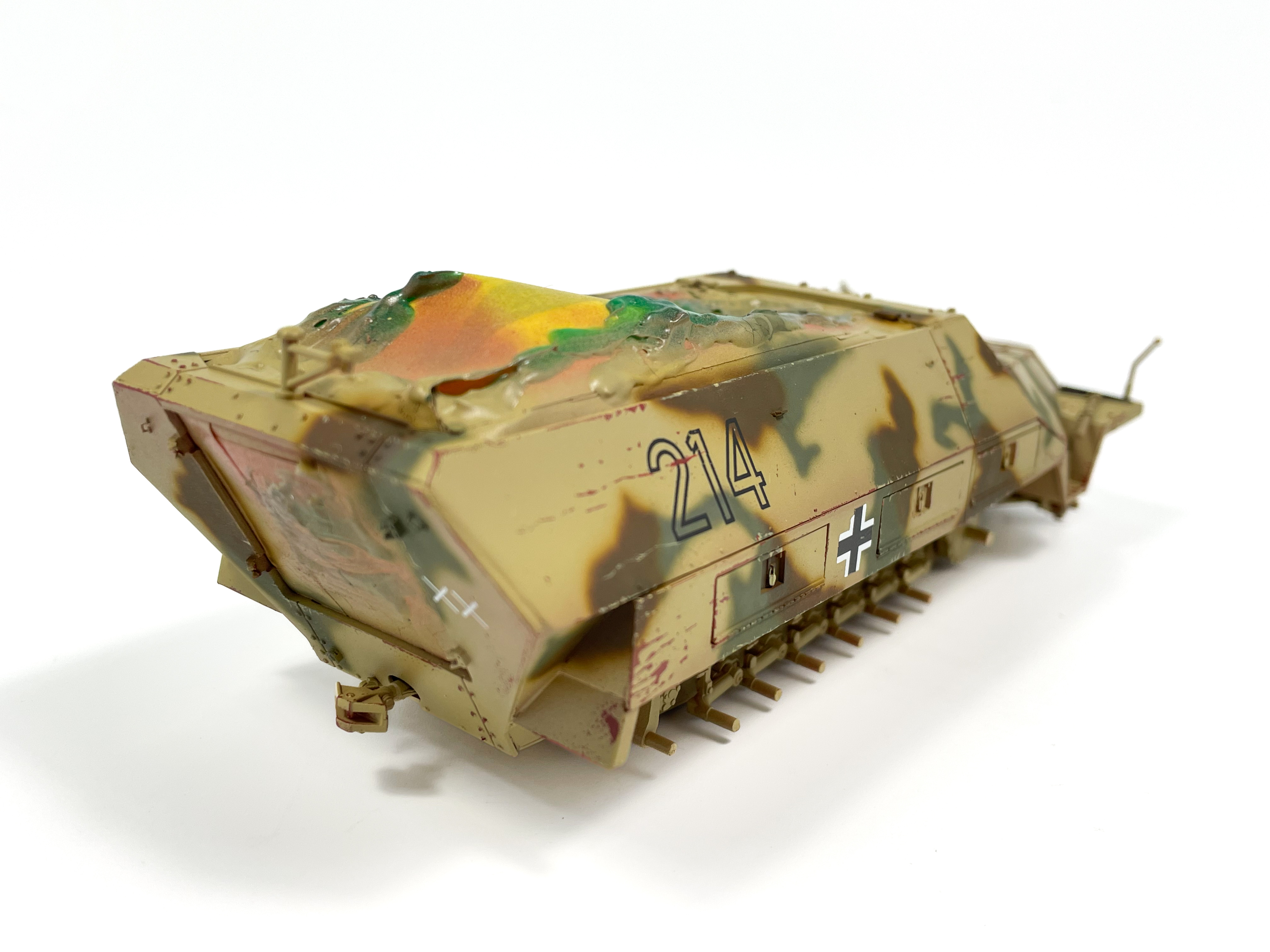
Overall, the initial painting stage went very well and I sealed the model with a coat of VMS Satin varnish to protect the previous work and prepare the model for an oil wash. I used the Bitume shade oil paint as a general starting point for the weathering as it it a good base to build off of with more focused weathering effects.

Following the pinwash, I started some streaking effects with AK’s “Winter streaking grime” I often don’t pay much attention to what the name is on the label and the dark brown shade of this product contrasted well with the dark yellow main coat.
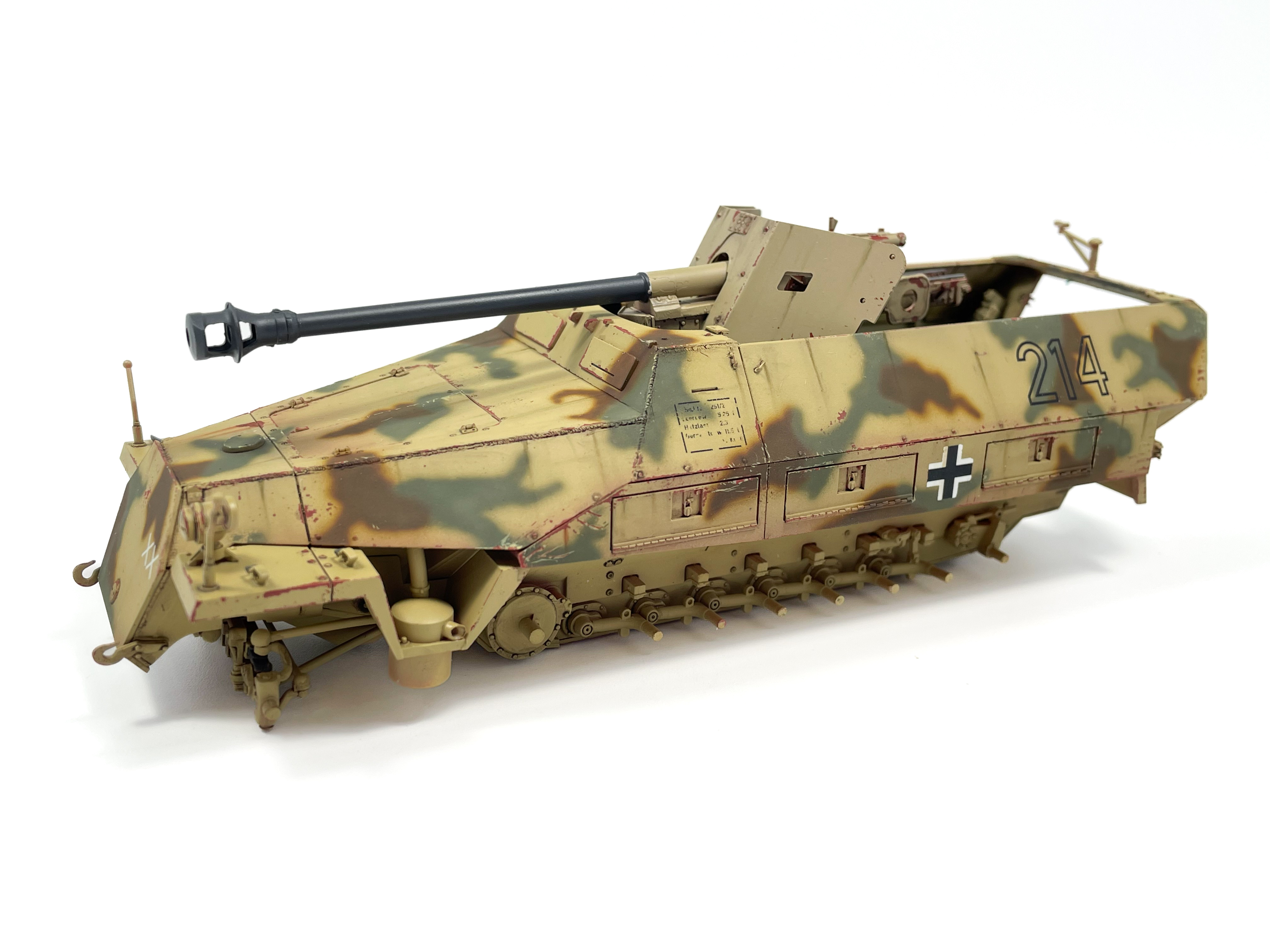
I also unmasked the interior as I had laid down my last (anticipated) coat of matte varnish. I’ve been aiming to get out of the habit of over-sealing my models between weathering steps as I’ve come to realize that too many varnish layers can really diminish the realism and overall look of the final product. I think that the vertical streaking effects done help to break up the lines of what is a very angular vehicle and enhances the overall look.

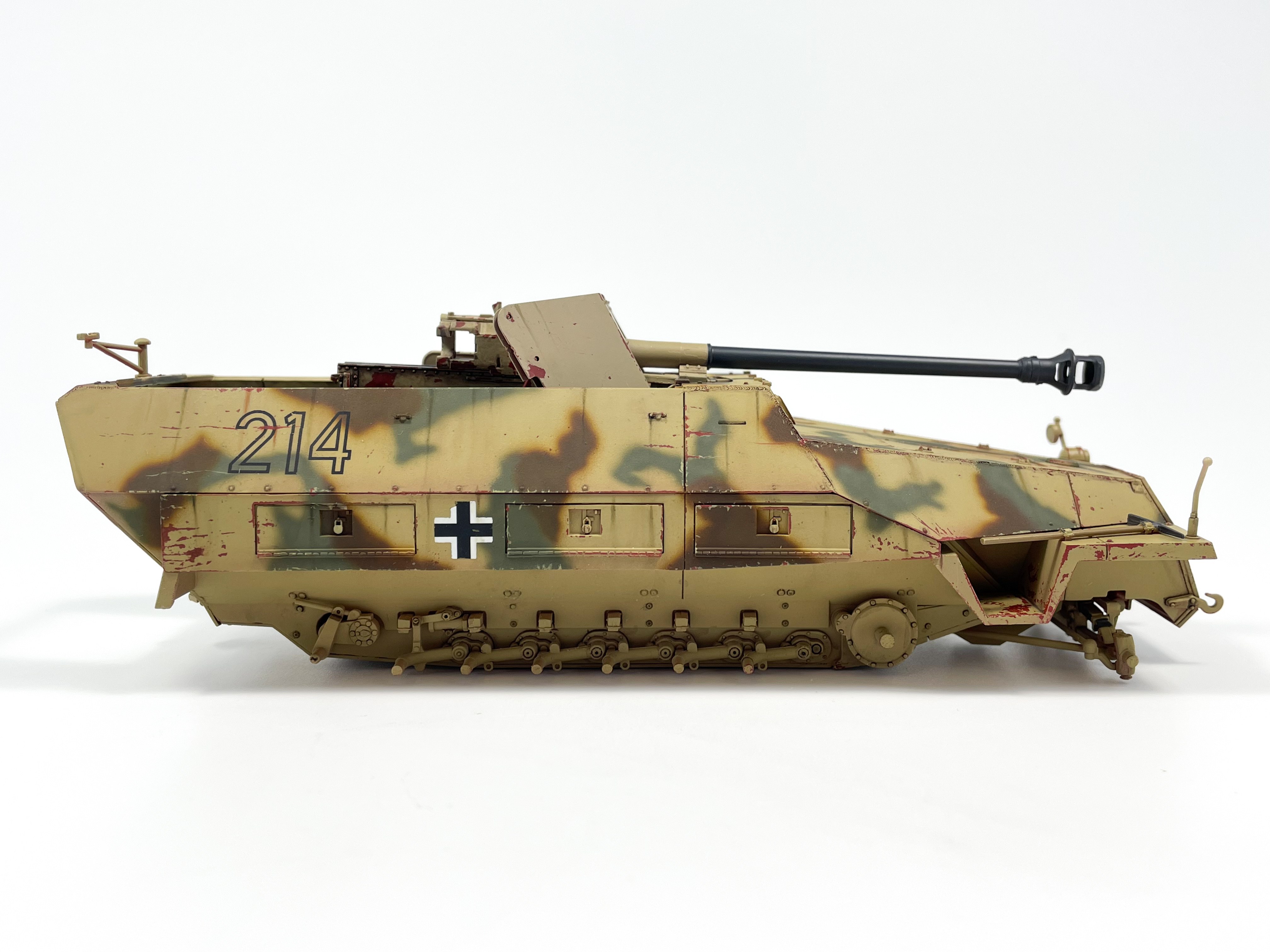
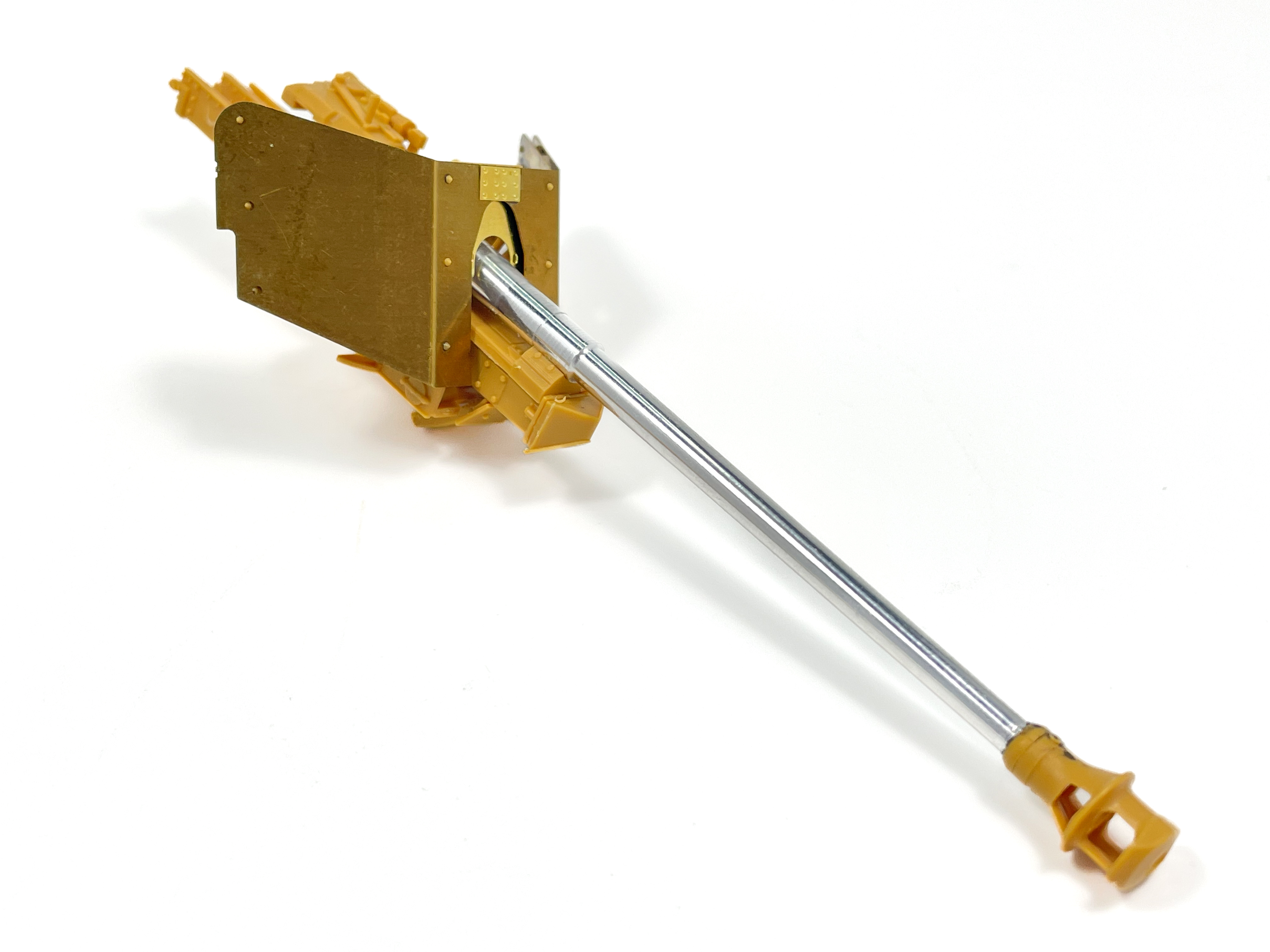
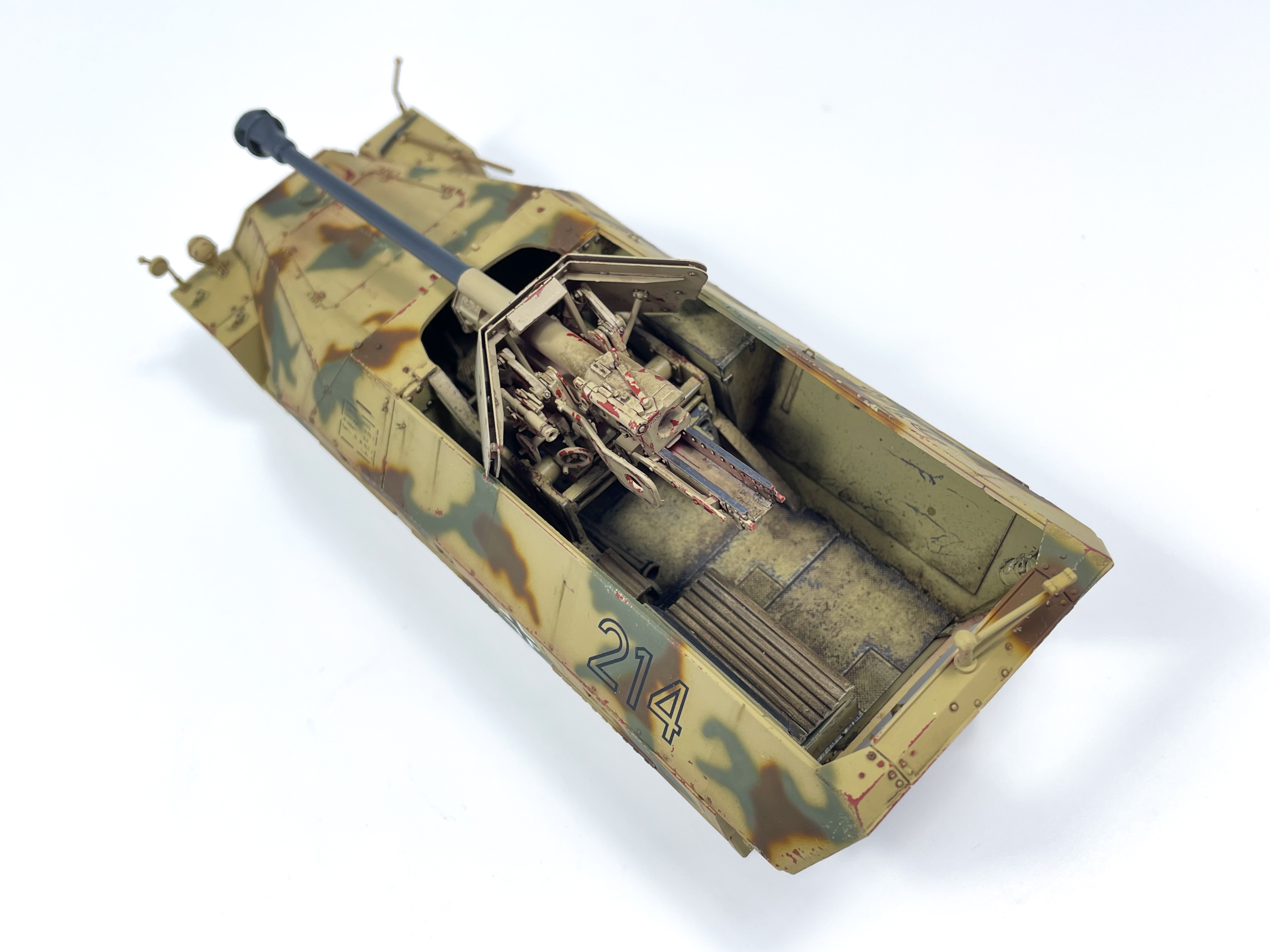
Weathering the main gun also progressed quite smoothly with a few applications of oil and grime washes. I wanted the breech area of the pak40 to both contrast with the dark yellow interior but also be subjected to the same level of dirt and grime as the rest of the interior. I’m still not 100% satisfied with it and I may do more work with this area of the build but I’ll have to see.
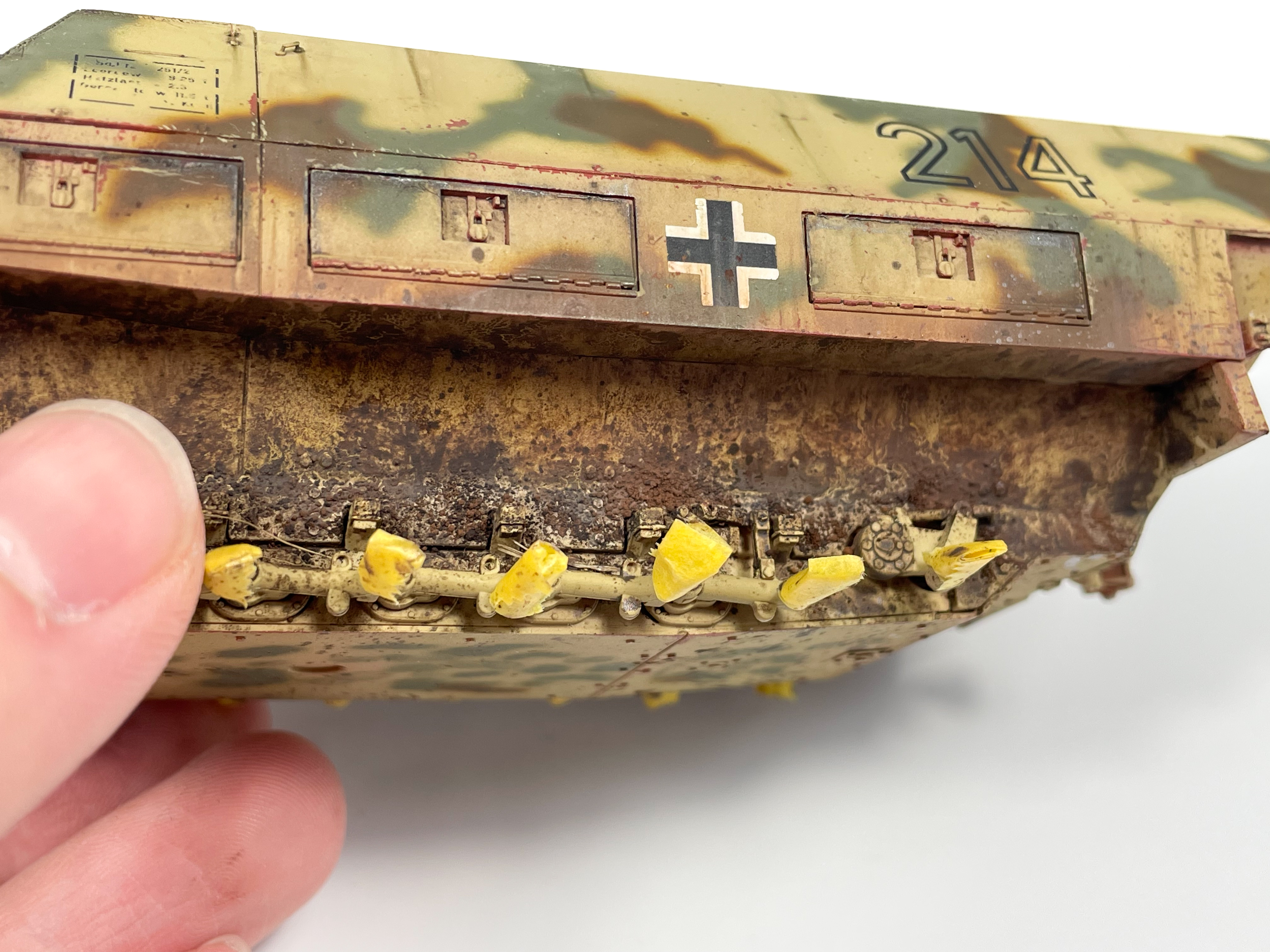
I then moved on to the mud and dirt application of the build. Seeing as this vehicle would be situated during the spring thaws of 1945, it would make sense that the vehicle would see a liberal application of mud in and around the running gear. Still, I had to be careful as I wanted to strike a balance between almost black (winter) mud v.s more brown (summer) dust/dried mud. I’ve begun experimenting a lot more with enamel dusting and it’s quickly becoming a favourite technique of mine. The general process is as follows:

  1. Spray a highly diluted layer of enamel paints in areas where dust may accumulate.
  2. Let the enamels dry for approx. 10-15 minutes.
  3. Brush a light layer of enamel thinner onto the painted area.
  4. Streak the brush in a vertical motion until the painted enamels begin to shift in accordance with the brush strokes.
  5. (Optional) add another light coat of enamel paint to depict dust/dirt that has not been disturbed yet.
Enamel dusting along with light splatter effects.

Next I applied a liberal application of mud to the underside of the vehicle and the running gear. To do this I applied AK’s “Damp earth” and “Fresh mud” fairly sloppily. I then sprinkled two shades of pigment, MIG’s “Track Brown” and Abteilung 502 “Trench Earth”. These various shades were used to provide variation in the final product. While I think that the final result looks good, It is fairly uniform and I’ll have to work on achieving greater contrast between different shades of mud and dirt.

Before and after the Enamel dusting and mud application

These comparison images really show how powerful the enamel dusting and mud splatter techniques can be. An area I wanted to target was the vertical plates with the storage lockers. Seeing as this area of the vehicle would see regular use by the crew and would be exposed to mud and dirt being flung up by the tracks I made a dedicated effort to single out this area for a little more attention than other parts of the model. The effects can further be seen by comparing the unweathered balkenkreuz in the before and after images.

Despite my minor issue with the lack of contrast in the mud tones, I really do like how this area of the build turned out. To my eye, I think that the end result is realistic and ascetically pleasing. I’m looking forward to adding mud and debris to my future models!
That’s it for this update! Really happy with how the painting and weathering process has turned out so far. There’s not a whole lot left to complete on the vehicle itself but there is still a fair amount of work to do on the accompanying figures, stowage and diorama base I have planned for this kit. Thanks for looking!
Categories
1:35 Armor Projects

Sd.Kfz 251/22 Ausf. D “Pakwagen”: Construction

For the last little while AFV Club’s Pakwagen has been a priority for me to build. There are a few reasons for this, namely I just think it’s a cool subject and I’ve been meaning to build one for a while now. There’s also the fact that I’m a bit out of practice when it comes to painting and weathering German vehicles and since I have a few slated to be built this year, this kit will serve as a nice test run prior to starting those planned builds.

I had intended for the construction phase of this build to be as smooth and painless as possible. I didn’t want to invest a ton of time building the kit because like I said, the focus was supposed to be on the painting and weathering. Unfortunately for me, AFV Club had other plans.

In short, the kit doesn’t fit well at all and has significant engineering issues. This entire process has been frustrating to say the least. It’s been so bad I’ve considered swearing off this brand all together, however there are a few Israeli Shot Kal’s they offer that may tempt me. Bottom line however, I’m not buying another AFV Club kit for a while.

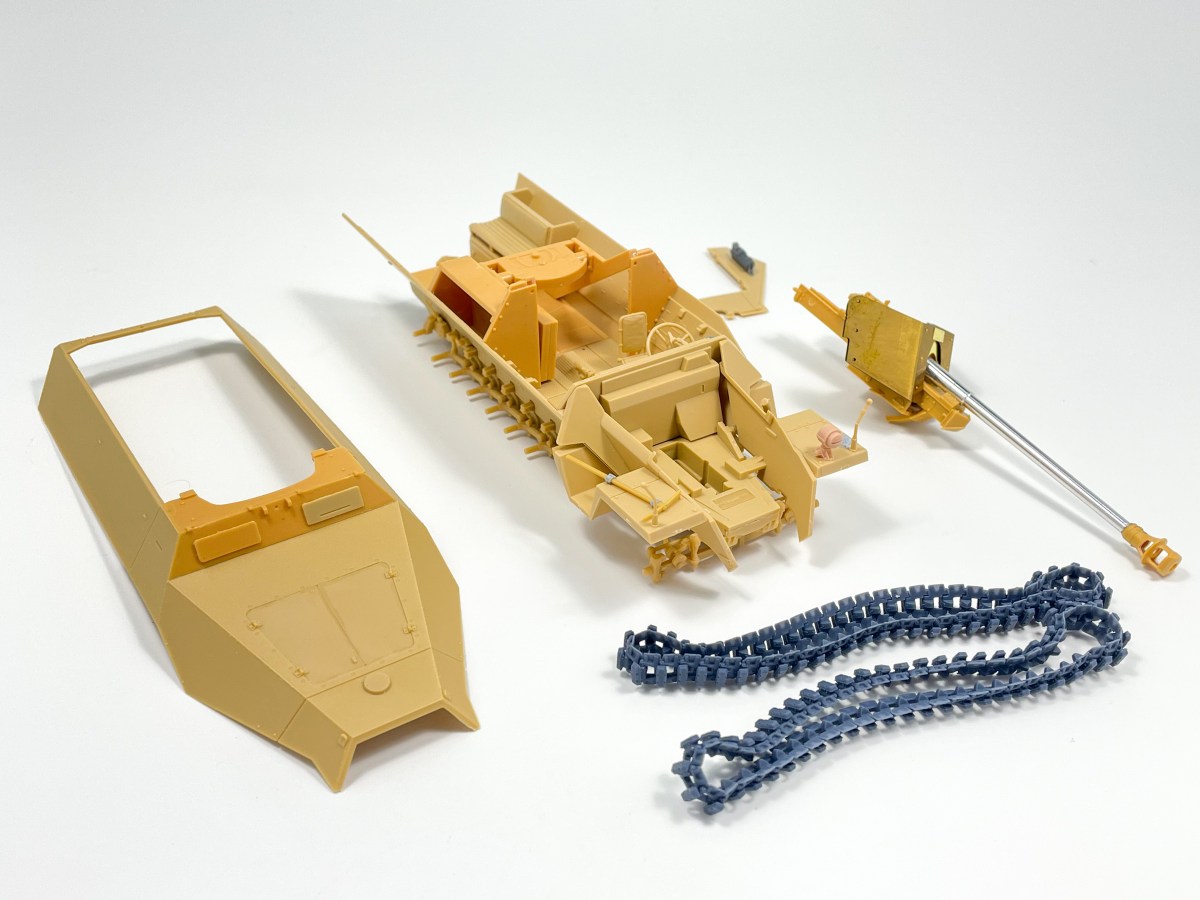
Construction begins assembling the lower hull and suspension components. There’s nothing to write home about here, and the fit for the suspension arms is vague at best. To my surprise the whole frontal steering and suspension assembly section fit together well and was level when completed. Of particular note was how the drive wheels (Not the steering wheels) fit together. AFV Club has you completely sandwich them together (Step 3) and it takes a significant amount of force to do so with one of mine even cracking under the pressure. it’s amazing this was the solution that was some up with.

The dashboard fits together alright and I opted to add some wiring despite the fact that it won’t ever be seen. Fitting the dashboard to the hub however is tricky and you really have to make sure that it’s seated well because if it’s not that will impact how the upper hull will fit. Next I filled out the various fittings for the main compartment and by far the cradle for the Pak 40 (assembly J) was the worst subassembly of the kit so far. I opted to assemble the thing attached to the hull then glue the parts together to ensure the final product will fit properly. I thought that this was a good idea until I actually tried to assemble it and here’s what went wrong:

  • Part Ho2 is too big and will cause the legs (Ho3 and Ho4) to bow out.
  • Part Ho5 doesn’t fit it’s attachment point and it’s not close.
  • Part Ho1 has “steps” for the legs to slot into but these “steps” are more like “curves” and it’s impossible to get concrete fit.
  • The pins for the entire assembly used to fit into the hull are incredibly small/weak and you’ll shear them off easily.
  • The entire assembly is too tall and you need to remove 1-2 millimetres from the top to allow the upper hull to fit.

This kit had various other fit issues such as the engine access doors, the exterior storage doors, the rear doors for example. Now that I think about it, virtually all the doors in this kit had problems fitting. AFV Club, how hard is it to make a rectangle fit in a hole?

With all these issues I was dreading working on the Pak 40 Anti-tank gun. With numerous fiddly parts I did not have a ton of hope with how it was going to go together. The answer? Not great, not terrible. Really, it wasn’t the worst, and was better than other parts of the kit. It wasn’t great by any means but the end result is a somewhat good looking Pak.

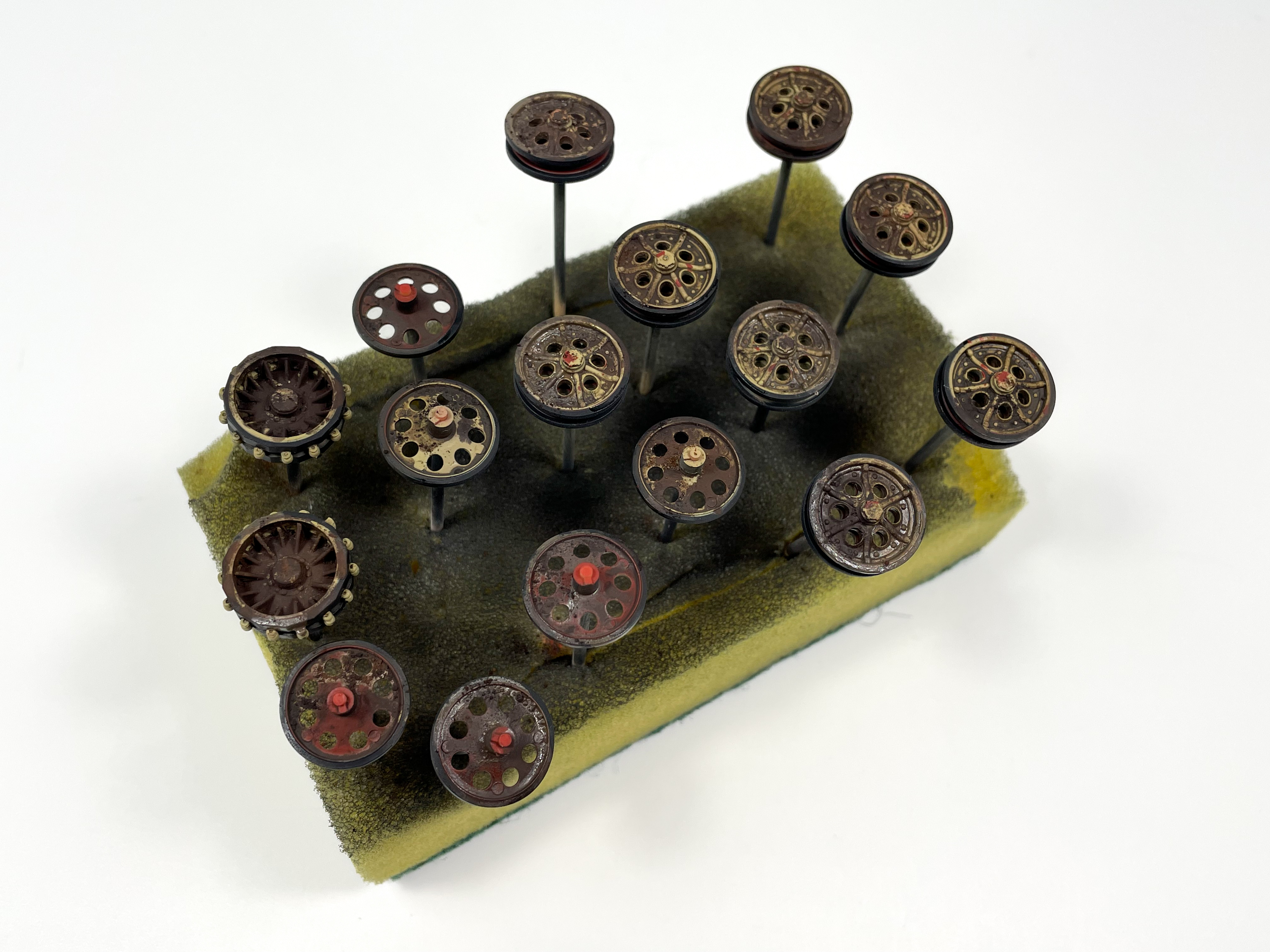
For this build I used a set of 3d printed tracks from DEF Model and while I’m typically wary of 3d printed products I don’t have direct experience with these went together beautifully. They came off their supports with little to no effort with not a single link broken or unusable. Additionally, they went together great and just snap together. If there are any downsides to these they are as follows: first, since they are snap fit they tend to deform under tension and one “pin” will slip out (without coming apart all together). Second, I don’t think they fit the model that well as they have to be posed under high tension or fairly slack with the addition of one link. Despite these issues I don’t regret picking these up and always like to try new tracks.

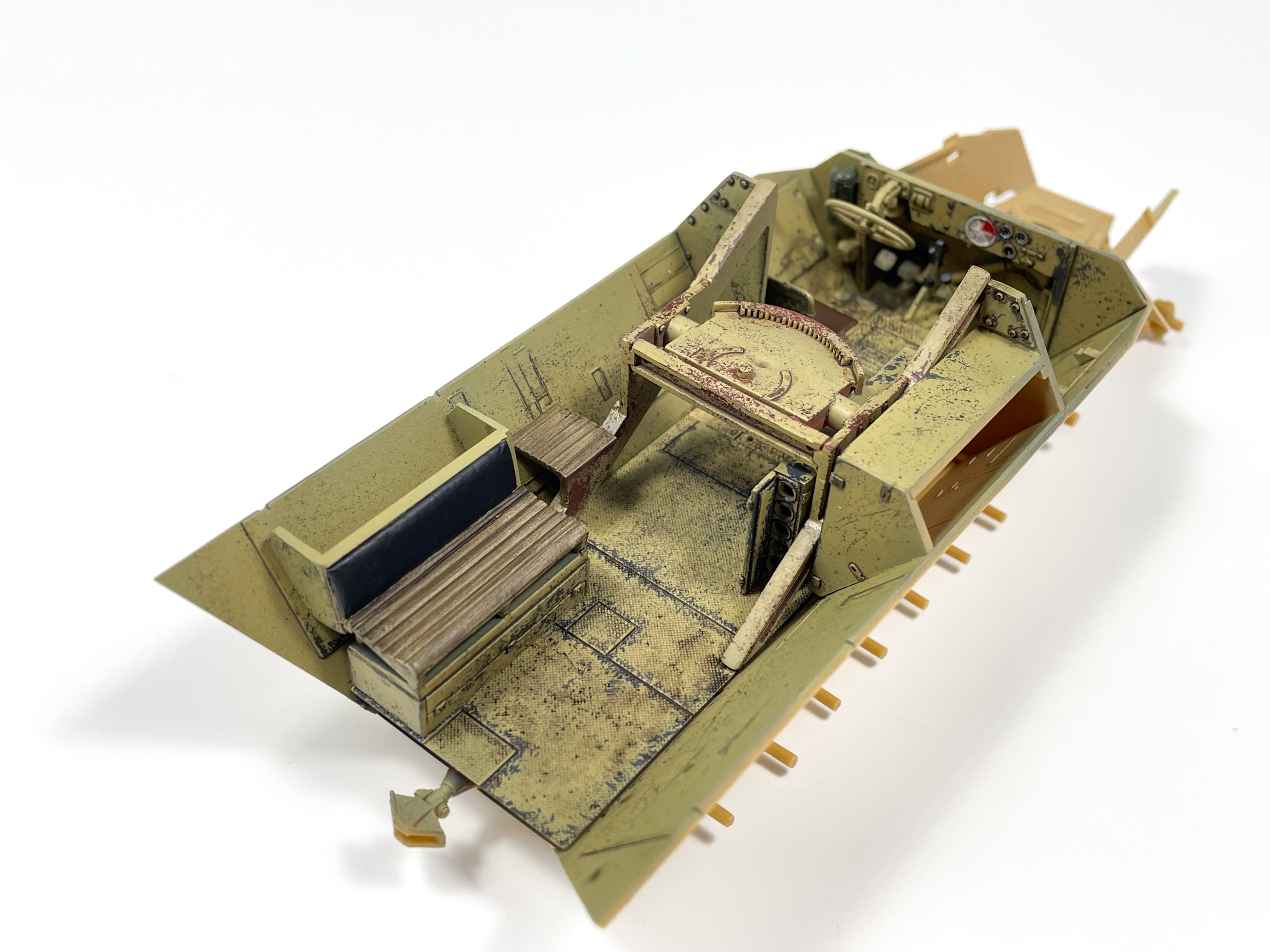
Construction had to take pause here as I needed to complete the painting of the interior before moving forward. The assembled vehicle would have zero space for any kind of painting or weathering of this area when built up so I decided to finish this task now. I knew I would be painting the interior in German dark yellow and opted for German grey as the undercoat chipping layer, seeing as the exterior of the vehicle would be chipped with red-brown.

To be honest the chipping fluid method did not work as well as well as I intended. It was difficult to get the paint to chip the way I wanted and I ended up with small flakes coming off instead of larger, more controlable chips. I used Tamiya dark yellow thinned with the Tamiya acrylic thinner and I’ll have to investigate more into how to get the results I’m looking for. All in all I’m not too disappointed because A; this area won’t be hugely visible and B; I got to practice doing hand made chips. I think this went ok seeing as I have next to no experieince creating the chipping effect this way.

I also tried making some basic woodgrain texture using oil paints. It’s quite an interesting technique and somewhat straightforward. I painted the wood parts in Tamiya Buff, and then using a dark brown oil paint colour I streaked the paint across with a dry brush. This creates visible brushstrokes that simulate woodgrain that looks very realistic in scale. I like how this turned out!
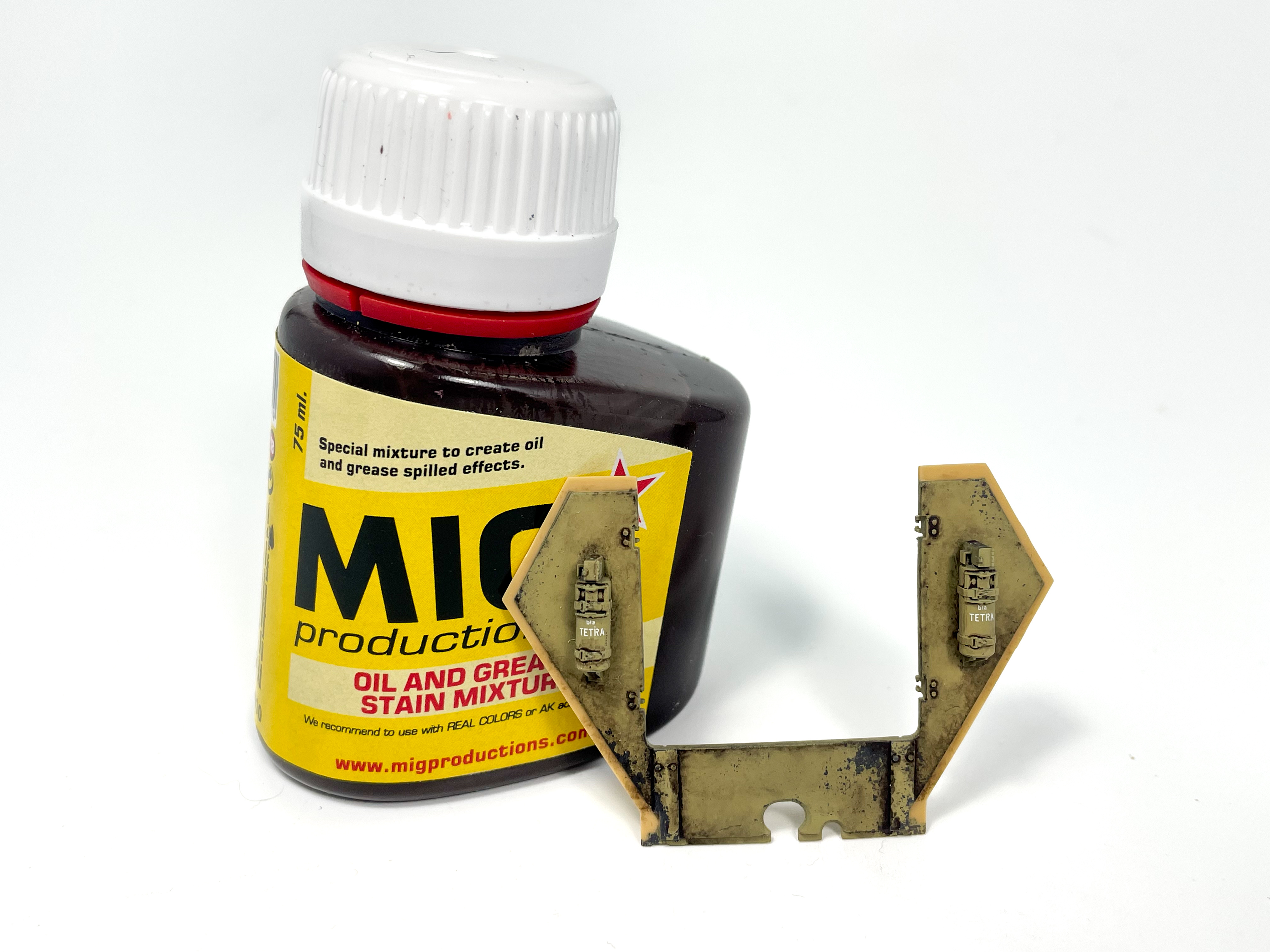
At this point I sealed the interior with a coat of VMS satin varnish prior to going further with the weathering. I next used oil paints for a pin wash but also to create some surface definition on the vehicle floor. I did this to represent general dirt and grime that would get caught on the grippy steel surface. It’s important to mention that this was a very general approach and in this phase I didn’t pickout specific details (aside from the pinwash). Additionally, I speckled on some MIG enamel weathering product “fuel stains” and “Oil and Grease stains” to create points with a little more contrast to the dark yellow base coat. I didn’t want too much contrast however and I used a brush damp with enamel thinner to slightly feather the drops to create a more subtle gradient.

This was largely the end of the general weathering and a sealed the model in a coat of alclad flat before moving on to more specific, focused weathering effects. For this stage I’ve been really drawn to three products in particular, MIG’s “Fuel stains”, “Oil and Grime stains” and “Engine Grime” The names of these products can be deceiving as they are very versatile enamel products that can be used in many different applications. In this stage of the weathering I would apply one of these products near a detail I wanted to highlight and then stipple the slightly dry product with a brush damp with enamel thinner to create a gradient and blend the stain into the model.

The rear bulkhead weathered with “oil and grease” stain mixture.

Overall despite some atrocious fit issues, AFV Club’s Pakwagen is slowly shaping up and is looking fairly good at the moment. More posts to come on this subject!

Categories
1:35 Armor Projects

T-55A Mod. 1981: Completed Model

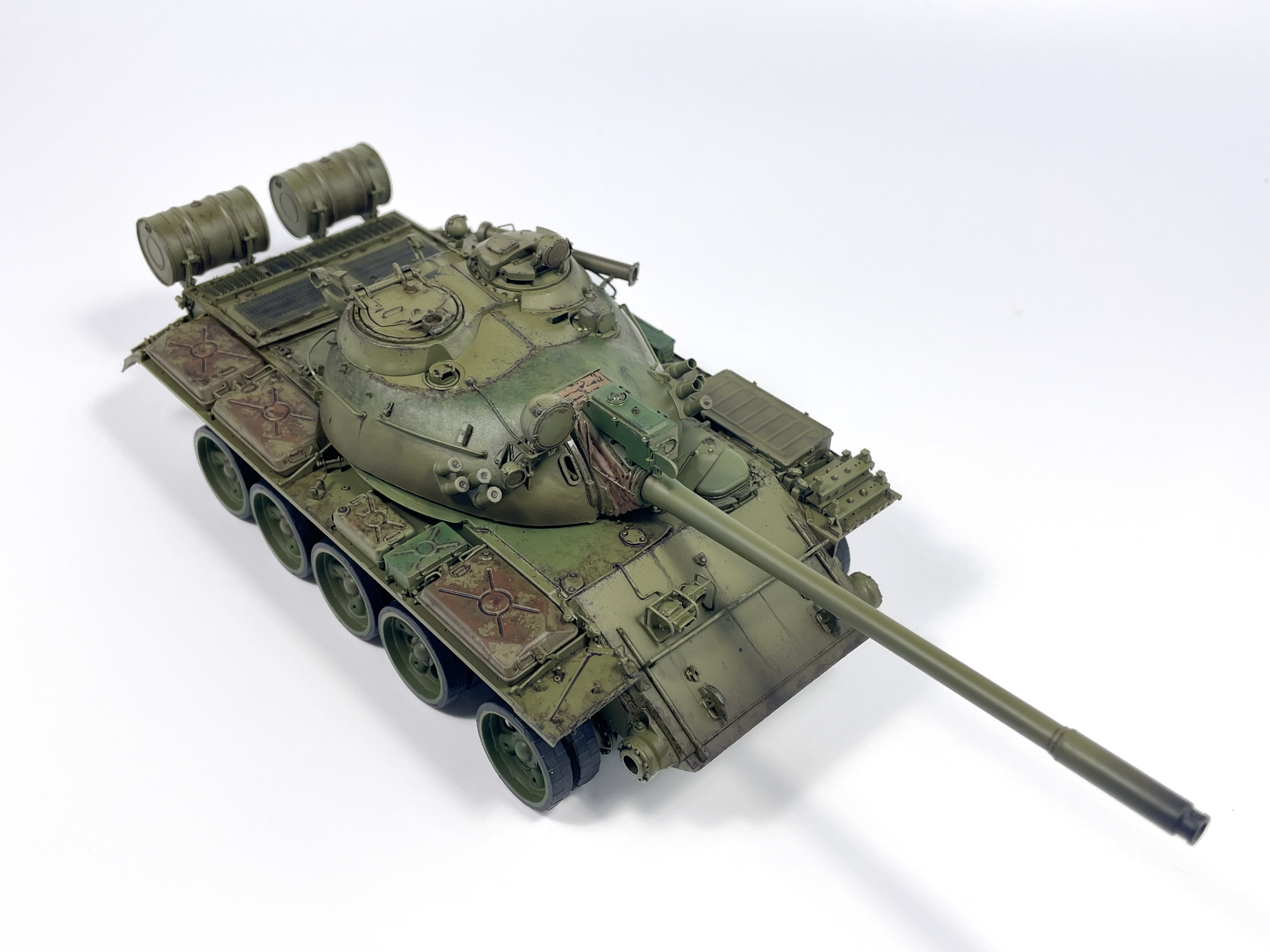
After almost three years in the making Miniart’s T-55 has been completed! This kit has been sitting in my “in progress” drawer for well over a year now and it feels great to finally have it completed. I decided to try to push myself and try out new techniques in completing it and I’m glad I did. One goal of mine was to not use any pre-shading at all in the painting process, a technique that is very familiar to me and I use in a lot of my builds. Instead I used the dullest coat of Russian 4bo as the main base coat and tried post shading the model to create colour modulation.

I’m glad I placed these limitations upon myself because I’ve felt that when I have a technique or process that I like I can tend to stay entrenched in said process and not grow as a modeller. I definitely feel like this build exposed me to new ways of doing things that I’ll be incorporating into future builds. One new technique I tried out was weathering over a matte coat. In prior builds I had always done my weathering over a gloss or satin clear coat and left the matte coat until the end to tie things together. I decided to stray from this process in this build with the majority of heavy weathering being doing over the final matte clear coat. It went better than I expected and it’s something I’ll be doing going forward.

I also made an effort to use a lot of different weathering products and mediums together. In prior builds I may have just stuck to one specific type of medium in my weathering and as a result I may have not been as familiar weathering with enamels or pigments for example. For the T-55 I made heavy use of these mediums with the various fuel and oil stains being created with MIG enamel products. I also used quite a bit of pigments and applied them basically where I felt dust and debris would collect on the vehicle. In short, I think that the three pronged approach to the weathering on this build (Oils for a general wash and streaking, Enamels for fuel stains, oil leaks, and rust effects, and pigments for dust and dirt deposits) worked well and it’s a process I’ll keep in mind for the future.

That’s it for now! Enjoy the final build gallery below!

Categories
1:35 Armor Projects

T-55A Mod. 1981: Weathering

Miniart’s T-55 has been in progress in one form or another for almost two years now. It’s survived being stuffed in a box and a move across the country. There’s a few reasons why I’m only getting around to finishing it now, namely that I was more interested in other projects and that it’s a complex kit and not one you’d try to finish when being away from the hobby for a sustained period of time. I’ve slowly picked away at it for the past year but with a new year returns an old build as I’m determined to start the year by finishing off this shelf queen.

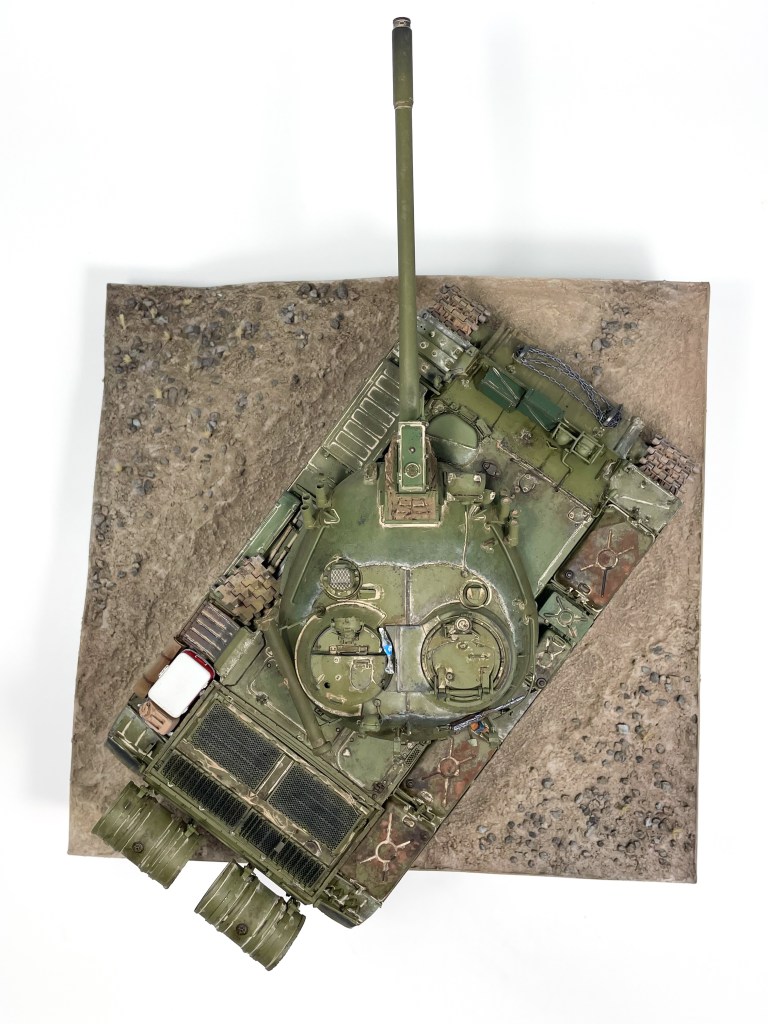
In starting the weathering process I’m reminded that conceptualizing the final result *before* beginning the painting process is needed for a good result. In slowly chipping away on this build I painted a layer of 4BO with no real direction as to what I wanted the final result to look like. Looking back this was a mistake, as I would have liked to add some chipping effects via the hairspray method. This mistake could be salvaged however and I decided to use this build to experiment with post shading, colour modulation and other heavy weathering effects. Basically I want to push this build and really go far with the weathering and pigments to get a better understanding of what works and what doesn’t. I settled on a dusty finish of a vehicle set in a desert environment and I think the green of the tank will contrast nicely with the brown environment it will be set in.

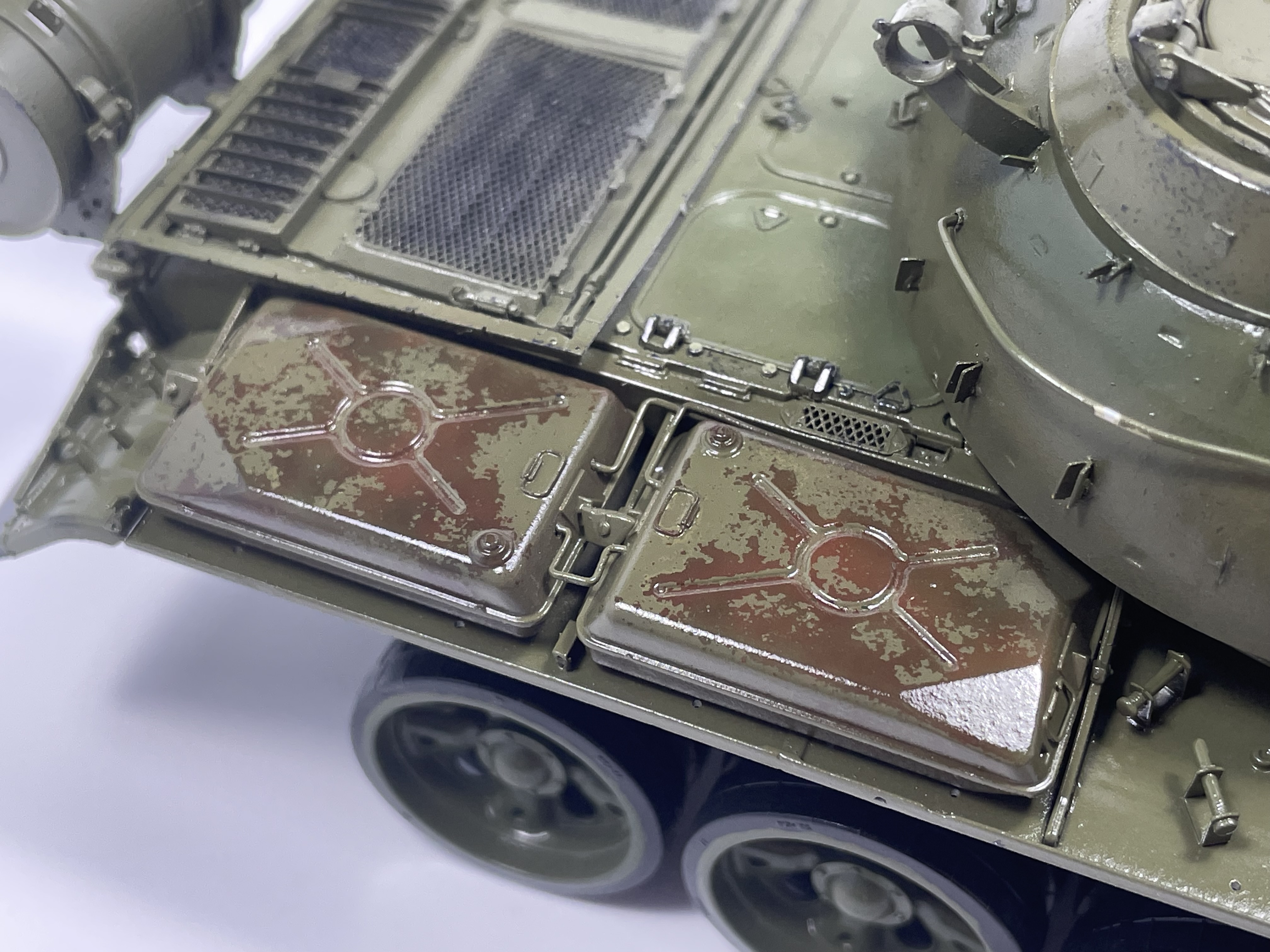
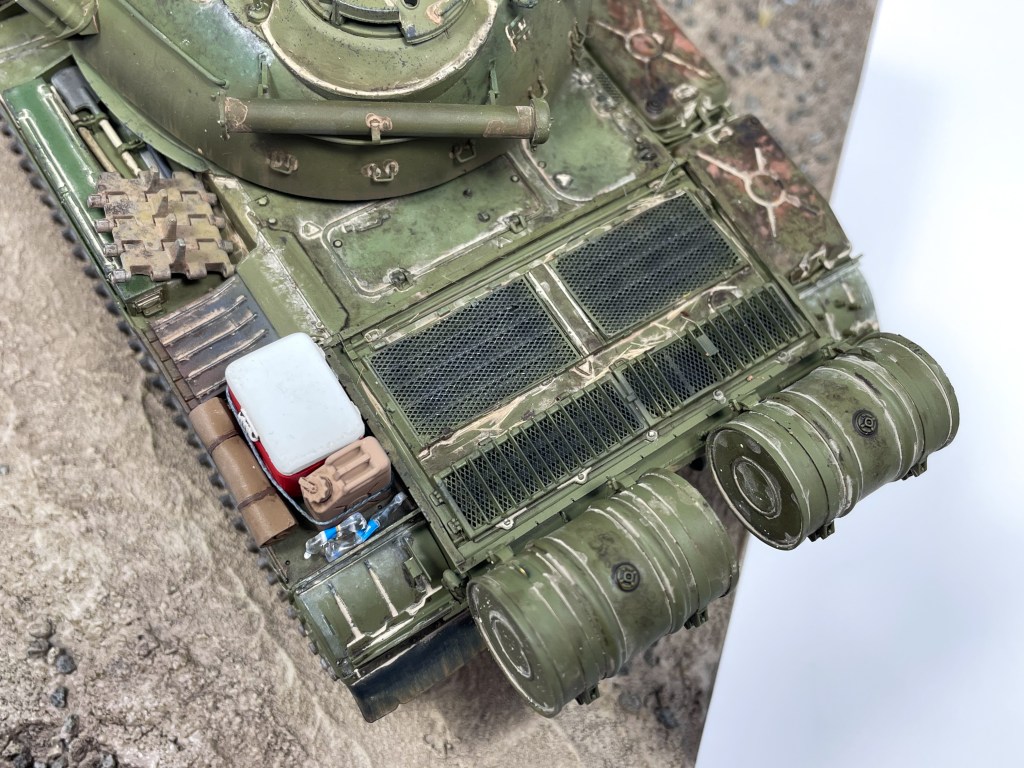
The weathering process started with adding some rust highlights by spraying some various rusty shades on the fuel tanks to create some contrast between the tanks and the vehicle hull. I then opted to treat the fuel tanks to a chipping effect to simulate areas where the paint has peeled away and exposed the rusted metal underneath.

Hairspray chipping helped to start a rust effect on the fuel tanks.

After getting the tanks where I wanted them, I hit the model with a gloss coat to seal the paint prior to an oil pinwash. Normally I’d stick with satin finishes on armour but seeing as there were a lot of details for a wash to skink into I opted for the gloss coat in this stage. After the pinwash I used VMS Satin to seal the model again before moving onto further effects. I opted for a satin coat instead of working over a gloss surface because it would allow for easier blending between the various effects I wanted to use.

Initial weathering was comprised of enamels from MIG using various grime and fuel stain effects. I like how this initial stage turned out although I think I need more practice with enamels as they are not my go to as much as oils are. That said, I like how “grimy” I was able to make the surfaces look and how the staining interacts with the colour modulation. This phase was only meant to be a base for the pigment work which will come next.

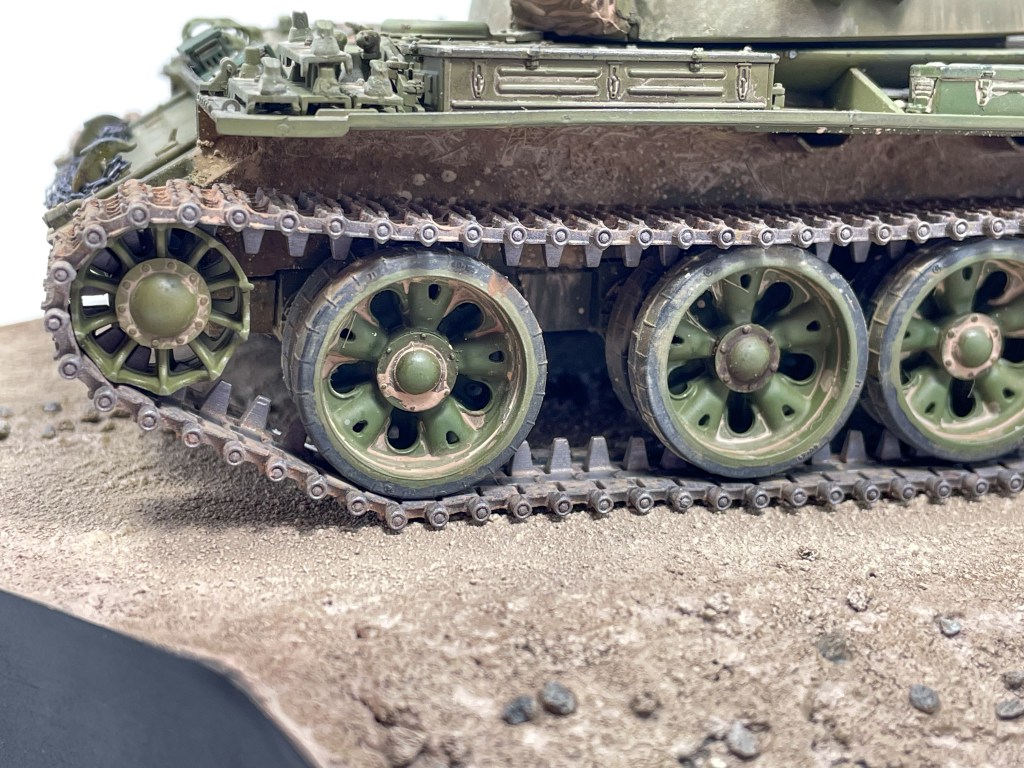
Since I knew I wanted to pose this vehicle in a Desert or Arid setting, I wanted a significant amount of dusting done to the model. I started on the running gear and underneath the fenders and stippled on AK’s “Kursk Earth” along with various other pigments. I also utilized a “light mud” product from AK to get very light splashes to add contrast. With it having been quite a while since I had really dirtied up a tank much of this process was experimenting to see how I liked the end result. I also cut up some static grass and mixed it with a light pigment before applying it to the model to simulate foliage being stuck to the underside of the vehicle.

For the initial dusting I utilized two pigment shades with pigment fixer and while I think it was good experience to practice with using pigments I think my application of this medium would use some refinement. I do think I need to slow down a bit and put more effort into blending while the pigments are still drying which is something I’ll need to keep in mind for the next build.

I used T-Rex tracks for this build and couldn’t be happier with how they turned out. I painted them in Gunze Mr. Metal Color “Iron” which if left unbuffed will remain a dull dark grey but will result in a really great shine if you rub the surface. I added some more “Kursk Earth” long with several different pigment shades to create a dusty weathered look. I then used several q tips to wipe away the pigments where wear would occur and revealed a nice shine to represent polished metal. I also added graphite onto the cleats on the reverse side to represent where the track would contact the ground the hardest and buff them metal.

This is where I’ll leave this update for now but there are sill a few things I’d like to do before declaring this one complete. I’d also like to put this one on a proper base so I’ll need to get that completed as well. Hoping to get the T-55+Base all done by the end of February so not a whole lot of time left!

Categories
1:35 Armor In Box Reviews

AFV Club In Box Review Sd.Kfz.251/22 Ausf. D “Pakwagen” In Box Review

Out of all the random vehicles I’ve been meaning to build, a Sd.Kfz.251/22 or “Pakwagen” has been randomly near the top of my list for a while now. I’m not really sure why, it looks well proportioned I guess and was one of the more useful late war vehicles the Germans came up with. This is the first AFV Club kit I’ve picked up and got it for $70 CAD. Let’s see how it shapes up!

Kit Features: 18/20

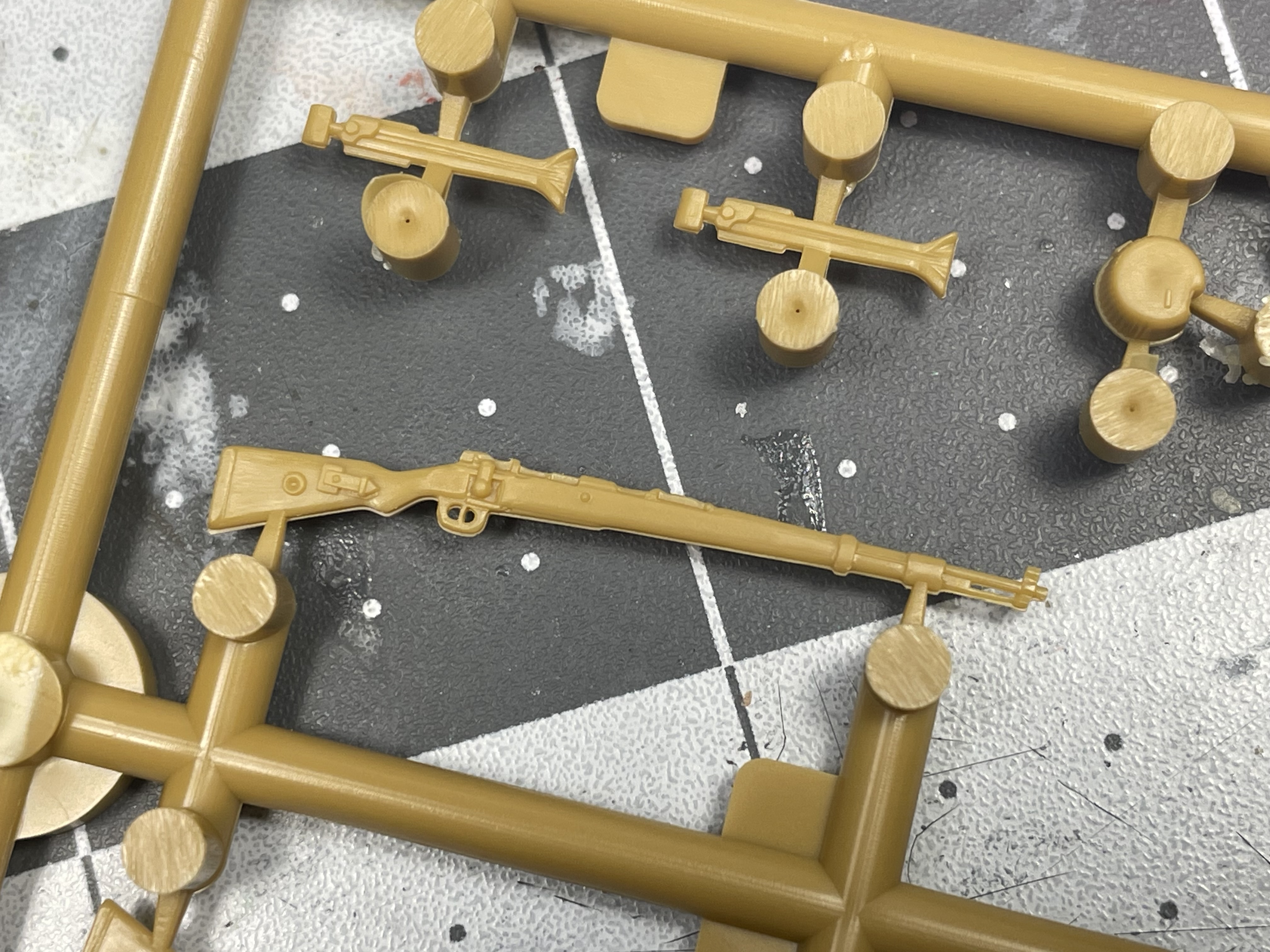
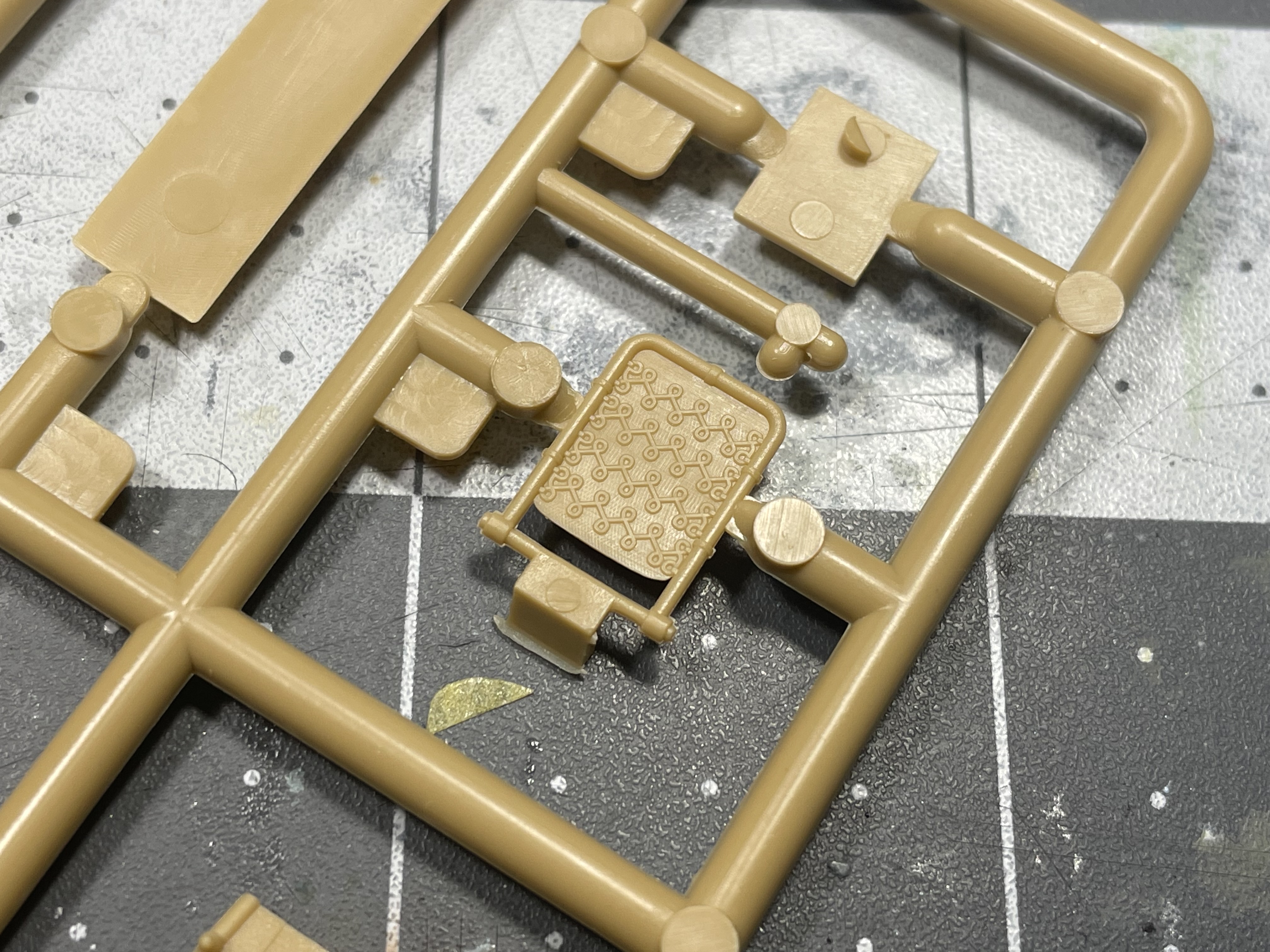
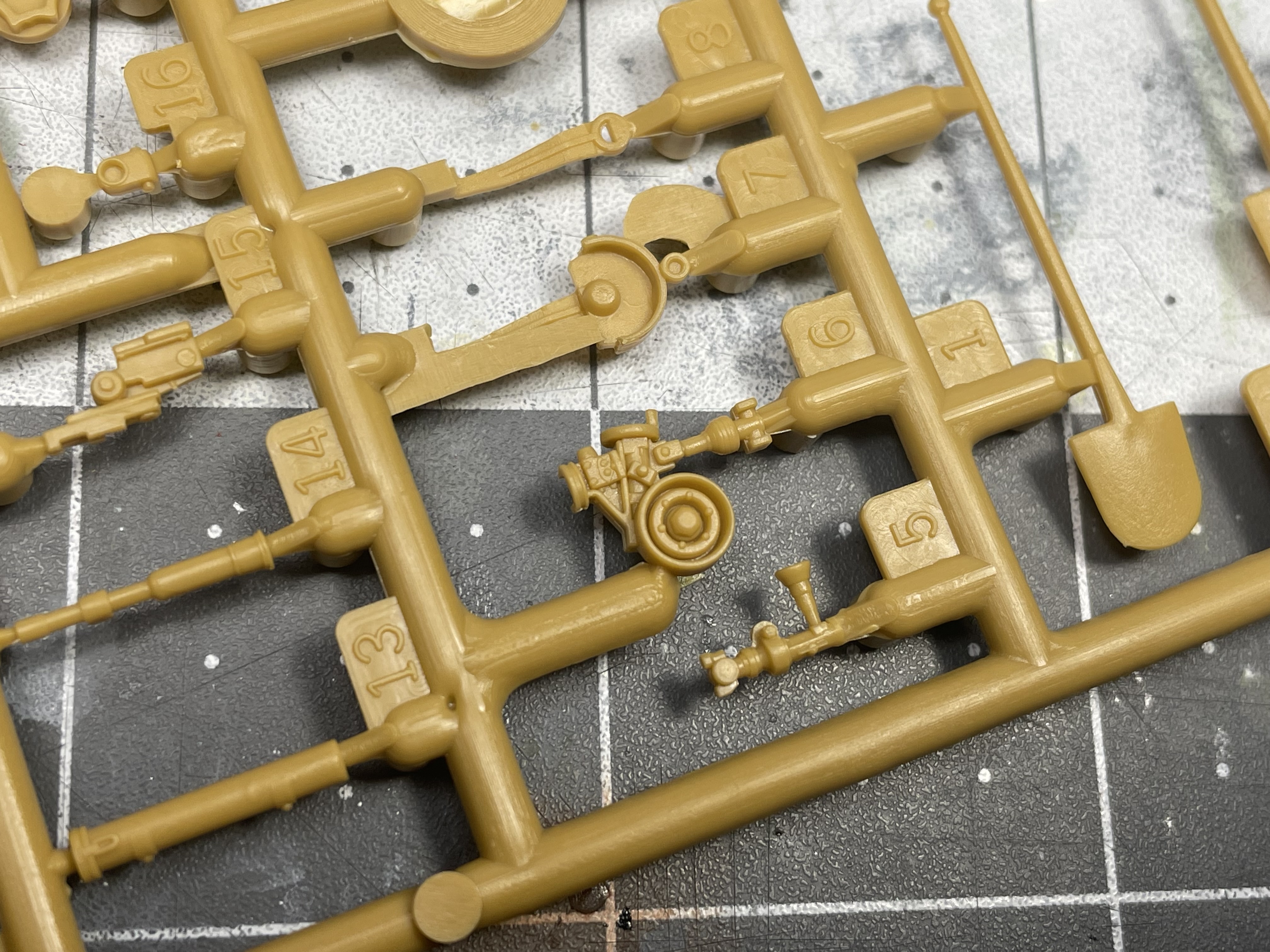
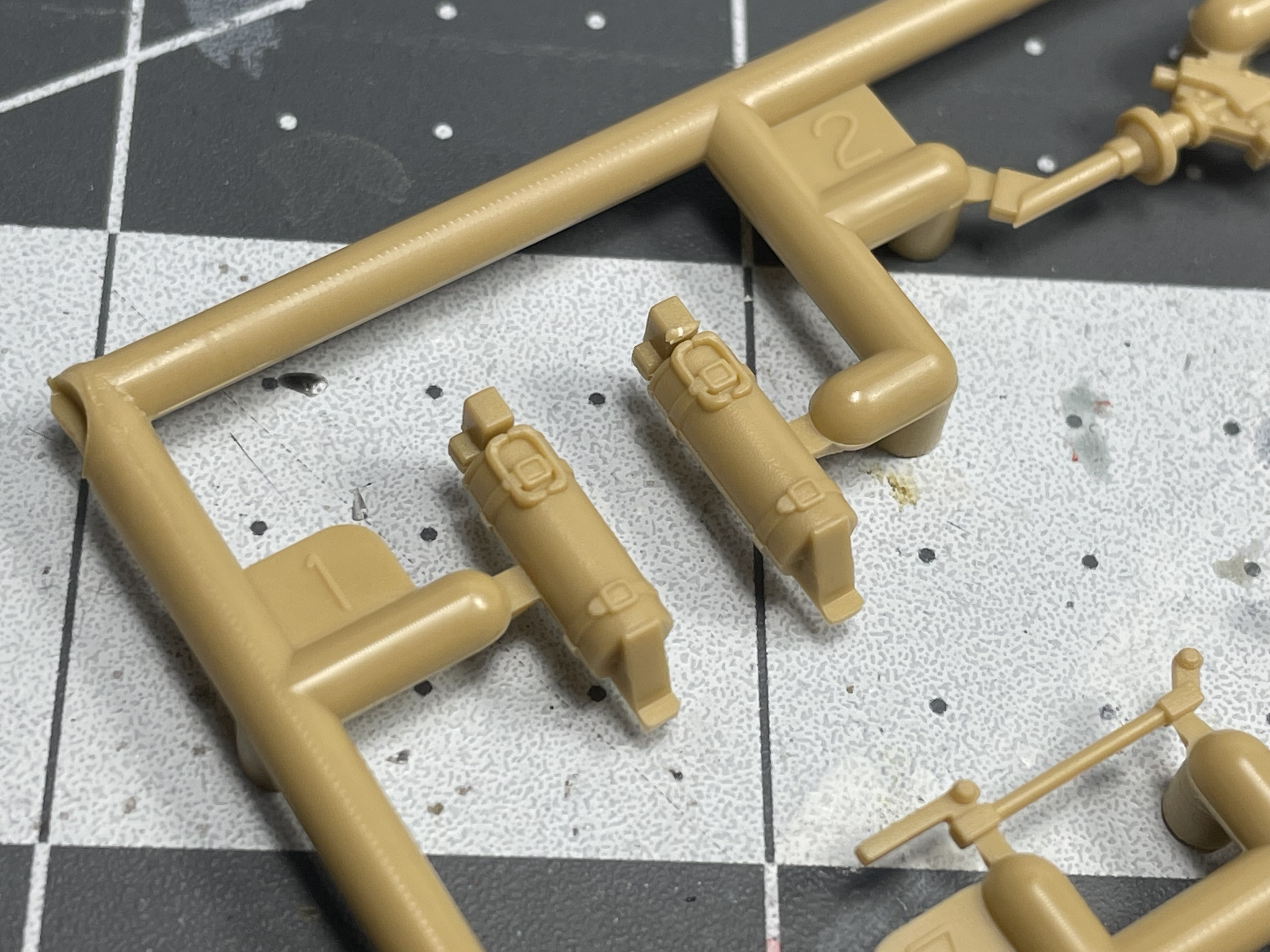
AFV Club kits have a reputation for being detailed and this one includes a lot for the builder. Included is a small fret of photo-etch, a brass gun shield and a metal barrel as well. Also included is a generous amount of small arms (4x Kar98K, MG34, MG42 and a MP40) along with personal equipment that would have been owned by the vehicle’s crew. Rubber tracks are included but I will say that these tracks are the best rubber tracks I’ve seen and very well detailed. I also like that it includes the vehicle tools molded *without* clamps, a very welcome addition. Only points missed out on is the absence of any kind of figures but otherwise This kit is off to a good start.

Quality of Molding: 41/50

As expected, AFV Club’s Pakwagen has a high quality of molding with one exception. In looking over the spues the detail is quite high, with the stand outs being the driver’s seat and crew bench (molded with leather texture), the crew weapons, the gun cradle with all the rivet details and the exterior locker details. While these areas are the standouts the entire kit really is very well detailed and very intricate that an intermediate to experienced builder will be able to flesh out. The only exception to this is the welding detail. The stock welds look extremely faint in some areas and will need to be re-done, no question. All in all however I’d say that I’m not disappointed by the detail present in this kit and considering the comparatively low price of the kit compared to some 2024 releases the welds are not the worst thing in the world and I’d still say the Pakwagen has high detail.

Instructions: 8/20

The instructions definitely are where AFV Club opted to save some money in the fact that they really are nothing special. A short blurb on the front about the history of the vehicle and standard line drawings, nothing special. No colour at all and the profiles included really are nothing special, In fact I’d say the profiles exemplify the “cheapness” of the instructions, no colour callouts (on the profile page) and tiny profiles. Spelling mistakes are also present.

Miscellaneous: 5/10

Included are decals for one vehicle based out of the “western front” which let’s be honest is a huge cop out. The singular saving grace for the markings is that they include division markings and stencils, along with license plate information. I like it when kits include these types of markings because often times vehicles have a lot more organizational markings than just some numbers and a cross/star and adds to the realism of the final subject. In one of my early drafts of this review I initially failed AFV Club’s Pakwagen but thinking about it more now, the inclusion of the division stencils is just enough to warrant a 5/10 score. The quality of the tracks also helped increase this score as they are excellent.

Total: 72/100

AFV Club is shamless for some of the corners it cut while putting together this kit but on some level it’s understandable? I have no doubt this kit will end up looking great, the detail is there and a experienced builder will take advantage of it. Experienced builders put research into the vehicles they build and because of this AFV Club was clearly ok with not putting as much information behind the markings they chose for this subject. This is in stark contrast with a manufacturer such as Eduard that will not only provide a highly detailed kit but also information about the person who operated the real life vehicle. Add on the fact that this wasn’t a $90 monster and some of the errors are forgivable.