
With progress moving quickly on the LCA I found myself at the painting stage earlier than I had expected. For the build I planned to keep the weathering on the more subtle side for numerous reasons, primarily the fact that these vehicles didn’t see as much wear as land based armour. This is not to say that LCA’s did not wear at all however but rather that in my option a restrained weathering approach was in order.

Early painting steps included priming in Mr. Finishing Surfacer 1500 black (my preferred type of primer) and a random light grey shade I had lying around, which in this case was AK’s “light sky blue”. When choosing colours for marbling I took into account the shades of the final base colours and selected a paint that was slightly lighter than the final grey shade. I did this because the black of the primer will heavily darken the final coat of the model if the marble colour is not light enough to offset the black. This was a lesson I learnt during the painting process of my Kinetic CF-18 and as a result the whole build was tinted slightly too dark.
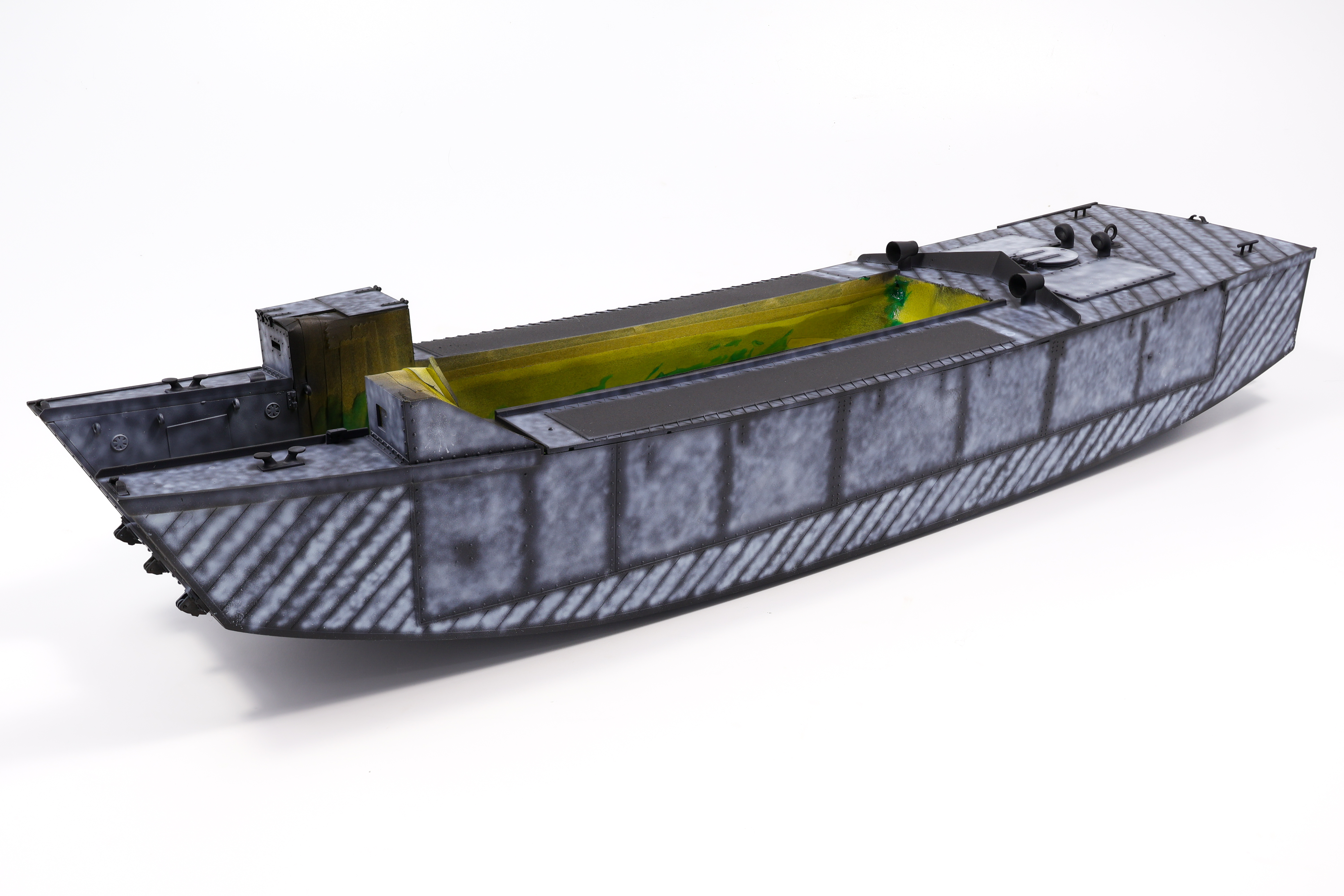

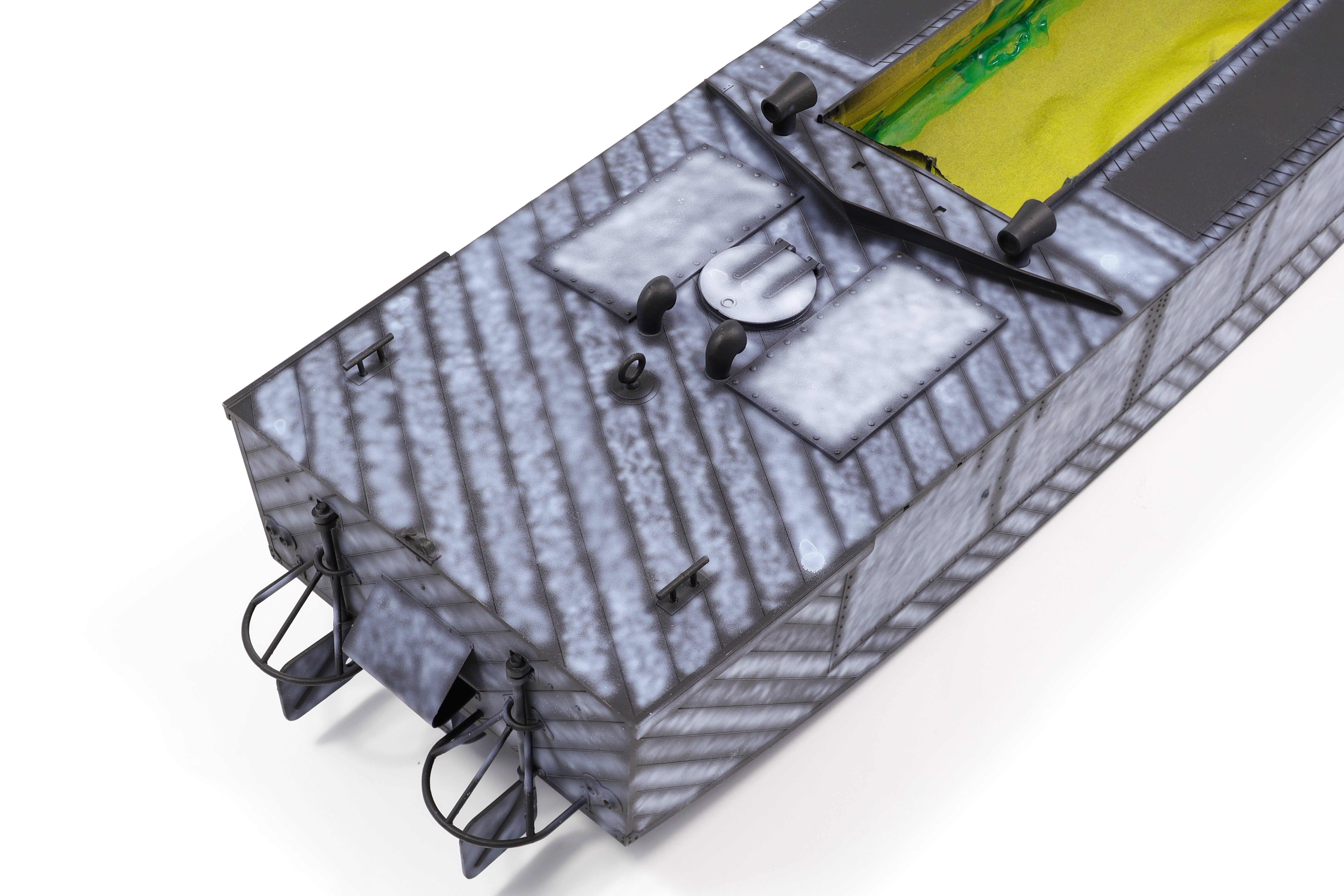
After the initial marble coat with the light sky blue I had a fairly good base for further pre-shading and paint variation. The LCA is a very geometric craft and has really distinct paneling, The large square armour plates are very distinct in contrast to the diagonal planks. I really wanted to take advantage of these shapes so I decided I wanted to implement some drastic pre-shading for this build. This would also help on the weathering side as the kind of finish this would produce was in line with how I wanted to depict the finished model.
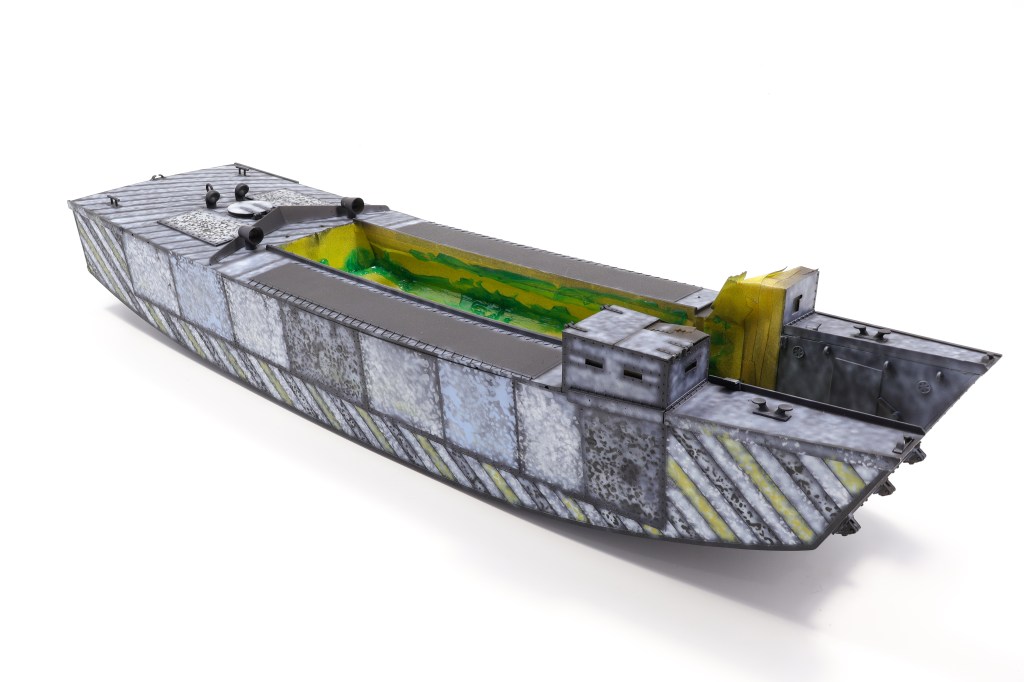
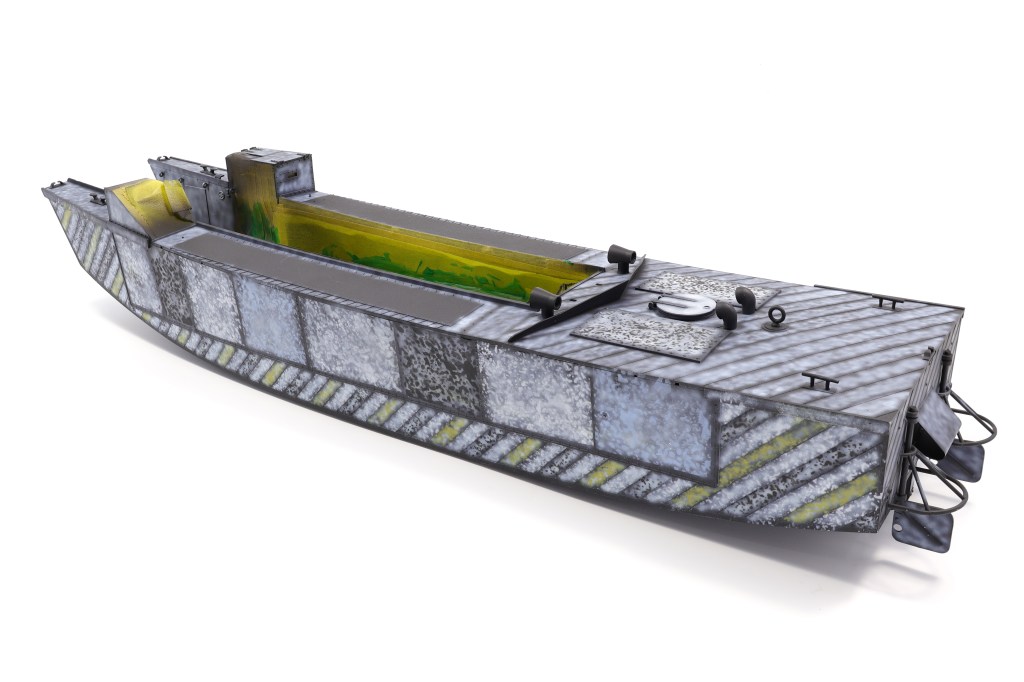
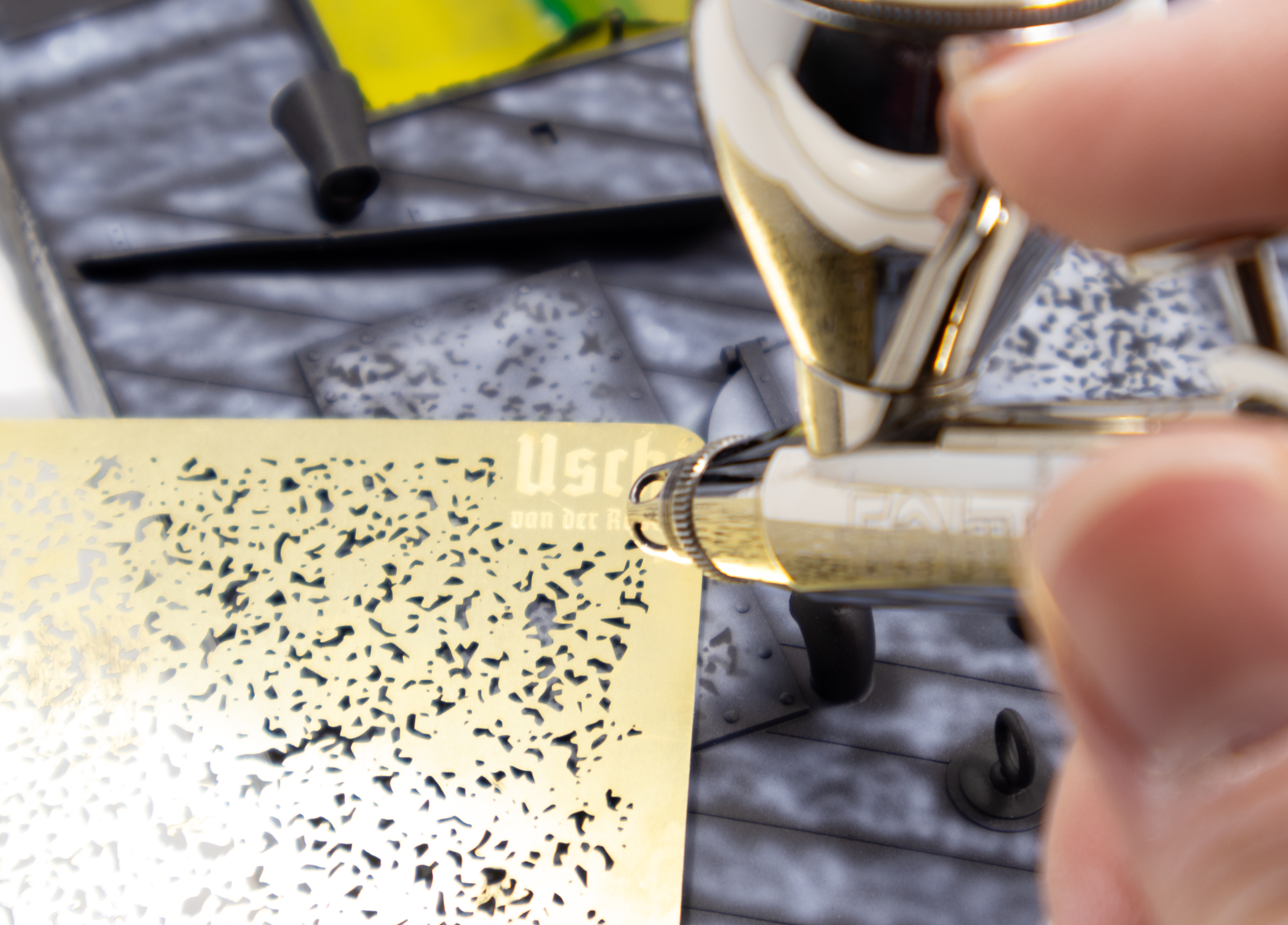
I used several new shades to introduce further paint variation, White, Black, Sky blue, and oddly enough, Dunkelgleb (which looks like lime green when sprayed lightly over light grey). For this stage I wanted hard transitions between these shades and the underlying marble coat and to get them I used Uschi metal airbrush stencils. They are quite good and I recommend anybody who is serious about incorporating presiding techniques in their workflow to pick up a set. One drawback to these however is the fact that they cannot be bent to contour a curved surface. This wasn’t a huge issue in this build as the LCA is a very boxy craft. That said you don’t need to have the stencil completely flush to get hard demarcation lines and holding them slightly away from the model will still yield good results. I sprayed these shades only over specific shapes, taking care the the colours did not spill over too much.
For masking I used AK’s hard edge masking putty. I’ve used it in the past and even though it can be a bit frustrating to use at times, I’ve been able to get good results with it. In fact part of the reason I picked this specific type of landing craft and not Gecko Model’s U.S landing craft was because I found this specific hard edge scheme quite interesting.
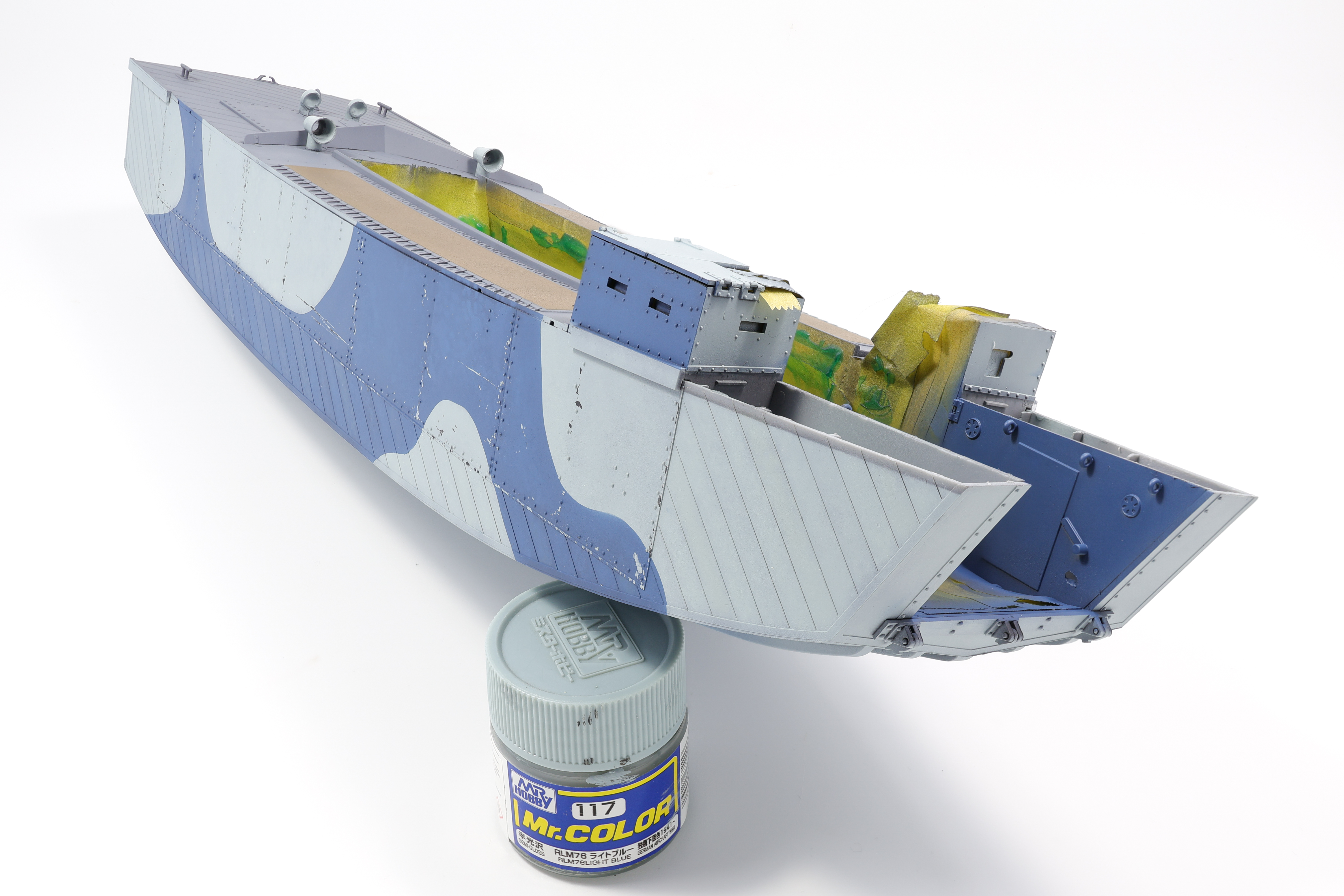
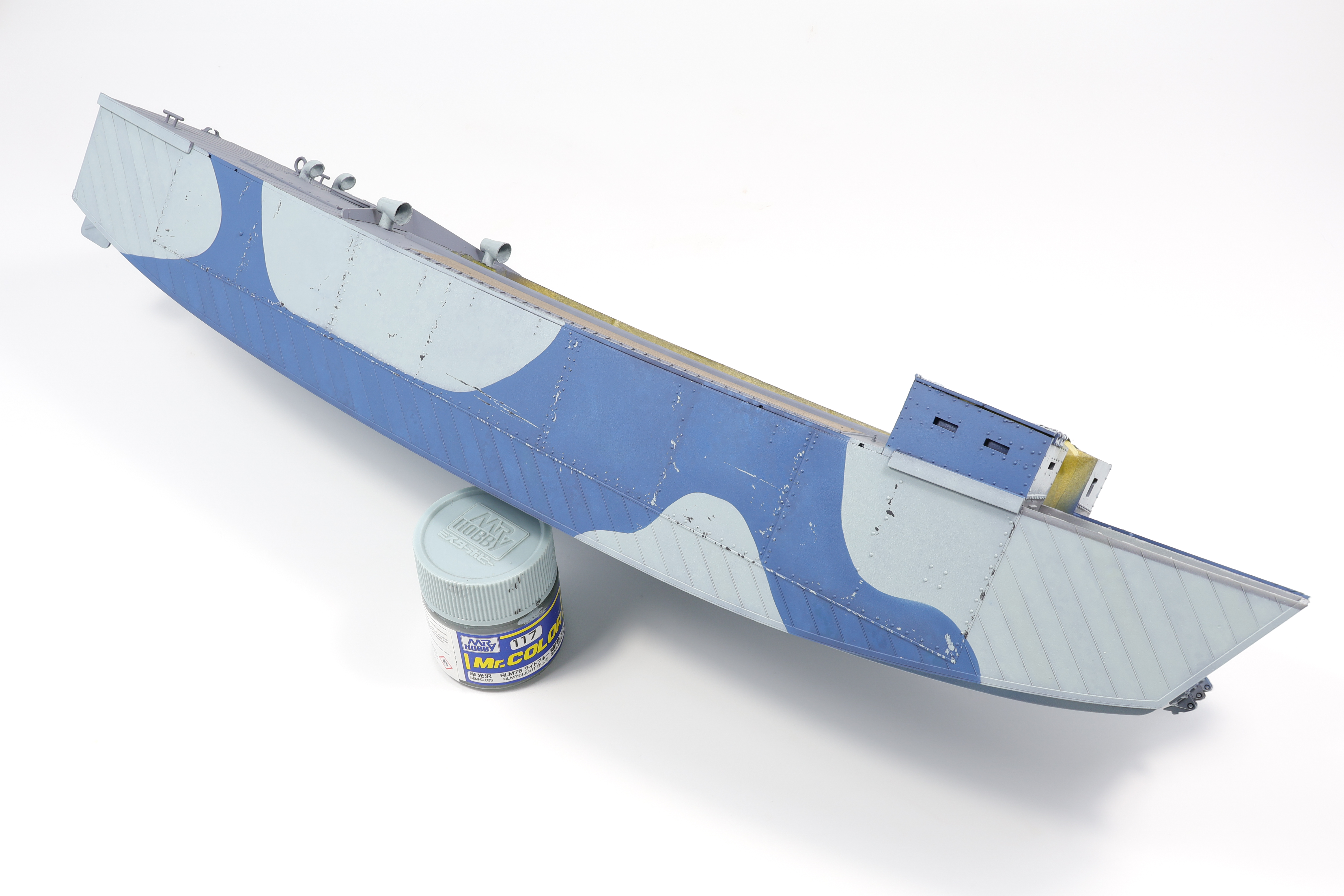
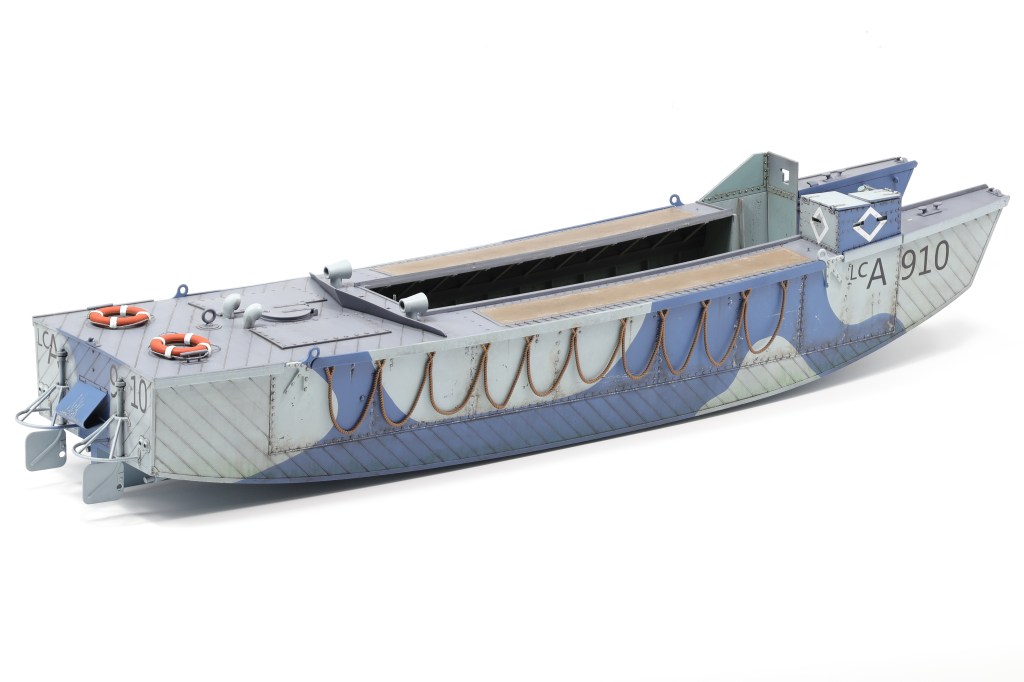
For the final scheme colours I used Mr. Colour Lacquers, with RLM 76 light blue used as the grey shade and Intermediate blue used as the blue colour. Even though the bottle says “light blue” this colour is very close to being grey and with the pre-shading underneath it has a further grey tint.

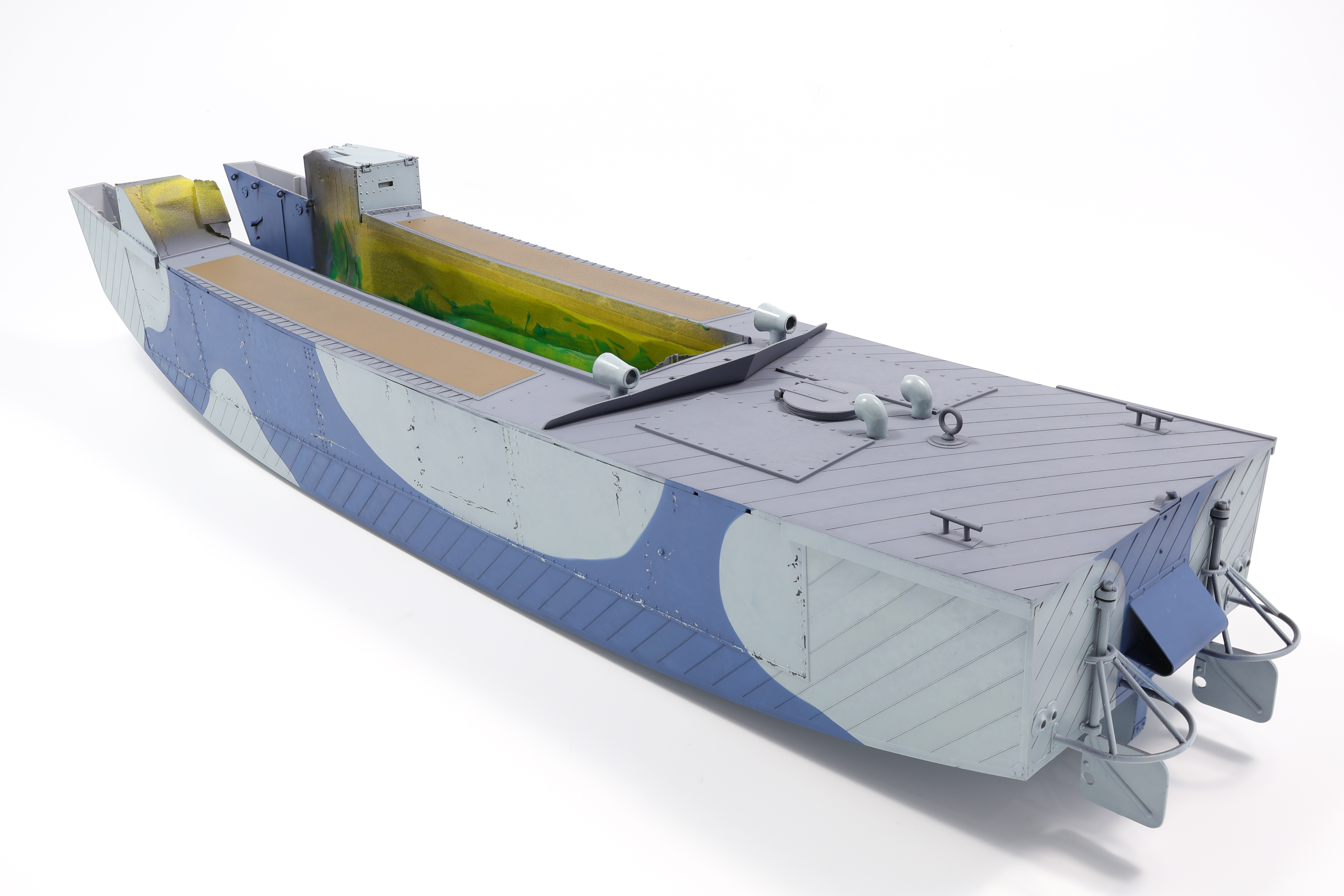


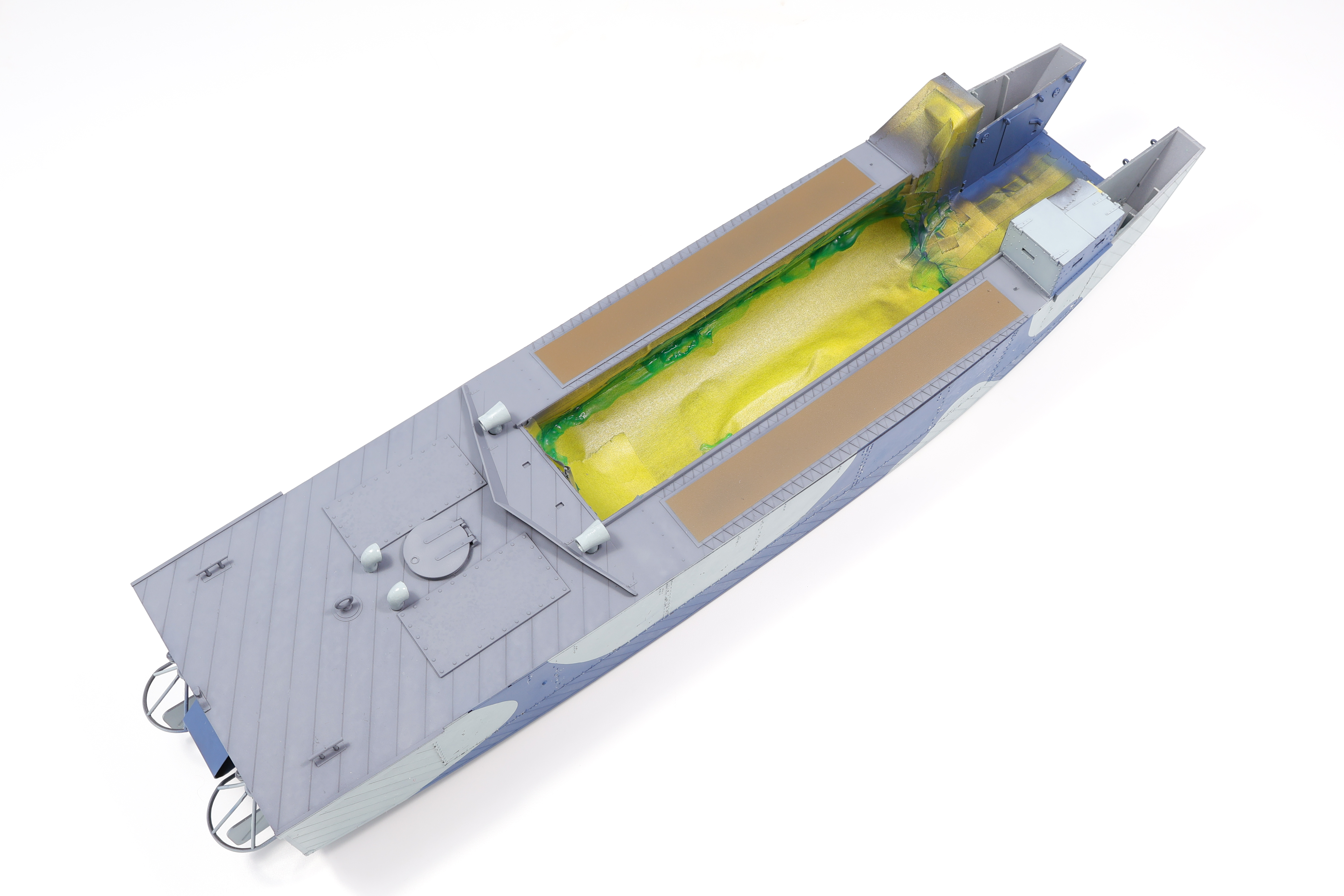
At this stage before applying any vanishes I started the weathering process in the form of slight paint chipping. I thought it was important to add some visual interest to the sides as not adding weathering in this area will cause the model to look uninteresting and boring in my opinion. All chipping was applied with a brush, a technique I’ve gotten good at over the past few months. I used to avoid brush chipping like the plague but since I got my hands on some super fine brushes I’ve found the technique a whole lot more easier than before. There’s also the fact that with traditional chipping methods such as hairspray chipping you can have a bit of a time limit in the sense that if you paint cures it can be difficult to get it to chip the way you want. There’s still a place for HS chipping but as my workflow shifts to include more pre and post shading I’m not sure where that place will be moving forward.

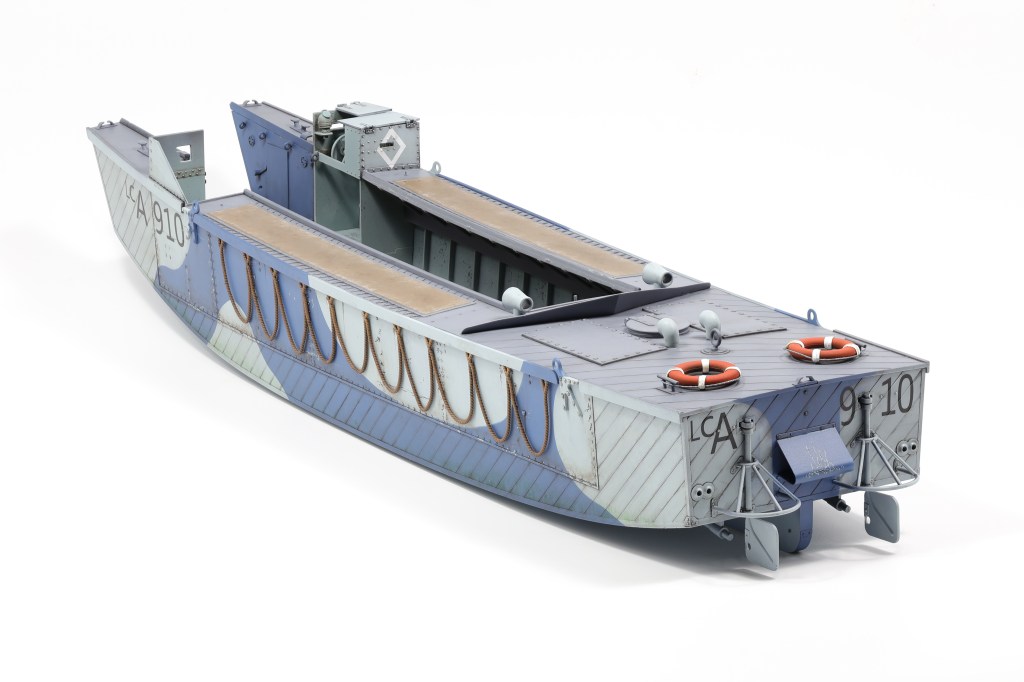
Decals were straightforward for this build, a grand total of 6 to apply. I used VMS satin coat to seal the model and after doing a test run on a chemical dummy I discovered that Tamiya mark fit super strong nearly melted the acrylic vanish I settled on the far more tame Micro sol/set combo. Decals were fine to use (If a bit thick) and settled around surface detail well. I was a bit concerned about how they would settle over the hull ribbing but it was no issue.
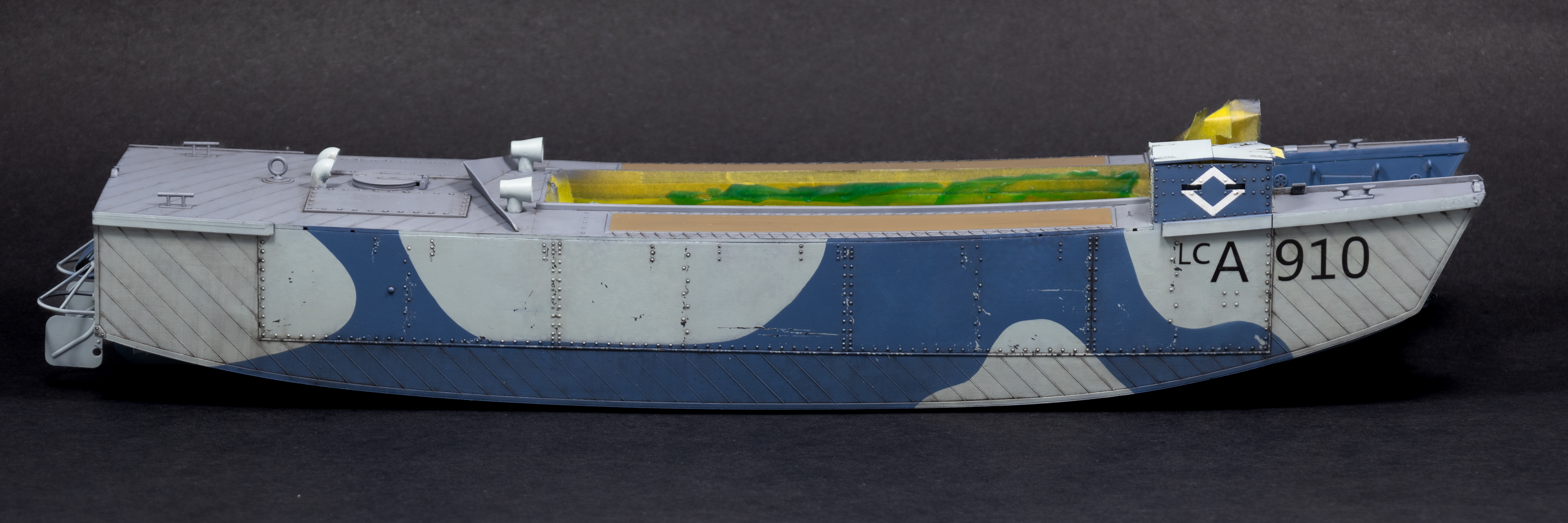

Initial weathering steps consisted of a dark brown (almost black) oil wash. I limited myself to a pinkish on the large steel plates and did a broader wash on the planks on the side. This had the effect of causing the large plates to appear cleaner than the planks further adding some colour modulation.


I wanted to add some algae deposits on the lower hull and to do so I picked out a dark green shade of oil paint. to achieve the desired look I added diluted oil paint in dots along the bottom and blended it with thinner. Like a lot of the weathering I did on this model the effect is really subtle but the cumulative effect of half a dozen techniques adds up.

At this stage I also added some extra pieces onto the full after the majority of the watering stage was completed. This included the ropes on the side along with the lifting eyes. I left these off because painting and weathering the hull would have been a nightmare with them on and I could paint the ropes separately and not have to worry about overspray onto the hull. After these parts were added the last weathering effect I did was to add scratches to the anchor rest on the rear of the craft. This area would have seen the most wear on the entire vehicle as the anchor would have banged onto it each time it was lowered and raised, causing significant scarring.

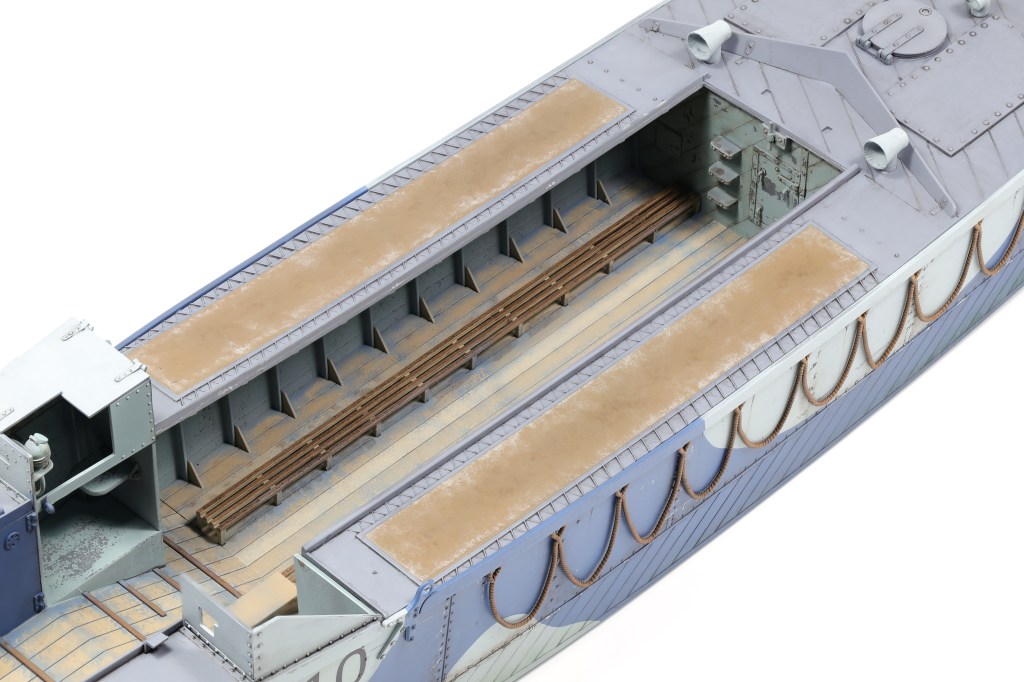
I also wanted to add some visual interest to the canvas covers above the cabin. I felt that this area would get significantly dirty with the exposure to salt water and crew walking on top. weather this area I mixed up a tan/white oil paint mixture and applied it around the outside of the canvas cover. Then, I applied a dark brown mixture on the inside to represent grime accumulated from crew activity. I really like how this area turned out and it added some much needed visual interest to a fairly boring part of the craft.
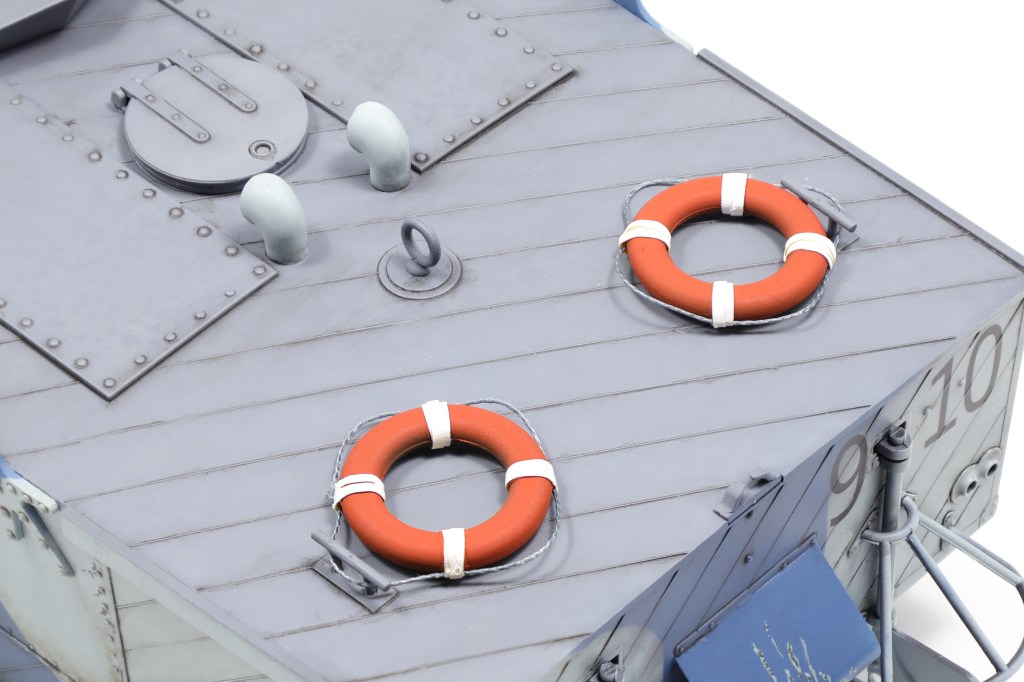
Also of note are the ring life preservers added onto the top of the hull. I made some considerable improvements to the way they came in the kit and I really like they way they improve the colour on the model. Gecko has you just glue them to the deck, however there’s no way that in real life they would actually stay in place so I had to come up with a way in which they would plausibly stay attached. I looked at reference photos and I saw that the majority of WW2 British life rings had a rope going around the outside of the ring and using some scale rope I had on hand I recreated what I had seen in reference photos and fastened them to the hull in a way that seemed natural.
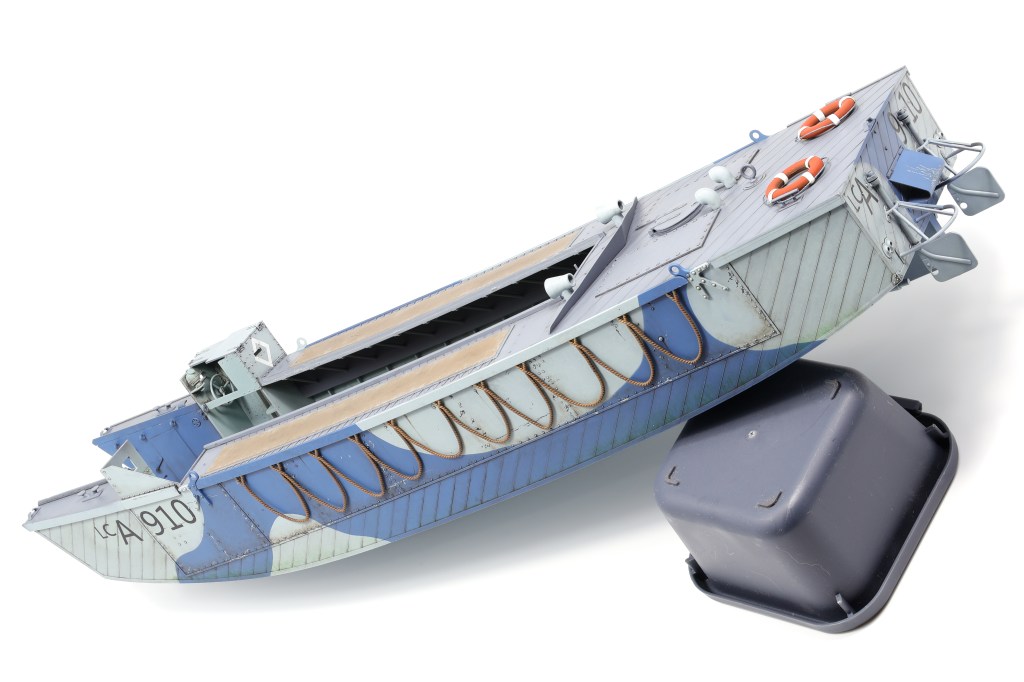
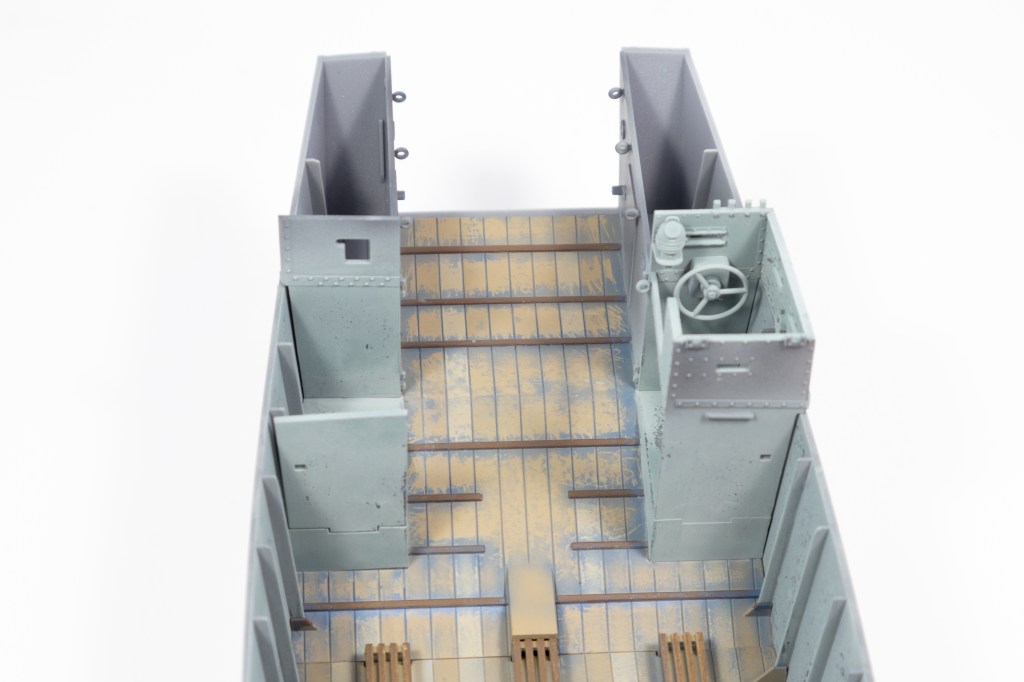
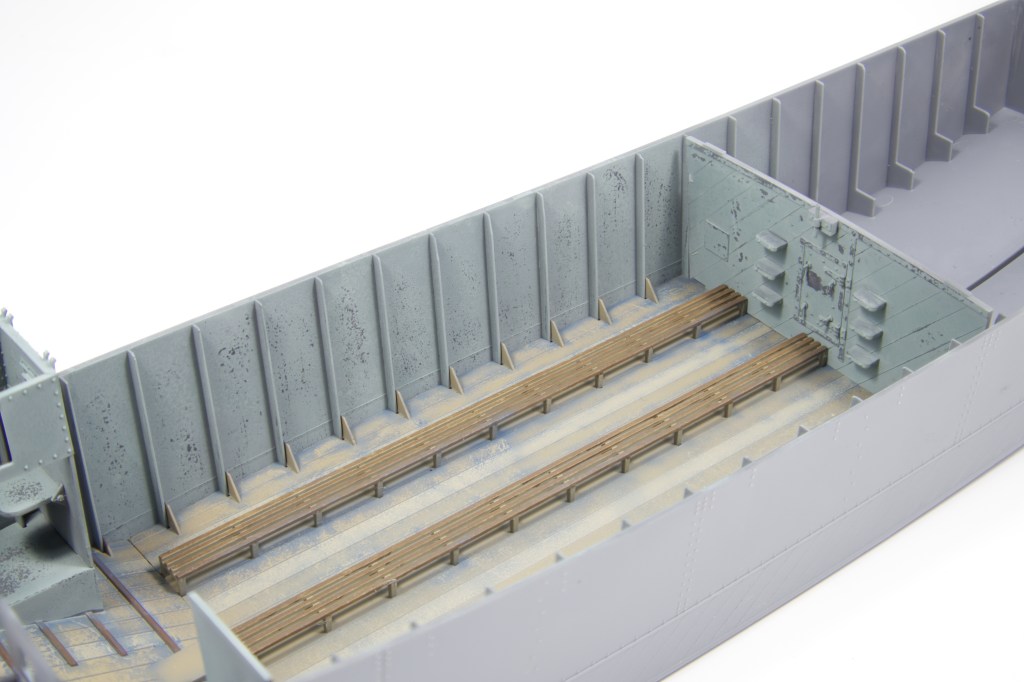
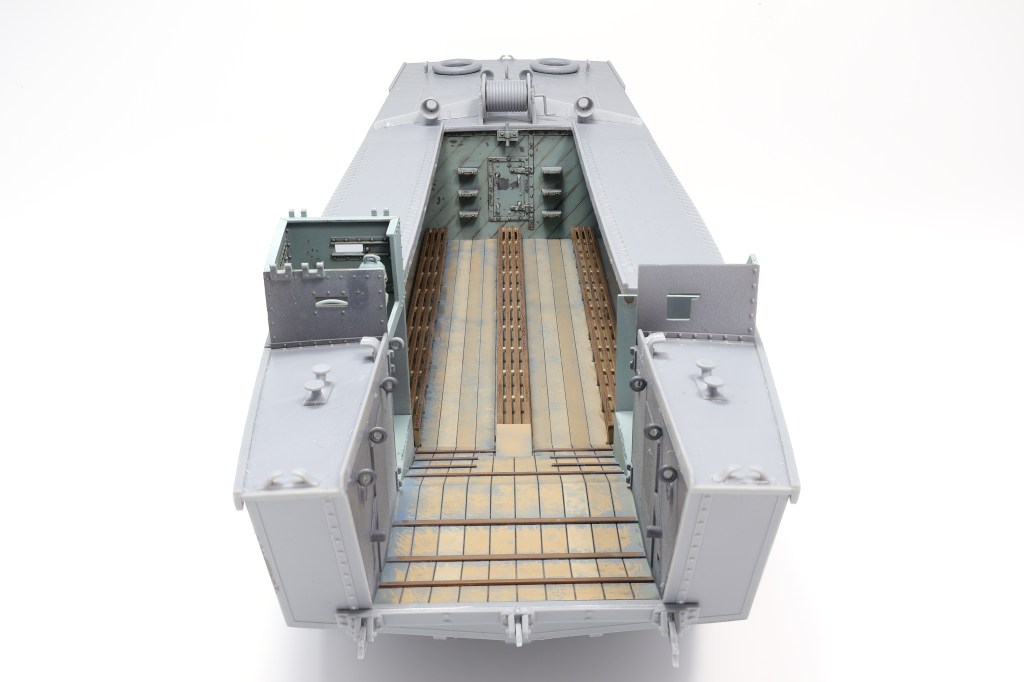
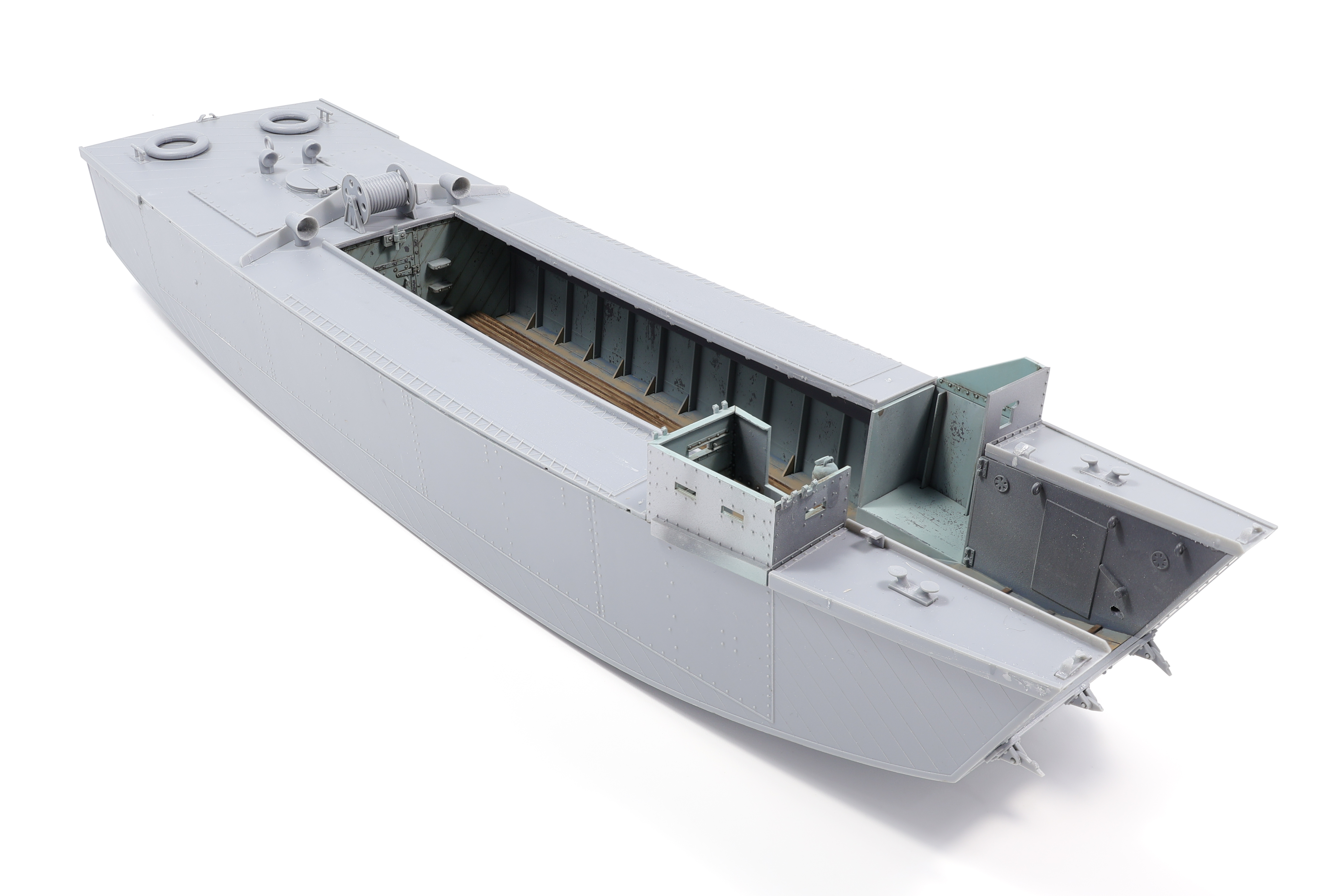
At this stage I hit the model with a coat of matte varnish and was finally able to unmask the interior wood planking inside of the vehicle. At this stage the weathering process was more or less done with just subassemblies and minor painting left to go on the build. Enjoy the photos below and thanks for looking!








 Nomad Models