Categories
1:48 Aircraft In Box Reviews

Tamiya F-35C Lightning II In Box Review

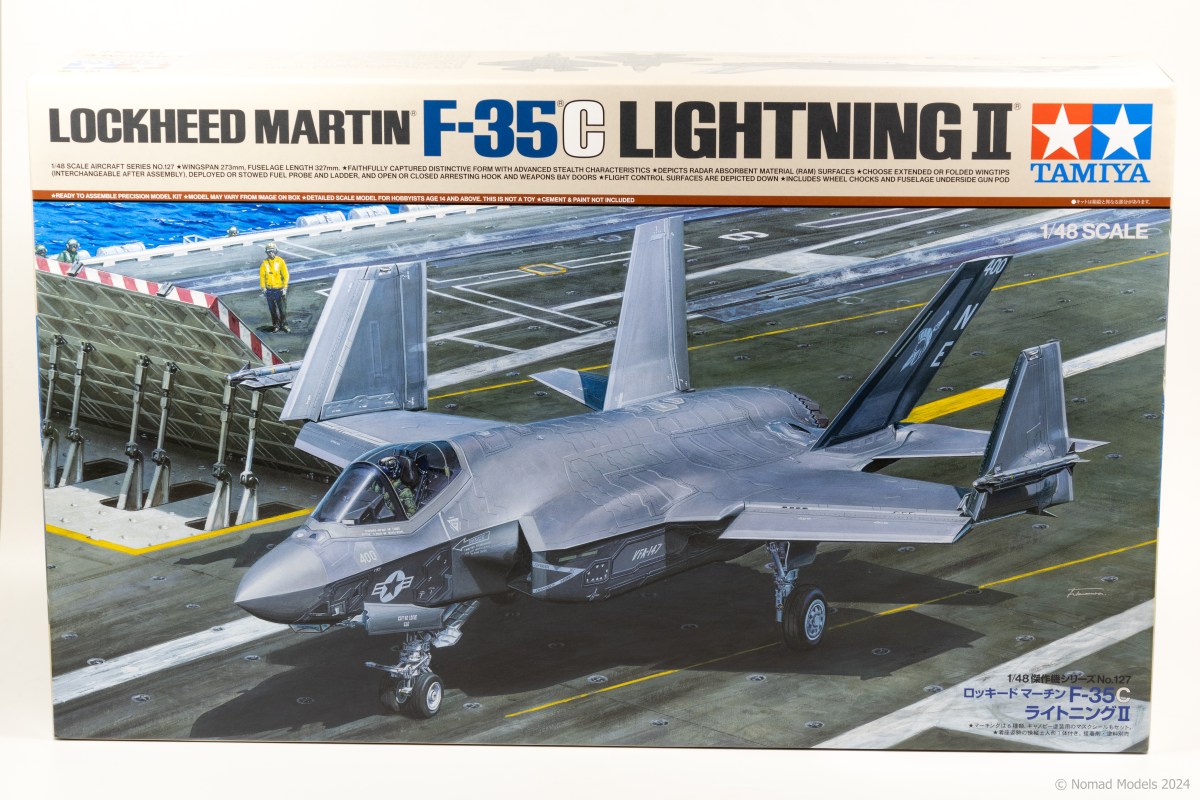
I knew when going into this review that Tamiya’s F-35C was going to be a serious challenger for the best kit I’ve ever reviewed. Both the A and B variants have recived critical acclaim since their releases in 2022 and 2023 respectively. Back in 2020 I rated Meng’s Jumbo Sherman a 92/100, will Tamiya’s latest lighting take that crown?

Kit Features 17/20
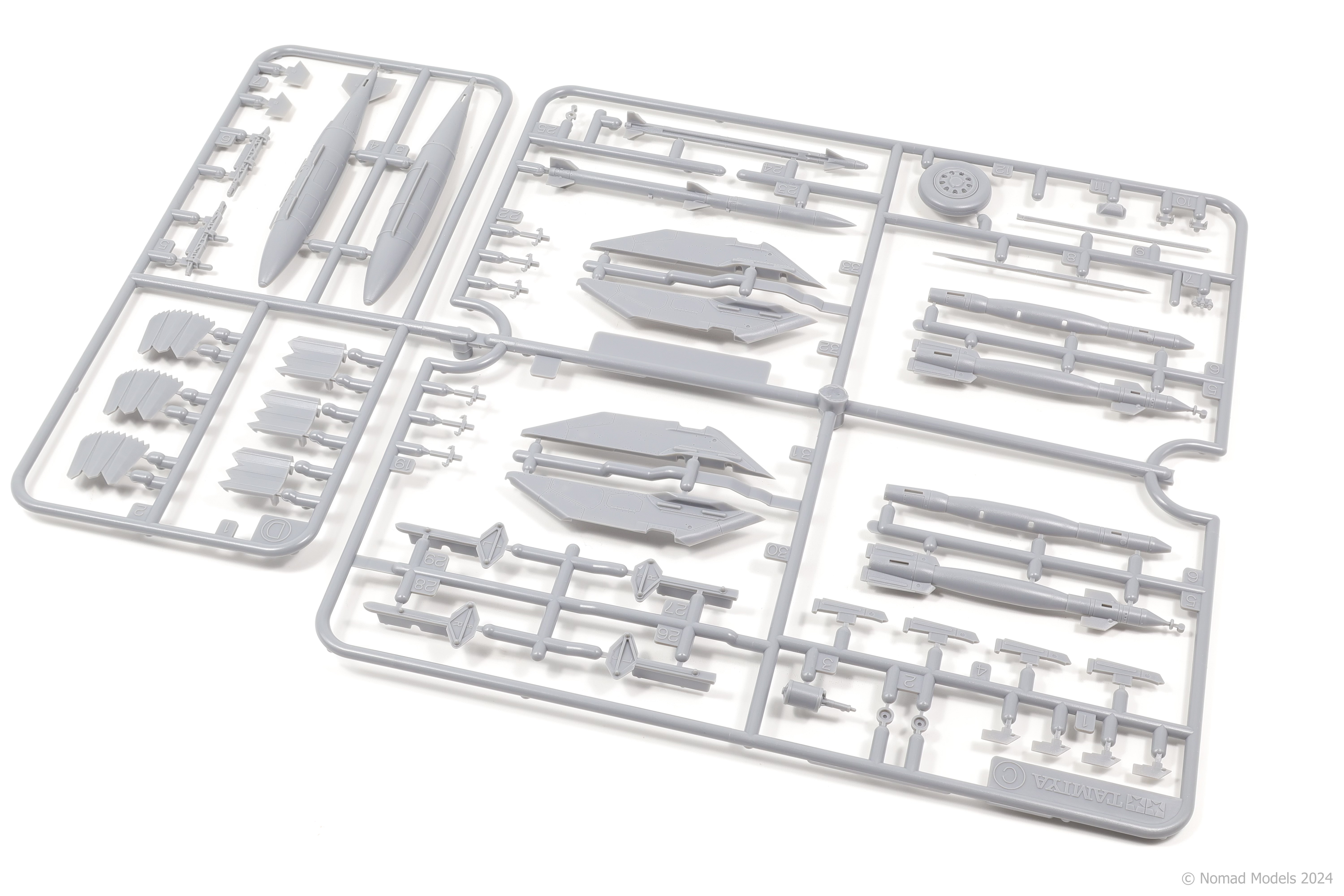
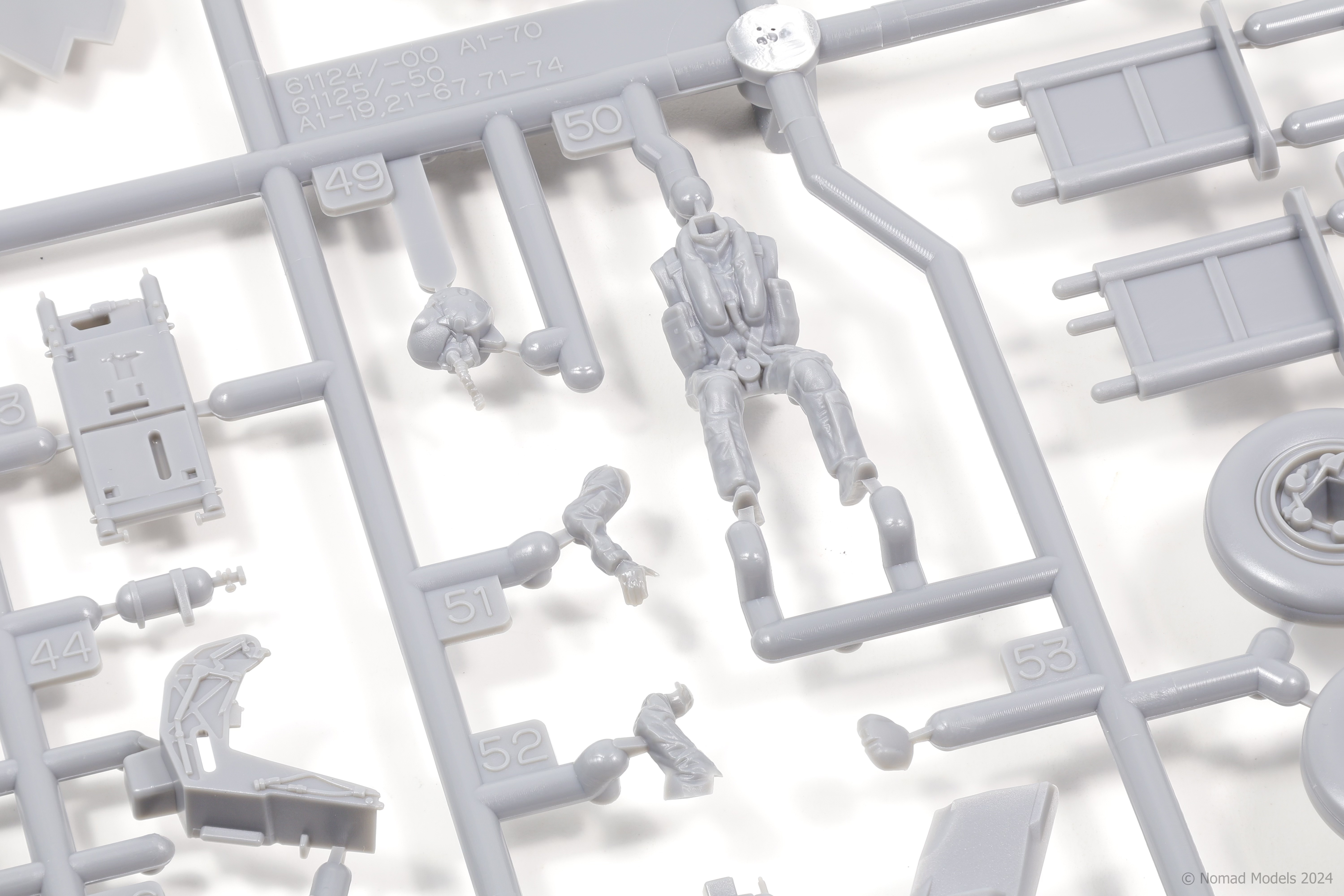
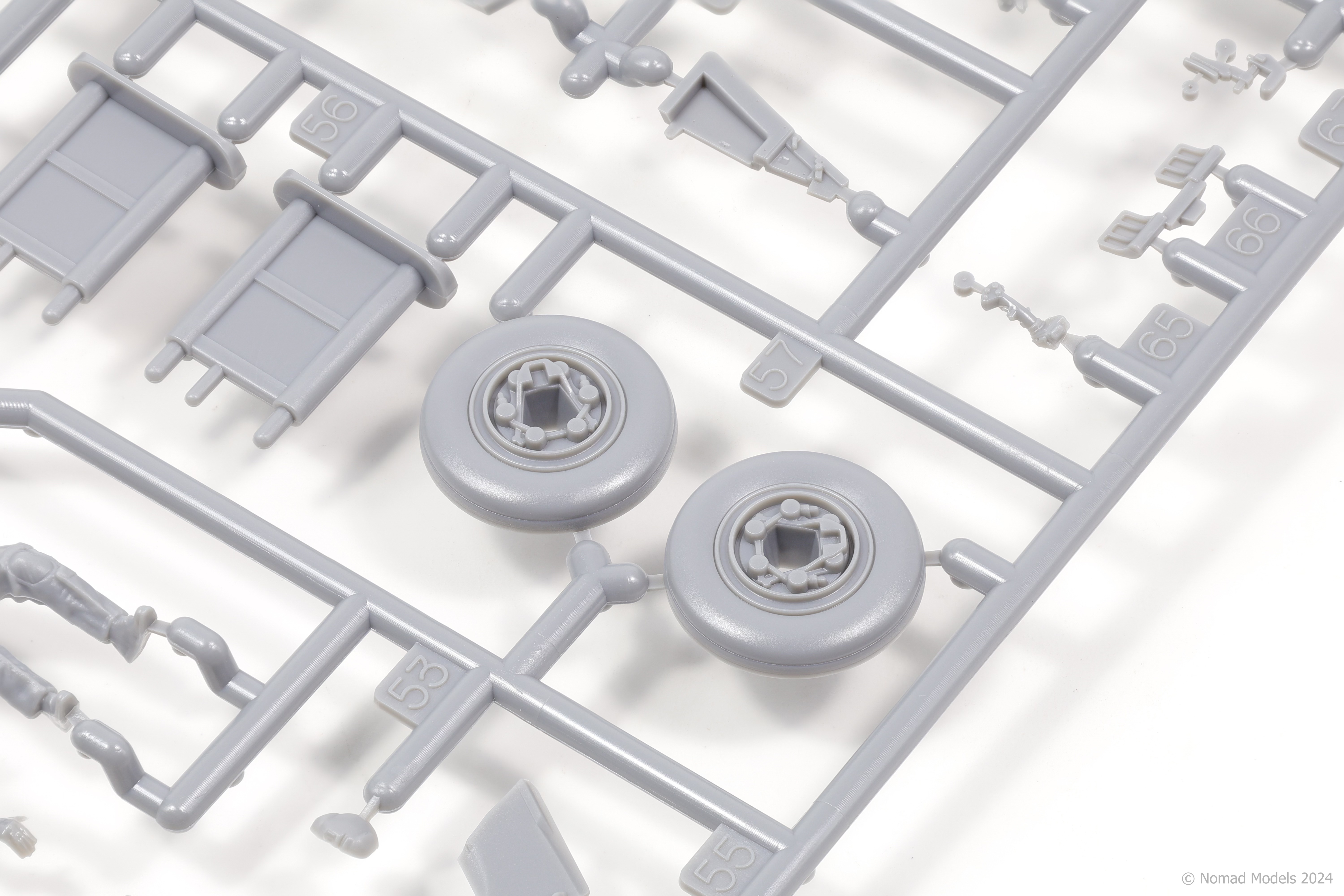
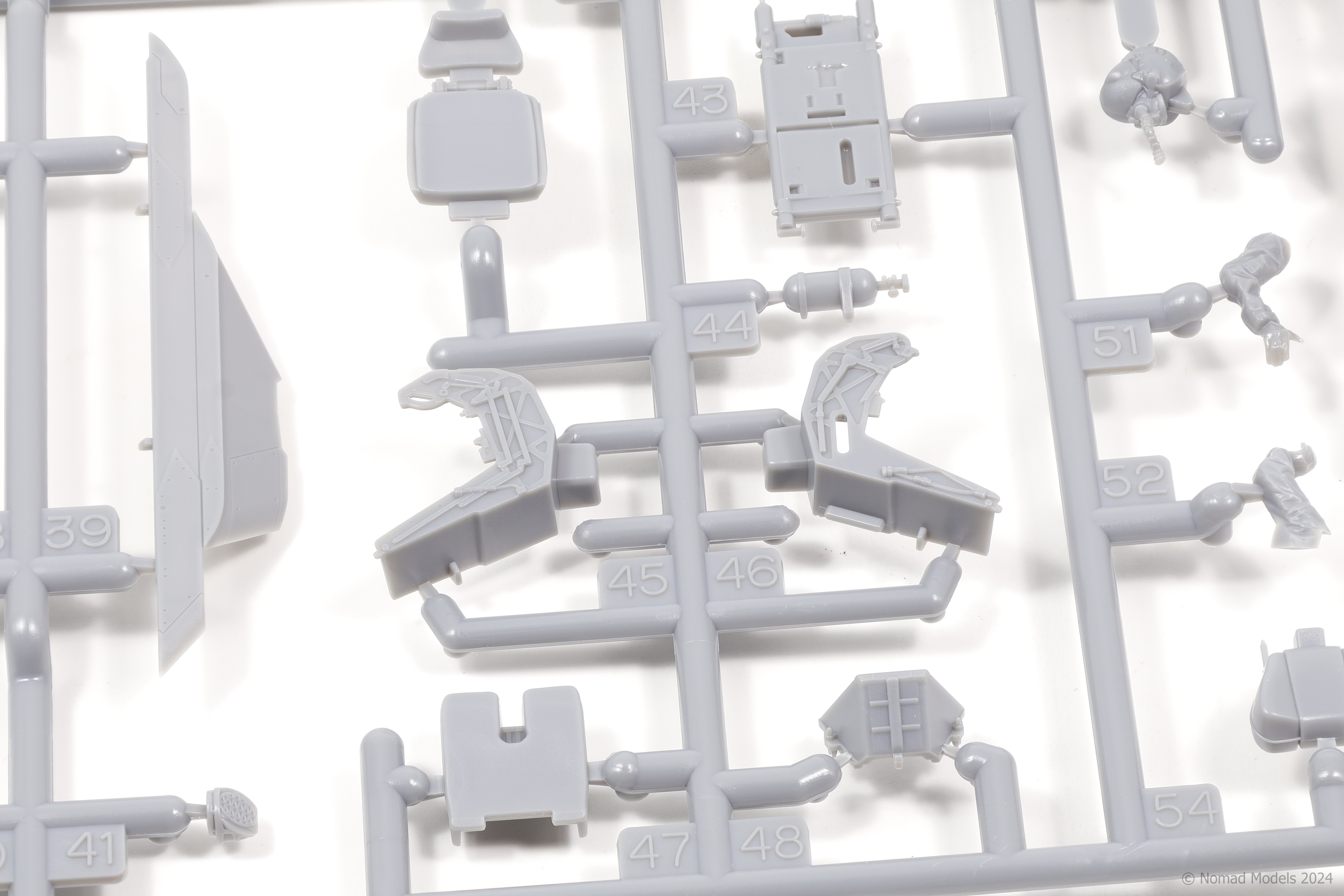
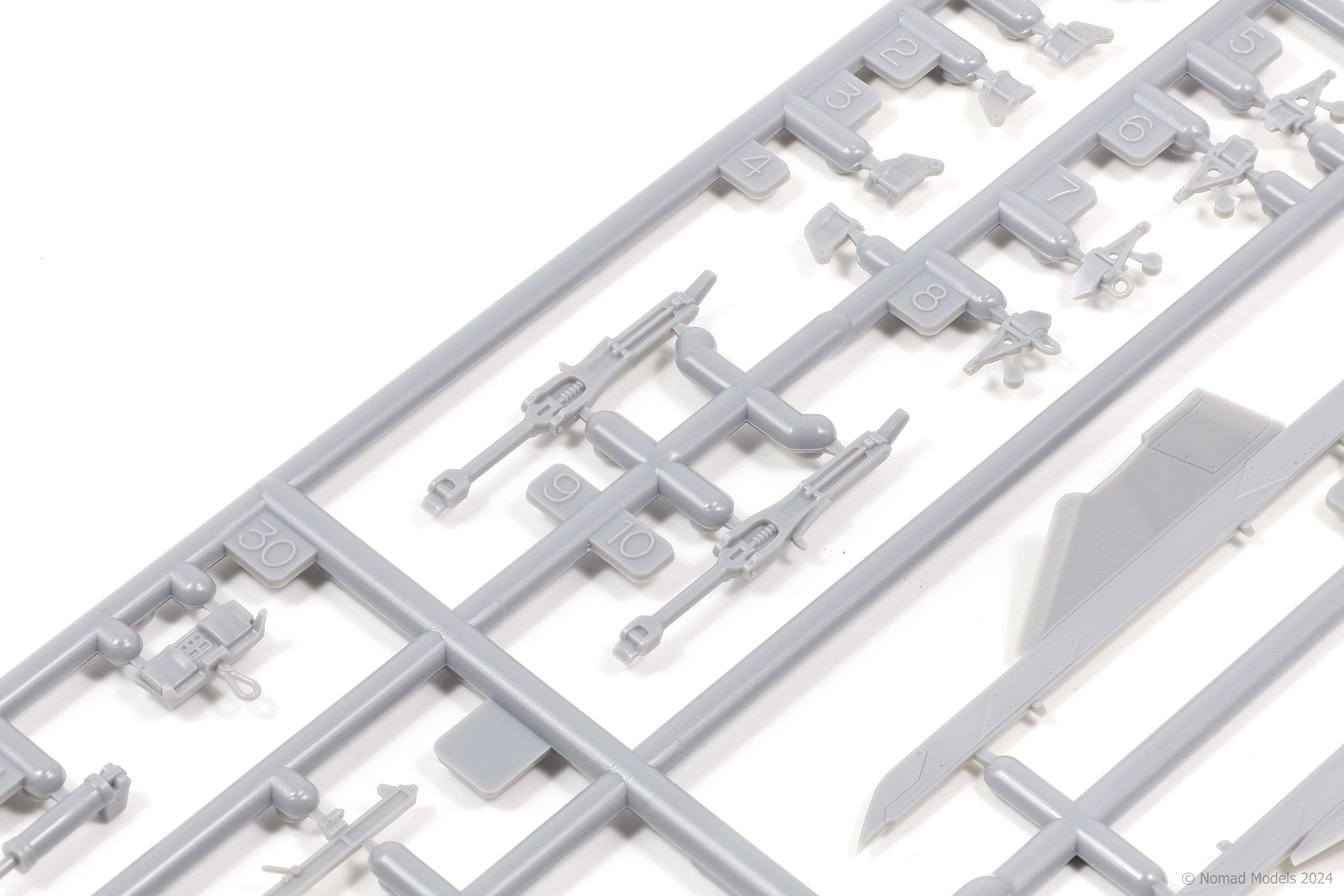
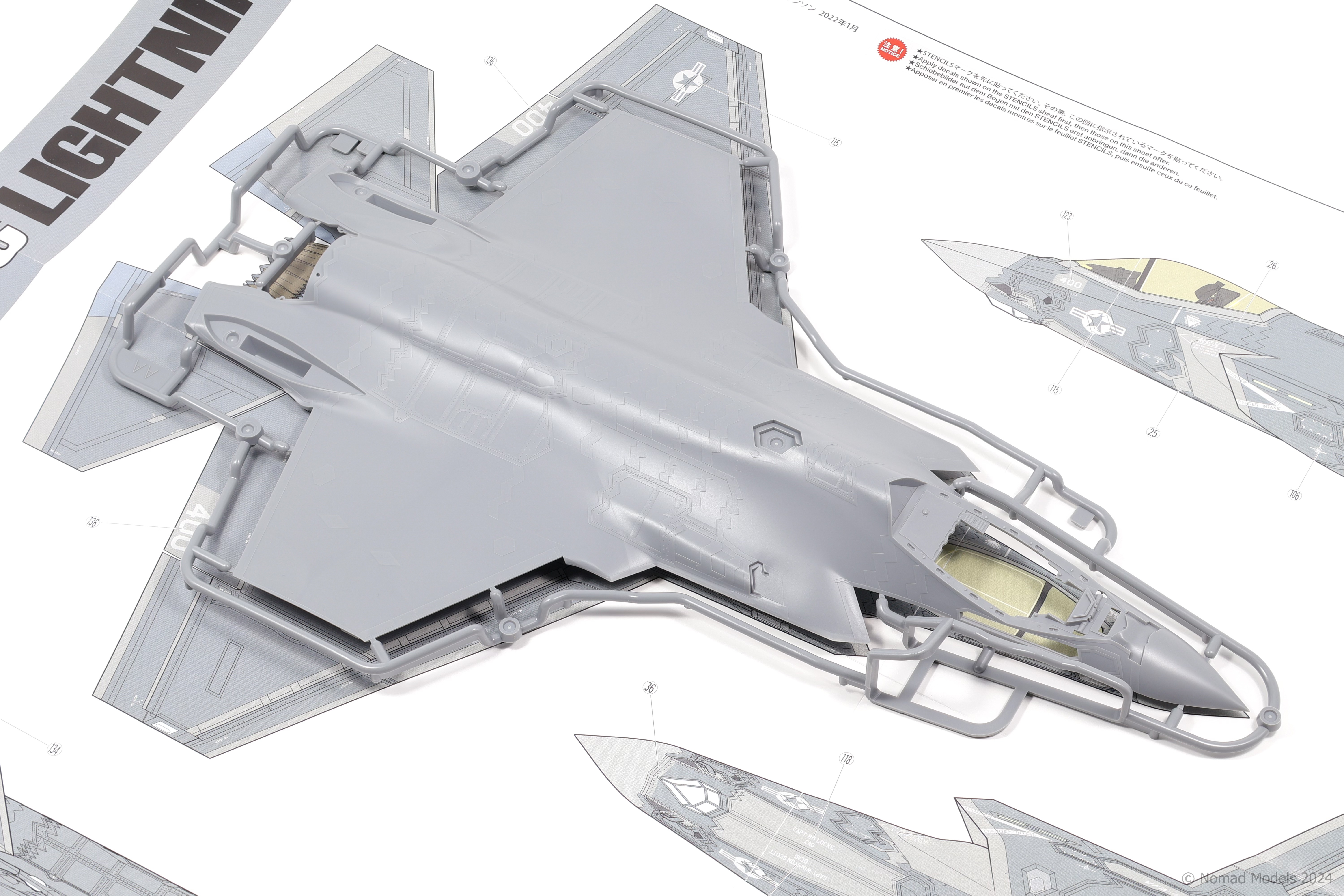
Tamiya’s F-35 offers some really nice features, some of which are unique to the subject matter here, a stealth aircraft. Modellers are offered a wide range of options to choose from in depicting thier own F-35. The canopy, wingtips, ladder, weapon bays, gun pod, arrestor hook, and fuel probe are all optional accessories to the modeller. I was also surprised to see RCS enhancers included in the kit, these are little nodules added to the exterior of the F-35 to increase its radar cross section to civilian radars. These are examples of small additions that really show how much effort went into designing this kit. The kit includes a nicely molded pilot figure along with helmet specific decals. Also included is a healthy amount of ordinance so that the model can be built in “beast mode”. Other manufacturers might skimp on the included weapons (considering that this IS a stealth aircraft) but Tamiya is not guilty of this here. The kit features various paper masks for the canopy and other parts, although you will have to cut them out yourself. Masks for the RAM panels are not included however and decals are provided instead. For modellers wanting to paint their own RAM panels the lack of masks will be felt as it’ll take some time to mask off the fine details.

Quality of Molding: 50/50

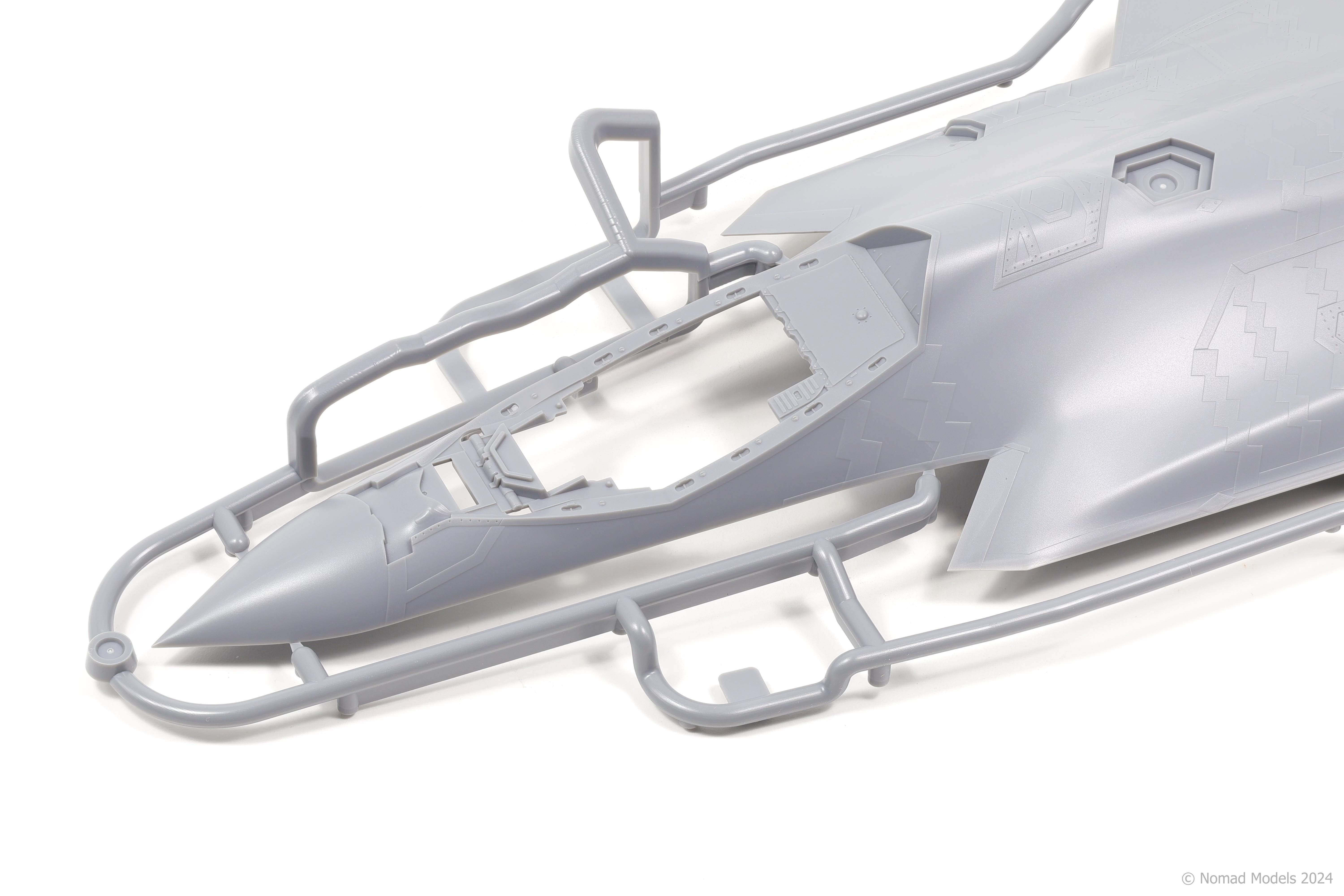
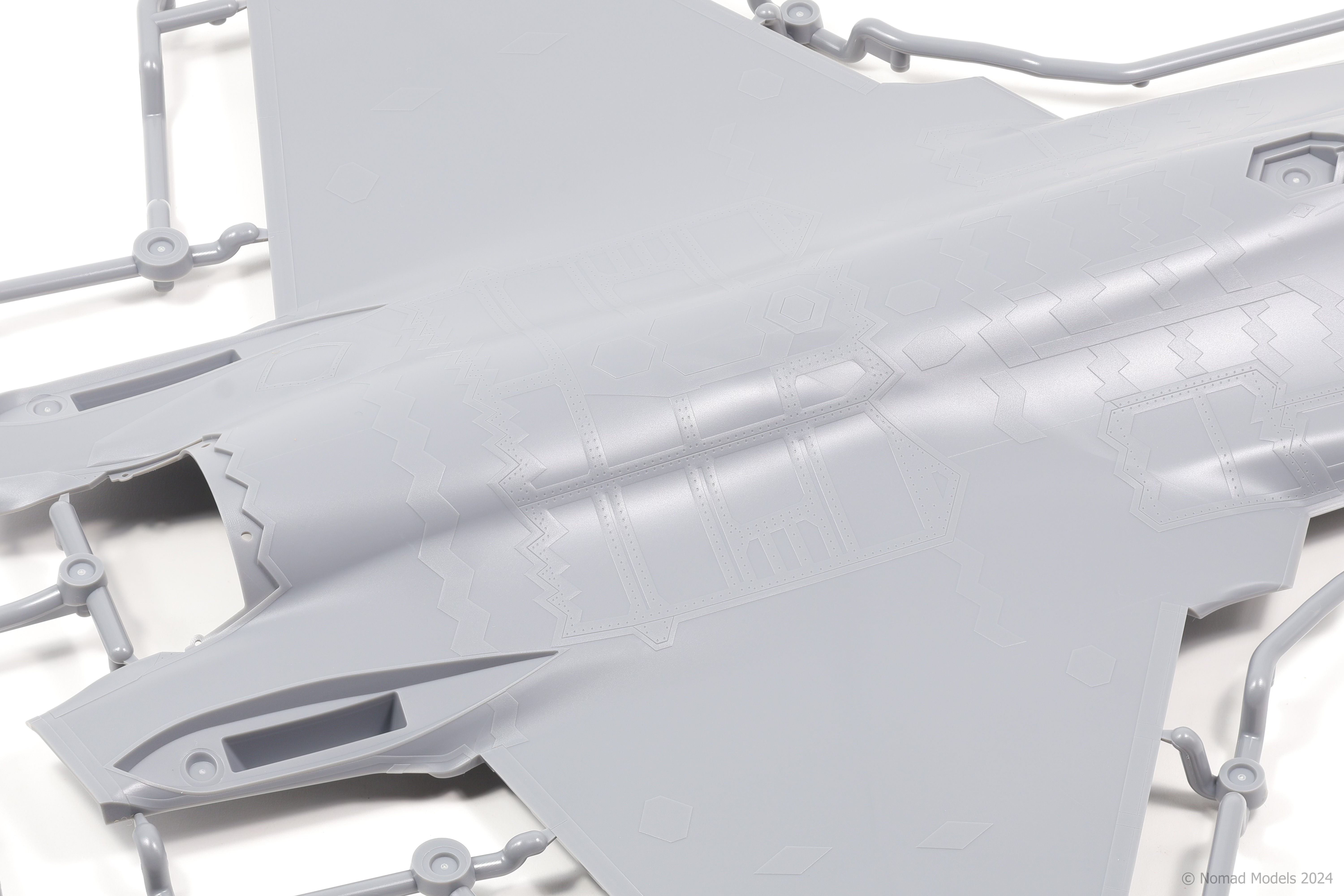
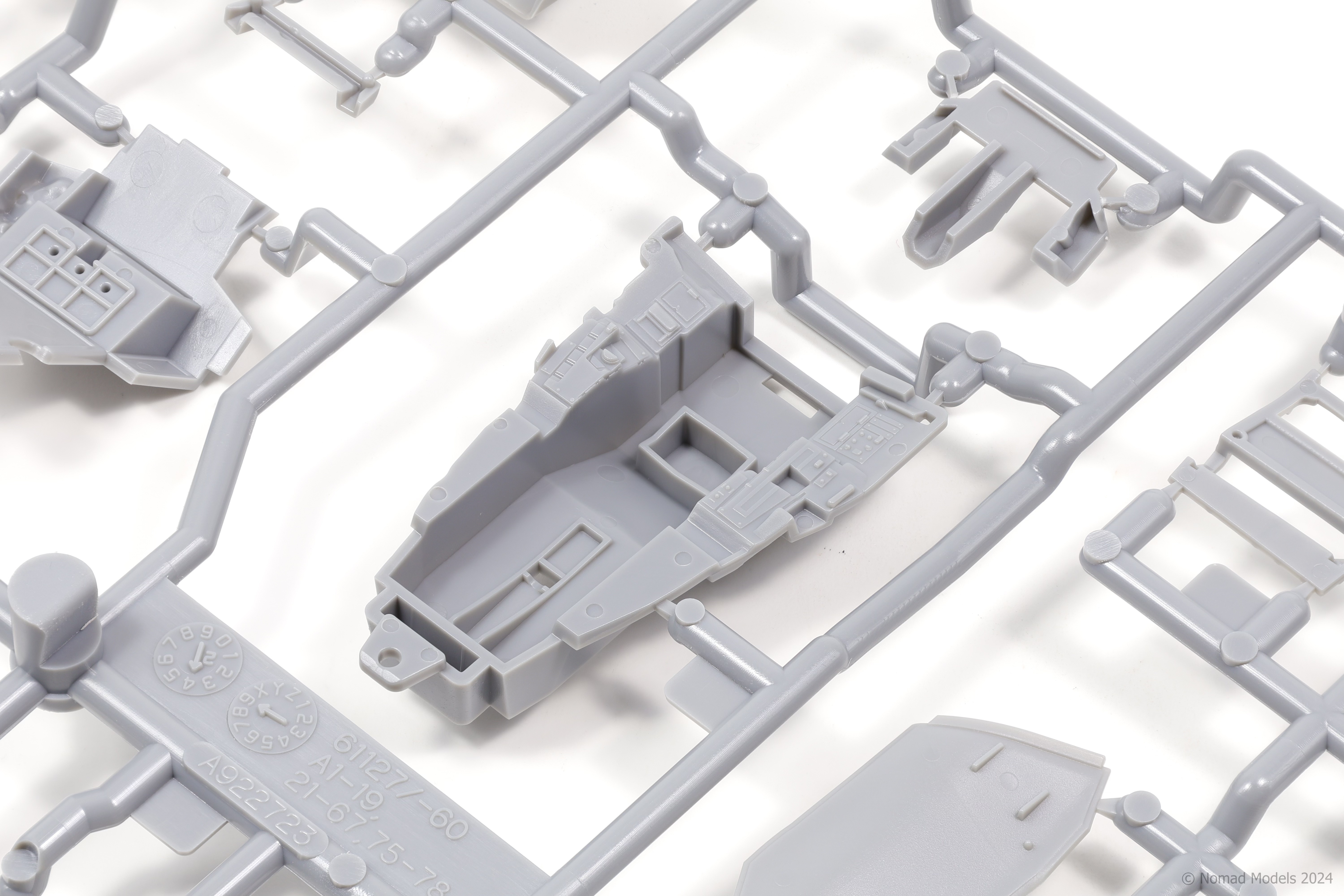
I’m hesitant to give any category a perfect score on any kit, but considering that this kit (and the rest of Tamiya’s F-35 lineup) features arguably the most impressively molded part in all of modelling there’s just no way I can justify anything less than a perfect score here. I’m of course referring to the weapons bay.

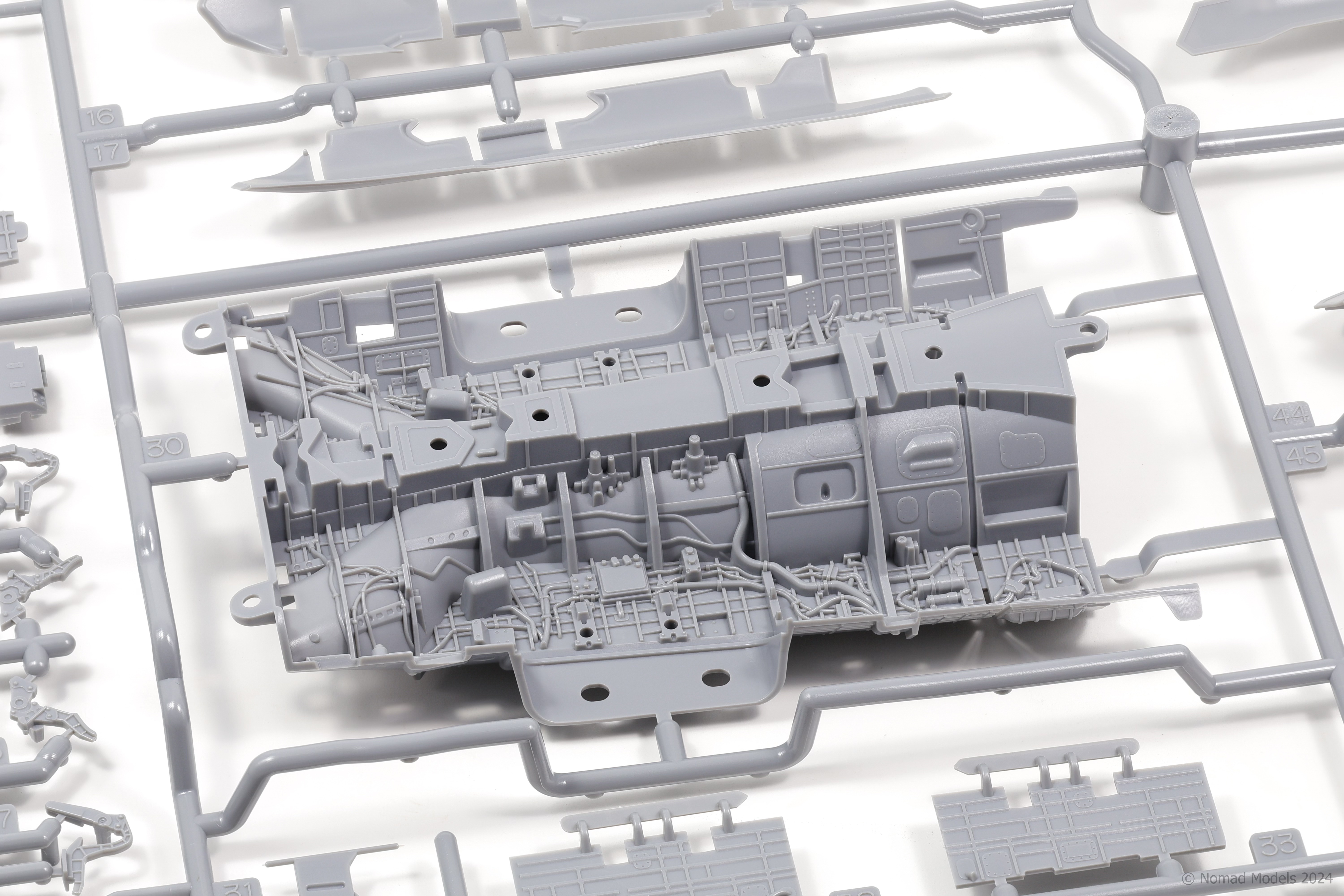
The quality of the modelling isn’t just limited to this area however as each and every part is intricatley detailed from the cockpit to the RAM panels. The detail is just so fine and impressive, it’ll be a real joy to see these parts painted up.

Instructions: 19/20

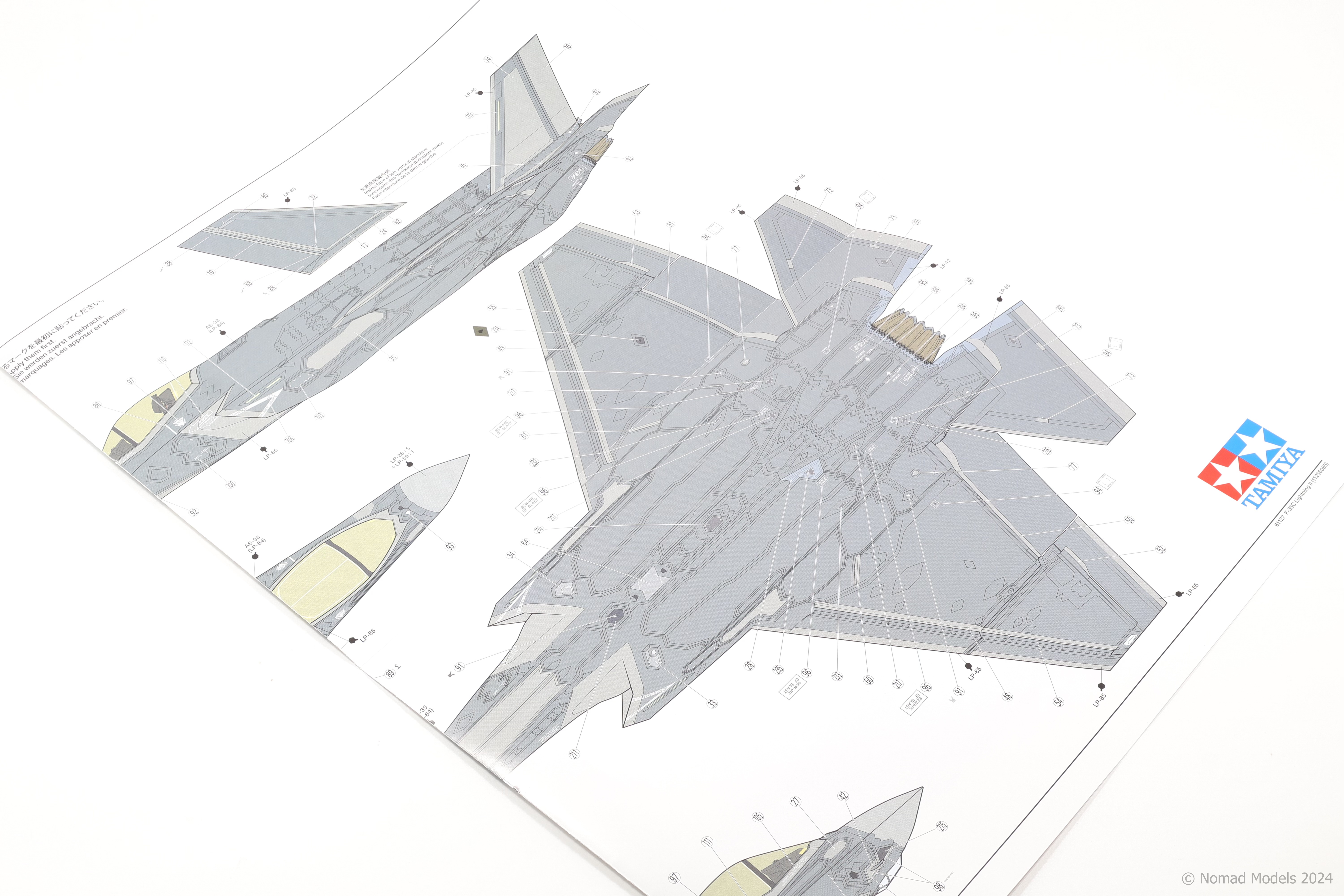
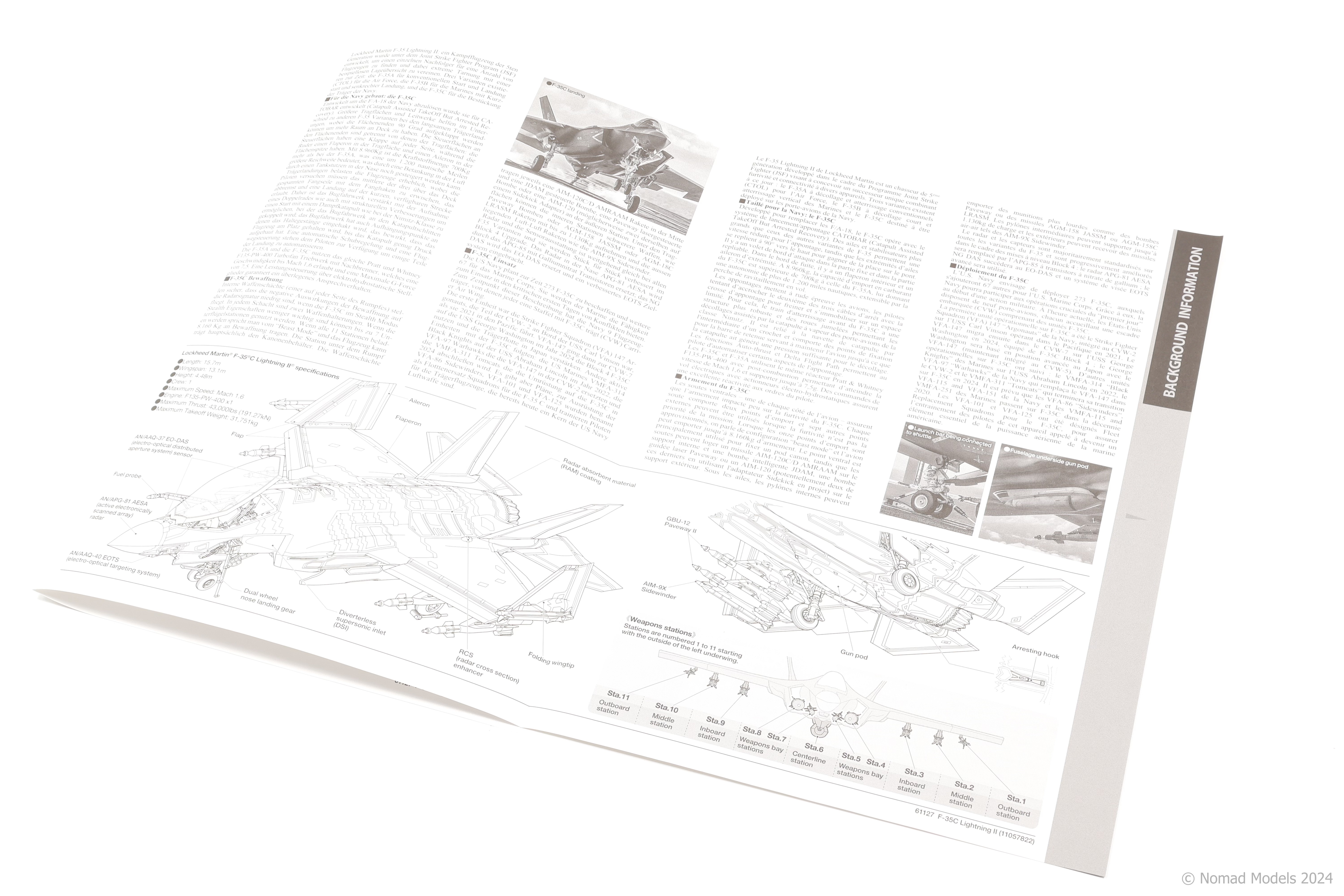
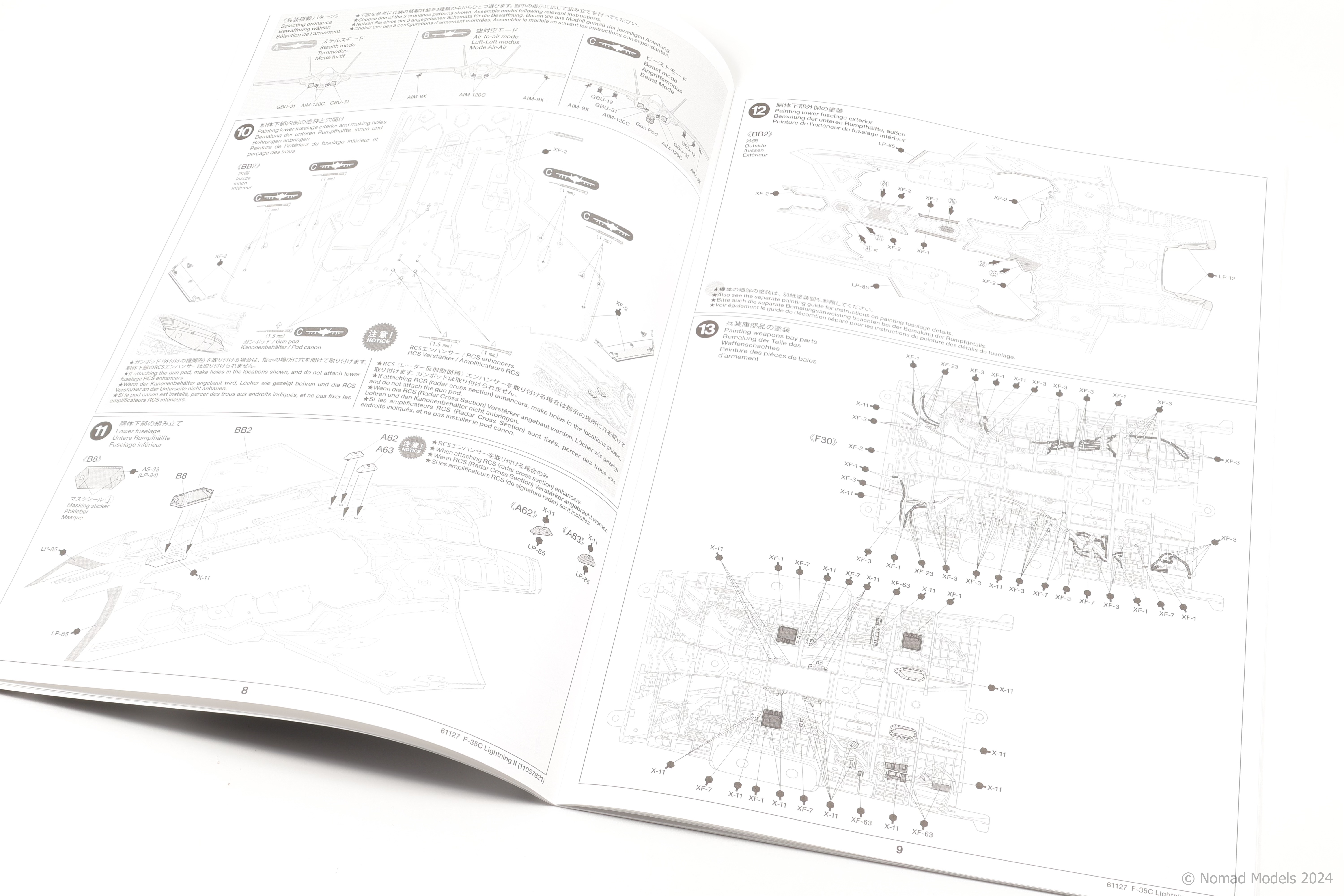
These are the most substantial instructions I have ever seen from a Tamiya kit and at first glance they guide the modeller through the build effortlessly. Make no mistake, This is a complex kit and not one I’d recommend for beginners. With the amount of options that the builder has in completing this kit, it’s not a surprise that they are filled with “Do this if A, Skip B, See steps 35-45, attach parts in numbered order.” That said, these are as clear as clear can be for indicating the significance of your choices in the build. The colour profiles included are hugely impressive and nothing like I’ve ever seen in this hobby. Included is a massive 1/48 sized poster detailing the “A” markings with full colour sheets for the rest of the 5 markings. In all the kits I’ve built I’ve never seen such impressive colour profiles included in a kit, they stand in as some serious wall art!
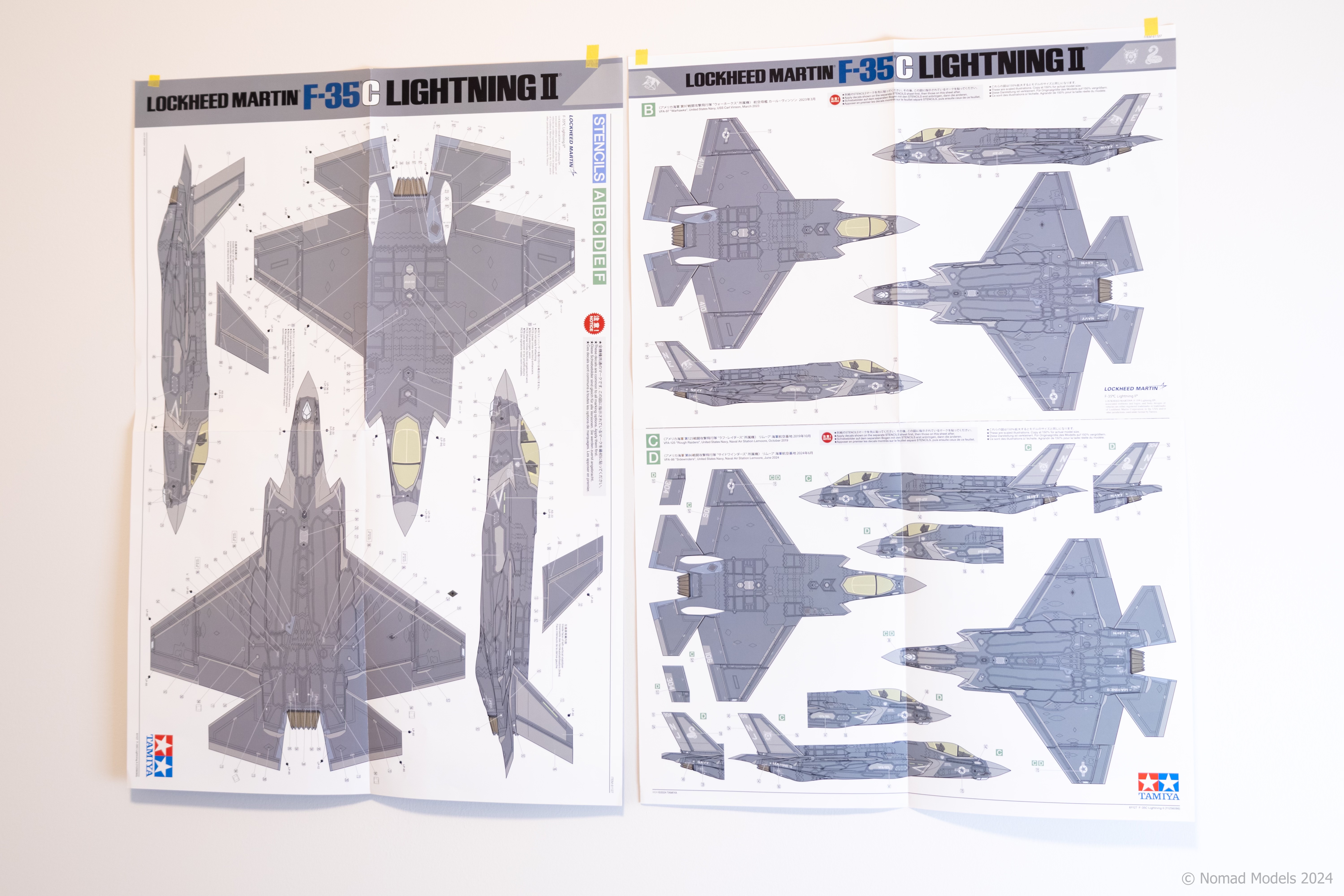
Miscellaneous: 9/10

A whopping 6 marking options are included in the kit, 2 Marine and 6 Navy jets. The F-35 is a pretty boring aircraft when it comes to markings so Tamiya has done their best here, you get some colour in one option but the rest are fairly similar, not that this was unexpected. The decal quality is excellent as well with very clear printing. The decal thickness may be another issue however.

Total: 95/100

Tamiya’s F-35C is undoubtedly at the apex of the hobby right now, and for good reason. It’s by no means something I’d recommend to a beginner, as there is a number of small parts and keeping focused on a specific aircraft and loadout might be a tall order for somebody new to the hobby. In all other areas however this kit excels.

Categories
1:35 Naval Projects

British Landing Craft Assault (LCA): Painting and Weathering

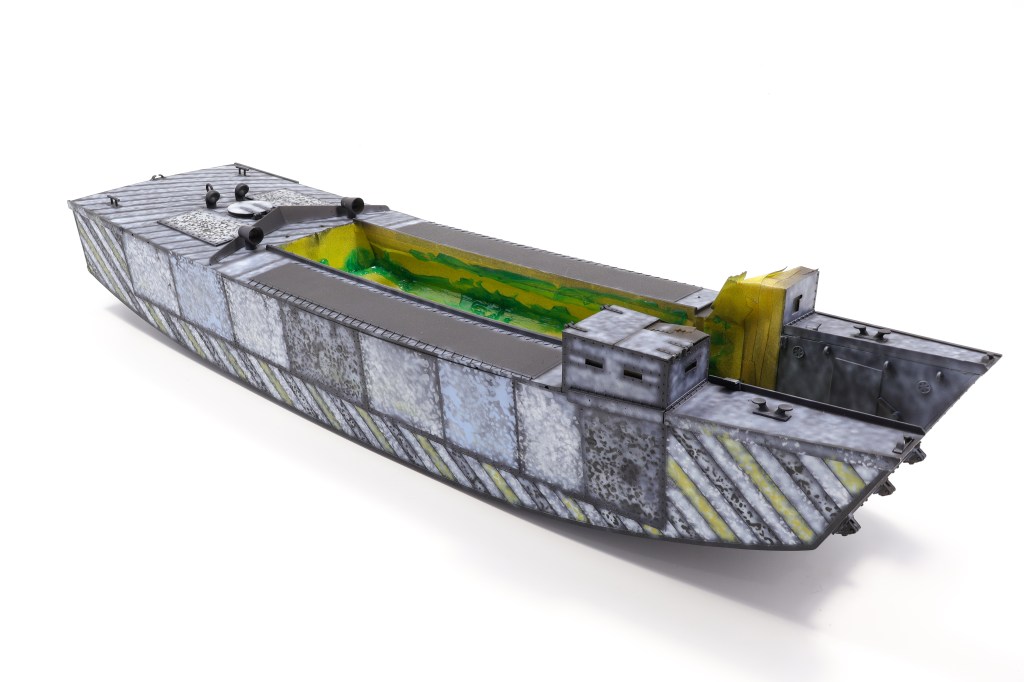
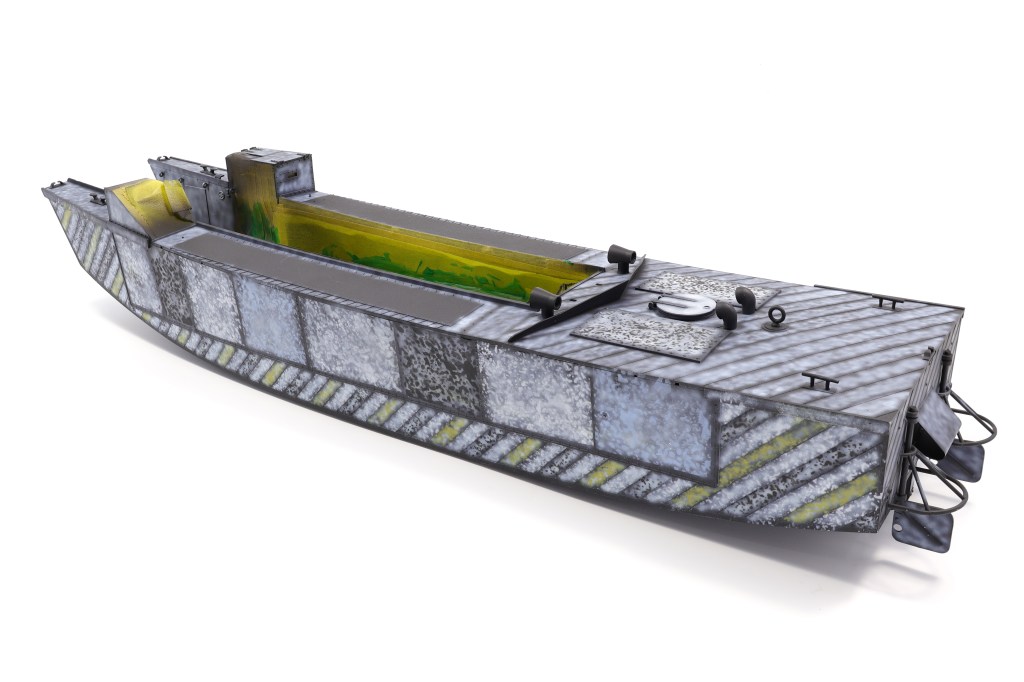
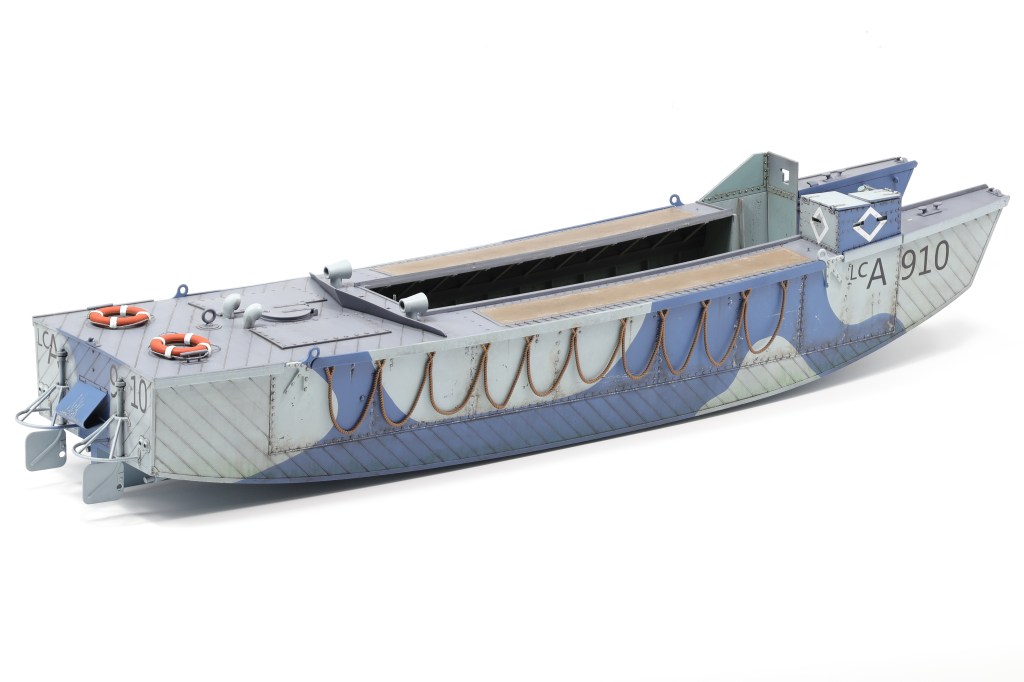
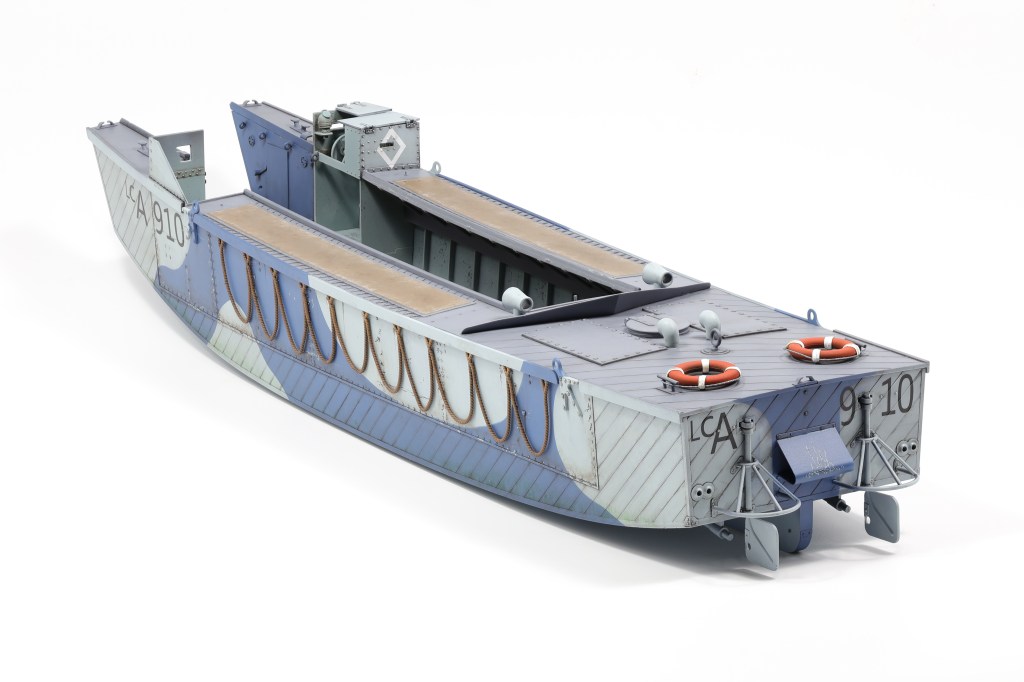
With progress moving quickly on the LCA I found myself at the painting stage earlier than I had expected. For the build I planned to keep the weathering on the more subtle side for numerous reasons, primarily the fact that these vehicles didn’t see as much wear as land based armour. This is not to say that LCA’s did not wear at all however but rather that in my option a restrained weathering approach was in order.

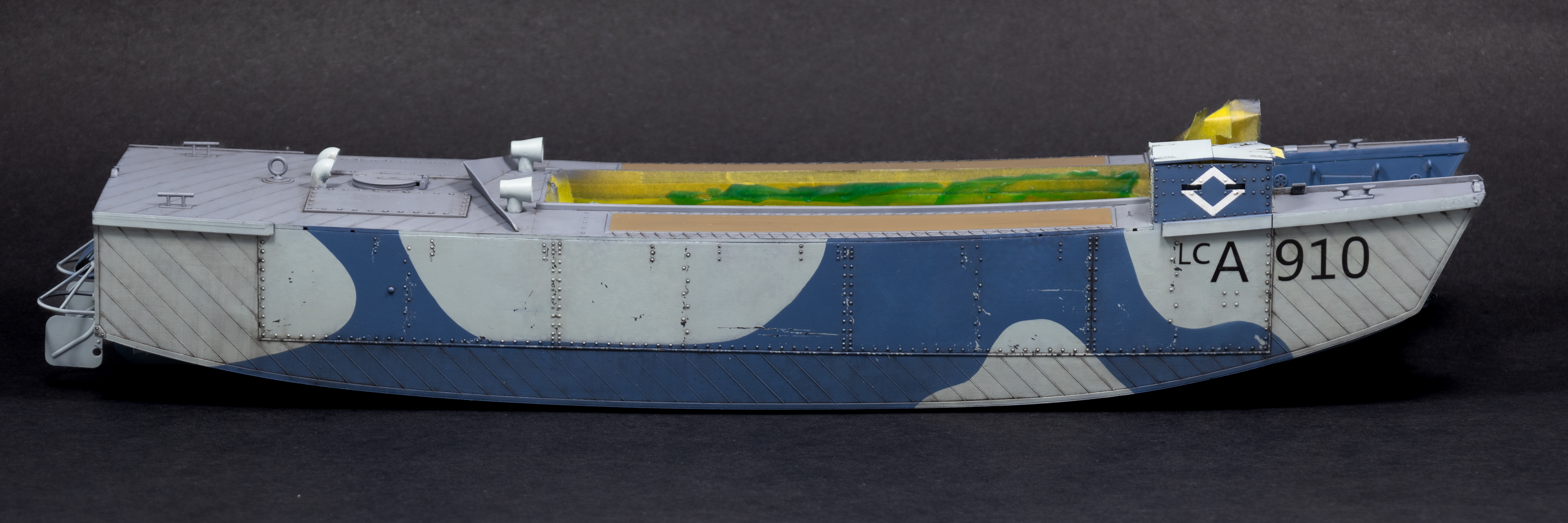
Early painting steps included priming in Mr. Finishing Surfacer 1500 black (my preferred type of primer) and a random light grey shade I had lying around, which in this case was AK’s “light sky blue”. When choosing colours for marbling I took into account the shades of the final base colours and selected a paint that was slightly lighter than the final grey shade. I did this because the black of the primer will heavily darken the final coat of the model if the marble colour is not light enough to offset the black. This was a lesson I learnt during the painting process of my Kinetic CF-18 and as a result the whole build was tinted slightly too dark.

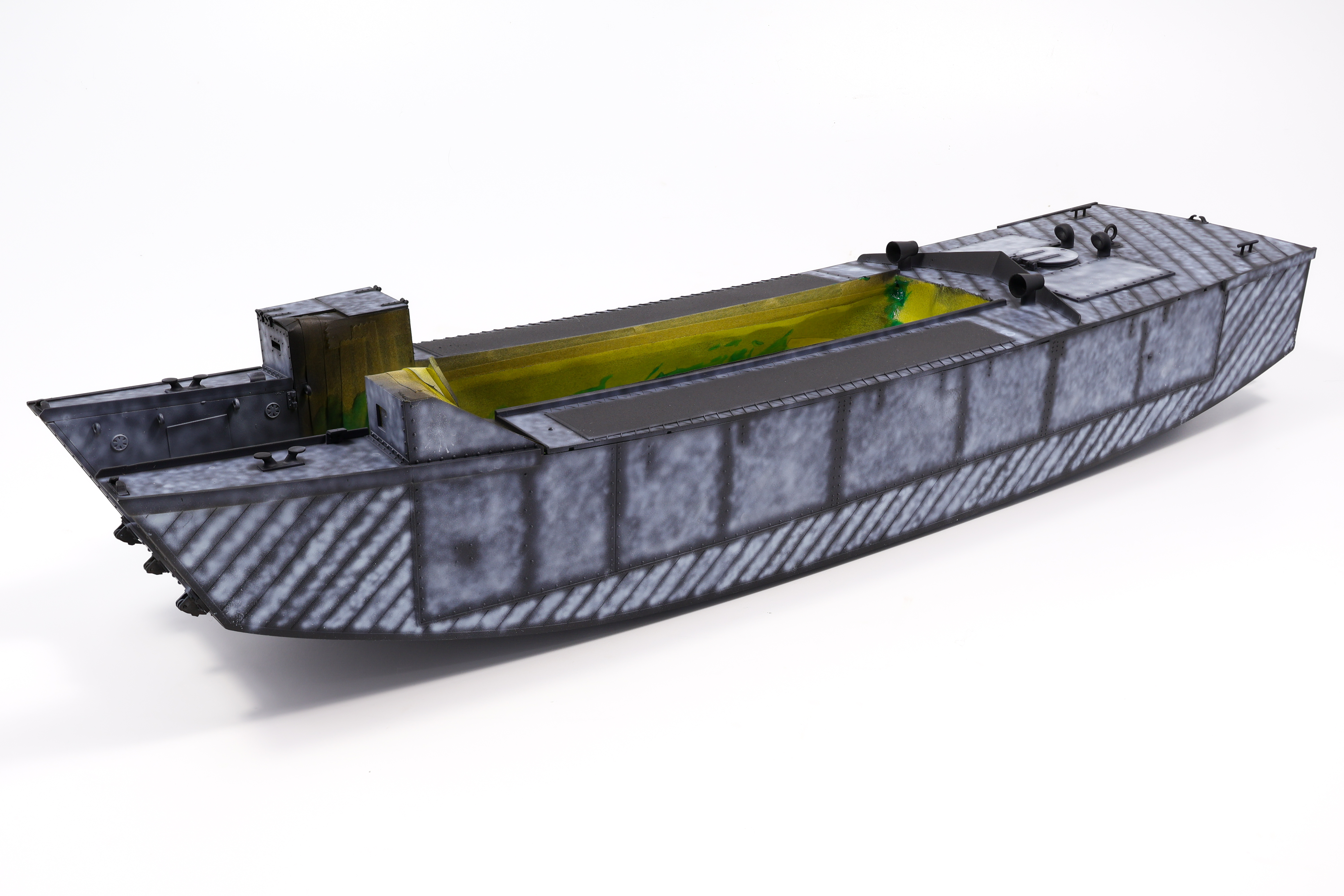
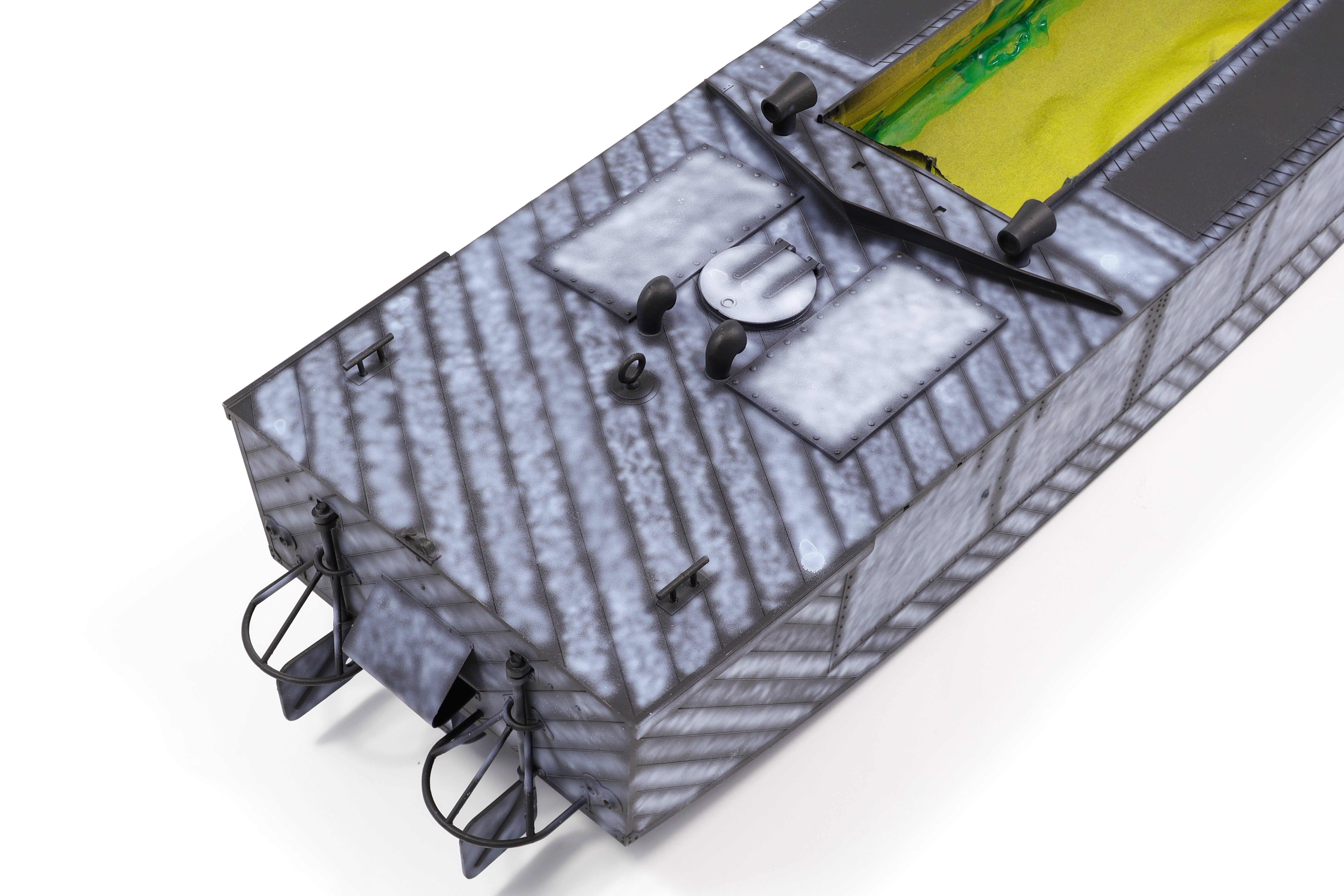
After the initial marble coat with the light sky blue I had a fairly good base for further pre-shading and paint variation. The LCA is a very geometric craft and has really distinct paneling, The large square armour plates are very distinct in contrast to the diagonal planks. I really wanted to take advantage of these shapes so I decided I wanted to implement some drastic pre-shading for this build. This would also help on the weathering side as the kind of finish this would produce was in line with how I wanted to depict the finished model.

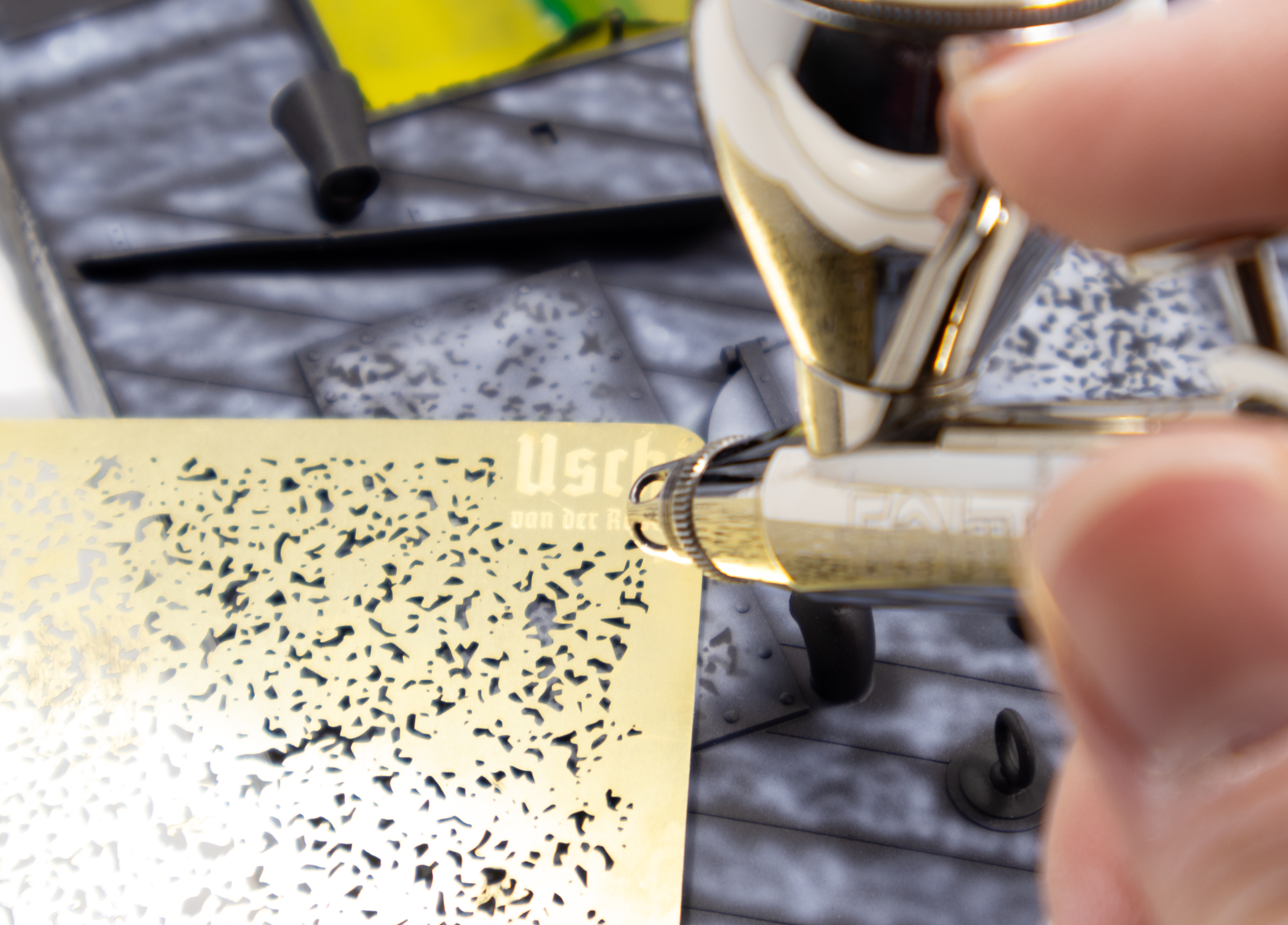
I used several new shades to introduce further paint variation, White, Black, Sky blue, and oddly enough, Dunkelgleb (which looks like lime green when sprayed lightly over light grey). For this stage I wanted hard transitions between these shades and the underlying marble coat and to get them I used Uschi metal airbrush stencils. They are quite good and I recommend anybody who is serious about incorporating presiding techniques in their workflow to pick up a set. One drawback to these however is the fact that they cannot be bent to contour a curved surface. This wasn’t a huge issue in this build as the LCA is a very boxy craft. That said you don’t need to have the stencil completely flush to get hard demarcation lines and holding them slightly away from the model will still yield good results. I sprayed these shades only over specific shapes, taking care the the colours did not spill over too much.
For masking I used AK’s hard edge masking putty. I’ve used it in the past and even though it can be a bit frustrating to use at times, I’ve been able to get good results with it. In fact part of the reason I picked this specific type of landing craft and not Gecko Model’s U.S landing craft was because I found this specific hard edge scheme quite interesting.

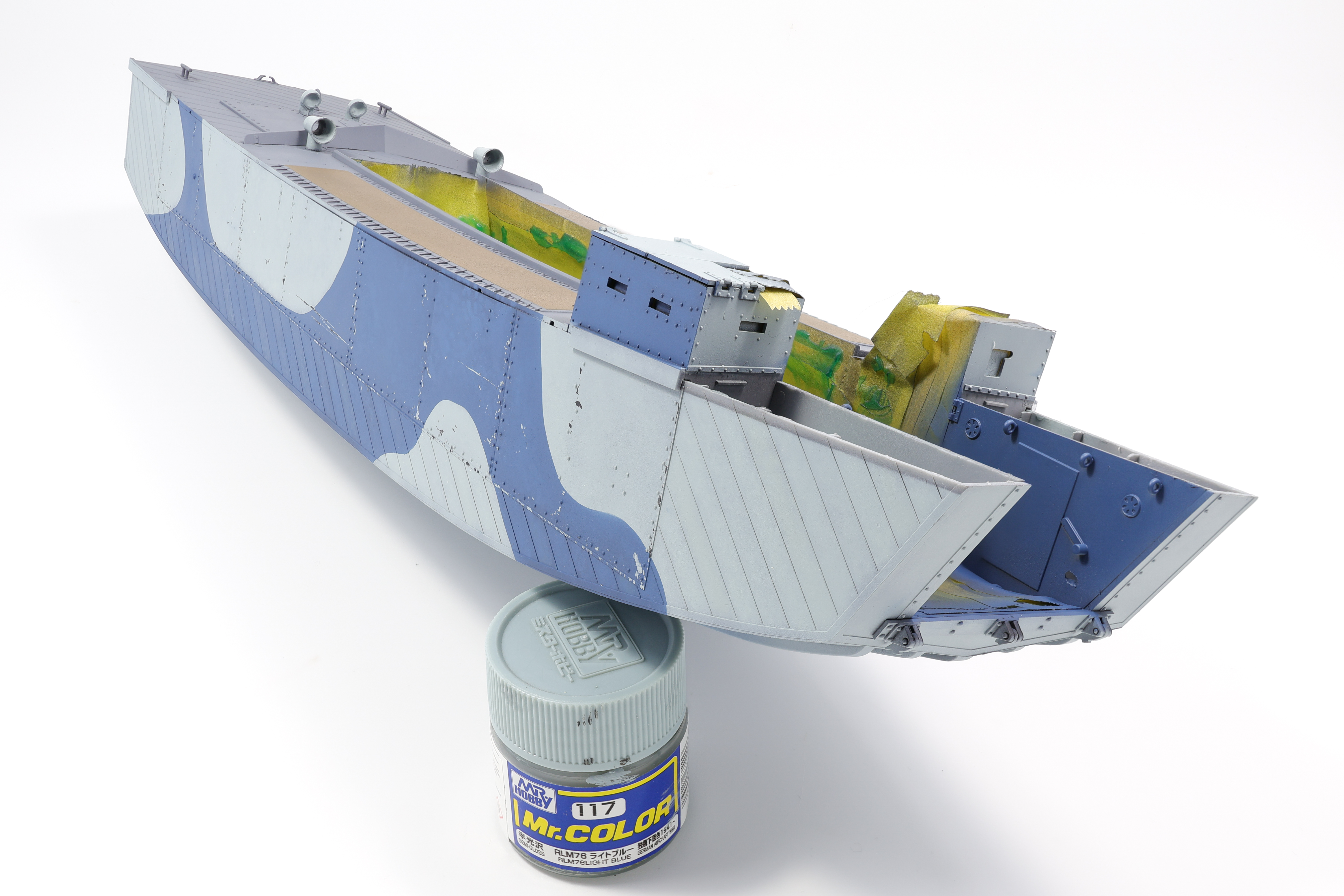
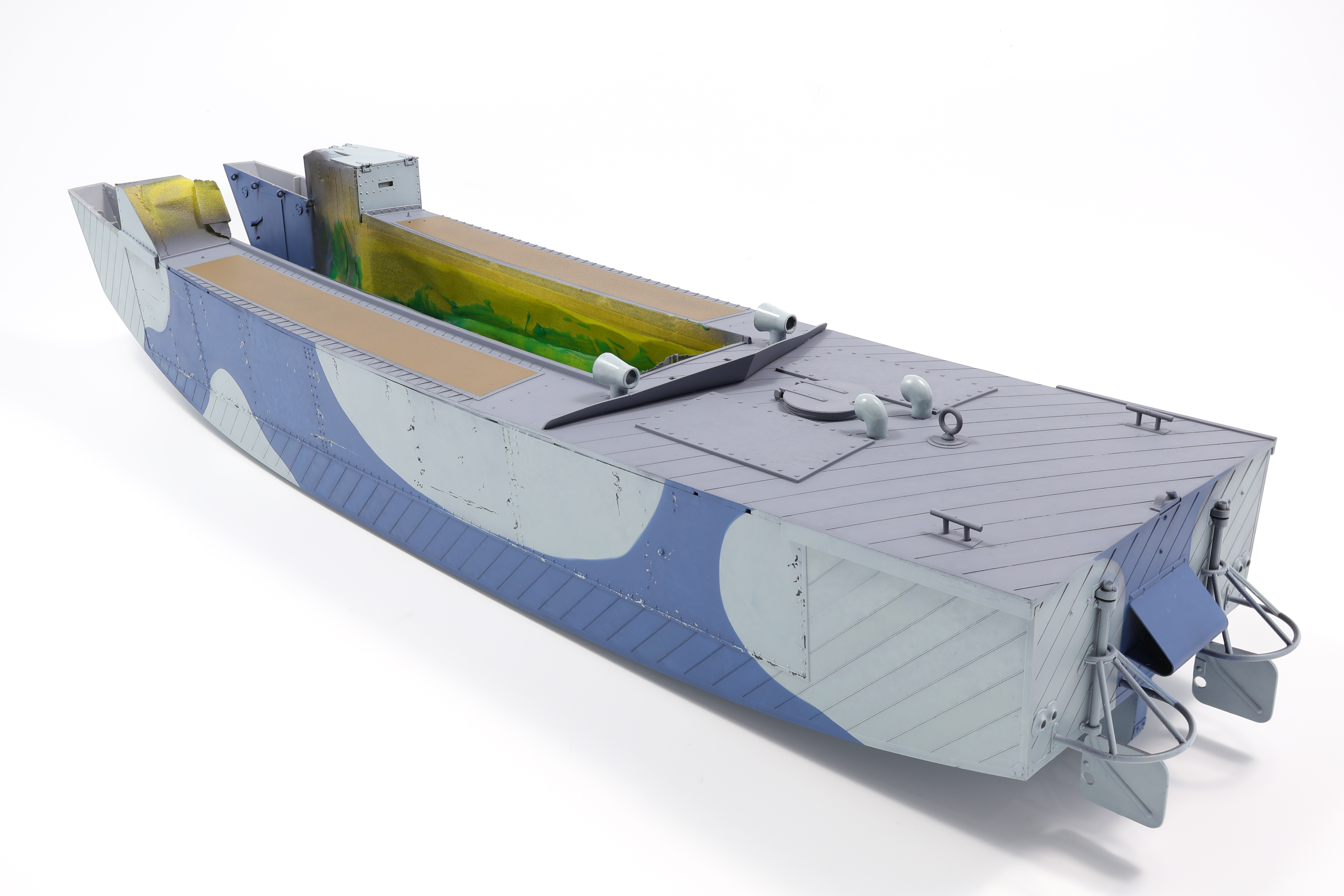
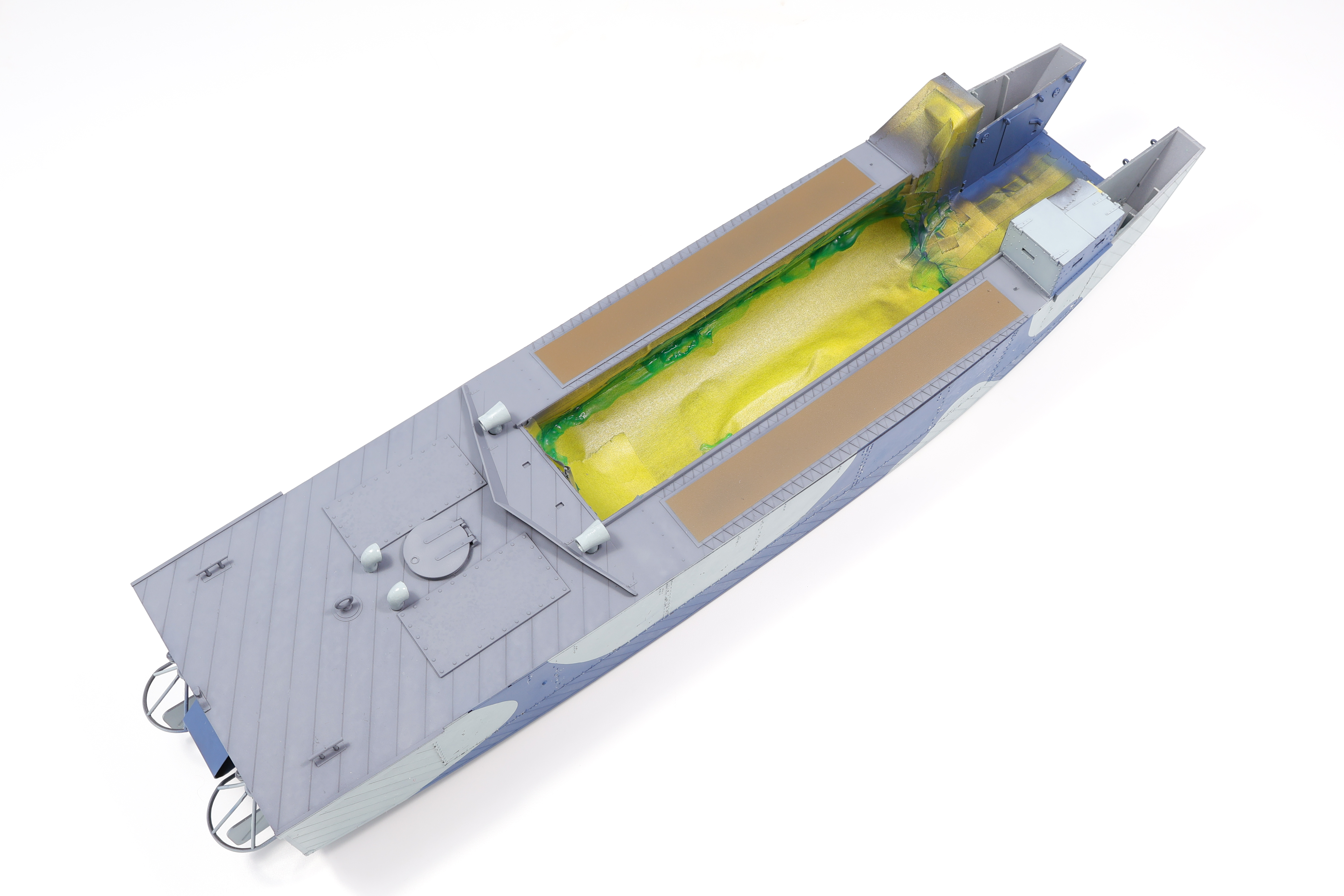
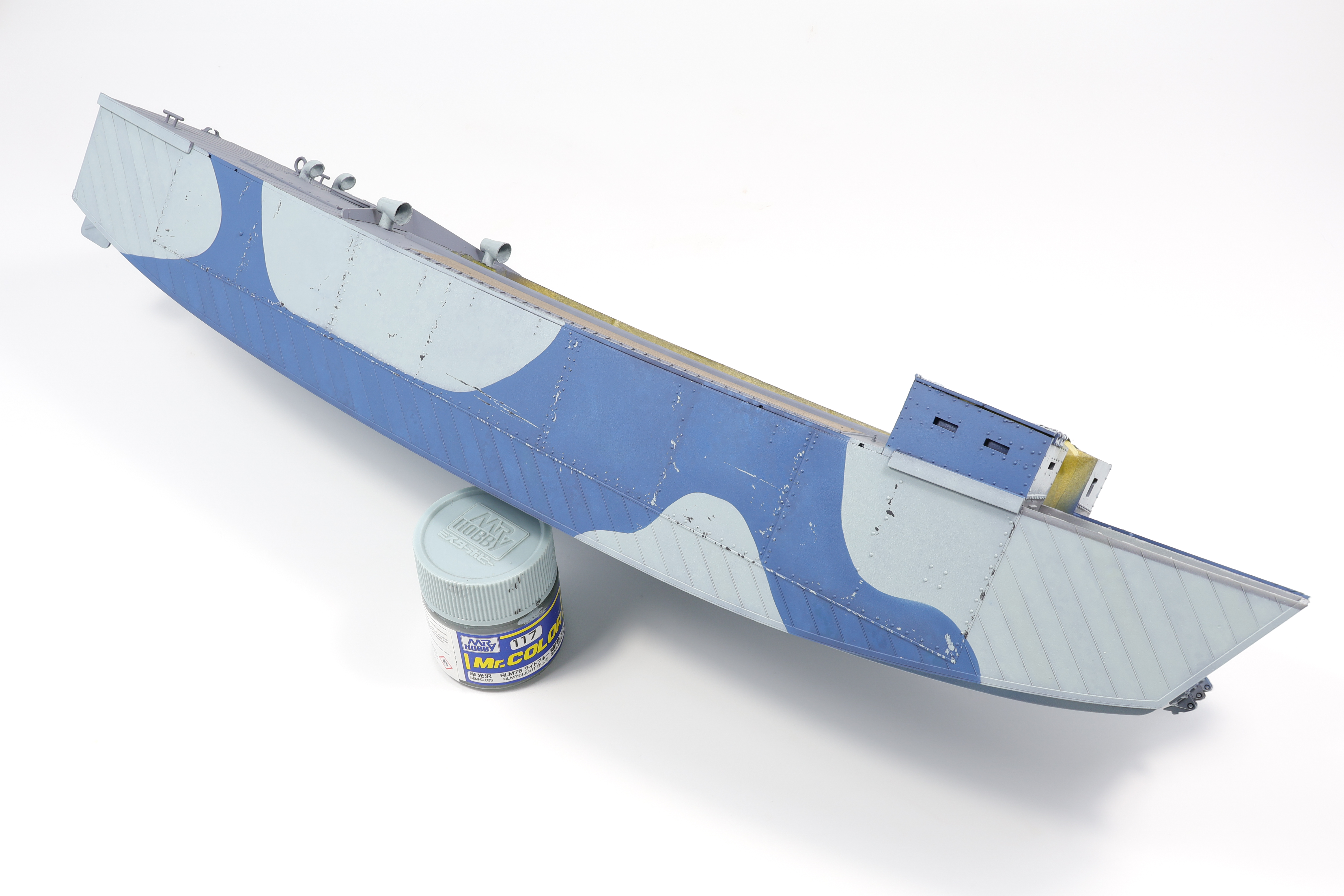
For the final scheme colours I used Mr. Colour Lacquers, with RLM 76 light blue used as the grey shade and Intermediate blue used as the blue colour. Even though the bottle says “light blue” this colour is very close to being grey and with the pre-shading underneath it has a further grey tint.

At this stage before applying any vanishes I started the weathering process in the form of slight paint chipping. I thought it was important to add some visual interest to the sides as not adding weathering in this area will cause the model to look uninteresting and boring in my opinion. All chipping was applied with a brush, a technique I’ve gotten good at over the past few months. I used to avoid brush chipping like the plague but since I got my hands on some super fine brushes I’ve found the technique a whole lot more easier than before. There’s also the fact that with traditional chipping methods such as hairspray chipping you can have a bit of a time limit in the sense that if you paint cures it can be difficult to get it to chip the way you want. There’s still a place for HS chipping but as my workflow shifts to include more pre and post shading I’m not sure where that place will be moving forward.

Decals were straightforward for this build, a grand total of 6 to apply. I used VMS satin coat to seal the model and after doing a test run on a chemical dummy I discovered that Tamiya mark fit super strong nearly melted the acrylic vanish I settled on the far more tame Micro sol/set combo. Decals were fine to use (If a bit thick) and settled around surface detail well. I was a bit concerned about how they would settle over the hull ribbing but it was no issue.

Initial weathering steps consisted of a dark brown (almost black) oil wash. I limited myself to a pinkish on the large steel plates and did a broader wash on the planks on the side. This had the effect of causing the large plates to appear cleaner than the planks further adding some colour modulation.

I wanted to add some algae deposits on the lower hull and to do so I picked out a dark green shade of oil paint. to achieve the desired look I added diluted oil paint in dots along the bottom and blended it with thinner. Like a lot of the weathering I did on this model the effect is really subtle but the cumulative effect of half a dozen techniques adds up.

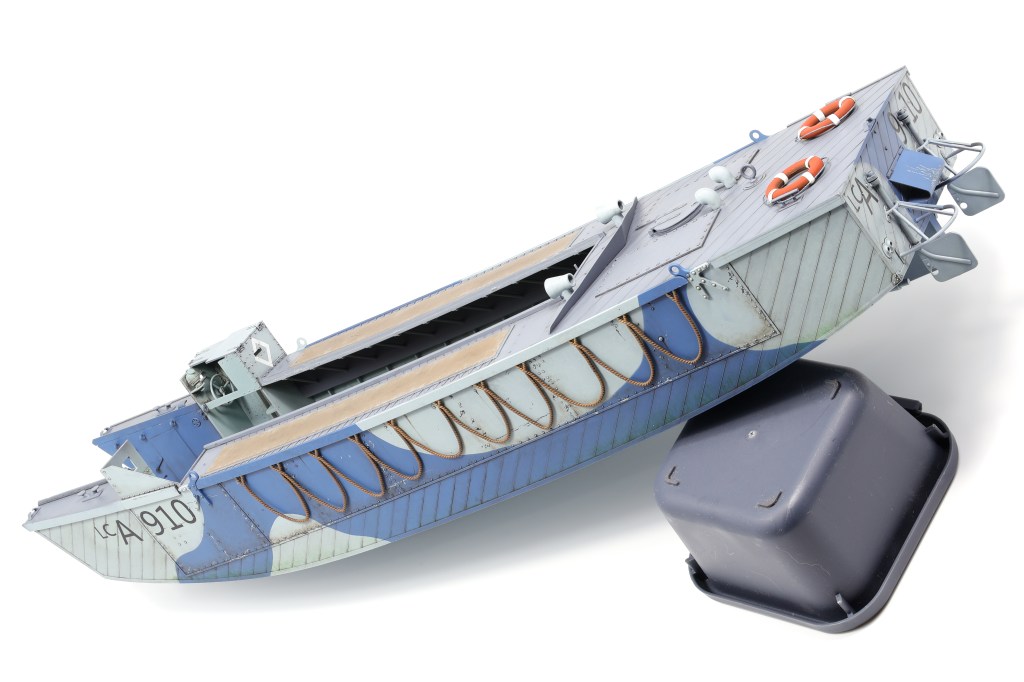
At this stage I also added some extra pieces onto the full after the majority of the watering stage was completed. This included the ropes on the side along with the lifting eyes. I left these off because painting and weathering the hull would have been a nightmare with them on and I could paint the ropes separately and not have to worry about overspray onto the hull. After these parts were added the last weathering effect I did was to add scratches to the anchor rest on the rear of the craft. This area would have seen the most wear on the entire vehicle as the anchor would have banged onto it each time it was lowered and raised, causing significant scarring.

I also wanted to add some visual interest to the canvas covers above the cabin. I felt that this area would get significantly dirty with the exposure to salt water and crew walking on top. weather this area I mixed up a tan/white oil paint mixture and applied it around the outside of the canvas cover. Then, I applied a dark brown mixture on the inside to represent grime accumulated from crew activity. I really like how this area turned out and it added some much needed visual interest to a fairly boring part of the craft.

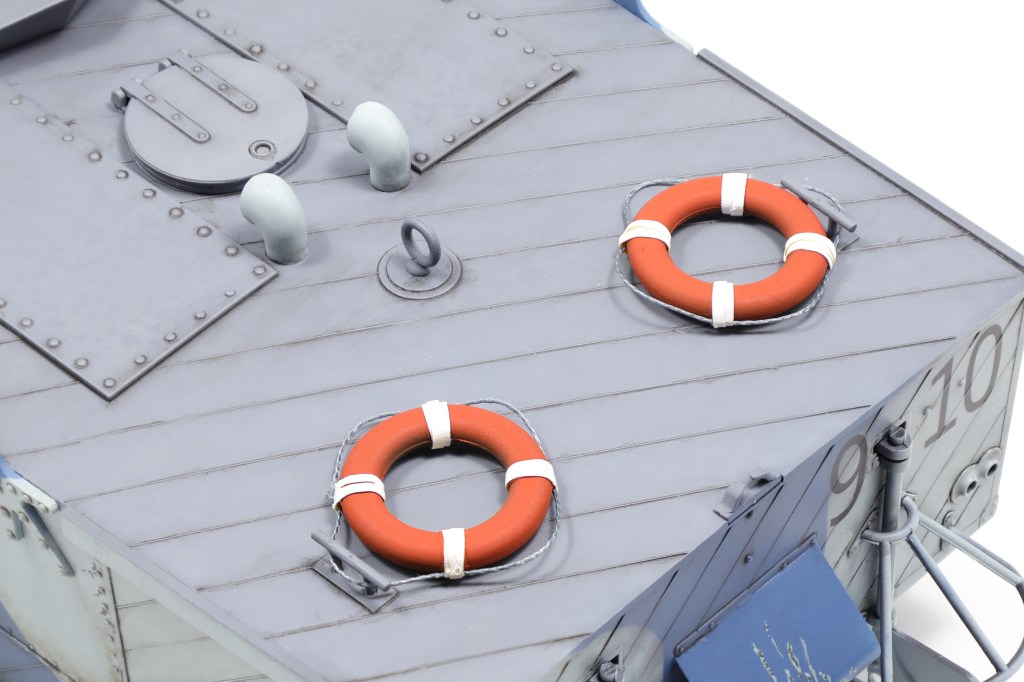
Also of note are the ring life preservers added onto the top of the hull. I made some considerable improvements to the way they came in the kit and I really like they way they improve the colour on the model. Gecko has you just glue them to the deck, however there’s no way that in real life they would actually stay in place so I had to come up with a way in which they would plausibly stay attached. I looked at reference photos and I saw that the majority of WW2 British life rings had a rope going around the outside of the ring and using some scale rope I had on hand I recreated what I had seen in reference photos and fastened them to the hull in a way that seemed natural.

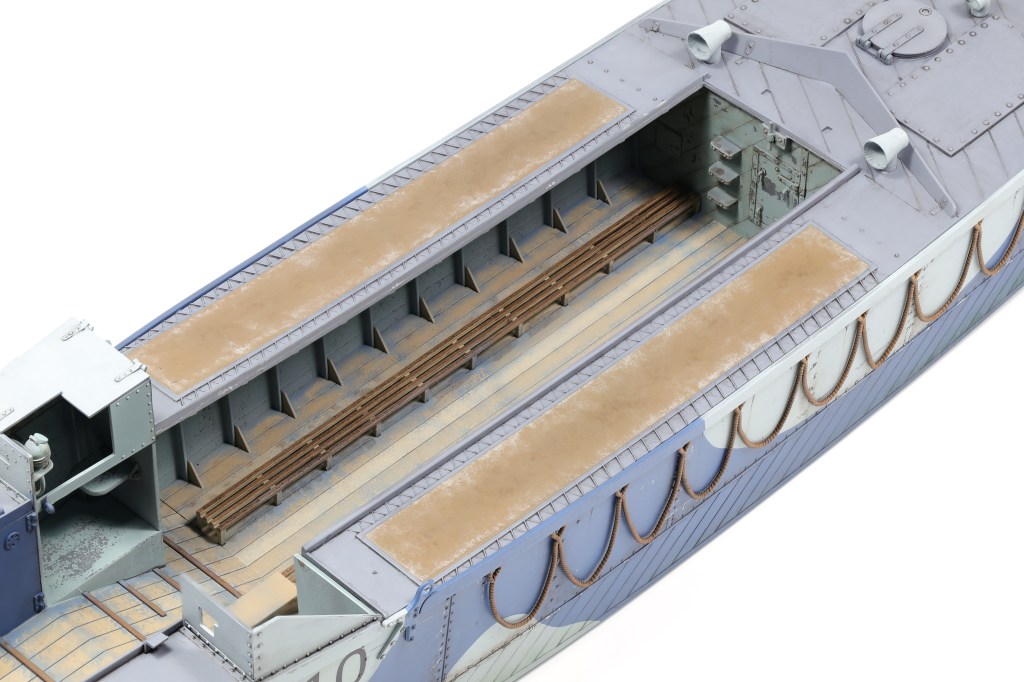
At this stage I hit the model with a coat of matte varnish and was finally able to unmask the interior wood planking inside of the vehicle. At this stage the weathering process was more or less done with just subassemblies and minor painting left to go on the build. Enjoy the photos below and thanks for looking!

Categories
1:35 Naval Projects

British Landing Craft Assault (LCA): Construction

I picked up Gecko Model’s 1/35 British landing craft assault (LCA) this past January while I was in Japan and my initial impression was quite good. Surface detail is quite crisp and the build seemed straightforward. I chose to build think kit as part of a D-Day 80th groupbuild I am participating in and I really wanted to step away from traditional armour/aircraft subjects and try my hand at a really unique and somewhat forgotten vehicle. This is my first “naval” subject if you can call it that, seeing as it has very few similarities (in terms of build strategy) with 1/350 and 1/700 warships. I’m aiming to have this project complete by June 6th so there’s quite a bit of work to be done.

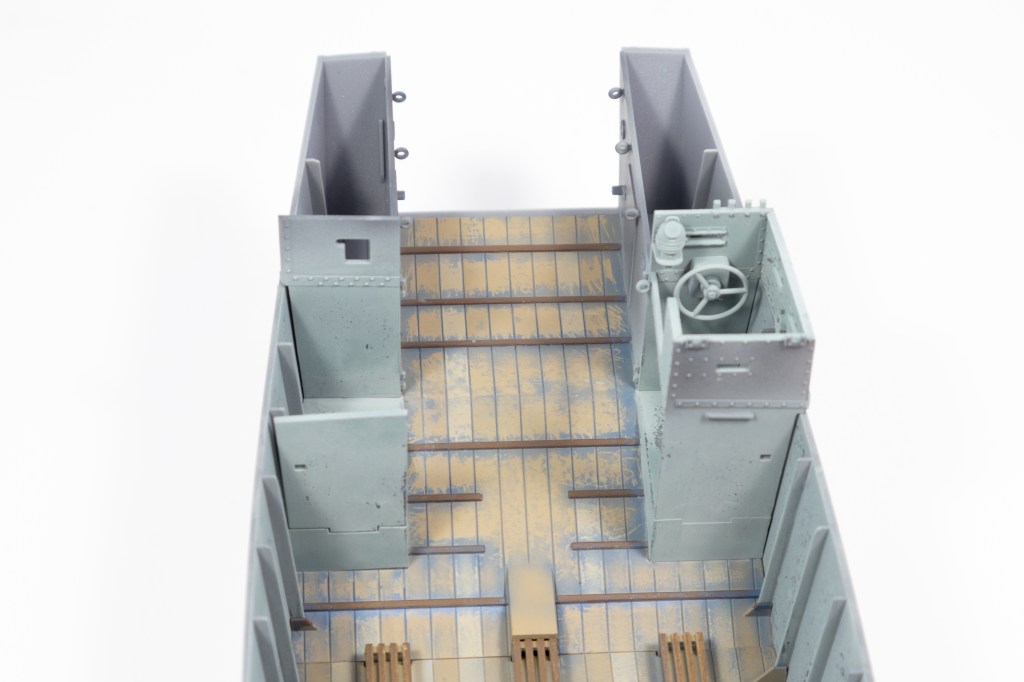
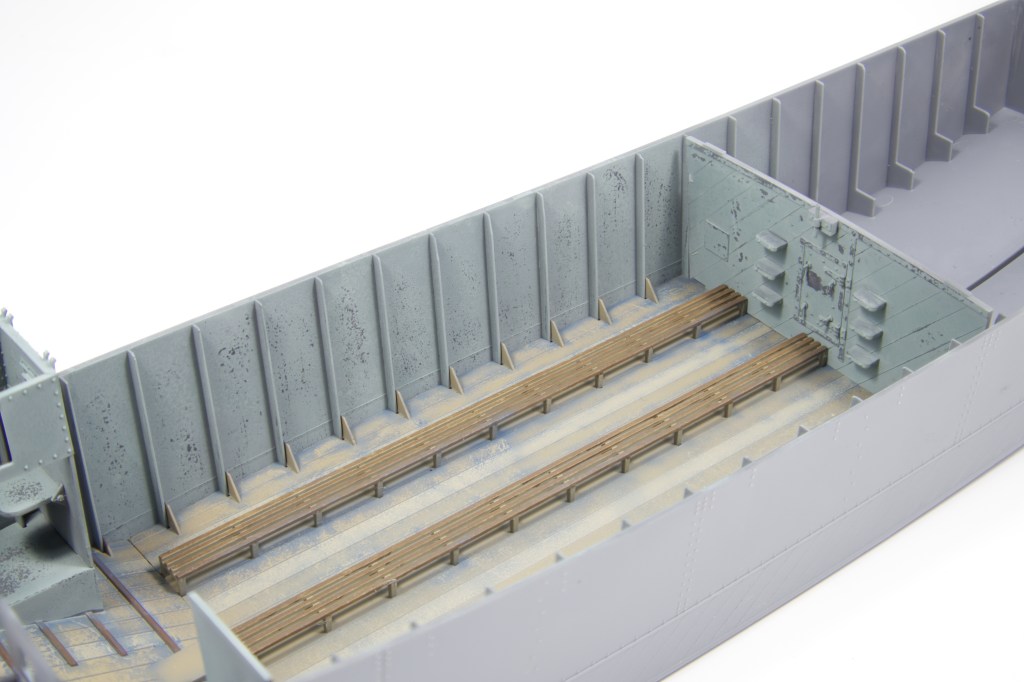
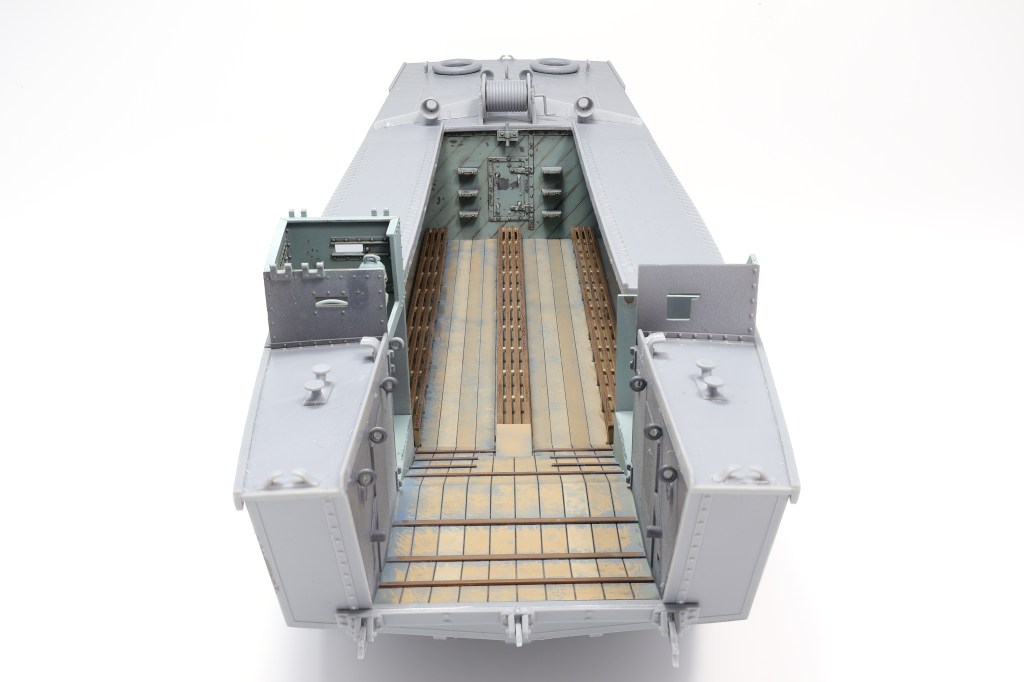
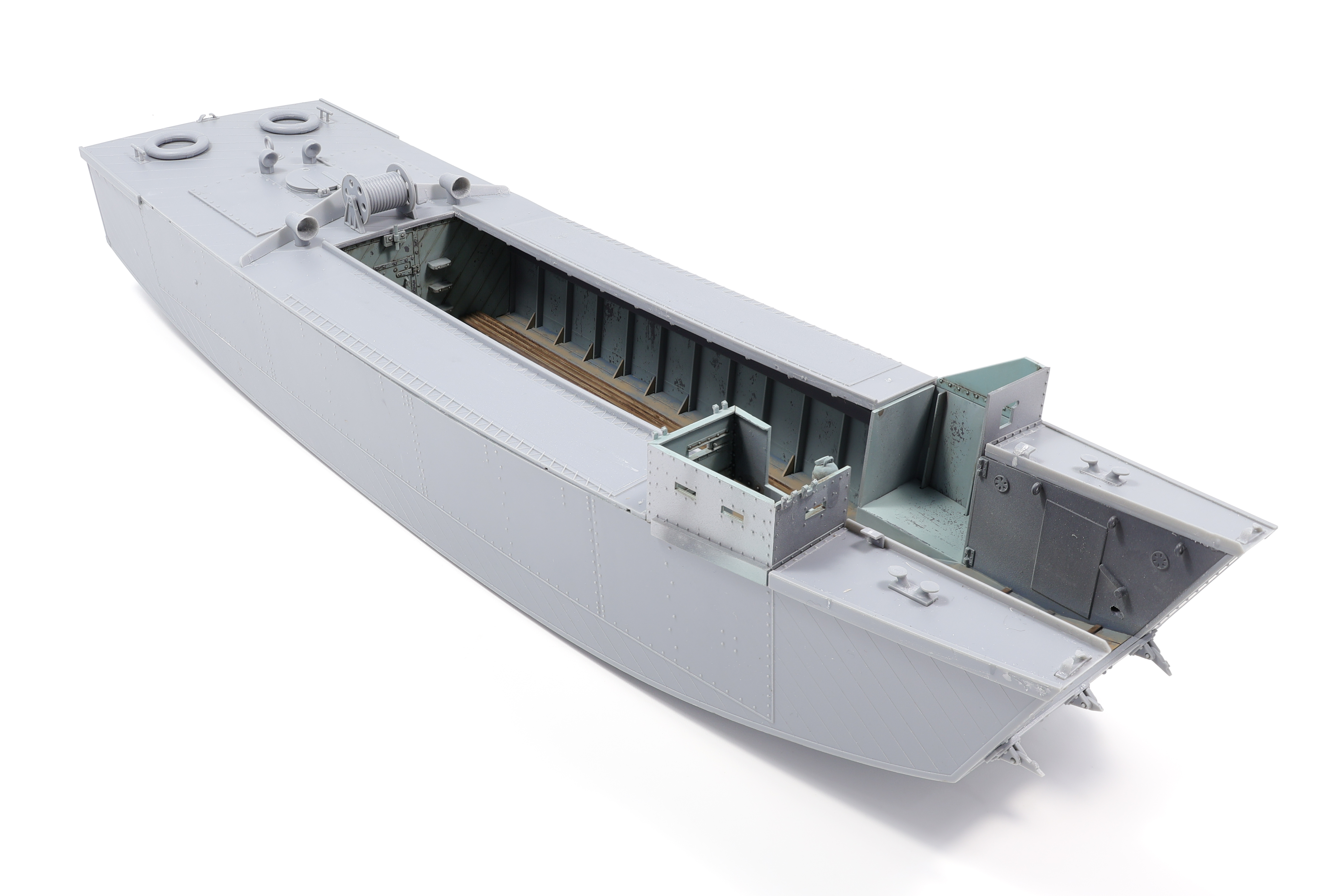
Construction started with the wood floorboards and the interior spaces of the vehicle. I decided to completely finish the interior before moving on to more advanced stages of construction due to the fact that conducting and fine detail work after the deck was attached to the hull would be nearly impossible. Finding usable sources was a bit tricky and the painting and weathering of the interior was largely left up to my interpretation of the subject. I kept things simple due to the fact that I didn’t want this build to spiral into a super-detailed project. I opted to not add woodgrain texture but still added some variation to the wood paneling colour. I also decided to include worn paint on the floorboards. I didn’t have a reference photo to support this but chose to do so in order to add some visual interest. It’s plausible that the floorboards could have been painted over to protect them and I like the end result.

The interior work was tedious but not especially challenging. I did have some slight issues ensuring that the floor was completely set on the bottom and I also found that in one specific area the deck was not completely flat with the sides of the hull. These were just minor issues however and I had the deck glued on in short order.

In terms of the construction phase of this build that was pretty much it! The kit was extremely straightforward in its construction and only took about a week or two to get it to a stage ready for paint. I did chose to add some detail here however and I added a rough cast texture on the included anchor:

Thanks for looking! In my next post I’ll be going into detail on the painting and dealing process for this D-Day transport!

Categories
1:35 Projects

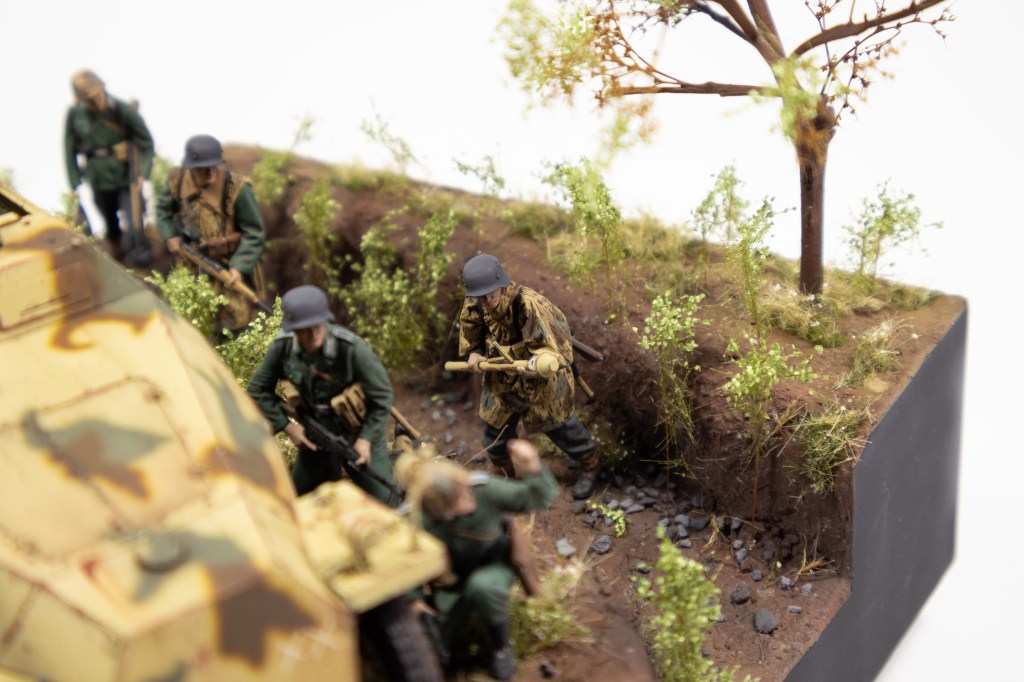
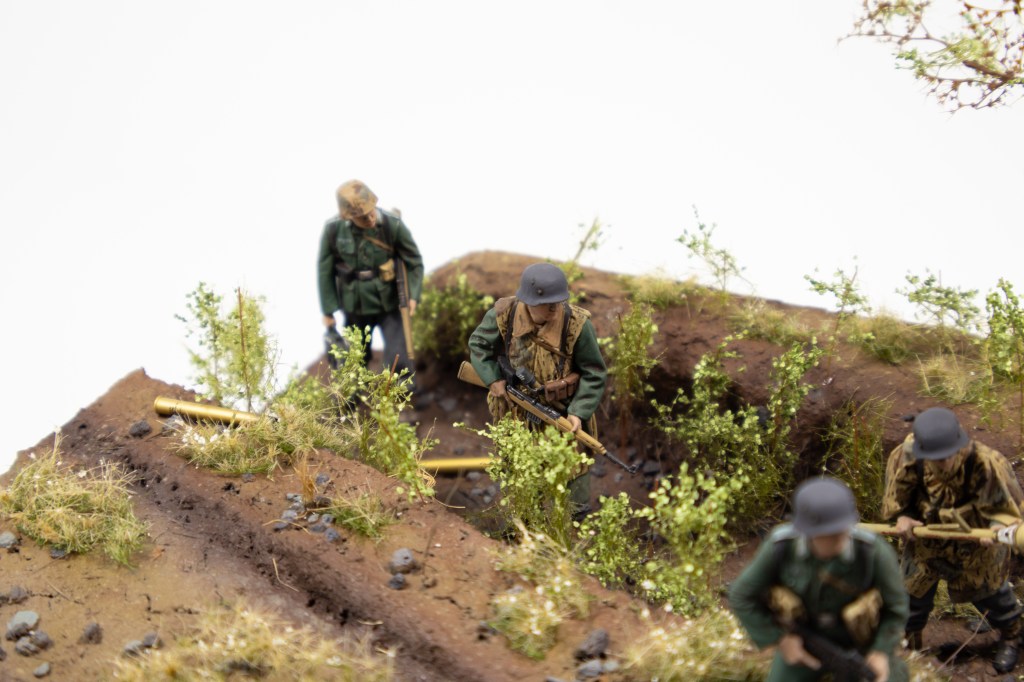
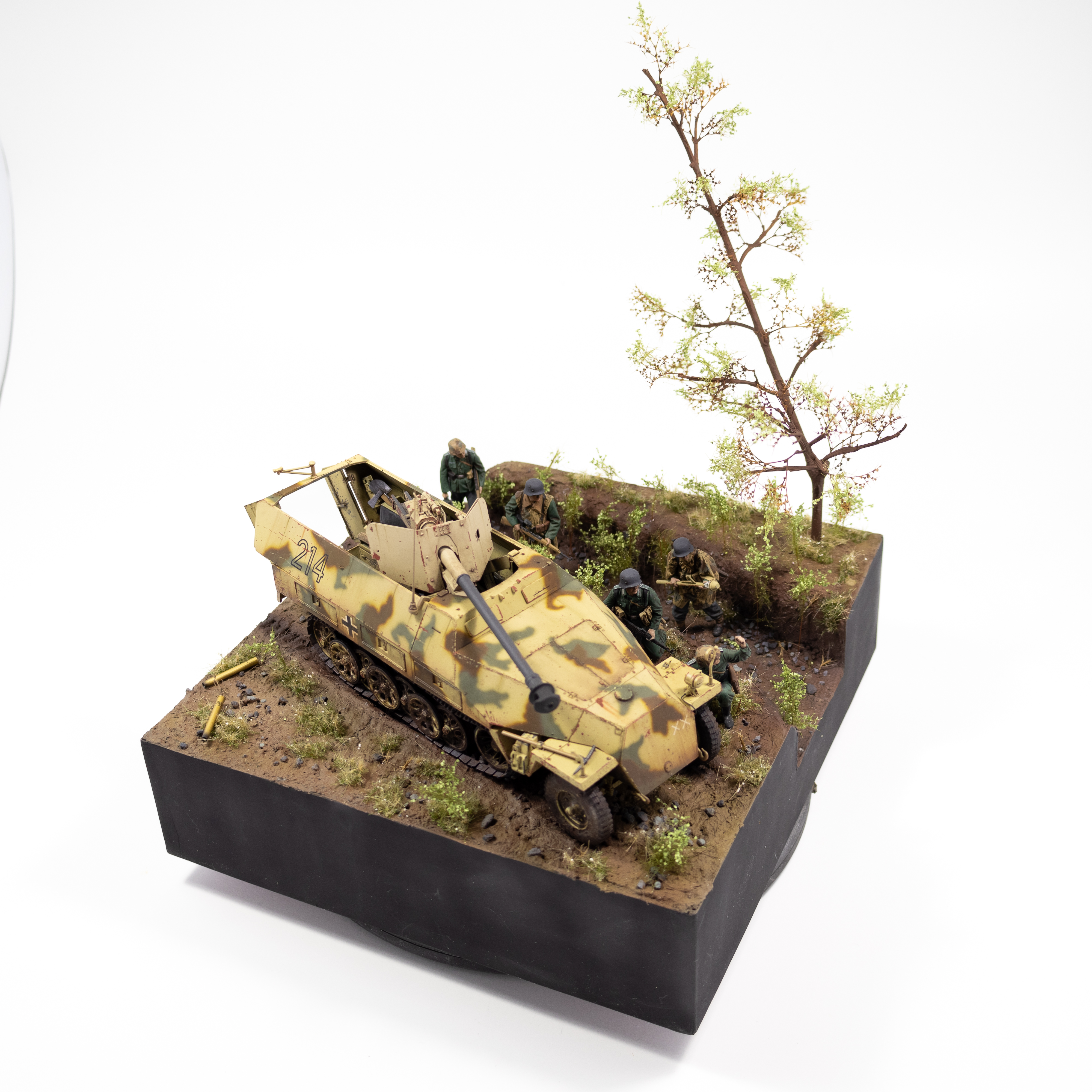
Sd.Kfz 251/22 Ausf. D “Pakwagen”: Completed Project

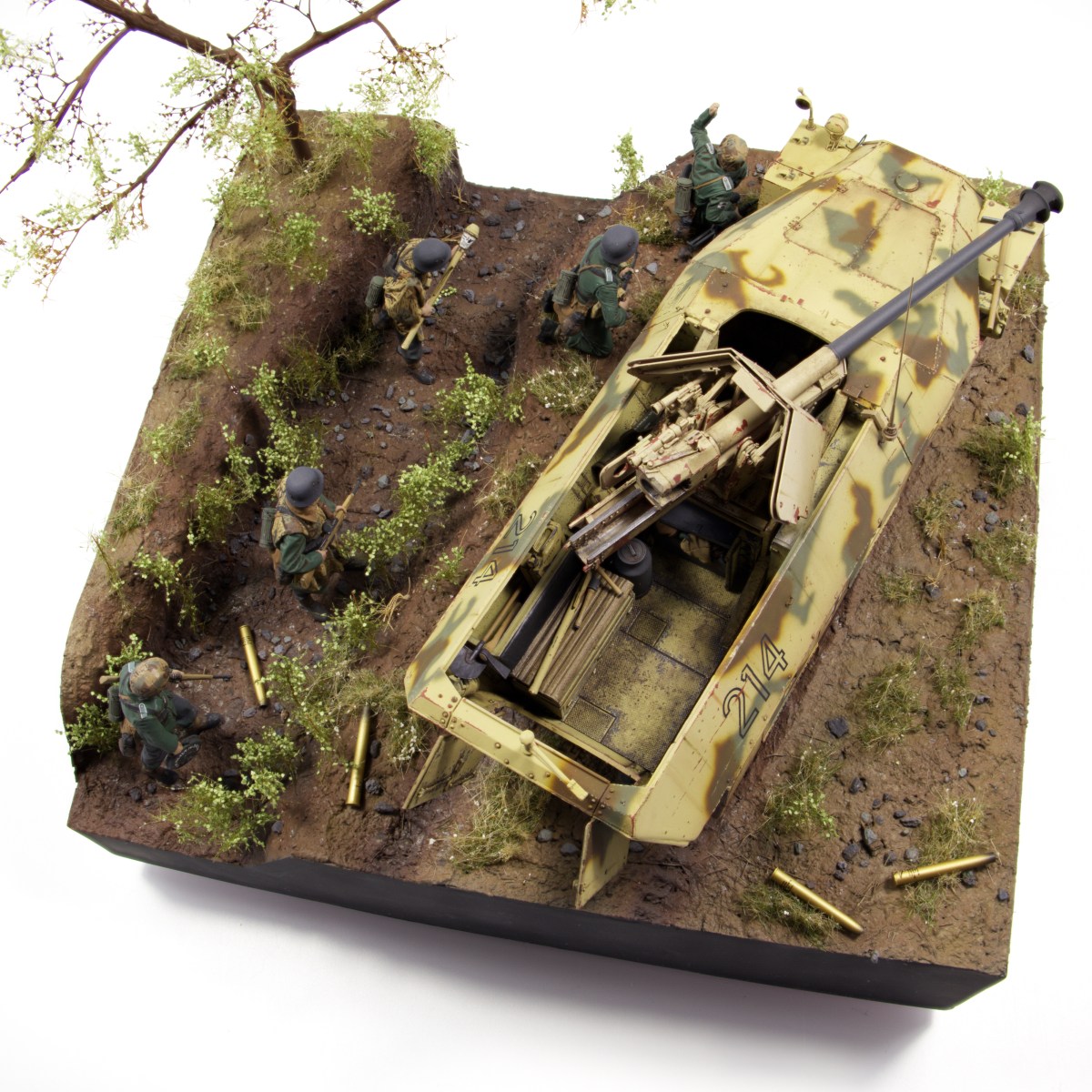
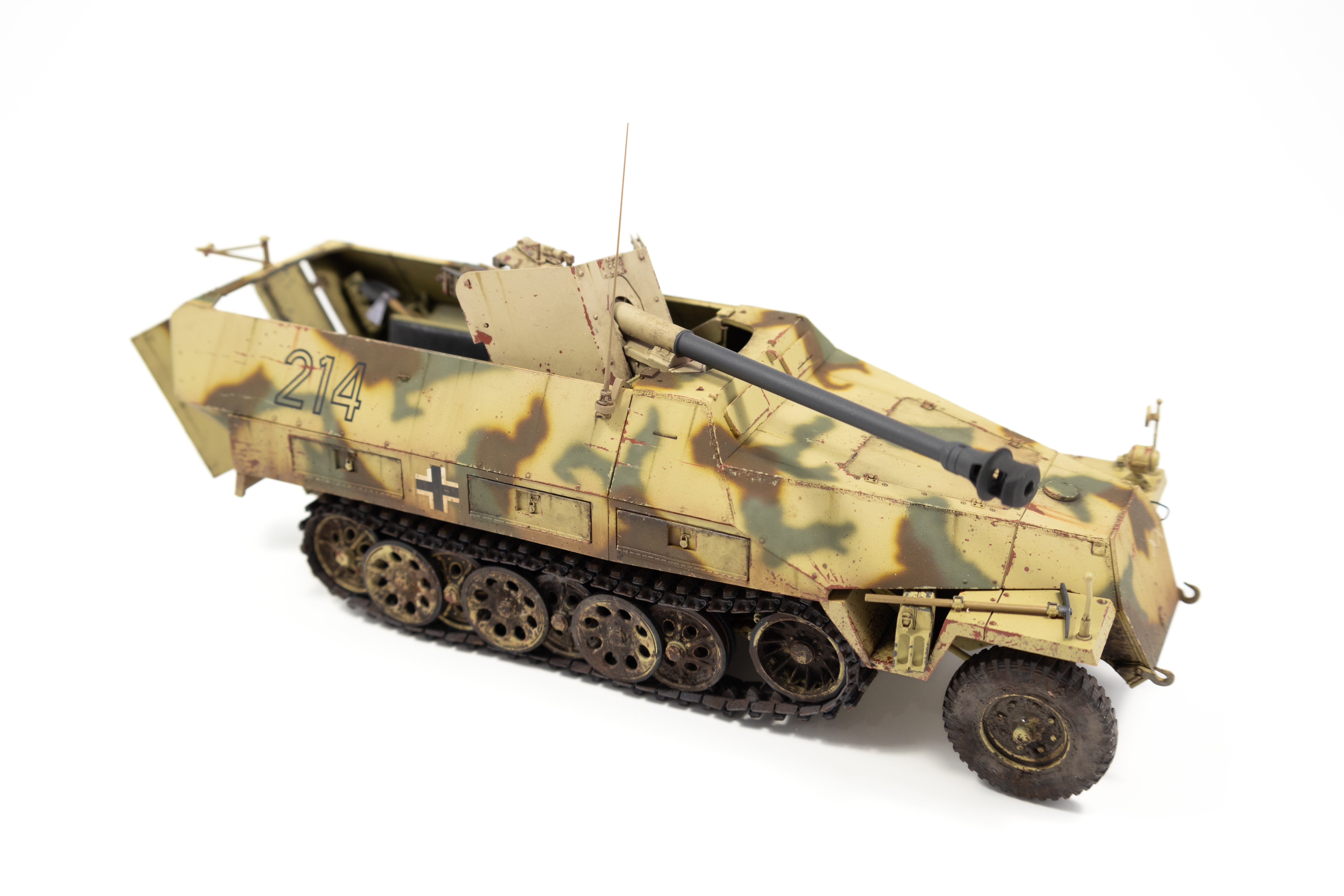
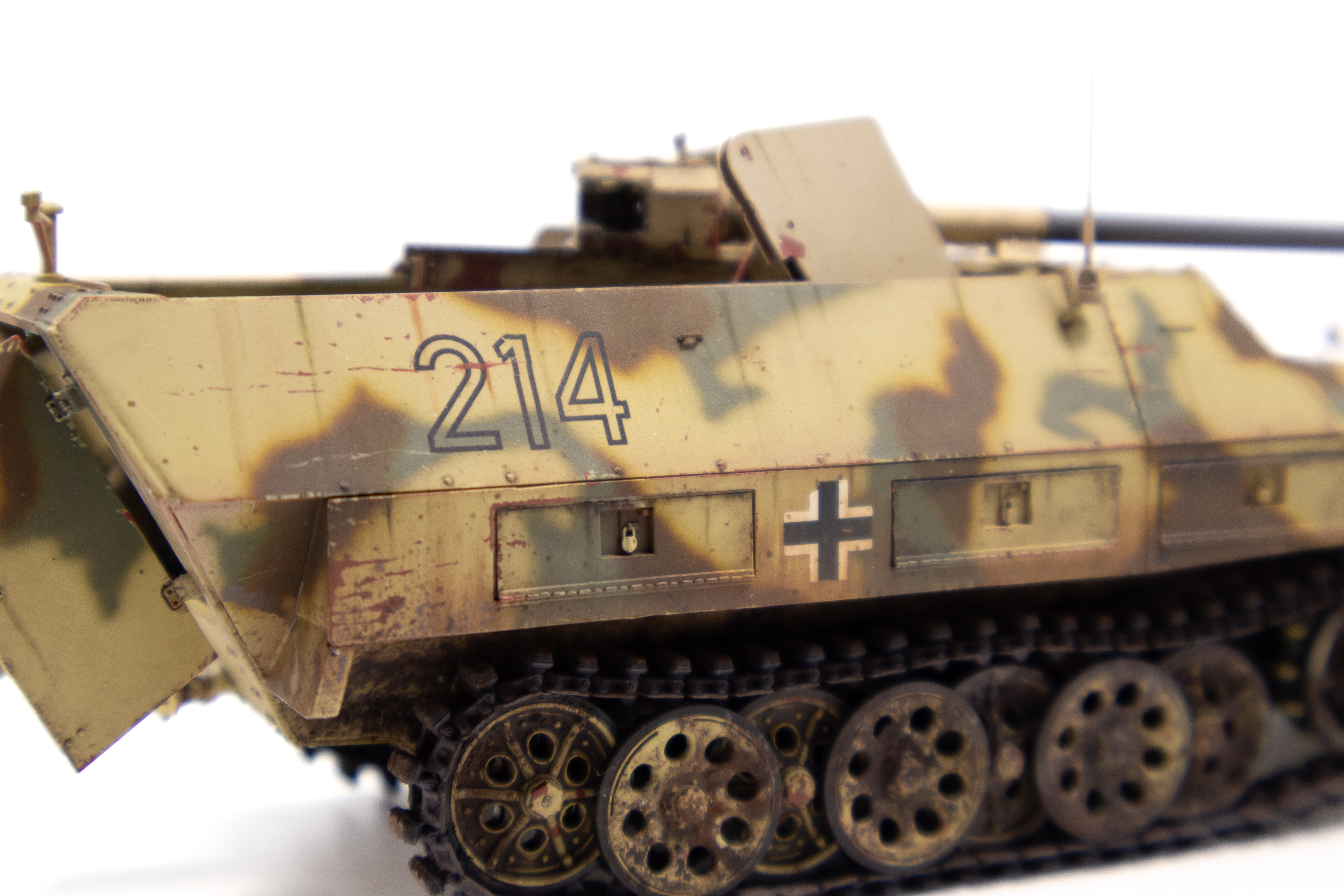
A few weeks ago I was finally able to declare the Pakwagen project complete. The scope of this project continuously kept increasing and increasing and in the end I was left with a fully completed diorama. I’m considering this build my best work so far so I’m hardly complaining.

I also decided to make a significant investment in the form of a new camera, a Canon EOS R50. Since starting this blog I’ve largely been taking photos with my phones, a iPhone 8 before and more recently a iPhone 12. The quality was passable at best but this new camera is amazing at being able to capture detail on the model. I’ve also been able to start incorporating a new technique, Focus stacking! Being able to see the entire model clearly in focus is such a huge improvement and I love the shots I’ve been able to take and share.

Also new is the base that the model is sitting on. I first tried out a workflow for building diorama bases with my work on Miniart’s T-55 and I’ve honed that process here as well. It’s comprised of insulation foam with styrene sheet on the edges. I used AK terrain paste along with foliage from green stuff world. Believe it or not, the base was in limbo for a while, I was convinced that it was going to look terrible and that I should just cut my losses and move on to the next project. Despite the rocky start I stuck with it and I’m so glad I did. It’s still got some shortcomings but I’m happy with the result, especially considering that this was my first swing at a base with heavy foliage.

I utilized a set of Tamiya late war German figures which were fantastic, the best figure set I’ve ever used. Amazing surface detail and plenty of spares were par for the course here. It had been years and years since I hade done any kind of figure painting and this set was perfect for getting the rust off. I love the way these turned out, especially the splinter camo.

That’s it for this project! Thanks for looking and enjoy the rest of the gallery below!

Categories
1:35 Armor Projects

T-55A Mod. 1981: Weathering

Miniart’s T-55 has been in progress in one form or another for almost two years now. It’s survived being stuffed in a box and a move across the country. There’s a few reasons why I’m only getting around to finishing it now, namely that I was more interested in other projects and that it’s a complex kit and not one you’d try to finish when being away from the hobby for a sustained period of time. I’ve slowly picked away at it for the past year but with a new year returns an old build as I’m determined to start the year by finishing off this shelf queen.

In starting the weathering process I’m reminded that conceptualizing the final result *before* beginning the painting process is needed for a good result. In slowly chipping away on this build I painted a layer of 4BO with no real direction as to what I wanted the final result to look like. Looking back this was a mistake, as I would have liked to add some chipping effects via the hairspray method. This mistake could be salvaged however and I decided to use this build to experiment with post shading, colour modulation and other heavy weathering effects. Basically I want to push this build and really go far with the weathering and pigments to get a better understanding of what works and what doesn’t. I settled on a dusty finish of a vehicle set in a desert environment and I think the green of the tank will contrast nicely with the brown environment it will be set in.

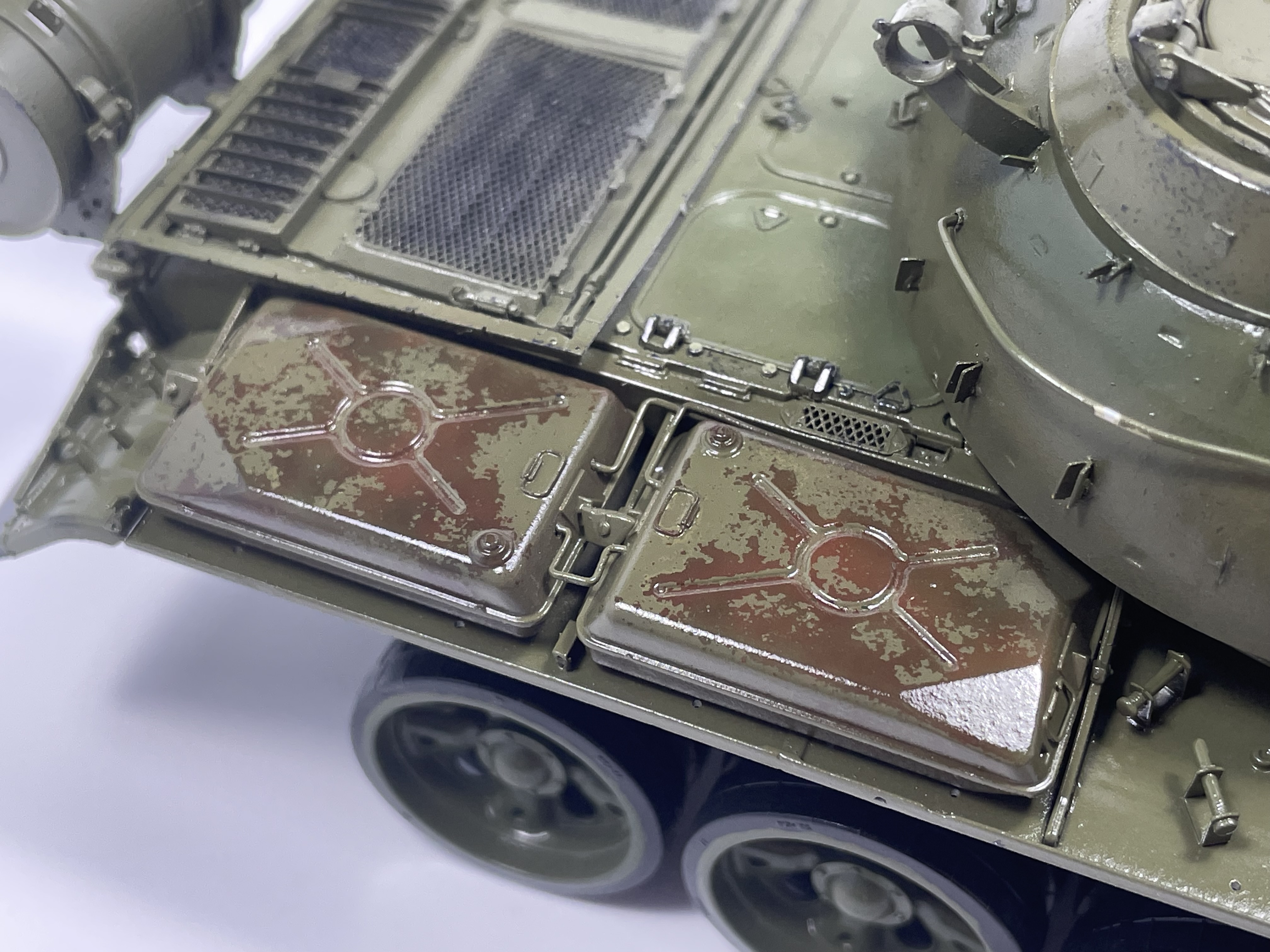
The weathering process started with adding some rust highlights by spraying some various rusty shades on the fuel tanks to create some contrast between the tanks and the vehicle hull. I then opted to treat the fuel tanks to a chipping effect to simulate areas where the paint has peeled away and exposed the rusted metal underneath.

Hairspray chipping helped to start a rust effect on the fuel tanks.

After getting the tanks where I wanted them, I hit the model with a gloss coat to seal the paint prior to an oil pinwash. Normally I’d stick with satin finishes on armour but seeing as there were a lot of details for a wash to skink into I opted for the gloss coat in this stage. After the pinwash I used VMS Satin to seal the model again before moving onto further effects. I opted for a satin coat instead of working over a gloss surface because it would allow for easier blending between the various effects I wanted to use.

Initial weathering was comprised of enamels from MIG using various grime and fuel stain effects. I like how this initial stage turned out although I think I need more practice with enamels as they are not my go to as much as oils are. That said, I like how “grimy” I was able to make the surfaces look and how the staining interacts with the colour modulation. This phase was only meant to be a base for the pigment work which will come next.

Since I knew I wanted to pose this vehicle in a Desert or Arid setting, I wanted a significant amount of dusting done to the model. I started on the running gear and underneath the fenders and stippled on AK’s “Kursk Earth” along with various other pigments. I also utilized a “light mud” product from AK to get very light splashes to add contrast. With it having been quite a while since I had really dirtied up a tank much of this process was experimenting to see how I liked the end result. I also cut up some static grass and mixed it with a light pigment before applying it to the model to simulate foliage being stuck to the underside of the vehicle.

For the initial dusting I utilized two pigment shades with pigment fixer and while I think it was good experience to practice with using pigments I think my application of this medium would use some refinement. I do think I need to slow down a bit and put more effort into blending while the pigments are still drying which is something I’ll need to keep in mind for the next build.

I used T-Rex tracks for this build and couldn’t be happier with how they turned out. I painted them in Gunze Mr. Metal Color “Iron” which if left unbuffed will remain a dull dark grey but will result in a really great shine if you rub the surface. I added some more “Kursk Earth” long with several different pigment shades to create a dusty weathered look. I then used several q tips to wipe away the pigments where wear would occur and revealed a nice shine to represent polished metal. I also added graphite onto the cleats on the reverse side to represent where the track would contact the ground the hardest and buff them metal.

This is where I’ll leave this update for now but there are sill a few things I’d like to do before declaring this one complete. I’d also like to put this one on a proper base so I’ll need to get that completed as well. Hoping to get the T-55+Base all done by the end of February so not a whole lot of time left!